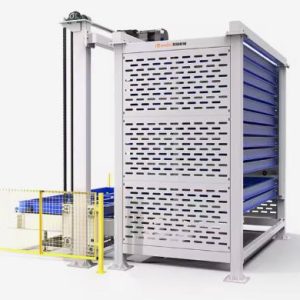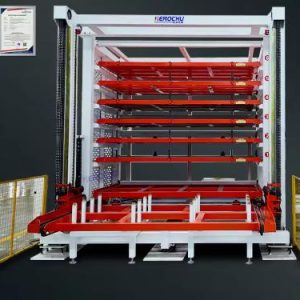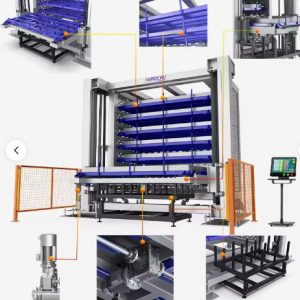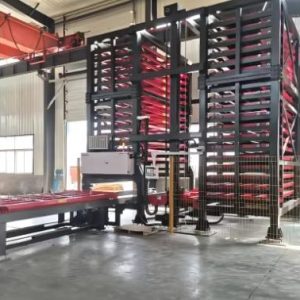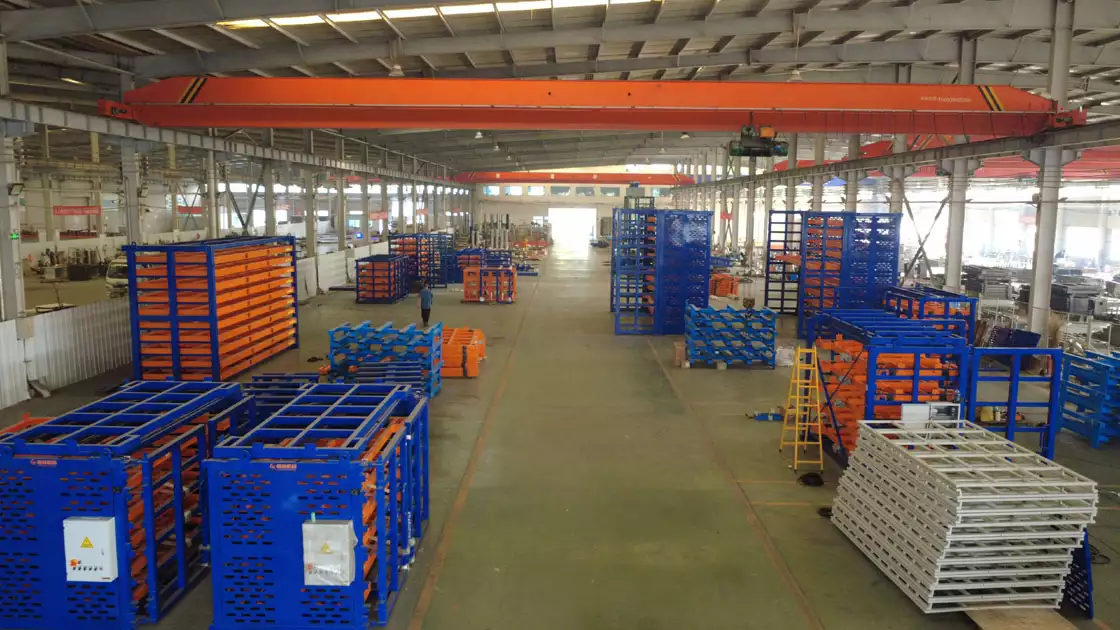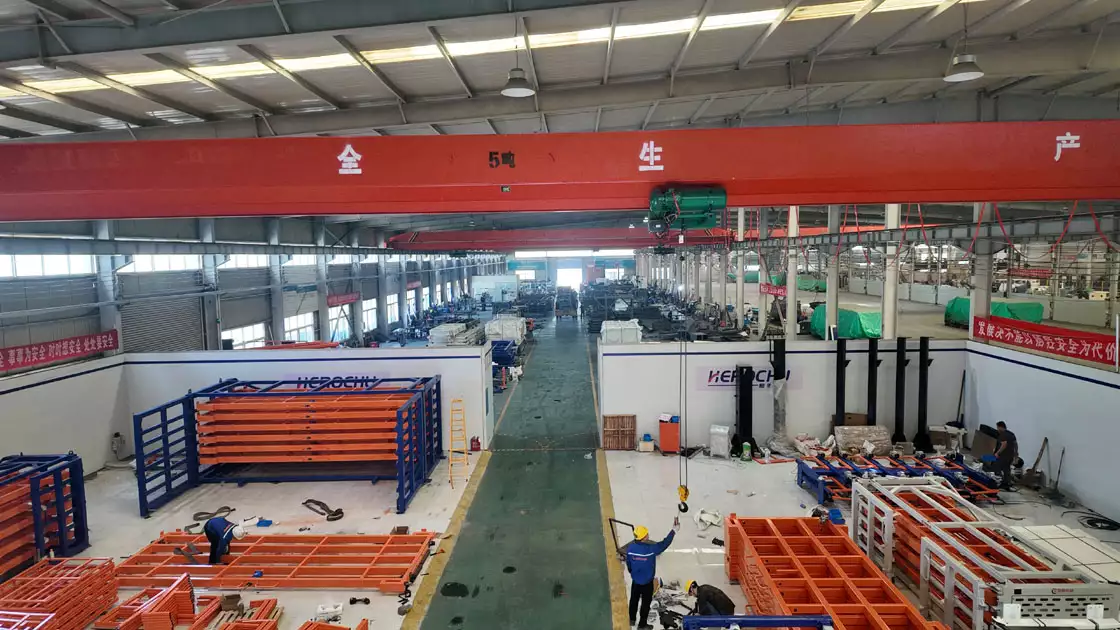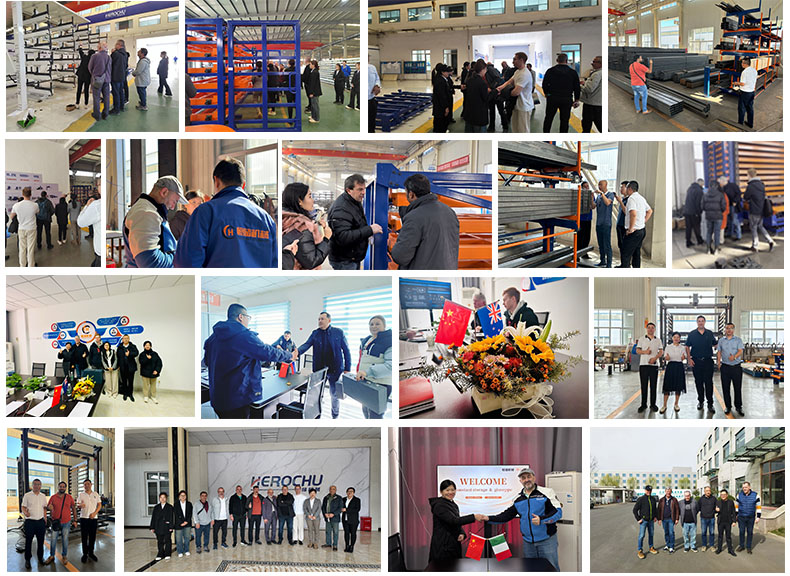
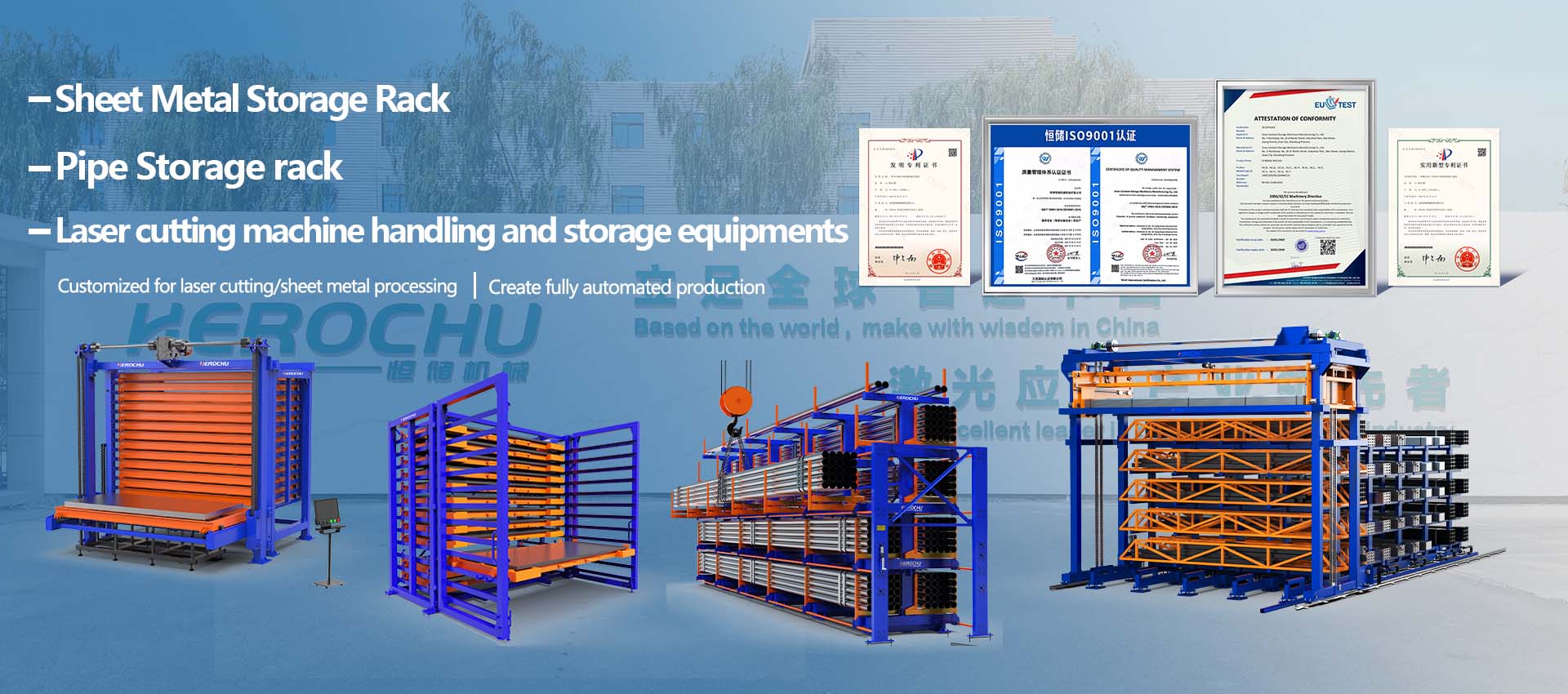
For decades, sheet metal fabrication shops have accepted a fundamental inefficiency as unavoidable: the time, labor, and floor space consumed by material storage and retrieval. Forklifts navigating between racks, operators searching through stacks for the right gauge, and production machines waiting while material is located and moved—these are not isolated inconveniences but systemic drags on productivity. Herochu has engineered automated sheet metal storage systems that directly target these inefficiencies, delivering measurable gains that can double the effective throughput of fabrication operations.
The Efficiency Drain of Traditional Storage
The conventional approach to sheet metal storage is deceptively expensive. Floor-level stacking consumes valuable production space that could otherwise accommodate additional processing equipment. Cantilever racks require wide aisles for forklift access, further reducing the usable area. Manual retrieval introduces variability—some sheets are found quickly, others require searching through multiple stacks. Inventory accuracy depends on handwritten records or spreadsheet-based tracking, both prone to errors.
The cumulative effect is significant. Studies indicate that automated sheet metal storage can reclaim up to 80 percent of floor space and cut retrieval times to less than a minute. For a shop running multiple laser cutting machines, the time saved per retrieval translates directly into increased machine utilization and higher throughput.
How Automation Doubles Efficiency
Herochu’s automated sheet metal storage systems achieve efficiency gains through three primary mechanisms: vertical density, automated retrieval, and intelligent scheduling.
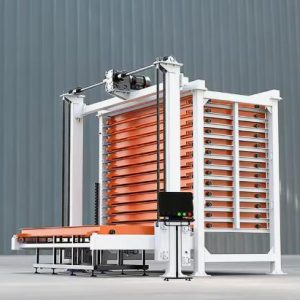
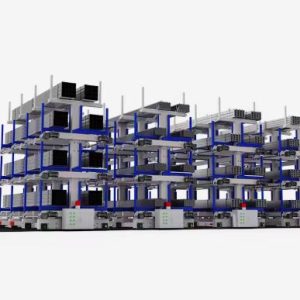
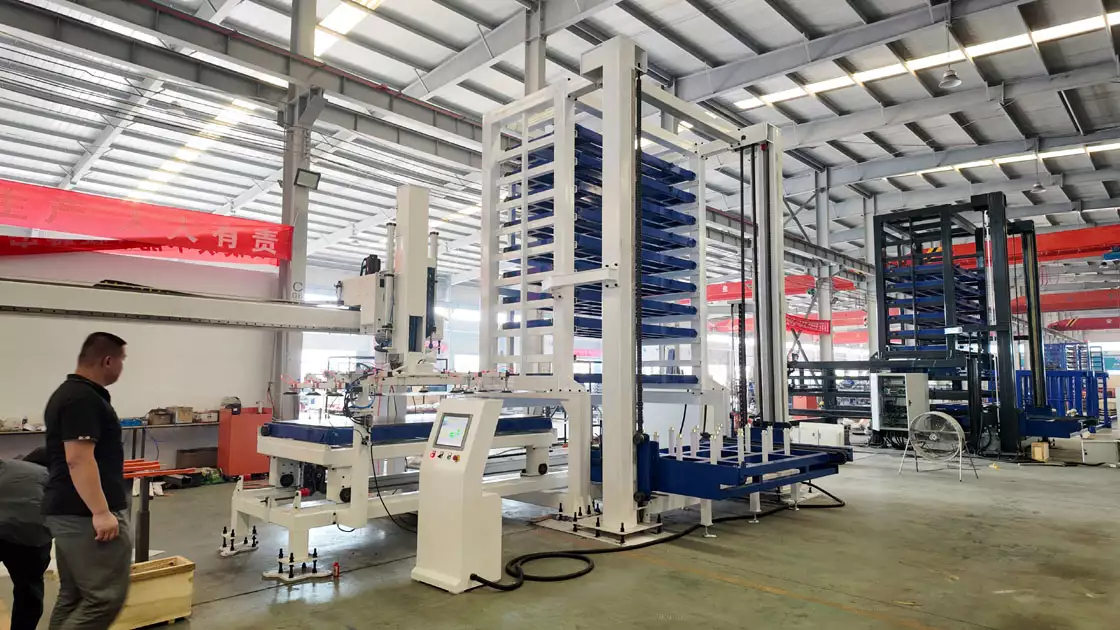
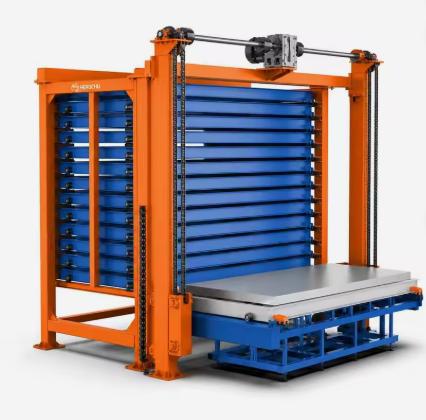
Vertical density eliminates the floor-space trade-off. A single Herochu storage tower occupying less than 10 square metres can house more than 60 tonnes of sheet metal, delivering an 85 percent reduction in the floor area previously consumed by horizontal storage methods. This consolidation frees space for additional production capacity without expanding the facility.
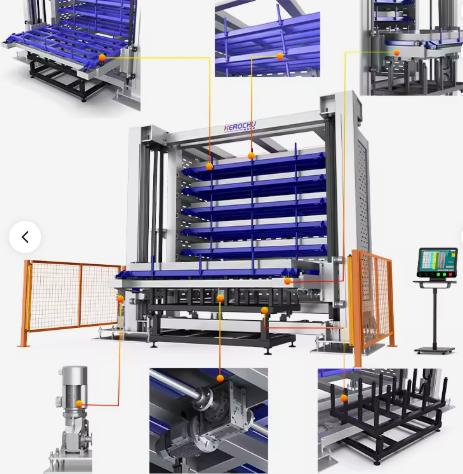
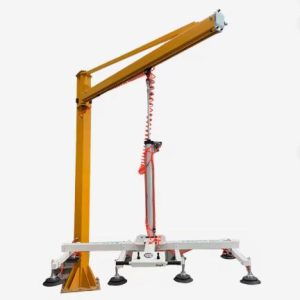
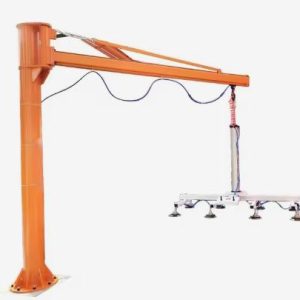
Automated retrieval removes the variability and delay of manual material handling. The tower’s motorized lift operates within the central column, delivering requested sheets to the access bay in under 60 seconds. The gantry robot with vacuum suction lifters handles sheets without physical contact that could cause damage, ensuring material integrity while accelerating the loading process.
Intelligent scheduling ensures that material availability never constrains production. The system’s WMS/WCS software integrates with production planning, anticipating material requirements and positioning sheets for retrieval before the cutting machine finishes its current job. This predictive capability eliminates the idle time that occurs when machines wait for material.
Synchronized Material Flow
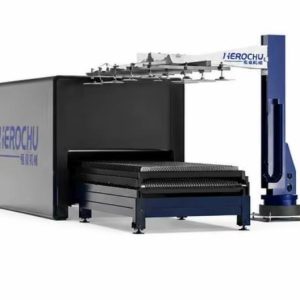
The efficiency multiplier effect is most pronounced when automated storage is integrated with downstream processing equipment. Herochu’s systems connect the tower’s access bay directly to CNC punch presses, fibre laser cutters, and plasma tables through shuttle systems and conveyors. Sheets move from storage to the machine bed without manual transport, creating a continuous material flow that supports unattended or lightly attended production runs.
For facilities operating multiple laser cutting machines, the synchronization is particularly powerful. The system serves a group of machines on a shared schedule, with the software coordinating retrieval and delivery to match the real-time cutting sequence. When one machine finishes a job, the next sheet is already en route. When two machines request material simultaneously, the system prioritizes and routes accordingly.
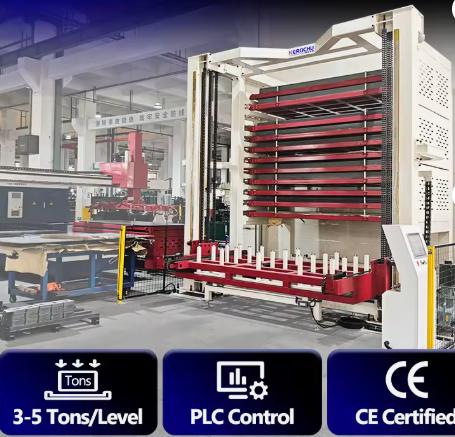
This eliminates the sequential bottleneck that plagues manual material handling: instead of retrieving sheets one at a time as machines request them, the system maintains a buffer of material flowing continuously to multiple machines. The result is a production environment where machines run at their maximum rated speed, limited only by cutting parameters rather than material availability.
Performance Metrics That Matter
Herochu’s automated sheet metal storage systems deliver performance improvements that are measurable and substantial. The transfer speed of the material cart ranges from 5 to 15 metres per minute, while the loading arm achieves horizontal speeds of 10 to 30 metres per minute and lifting speeds of 5 to 10 metres per minute. These speeds translate directly into reduced cycle times and increased throughput.
The systems accommodate sheet dimensions from 3,000×1,500 mm up to 6,000×2,500 mm, with per-tier capacities from 3,000 kg to 5,000 kg and maximum sheet weights of 500 kg. This flexibility ensures that the efficiency gains apply across the full range of materials processed in a typical fabrication shop—from thin aluminum blanks to thick steel plates.
The Business Case for Automation
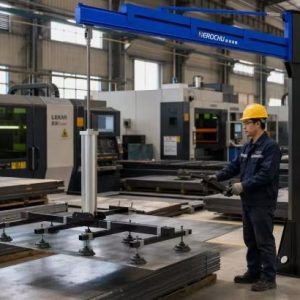
The return on investment for automated sheet metal storage is compelling. Facilities implementing Herochu’s systems report not only increased throughput but also reduced material damage (eliminating the edge damage common with forklift handling), improved inventory accuracy (through automatic tracking of every sheet stored and retrieved), and enhanced safety (removing forklifts from material handling workflows).
For fabrication shops facing competitive pressure to reduce lead times and increase output, automated sheet metal storage is not an optional upgrade—it is a strategic necessity. The efficiency gains are not incremental but transformative, enabling a single operator to manage material flows that previously required multiple personnel, and allowing production schedules to extend into unattended shifts without compromising material availability.