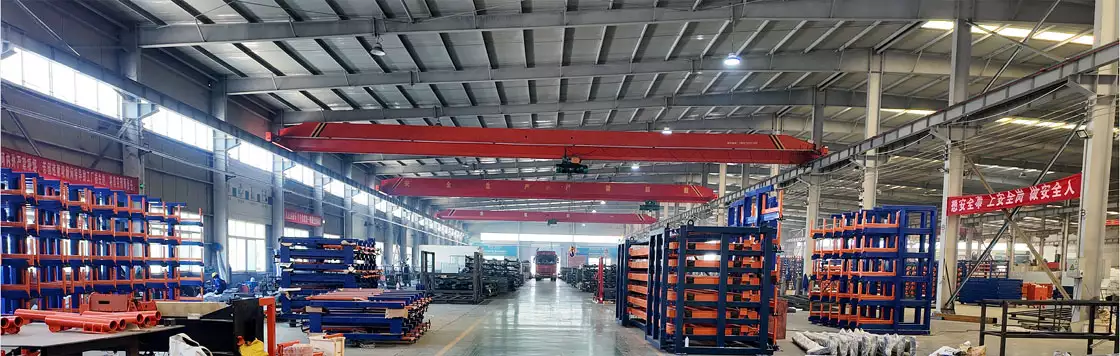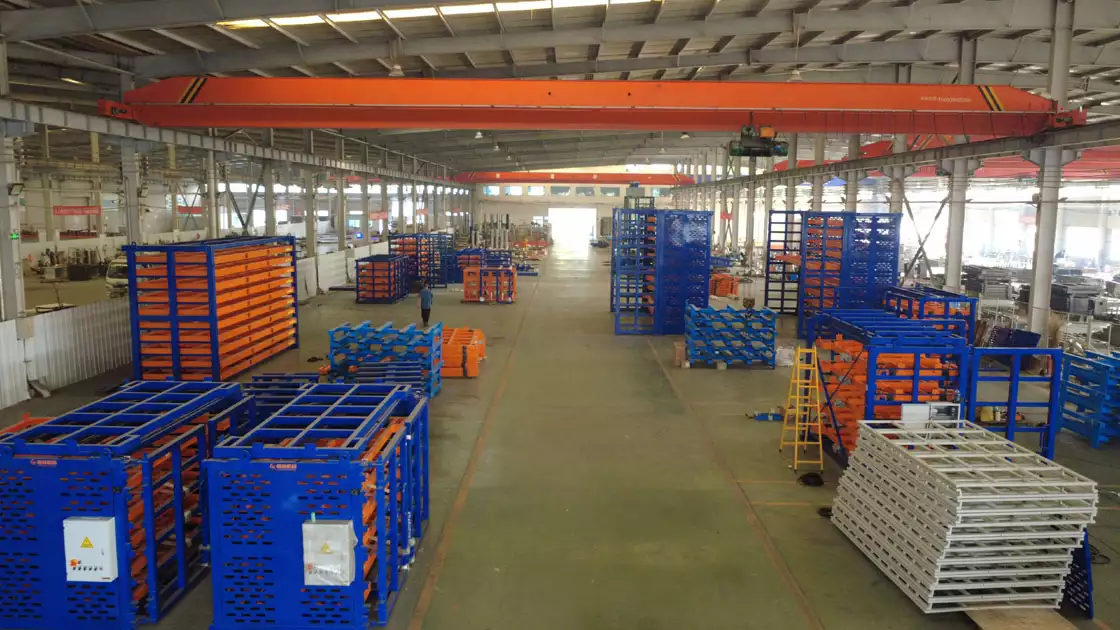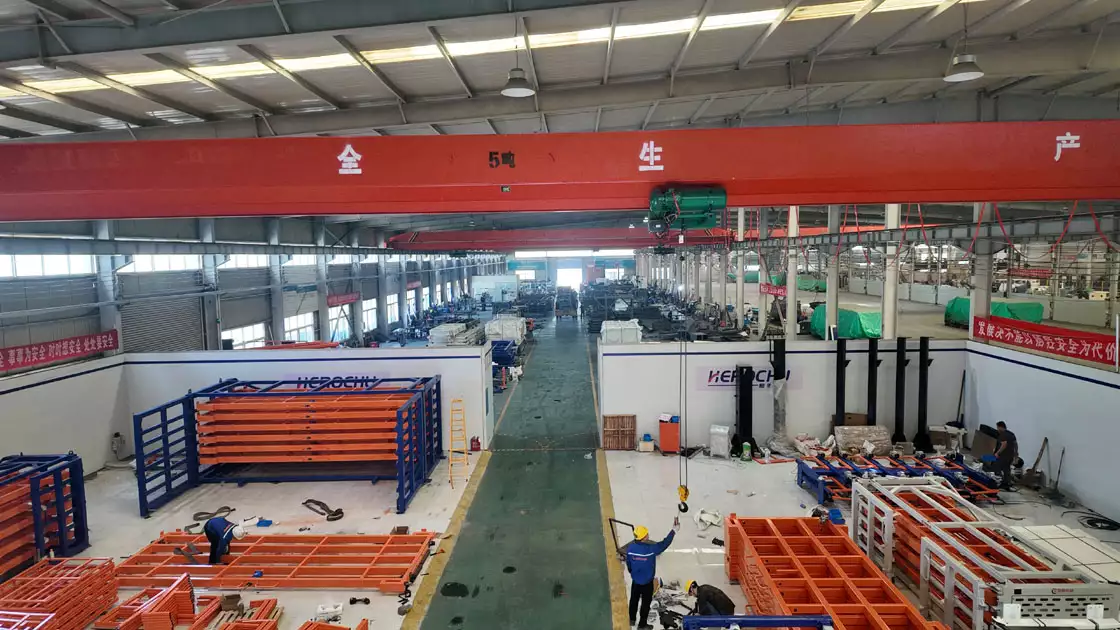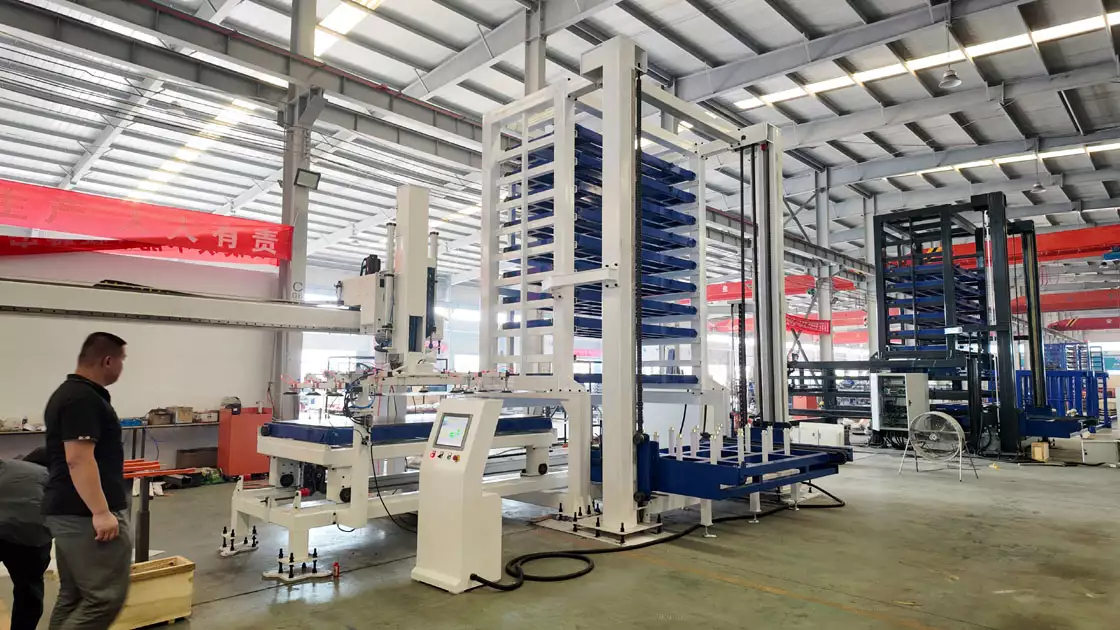
Storing long pipes and tubes at industrial scale is a systems problem, not a racking problem. Tower counts, tier numbers, material flow and control integration decide whether a pipe warehouse is a bottleneck or an asset. Herochu’s high-density rail-type cantilever storage system answers these questions as one integrated package.
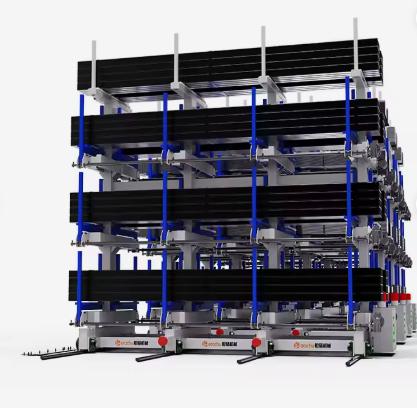
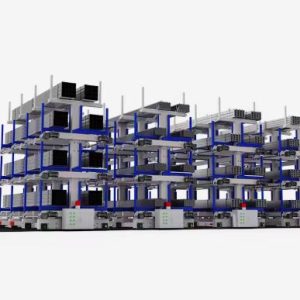
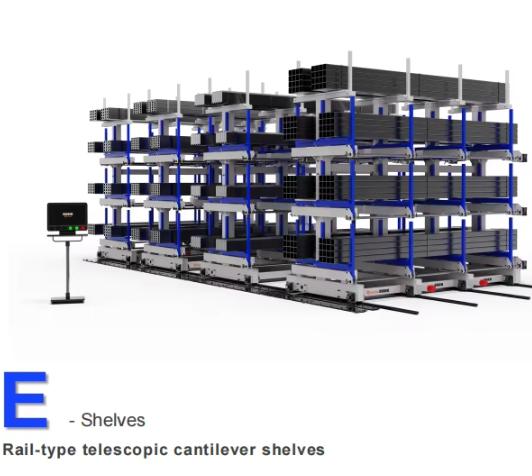
The system combines mobile rail bases, telescopic cantilever arms and Siemens PLC control into a storage block that shares a single aisle. Racks compress together when idle and open on demand at the point of operation, so density and access stop competing with each other.
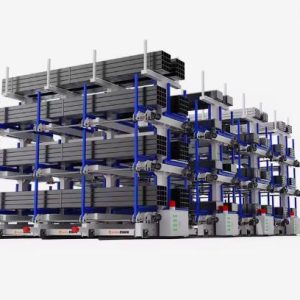
System architecture
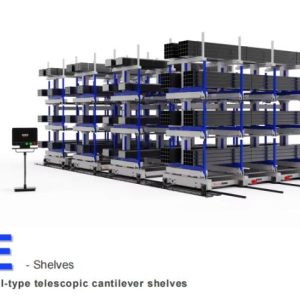
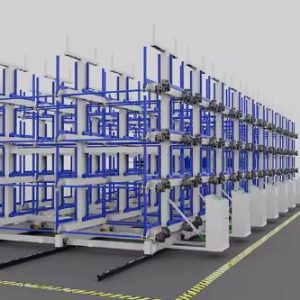
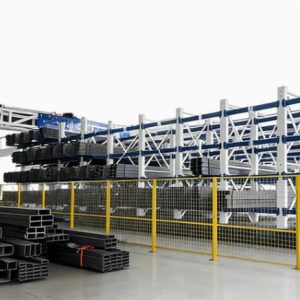
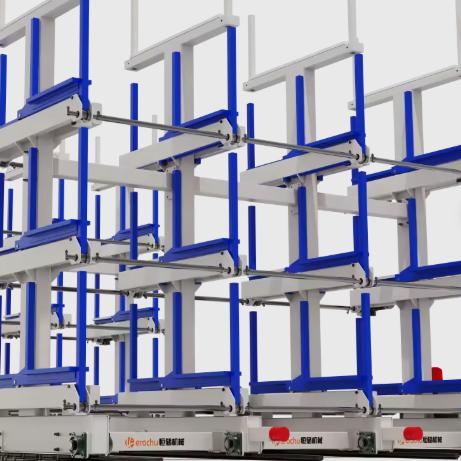
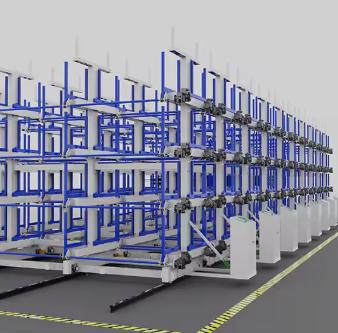
The building block is the cantilever rack tower: a central column with horizontal arms, no front legs, and open access from the side and above. Towers are mounted on a single ground rail and grouped into blocks. Each block shares one aisle, and the motorized drive opens the aisle in front of the required tower. Between the shelves only one aisle is needed for loading and unloading. In operation, up to 80% of fixed aisle space is reclaimed, and usable capacity rises by up to 400% within the same footprint.
The system is modular by design. Tower count, tier count, arm geometry and rail length are defined at the engineering stage and can be extended later. A facility that starts with five towers can grow to seven or more without replacing the rail bed, which protects the initial investment as volumes increase.
Why mobile beats static for long stock
Static cantilever racking optimizes access and ignores space; a moving system optimizes both. The difference shows up in utilization rates. Fixed layouts typically leave 30 to 40% of the floor as aisles, while a rail-type block cuts that to a single lane. Over the life of the system, that difference funds the drive hardware many times over. Warehouses with limited space and low height gain the same utilization benefits as large halls.
Standard configurations
Herochu offers the system in three standard configurations covering the common range of long-stock operations. All models accept customized layer counts, rack quantities and arm layouts to match the site’s material program.
| Parameter | HC-G6053EM-5 | HC-G9055EM-7 | HC-G12065EM-7 |
| Pipe length | 6,000 mm | 9,000 mm | 12,000 mm |
| Number of layers | 5 (customizable) | 5 (customizable) | 6 (customizable) |
| Max. load per level | 3,000 kg | 5,000 kg | 5,000 kg |
| Number of racks | 5 towers (customizable) | 7 towers (customizable) | 7 towers (customizable) |
| Carriage speed | 27 mm/s | ||
| Racking travel speed | 1-5 m/min | ||
| Material discharge method | Electric assistance | ||
| Control method | Siemens PLC | ||
The 6,000 mm model suits cut-to-length lines and mid-size stockholding operations. The 9,000 mm and 12,000 mm versions cover structural steel programs and long pipe projects. Multi-tier layouts such as 5+1 levels increase capacity further without raising the building height.
Choosing the right configuration
The choice starts with the longest pipe in the program. Stock up to 6,000 mm runs on the HC-G6053EM-5 with five layers rated at 3,000 kg per level. Programs that include 9,000 mm material move to the HC-G9055EM-7 with five layers at 5,000 kg, and 12,000 mm stock uses the HC-G12065EM-7 with six layers at 5,000 kg. Tower counts of five or seven per group follow from the total tonnage and the desired picking frequency.
Material handling integration
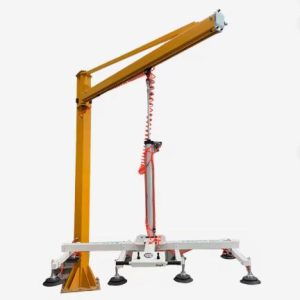
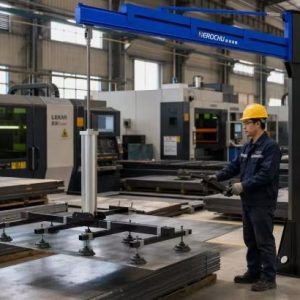
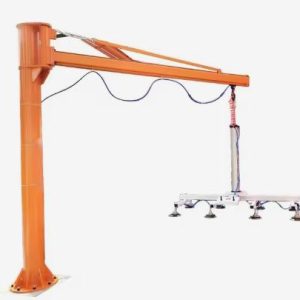
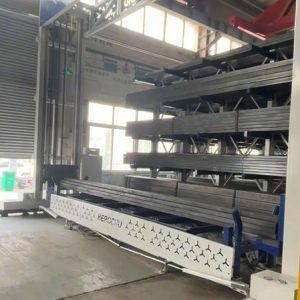
The open front of each Herochu tower allows overhead cranes, hoists and vacuum suction lifters to lower or lift pipes directly from above. Telescopic arms extend the bundle into the aisle, so the crane never reaches into the rack. Electric-assisted discharge supports heavy loads during removal. Forklift operations stay in the single designated aisle, cutting travel time and eliminating the tight-channel maneuvering that damages racks.
Safety in the storage block
A moving rack system has to be predictable around people. Travel is speed-limited to 1-5 m/min, the carriage positions at 27 mm/s, and interlocks halt movement if anyone enters the aisle. Emergency stops sit at each group, end stops prevent over-travel, and the open design gives operators clear sight lines across the block. Mechanized movement also removes the manual pulling that injures backs and shoulders in long-stock handling.
Control and automation
Herochu’s Siemens PLC control coordinates rack movement, grouping and safety interlocks. Rack travel speed is adjustable from 1 to 5 m/min, and the carriage runs at 27 mm/s for fine positioning. The PLC can interface with the plant’s WMS or ERP so that picking orders automatically move the right tower to the aisle. For facilities moving toward automation, the system is a storage foundation that robots, cranes and conveyors can be layered onto later.
Diagnostics extend beyond basic operation. Travel counts, cycle times and fault records are logged, so maintenance teams see wear developing before it stops production. Remote monitoring options keep service engineers informed without a site visit, which matters for plants running multiple shifts.
Built for heavy industry
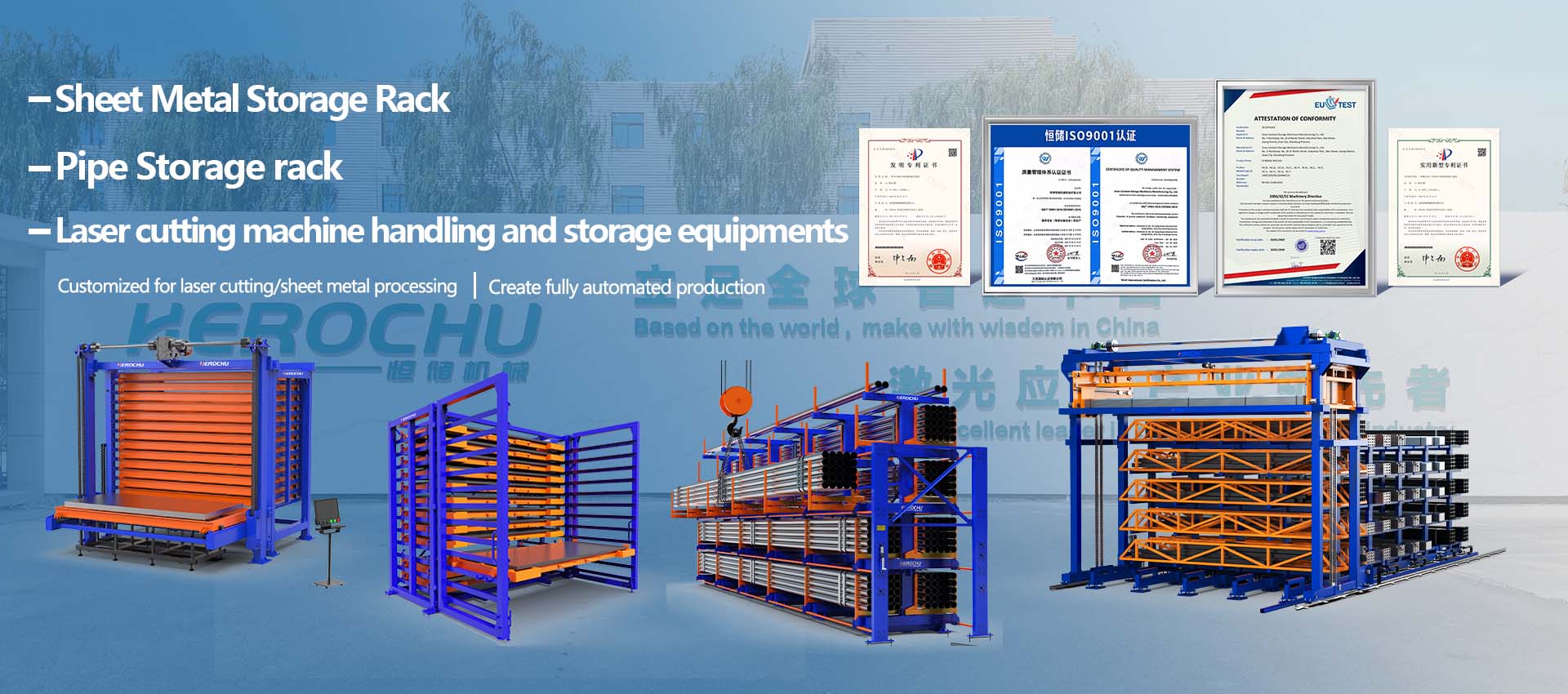
The system is engineered for continuous duty. Structures use Q235B high-strength steel, rails are precision ground and carriages are heavy duty. Production at Jinan Constant Storage Machinery Co., Ltd. follows ISO 9001 procedures, and the equipment carries CE certification. Zinc anti-rust coatings are available for demanding environments. These qualities matter in aerospace, automotive, logistics and heavy manufacturing, where downtime and damaged stock carry high costs.
Sector applications
Aerospace plants store long aluminum and titanium profiles that must stay straight and scratch-free; the closed rack block and full arm support protect them through every shift. Automotive facilities stage steel tube stock for press and forming lines, where the moving aisle keeps the line fed without interrupting deliveries. Logistics operators use the system for high-density pipe and tube distribution, and heavy manufacturing departments keep structural steel ready for cutting and welding work.
The payback
The system improves three cost lines at once. Floor space: reclaimed aisles raise capacity by up to 400%, deferring building expansion. Labor: single-aisle logistics and mechanized movement cut picking time and manual handling. Inventory: open, visible storage reduces damage and makes stock counts fast and accurate. For a long-stock operation, these savings typically justify the investment within the first years of operation.
Delivery and commissioning
A project starts with an on-site survey of pipe lengths, bundle weights, floor dimensions and crane coverage. Herochu then prepares the layout, structural calculation and control scheme, manufactures the towers and rails, and installs the system with minimal disruption to ongoing operations. Commissioning includes operator training, and the documentation package covers maintenance schedules and spare parts lists.
A high-density rail-type cantilever storage system turns a crowded pipe warehouse into a controlled, efficient storage asset. Contact Herochu with your pipe and tube lengths, per-level loads, tower counts and control requirements. The engineering team will configure the system to your building and your material flow, and provide a full capacity analysis.