
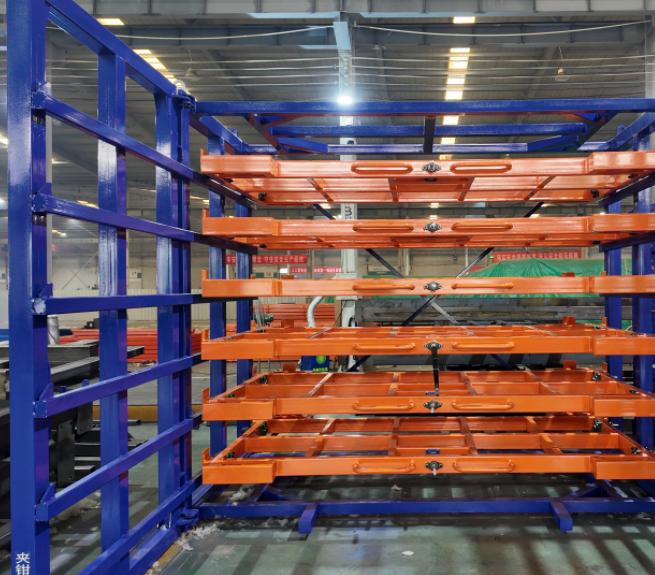
Heavy-Duty Motorized Sheet Metal Storage Rack
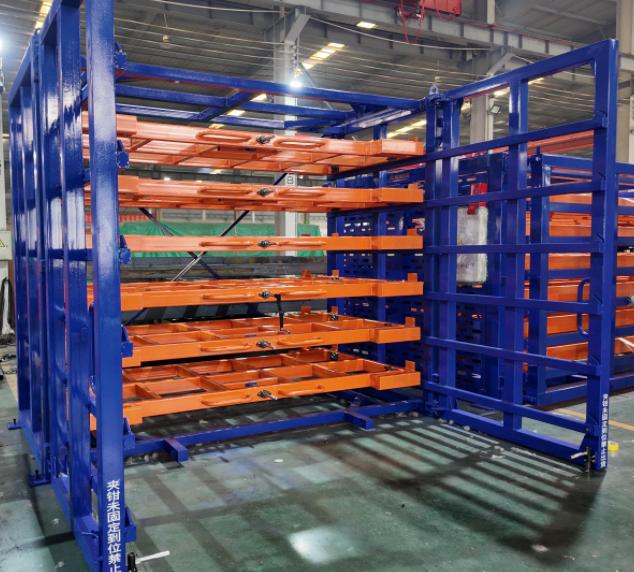
A CNC laser cutting station that waits for material is a machine that is not earning revenue. The gap between raw sheet inventory and the cutting table loading zone is where workshops lose production hours to forklift traffic, manual searching, and double-handling. Herochu’s heavy-duty motorized sheet metal storage rack closes this gap with a powered, classified storage system that delivers the right sheet to the loading position in under two minutes, operated by a single technician with a pendant control.
Heavy-Duty Motorized Sheet Metal Storage Rack
A CNC laser cutting station that waits for material is a machine that is not earning revenue. The gap between raw sheet inventory and the cutting table loading zone is where workshops lose production hours to forklift traffic, manual searching, and double-handling. Herochu’s heavy-duty motorized sheet metal storage rack closes this gap with a powered, classified storage system that delivers the right sheet to the loading position in under two minutes, operated by a single technician with a pendant control.
The Real Cost of Disorganized Sheet Storage
Workshop managers tend to measure storage efficiency by how many sheets fit in a given square meter. That metric misses the larger cost: how many machine-hours are lost to material access delays. A shop running three CNC lasers that each cut 12 sheets per shift needs 36 sheets to flow from inventory to loading station every day. If each retrieval takes 15 minutes—a realistic number for a deep-stacked floor pile where the needed sheet is never on top—the shop spends nine hours per day on material access alone. That is more than one full shift of labor producing zero billable output.
Floor-stacked sheet metal also degrades over time. Moisture trapped between stacked sheets promotes oxidation. Forklift contact dents edges, which then require extra trim allowance at the laser table. Mill scale transfers from carbon steel sheets to stainless or aluminum sheets stored in adjacent piles when foot traffic kicks up debris. These losses accumulate silently—a scratched sheet that requires rework, a rust-stained sheet sold at a discount, a dented corner that forces the nesting engineer to rotate the part layout and waste sheet area.
Classified storage addresses all of these costs simultaneously. When each sheet type occupies a defined, labeled location in a motorized rack, the operator knows exactly where to go, extends the correct tier with a button press, and loads the sheet directly onto the cutting table. There is no searching, no re-stacking, no double-handling, and no damage from adjacent sheet contact.
Classification by Material Type and Thickness
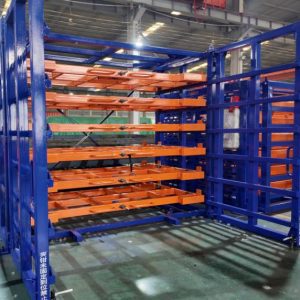
The Herochu motorized rack is configured, not just assembled. During the specification phase, the customer provides a material inventory list: alloy grades, thicknesses, typical sheet dimensions, and monthly consumption volumes. Herochu’s application engineers map this data onto the rack’s tier layout using two principles: frequency of access and ergonomic height.
High-turnover materials—the 2 mm cold-rolled steel or 3 mm 5052 aluminum that the shop cuts every day—occupy the waist-height tiers. These tiers require no bending or reaching to operate, and their extension brings the sheet directly into the natural lifting path of the overhead crane or vacuum lifter. Low-turnover materials—the 20 mm 316L stainless plate that ships once a month—go into the upper or lower tiers, where occasional access is acceptable.
Each tier is labeled with the material type, thickness range, and a barcode that links to the digital inventory record. The labeling is not a suggestion; it is a physical commitment to organization. When a truck delivers new stock, the receiving operator scans the material certificate, opens the inventory module, and the system returns the designated tier number. The sheet goes into that tier every time, not into whichever tier happens to be empty.
For workshops that handle multiple surface finishes within the same alloy grade, Herochu can configure separate rack zones with physical dividers. A brushed-finish aluminum sheet should never share a tier with a mill-finish sheet, even if the alloy and thickness are identical. The risk of scratching during extension and retraction is too high, and the quality cost of rework outweighs the storage density gained by mixing finishes.
Motorized Extension with Pendant Control
The motorized drive converts what would be a two-person manual pull into a one-person button-press operation. Each tier has a dedicated 24 VDC gear motor driving a rack-and-pinion mechanism. The motor, gearbox, and pinion are mounted on the fixed frame structure, not on the moving tier, so the motor power cable never flexes during operation.
The pendant control is a handheld unit with up, down, forward, reverse, and emergency stop buttons. The operator plugs the pendant into a receptacle at the control station on the rack frame, selects the tier using the up/down buttons, and presses forward to extend. The tier moves at a controlled speed—between 2.28 and 5.27 meters per minute depending on the model and load rating—and stops when the operator releases the button or when the tier reaches its end-of-stroke limit switch.
The pendant cable is armored with a steel braid jacket and runs through a cable carrier chain mounted along the rack frame. This protects the cable from forklift traffic, weld spatter, and general shop abuse. For facilities that prefer untethered operation, a wireless remote option operates on the 2.4 GHz ISM band with frequency-hopping spread spectrum to maintain link reliability in electrically noisy environments.
Extension linear bearings are sealed and lubricated for life, with wiper seals at both ends of each bearing carriage to exclude grinding dust and coolant mist. The bearing rails are hardened and ground to RC 58-62, providing a hard running surface that resists indentation from airborne particulate. The combination of sealed bearings and hardened rails delivers the long service intervals that a high-utilization rack demands—no weekly greasing, no monthly alignment checks.
Space Compression and Vertical Utilization
The space argument for motorized telescopic racks is not theoretical. A flat-stacked sheet inventory occupies the footprint of the largest sheet times the number of piles, plus aisle space for forklift access. A rack with eight tiers stores eight times the sheet count in the same footprint, minus the aisles between piles.
Consider a workshop that stocks 48 sheets of 3,000 × 1,500 mm carbon steel. In a flat-stack arrangement with three sheets per pile, the shop needs 16 piles. With 1.5-meter aisles between piles, the total footprint approaches 140 square meters. The same 48 sheets in a six-tier Herochu rack occupy eight rack bays in a single row—roughly 35 square meters including the front access aisle. The recovered 105 square meters represents space for an additional production cell or expanded assembly area.
Vertical utilization compounds this benefit. Most workshops have ceiling heights between 6 and 10 meters, but flat-stacked sheet inventory rarely exceeds 1.5 meters in height. The remaining 4.5 to 8.5 meters of vertical space is unused—heated, lighted, and contributing nothing to storage capacity. A telescopic rack fills that vertical column with usable tiers, each accessible on demand. The storage density increase, measured as tons of sheet per square meter of floor, often exceeds 150% compared to flat stacking.
The one-per-aisle layout also improves crane access. In a flat-stack yard, the crane operator must maneuver between piles, lowering the hook into narrow gaps where visibility is poor. With a single rack row, the crane travels along a clear aisle, the rack extends the sheet into the lifting zone, and the operator lifts straight up. The cycle is cleaner, faster, and involves fewer opportunities for the crane block to collide with adjacent inventory.
Integration with CNC Laser Cutting Workflows
The motorized sheet metal storage rack delivers its greatest value when positioned between raw material receiving and the CNC cutting station. In this configuration, the rack serves as a buffer that decouples material availability from cutting schedule.
A typical workflow: sheets arrive from the supplier with material certificates, get scanned into inventory, and are loaded into assigned rack tiers by the receiving operator using an overhead crane. When the nesting engineer releases a cutting program, the work order specifies the required material type and tier location. The laser operator extends the designated tier, the vacuum lifter picks the sheet, and the tier retracts. The sheet moves from rack to cutting table in approximately 90 seconds.
After cutting, the skeleton and cut parts separate at the unloading station. The skeleton returns to a dedicated scrap rack or bin. Cut parts proceed to deburring, forming, or welding. At no point does a sheet sit on the floor between operations, and at no point does a forklift enter the material flow path between the rack and the cutting table.
For facilities running lights-out or minimally attended shifts, the workflow can be further automated. The Herochu rack can interface with a robotic loading cell where the robot controller sends a signal to extend a specific tier, picks the sheet with a magnetic or vacuum end-effector, and sends a signal to retract the tier. The robot then places the sheet on the laser table and the cutting cycle begins without human intervention. This arrangement allows a shop to load material for multiple cutting programs before the end of the day shift, then let the automated system run through the night.
5S and Lean Manufacturing Alignment
The 5S methodology—Sort, Set in Order, Shine, Standardize, Sustain—is difficult to apply to flat-stacked sheet inventory. Sheets look similar from the edge, alloy types are indistinguishable without a label that can fall off, and the stack order changes constantly as sheets are added and removed. The “Set in Order” and “Standardize” steps break down quickly.
A motorized rack with classified tier assignment and barcode labeling provides the physical structure that 5S requires. Each material type has an assigned tier location (Set in Order). The tier label is permanently attached to the rack, not taped to a sheet (Standardize). The tier extension reveals the entire sheet surface for visual inspection before loading, making it obvious when a sheet is dirty, rusted, or mislabeled (Shine). The inventory database enforces the assignment—you cannot load 304 stainless into a tier designated for 316 without an override that generates a traceable record (Sustain).
Auditors from customers in aerospace, medical device, and automotive supply chains increasingly look for material segregation and traceability during on-site quality audits. A sheet metal storage rack with classified, labeled tiers and digital inventory tracking demonstrates process control in a way that a floor pile with a clipboard never can. It also simplifies internal quality investigations: when a batch of parts shows unexpected material properties, the inventory system traces the sheet back to its source heat number and tier location in seconds rather than requiring a manual search through dozens of similar-looking plates.
Return on Investment Analysis
The ROI case for a motorized sheet metal storage rack rests on three independent savings streams.
Labor reduction is the most immediate. If the rack reduces daily material handling time from 9 hours to 1.5 hours across three shifts, the facility recovers 7.5 hours of labor per day. At a fully burdened labor rate of 35perhour,thatrepresents35perhour,thatrepresents262 per day or roughly $68,000 per year. The labor savings alone often recovers the rack investment within 12 months.
Space recovery adds a second stream. The recovered floor area—100 square meters or more in a typical installation—can host additional production equipment. A press brake, a deburring station, or a welding cell occupying that space generates billable work that improves overall facility throughput. If the space would otherwise require a building expansion at 800to800to1,200 per square meter, avoiding that capital expenditure dwarfs the rack cost.
Material yield improvement provides the third, quieter return. Protected sheet surfaces mean fewer rejected parts due to surface defects. Accurate tier labeling means fewer mis-picks where the wrong alloy reaches the cutting table. Organized inventory means fewer emergency material orders when a sheet that was thought to be in stock turns out to have been used without updating the log. Each of these avoids a cost that is small individually but compounds across thousands of work orders.
Summary
Herochu’s heavy-duty motorized sheet metal storage rack converts chaotic floor piles into classified, powered inventory bays that integrate directly with CNC cutting workflows. Classification by material type and thickness, motorized extension with pendant or wireless control, and the resulting space compression combine to deliver labor savings, material protection, and process discipline that repay the investment within the first year. For workshops that treat material handling as a process step rather than an afterthought, the motorized telescopic rack is the structural foundation that organized sheet storage must have.
FAQ
Here are some frequently asked questions about our sheet metal racks and pipe storage solutions. We hope you find them helpful!
Q1: Can I request a custom size or color?
Absolutely. We offer complimentary design services and deliver efficient, tailored solutions to meet your specific requirements.
Q2: Are you a manufacturer or a distributor?
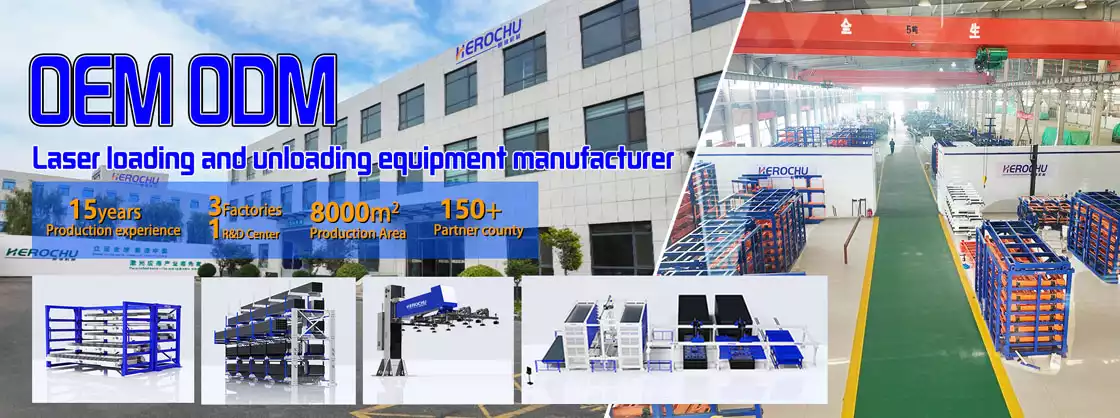
We are a direct manufacturer with over 15 years of industry experience and expertise.
Q3: Is there a minimum order quantity?
No. We welcome orders of any size, starting from a single unit.
Q4: How can I get detailed product information?
Click the “Get a Quote” button to receive product images, detailed specifications, and videos. Our team is always ready to assist.
Q5: How do I provide my storage rack requirements?
Simply share the type, dimensions, and quantity of materials you plan to store, along with any other specific needs. We will develop a professional storage solution for you. Alternatively, leave your contact details for a personalized consultation.
Q6: Do you offer automated loading systems or robotic arms?
Yes. We provide loading robotic arms and integrated loading/unloading systems tailored to your laser cutting machine’s table size and material handling method (e.g., board rack, exchange platform, or material warehouse). Contact us with your details for a customized proposal.
Q7: Do you provide on-site installation and debugging?
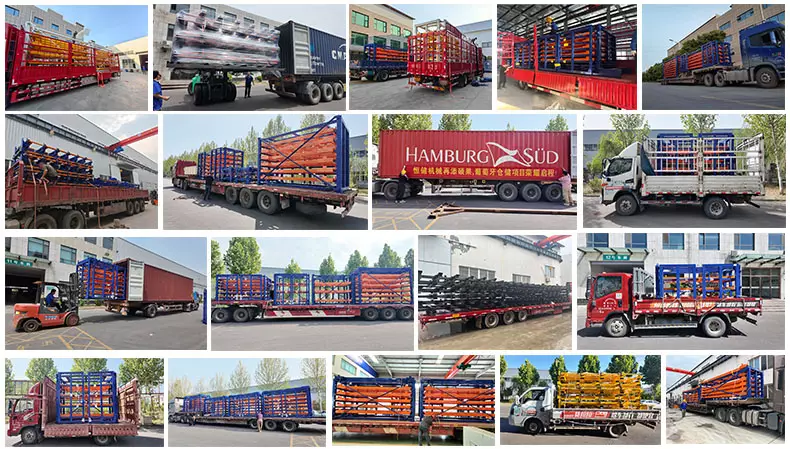
Yes. Our technicians can travel to your facility for installation and debugging, ensuring successful operation. We have served clients globally, including in the USA, South Korea, Russia, Qatar, Mexico, South Africa, Egypt, and Lebanon.
Q8: How do you ensure product quality?
Our quality assurance includes:
A team of over 40 technical engineers for professional debugging and support.
A dedicated quality control department compliant with ISO9001 standards.
CE certification for all exports.
Rigorous load testing before shipment to ensure structural safety and reliability.
Q9: Where is your factory located?
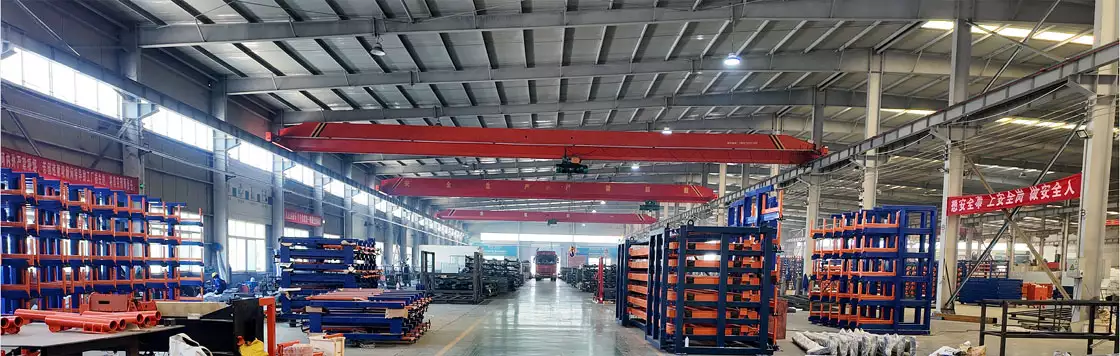
Our modern 10,000-square-meter manufacturing facility is located in Jiyang Industrial Park, Jinan, Shandong, China.
Q10: How can I evaluate your company’s capabilities?
We offer virtual video factory tours and warmly welcome on-site visits.
Q11: What does your company specialize in?
Jinan Constant Storage Machinery Manufacturing Co., Ltd. is a high-tech enterprise specializing in the R&D, production, sales, installation, and service of intelligent storage solutions. Our product range includes sheet material warehouses, drawer-style shelves, cantilever racks, servo manipulators, gantry loaders, and fully automated handling systems. Supported by a skilled technical team and advanced equipment, we are committed to delivering high-performance storage products and solutions to customers worldwide.
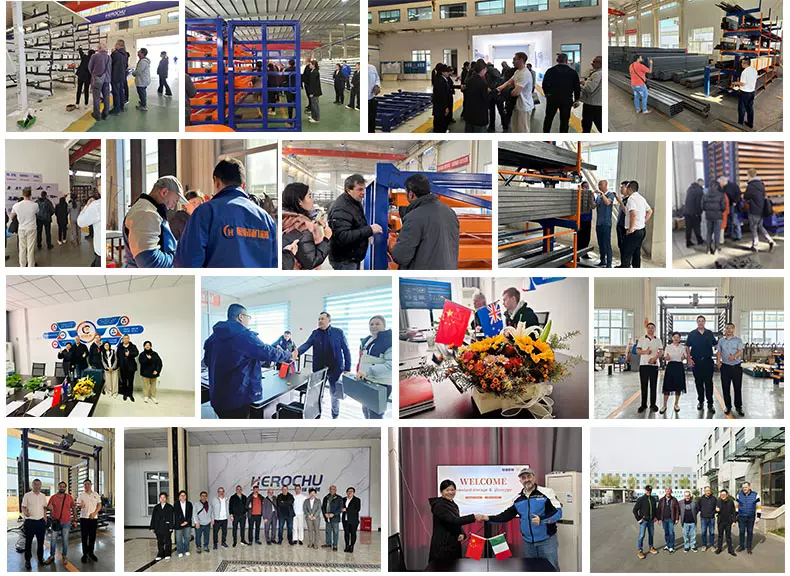
Customer visit
Herochu has always been adhering to the market-centric approach to meet customer requirements to the maximum extent, and the business philosophy of “creating brands with heart and gaining reputation with sincerity”. It provides customers with high-quality products and services with rigorous military quality, professionalism, and excellence, and has won unanimous praise in the Chinese aerospace, Chinese weapons, Chinese railways, automobile manufacturing, engineering machinery, non-ferrous metal titanium alloy and other industries.
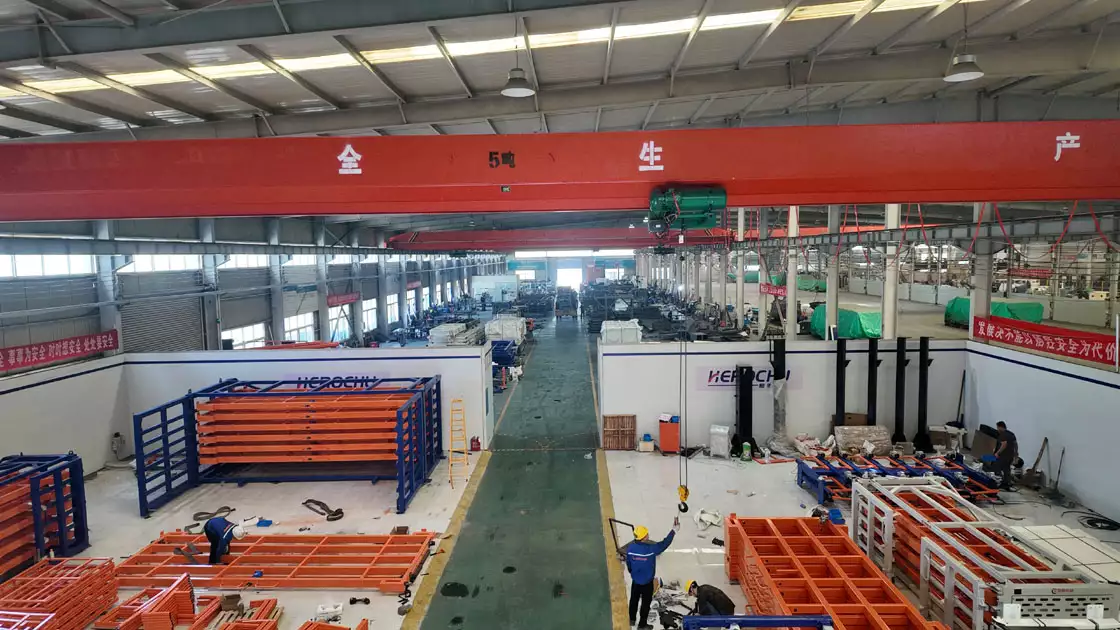
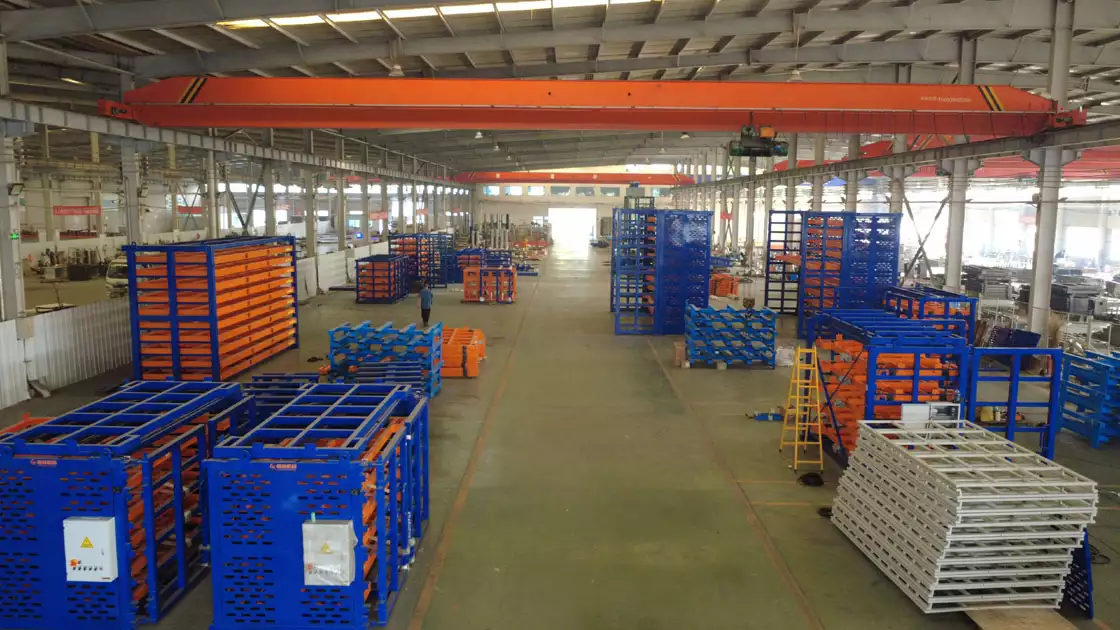
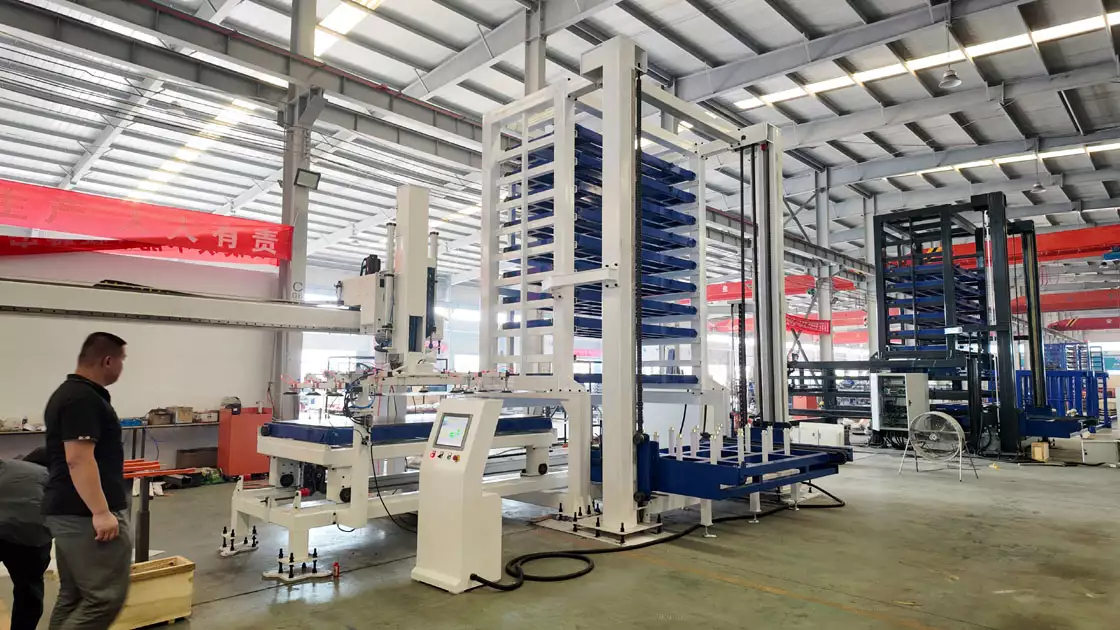
Factory

Hot Selling Machines
-
Vertical metal sheet racks
Heavy Duty Vertical Leftover Rack for Maximum Workshop Storage Efficiency
Read moreRated 0 out of 5 -
Vertical metal sheet racks
Vertical Rack for Leftover Metal Sheet Storage Stock Optimizing Workshop Efficiency
Read moreRated 0 out of 5 -
Vertical metal sheet racks
Manual Vertical Sheet Surplus Storage Rack for Industrial Material Management
Read moreRated 0 out of 5 -
Vertical metal sheet racks
Manual Pull-out Vertical Rack Storing Metal Sheet Remnants for Efficient Workshop Organization
Read moreRated 0 out of 5 -
Heavy Duty Electric Drawer Plate Rack
Heavy-Duty Electric Telescopic Steel Plate Rack
Read moreRated 0 out of 5 -
Motorized Sheet Metal Rack
Motorized Telescopic Rack for Heavy Steel Plate: Handling Multi-Ton Stock with Electric Precision
Read moreRated 0 out of 5
Related products
-
Pipe Storage Rack
Crank-Out Heavy Duty Pipe Cantilever Rack Warehouse Rack Storage
Read moreRated 0 out of 5
Product Categories