
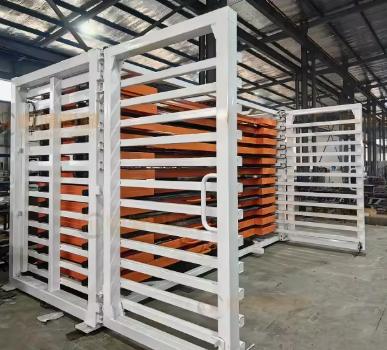
Heavy-Duty Electric Telescopic Steel Plate Rack
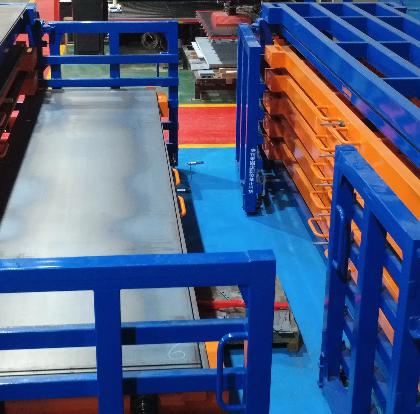
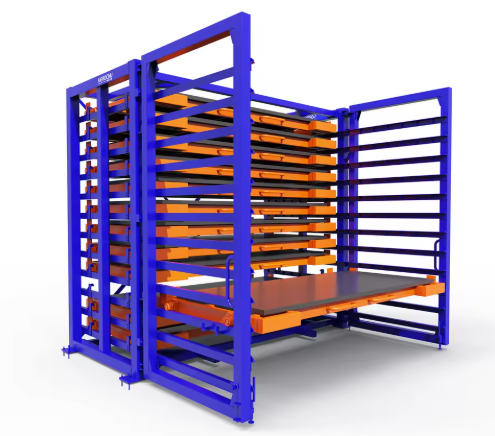
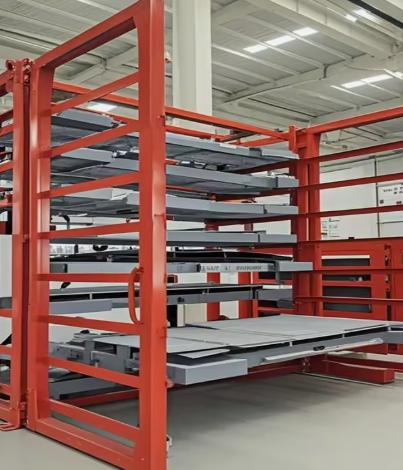
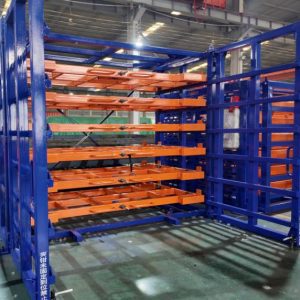
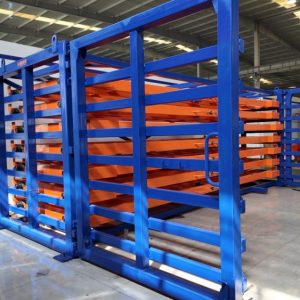
A storage rack that holds tens of tons of steel plate must earn its load rating through structural design, not marketing claims. Herochu’s heavy-duty electric telescopic steel plate rack is built on a Q235B dual-beam crossbar frame, validated through finite element analysis, and protected by a duplex zinc-plus-powder coating system. This article examines the engineering decisions that make the rack suitable for continuous industrial service with per-tier capacities from 3,000 kg to 20,000 kg.
Heavy-Duty Electric Telescopic Steel Plate Rack
A storage rack that holds tens of tons of steel plate must earn its load rating through structural design, not marketing claims. Herochu’s heavy-duty electric telescopic steel plate rack is built on a Q235B dual-beam crossbar frame, validated through finite element analysis, and protected by a duplex zinc-plus-powder coating system. This article examines the engineering decisions that make the rack suitable for continuous industrial service with per-tier capacities from 3,000 kg to 20,000 kg.
The Structural Frame: Q235B Steel and Why It Matters
Q235B is a Chinese national standard carbon structural steel with a minimum yield strength of 235 MPa and tensile strength ranging from 370 to 500 MPa. It is the workhorse structural grade for welded industrial frames—comparable to S235JR under the EN 10025 standard and ASTM A36 in the American system.
What distinguishes Q235B from lower grades like Q195 or Q215 is its controlled phosphorus and sulfur content, which improves weldability and reduces the risk of hot cracking during fabrication. Herochu selects Q235B for the primary load-bearing members precisely because every column-to-crossbeam joint is a full-penetration weld. The steel must tolerate the heat input without forming brittle phases in the heat-affected zone.
The frame columns are hollow structural sections with wall thickness selected for column buckling resistance rather than cross-sectional area alone. In a multi-tier rack, the columns carry the combined weight of every loaded tier above them. The lowest column segment sees the full stack load plus the eccentric moment introduced when upper tiers extend outward. Herochu’s structural analysis models this as a beam-column interaction problem, checking that the combined axial stress and bending stress stay within the allowable design stress defined by GB 50017 (the Chinese standard for steel structure design).
The crossbeams connect the columns using full-penetration butt welds with backing plates, ground flush and inspected by ultrasonic testing on critical joints. Bolted connections use grade 10.9 high-strength bolts in slip-critical joints where the connection must resist moment without allowing relative movement between the connected parts.
Dual-Beam Crossbar Configuration
The dual-beam crossbar design is the defining structural feature of this rack system. In a single-beam telescopic design, the extended tier and its payload generate a cantilever moment that the beam cross-section must resist entirely through its own bending stiffness. The required section depth for a single beam carrying 20,000 kg at full extension would be impractically large for a workshop environment.
The dual-beam approach divides the load across two parallel beams, each contributing to the overall bending resistance. The beams are tied together by the tier carriage assembly, which forces them to deflect as a unit. Under load, the upper beam experiences tension on its top flange and compression on its bottom flange across the support point—the opposite of simple bending in a single cantilever. This load-sharing mechanism allows each beam to use a more compact cross-section, which reduces the overall rack depth and leaves more aisle space between rack rows.
The beams themselves are fabricated box sections with internal stiffener plates at bearing points and at the pinion engagement zone. The stiffeners prevent local web buckling—a failure mode where the thin web plate buckles under concentrated load even though the overall beam is still within its global bending capacity. Each stiffener is welded on three sides (both flanges and one web face) and left free on the fourth side to avoid creating a closed cell that would trap moisture during the galvanizing process.
The Telescopic Mechanism: Rack-and-Pinion Drive
Extension and retraction of each tier is powered by a rack-and-pinion drive, selected over chain or belt alternatives for its positional accuracy and zero-slip engagement. The rack gear profile is machined as an integral feature of the tier beam’s underside, which eliminates the bolted-joint failure mode that plagues segmented rack assemblies under cyclic loading.
The pinion is case-hardened alloy steel with ground tooth flanks. Tooth contact is lubricated by an automatic grease dispensing system that meters a small quantity of lithium-complex grease onto the rack at programmable intervals. The grease system uses a positive-displacement pump driven by the tier extension cycle counter, so lubrication frequency scales with actual usage rather than calendar time.
The motor and gearbox assembly mounts on the fixed frame, not on the moving tier. This simplifies cable management—the motor power and control cables never flex—and reduces the mass that the linear bearings must accelerate and decelerate. The gearbox is a planetary reduction unit with a hardened output shaft coupled to the pinion through a keyed taper-lock bushing. The taper-lock provides zero-backlash torque transmission and can be disassembled with standard tools for pinion replacement without disturbing the motor alignment.
Linear bearings guide the tier along hardened and ground steel rails. Each bearing carriage contains recirculating ball circuits with wiper seals at both ends to exclude contamination. The rails are mounted on machined pads welded to the frame crossbeams, shimmed to within 0.5 mm of parallel across the full travel length. Misalignment beyond this tolerance would increase bearing rolling resistance and accelerate wear on both the bearings and the rack gear.
Load Distribution and Tier Design
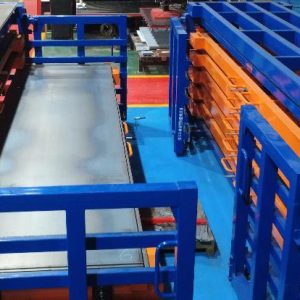
Each storage tier is a welded steel platform with longitudinal beams running the full depth of the rack and cross-members at regular intervals. The cross-member spacing is set so that the shortest sheet the customer expects to store bridges at least three support points—a rule that prevents a short sheet from tilting into the gap between cross-members if placed off-center.
The deck surface uses replaceable wear strips made from ultra-high-molecular-weight polyethylene (UHMWPE) or rubber, specified by material type. UHMWPE suits abrasive sheet surfaces like hot-rolled steel with mill scale, while rubber suits sensitive finishes like brushed stainless or pre-painted aluminum. The strips are fastened with countersunk screws into threaded inserts welded to the cross-members, allowing replacement without disassembling the tier.
Below the deck, the tier frame incorporates diagonal bracing that forms a truss in the horizontal plane. This bracing resists the torsional load introduced when a sheet is placed closer to one side of the tier than the other—a common occurrence when operators load sheets manually with a crane rather than using a centering fixture. Without bracing, the torsional deflection would misalign the linear bearings and increase extension force.
Load capacity is rated per tier as a uniformly distributed load. The rating assumes the sheet weight is centered within the tier footprint with a tolerance of ±10% of the platform dimension. If a customer’s loading pattern consistently places weight toward one edge—for example, when loading sheets from a single-sided aisle—Herochu can reinforce the eccentric side with additional bearing carriages to handle the unbalanced moment.
Zinc-Coated Surface Protection
Corrosion protection on a storage rack operates on two levels: preserving structural integrity and preventing iron contamination of stored material. Bare steel racks rust, and rust particles transfer to sheet surfaces during loading and unloading. On stainless steel, iron contamination initiates pitting corrosion at the particle sites. On aluminum, it creates galvanic cells that etch the surface.
Herochu applies a duplex coating system. The primary layer is hot-dip zinc, applied by immersing the fabricated and blasted steel members in a bath of molten zinc at approximately 450°C. The zinc metallurgically bonds to the steel substrate, forming intermetallic alloy layers topped with a pure zinc outer layer. The coating thickness averages 85 microns on sections up to 6 mm wall thickness, meeting the requirements of ISO 1461 for structural steelwork.
The secondary layer is a thermosetting polyester powder coating applied electrostatically and cured at 200°C. The powder flows into the surface roughness of the zinc layer, creating a mechanical bond that resists peeling better than paint on smooth galvanizing. The powder coating is available in standard RAL colors and provides the UV resistance that zinc alone lacks—important for racks installed near open bay doors where sunlight reaches the structure.
Between the two layers, a chromate-free conversion coating passivates the zinc surface and improves powder adhesion. The entire system is tested to C3 corrosion class per ISO 12944, suitable for urban and industrial atmospheres with moderate humidity.
Customization and Configuration Options
The rack is not an off-the-shelf product with fixed dimensions. Herochu configures each system based on the customer’s sheet inventory profile, available floor plan, crane lifting height, and material flow patterns.
Tier spacing can be set in 25 mm increments. A workshop that stores primarily 50 mm thick plates wastes vertical space with standard 200 mm tier clearance; a shop running mostly 6 mm sheets needs the full 200 mm for lifter access. Custom spacing ensures the rack packs the maximum number of usable tiers into the available height.
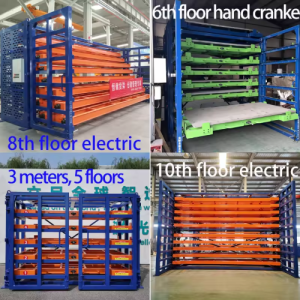
The number of tiers is similarly flexible. The HC-B3015E-63 model reference lists six tiers as a common configuration, but the column height can be extended or reduced to fit ceiling constraints. The structural analysis is recalculated for each custom configuration, verifying that the additional column height does not push the slenderness ratio beyond the allowable limit.
Color-coding by material type is a popular option. A rack dedicated to aluminum storage might receive a blue powder coat; stainless steel storage might use green. The visual cue helps crane operators confirm they are at the correct rack bay before extending a tier, reducing the rare but costly error of loading the wrong alloy into a tier and contaminating a batch.
The pendant control can be upgraded to a wireless remote, eliminating the tethered cable and allowing the operator to position for optimal sight lines regardless of the rack’s location in the shop. The wireless system operates on a license-free ISM band with frequency-hopping spread spectrum to reject interference from welding equipment and variable-frequency drives.
Integration with Quality Management Systems
For facilities certified to ISO 9001 or AS9100 (aerospace), material traceability is not optional. Herochu supports this requirement with barcode-labeled tier locations and an optional digital inventory management module.
Each tier receives a unique identification tag with a barcode and human-readable number. The tag material is anodized aluminum with laser-etched markings, resistant to solvents, cutting fluid, and UV exposure. When a sheet is loaded into a tier, the operator scans the tier tag and the incoming material certificate barcode, linking them in the inventory database. When a work order calls for a specific heat number or lot, the database returns the tier location, and the operator extends that tier directly.
The inventory module can export data in CSV or XML format for import into the facility’s ERP system. It does not attempt to replace the ERP—it serves as the rack-level data collection layer that feeds accurate, scan-verified location data into the higher-level system. This division of responsibility avoids the common failure mode where an ERP inventory module shows material as “in stock” but nobody knows where it is physically located.
Summary
Herochu’s heavy-duty electric telescopic steel plate rack earns its load ratings through deliberate structural engineering: Q235B steel frame members, dual-beam crossbar moment distribution, integral rack-and-pinion drive systems, and duplex corrosion protection. Every tier is verified by analysis, load-tested at 125% of rating, and supported by safety systems that engage mechanically—not through software interlocks that depend on sensors and logic controllers. For workshops that store heavy plate in production volumes, the rack delivers classified, protected, and instantly accessible storage that integrates with both material handling equipment and quality management workflows.
FAQ
Here are some frequently asked questions about our sheet metal racks and pipe storage solutions. We hope you find them helpful!
Q1: Can I request a custom size or color?
Absolutely. We offer complimentary design services and deliver efficient, tailored solutions to meet your specific requirements.
Q2: Are you a manufacturer or a distributor?
We are a direct manufacturer with over 15 years of industry experience and expertise.
Q3: Is there a minimum order quantity?
No. We welcome orders of any size, starting from a single unit.
Q4: How can I get detailed product information?
Click the “Get a Quote” button to receive product images, detailed specifications, and videos. Our team is always ready to assist.
Q5: How do I provide my storage rack requirements?
Simply share the type, dimensions, and quantity of materials you plan to store, along with any other specific needs. We will develop a professional storage solution for you. Alternatively, leave your contact details for a personalized consultation.
Q6: Do you offer automated loading systems or robotic arms?
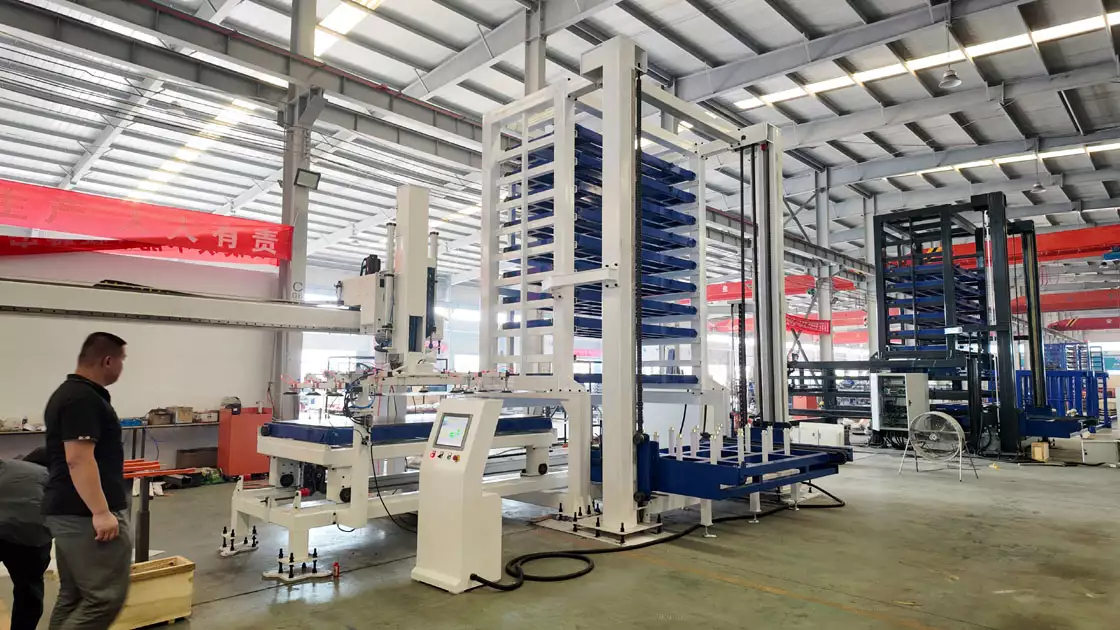
Yes. We provide loading robotic arms and integrated loading/unloading systems tailored to your laser cutting machine’s table size and material handling method (e.g., board rack, exchange platform, or material warehouse). Contact us with your details for a customized proposal.
Q7: Do you provide on-site installation and debugging?
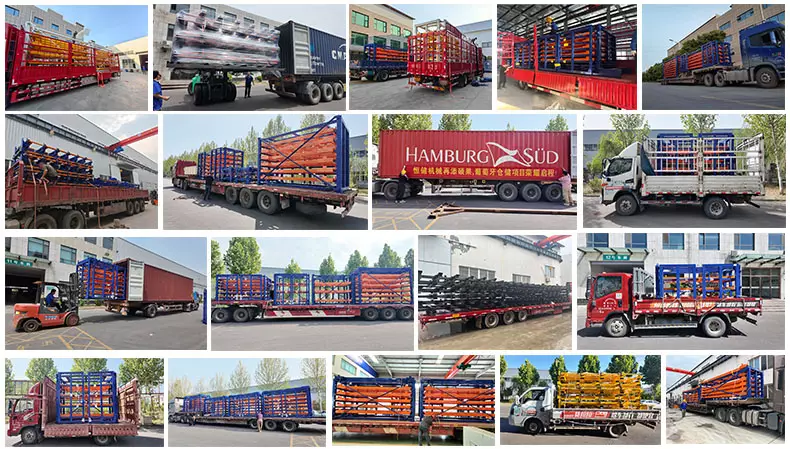
Yes. Our technicians can travel to your facility for installation and debugging, ensuring successful operation. We have served clients globally, including in the USA, South Korea, Russia, Qatar, Mexico, South Africa, Egypt, and Lebanon.
Q8: How do you ensure product quality?
Our quality assurance includes:
A team of over 40 technical engineers for professional debugging and support.
A dedicated quality control department compliant with ISO9001 standards.
CE certification for all exports.
Rigorous load testing before shipment to ensure structural safety and reliability.
Q9: Where is your factory located?
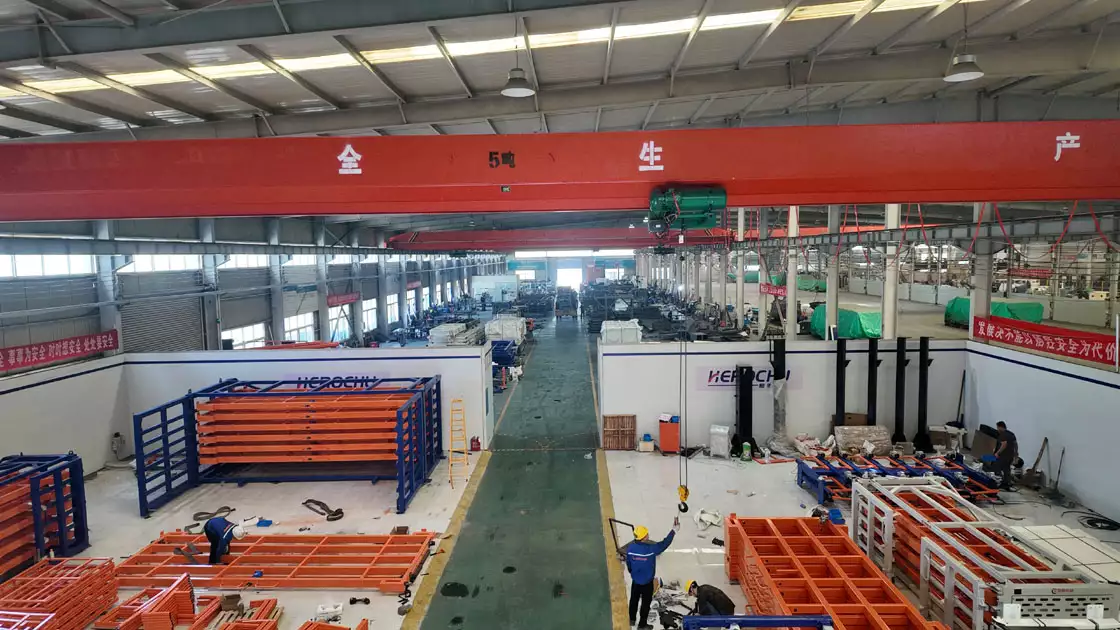
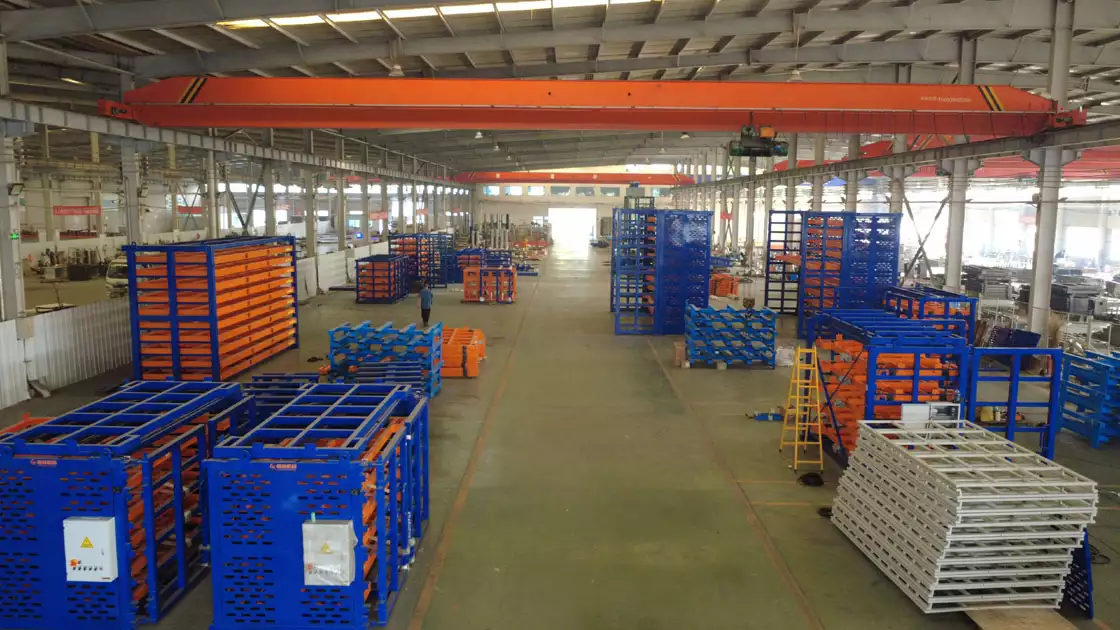
Our modern 10,000-square-meter manufacturing facility is located in Jiyang Industrial Park, Jinan, Shandong, China.
Q10: How can I evaluate your company’s capabilities?
We offer virtual video factory tours and warmly welcome on-site visits.
Q11: What does your company specialize in?
Jinan Constant Storage Machinery Manufacturing Co., Ltd. is a high-tech enterprise specializing in the R&D, production, sales, installation, and service of intelligent storage solutions. Our product range includes sheet material warehouses, drawer-style shelves, cantilever racks, servo manipulators, gantry loaders, and fully automated handling systems. Supported by a skilled technical team and advanced equipment, we are committed to delivering high-performance storage products and solutions to customers worldwide.
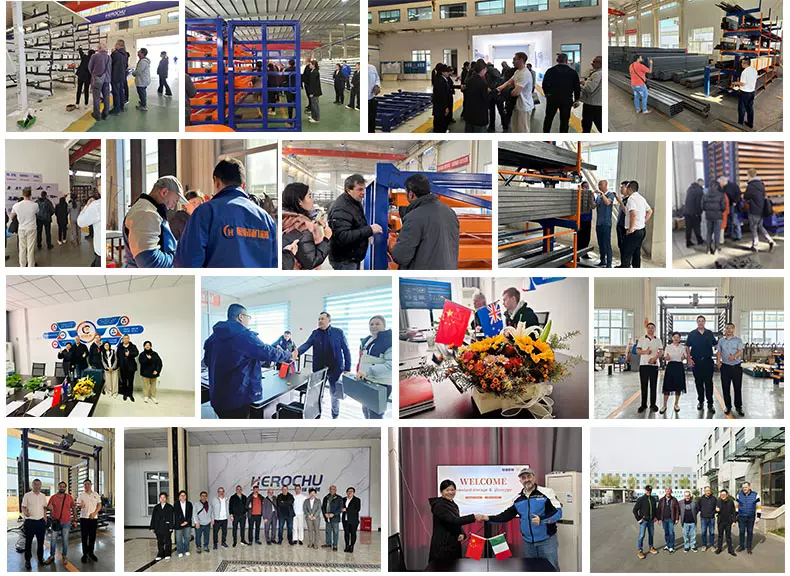
Customer visit
Herochu has always been adhering to the market-centric approach to meet customer requirements to the maximum extent, and the business philosophy of “creating brands with heart and gaining reputation with sincerity”. It provides customers with high-quality products and services with rigorous military quality, professionalism, and excellence, and has won unanimous praise in the Chinese aerospace, Chinese weapons, Chinese railways, automobile manufacturing, engineering machinery, non-ferrous metal titanium alloy and other industries.
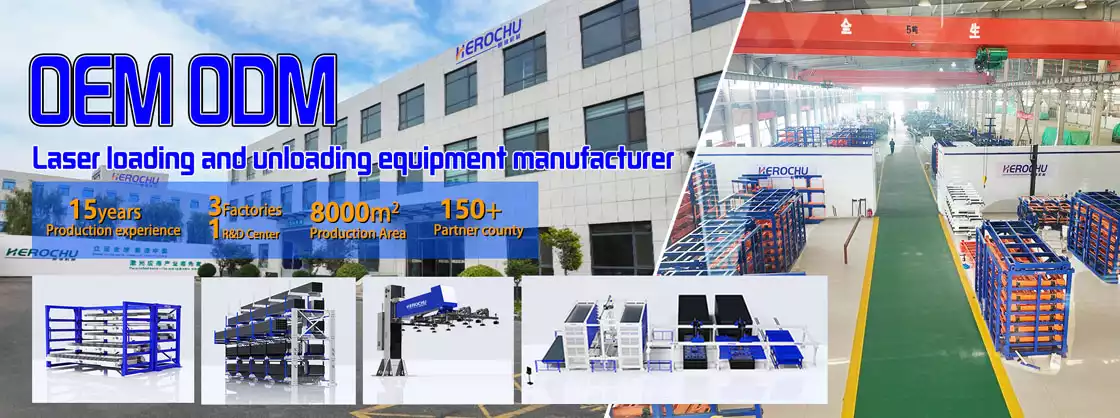
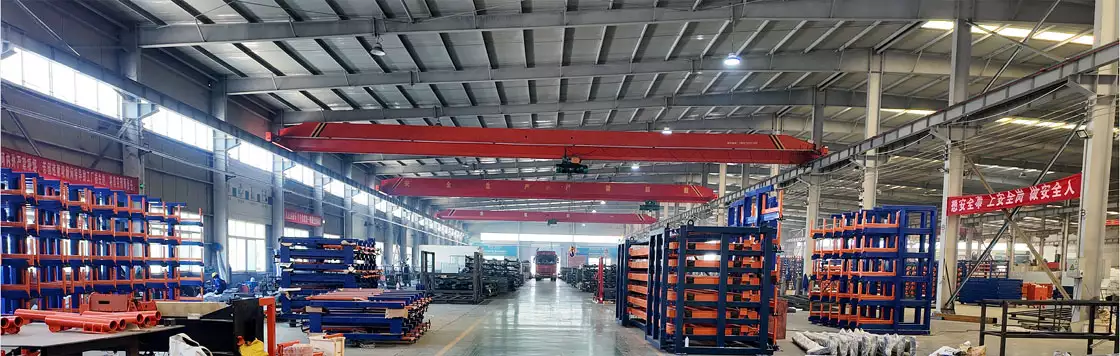
Factory

Hot Selling Machines
-
Heavy Duty Electric Drawer Plate Rack
Heavy-Duty Electric Telescopic Steel Plate Rack
Read moreRated 0 out of 5 -
Motorized Sheet Metal Rack
Motorized Telescopic Rack for Heavy Steel Plate: Handling Multi-Ton Stock with Electric Precision
Read moreRated 0 out of 5 -
Motorized Sheet Metal Rack
Electric Telescopic Heavy-Duty Rack for Sheet Metal Storage
Read moreRated 0 out of 5 -
Automatic Sheet Metal Storage System
Intelligent Fully Automatic Steel Plate Storage Library – The Smart Core of Modern Steel Processing
Read moreRated 0 out of 5 -
Automatic Sheet Metal Storage System
Automatic Classified Storage Tower for Metal Sheets – Intelligent Vertical Storage with Precision Inventory Control
Read moreRated 0 out of 5 -
Automatic Sheet Metal Storage System
Fully Automatic Sheet Material Storage Warehouse
Read moreRated 0 out of 5 -
Automation Sheet Metal Material Warehouse
Automatic Sheet Metal Storage & Retrieval System (AS/RS)
Read moreRated 0 out of 5
Related products
-
Sheet Metal Handling Equipment
Laser Cutting Machine Loading And Unloading Manipulator
Read moreRated 0 out of 5 -
Gantry Loading and Unloading Manipulator
Sheet metal material handling equipment
Read moreRated 0 out of 5 -
Pneumatic Manipulator
Pneumatic cantilever loading manipulator-Sheet Metal Handling Equipment
Read moreRated 0 out of 5
Product Categories