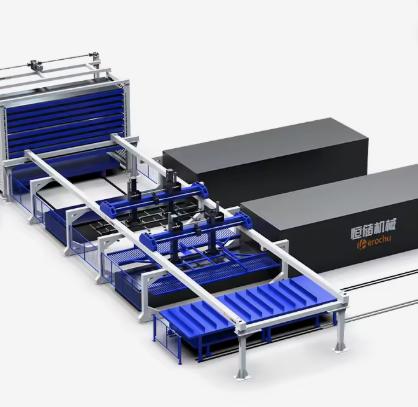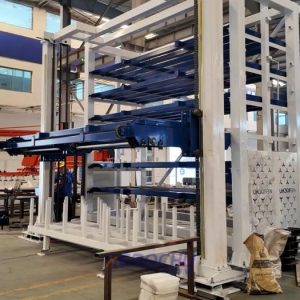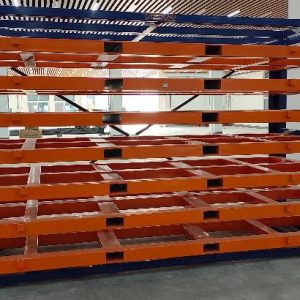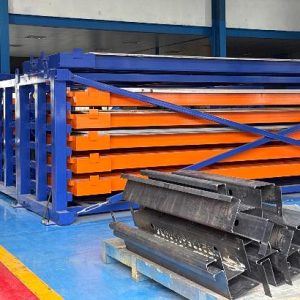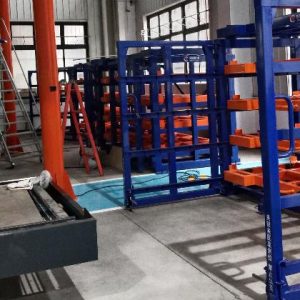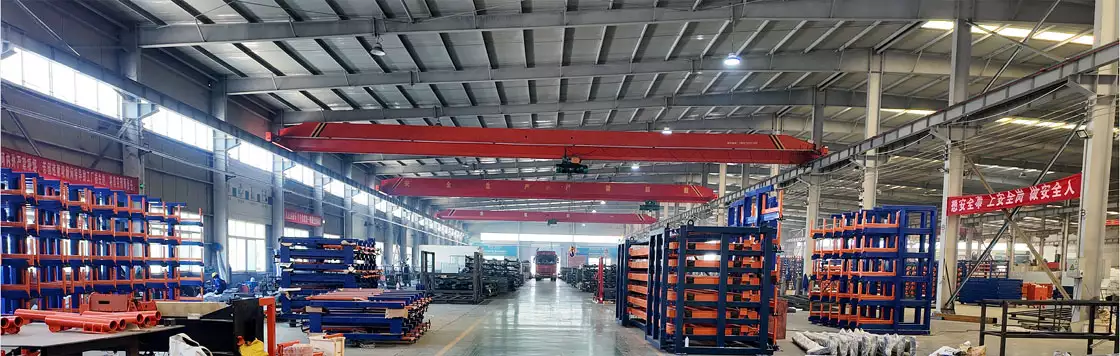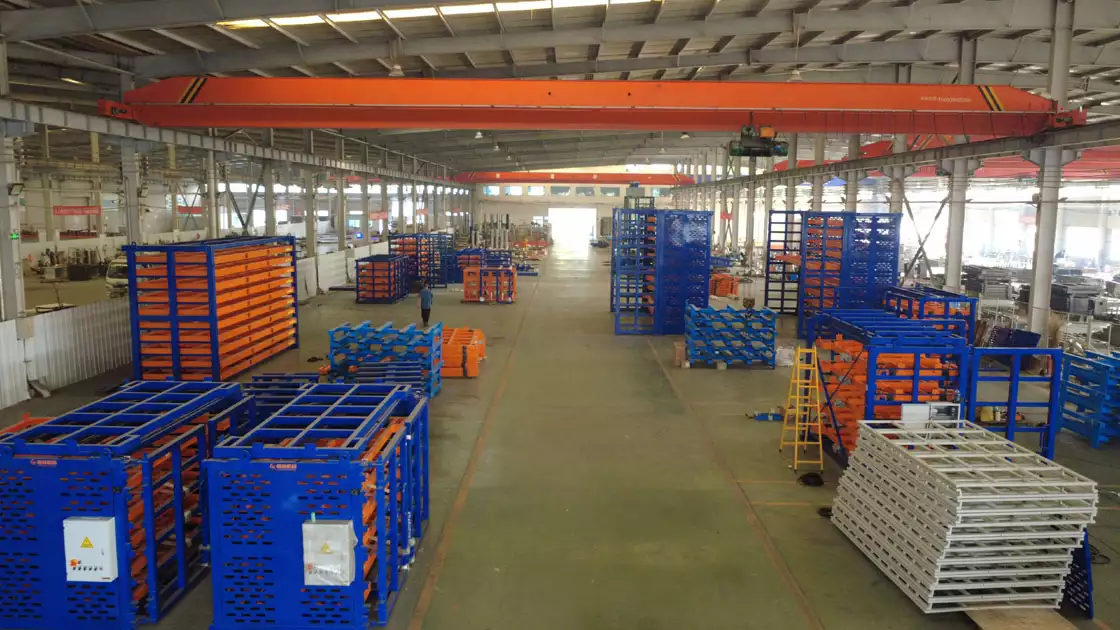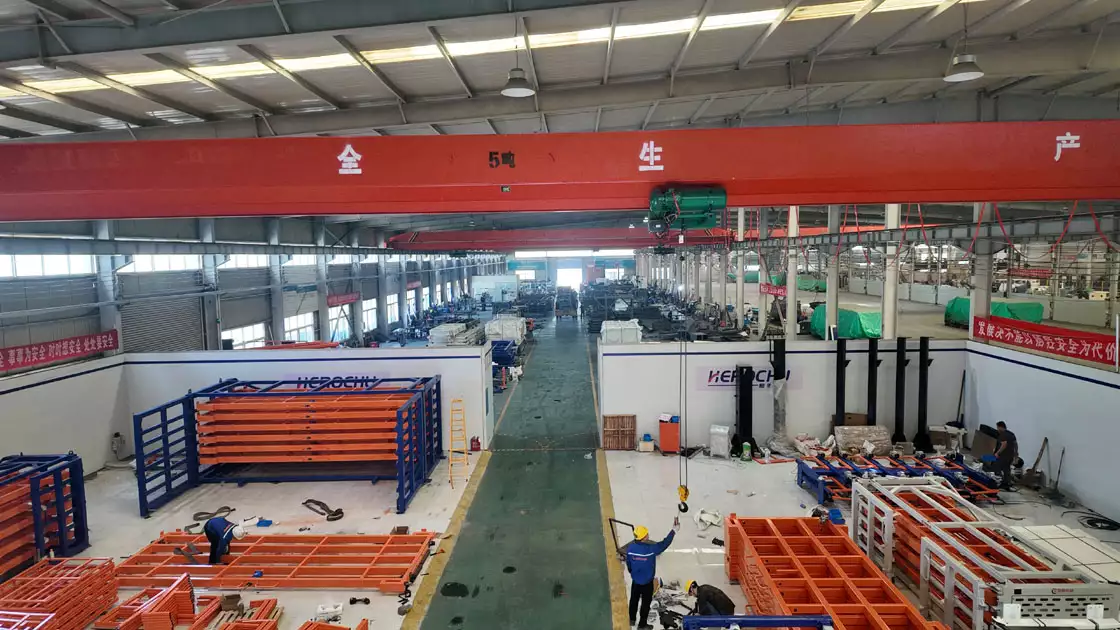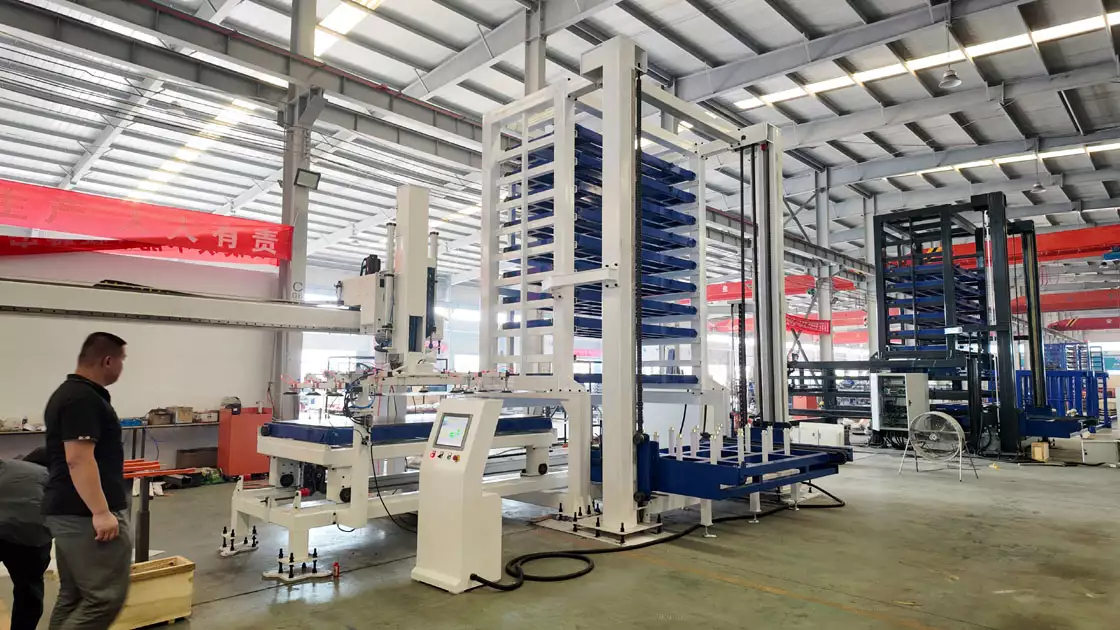
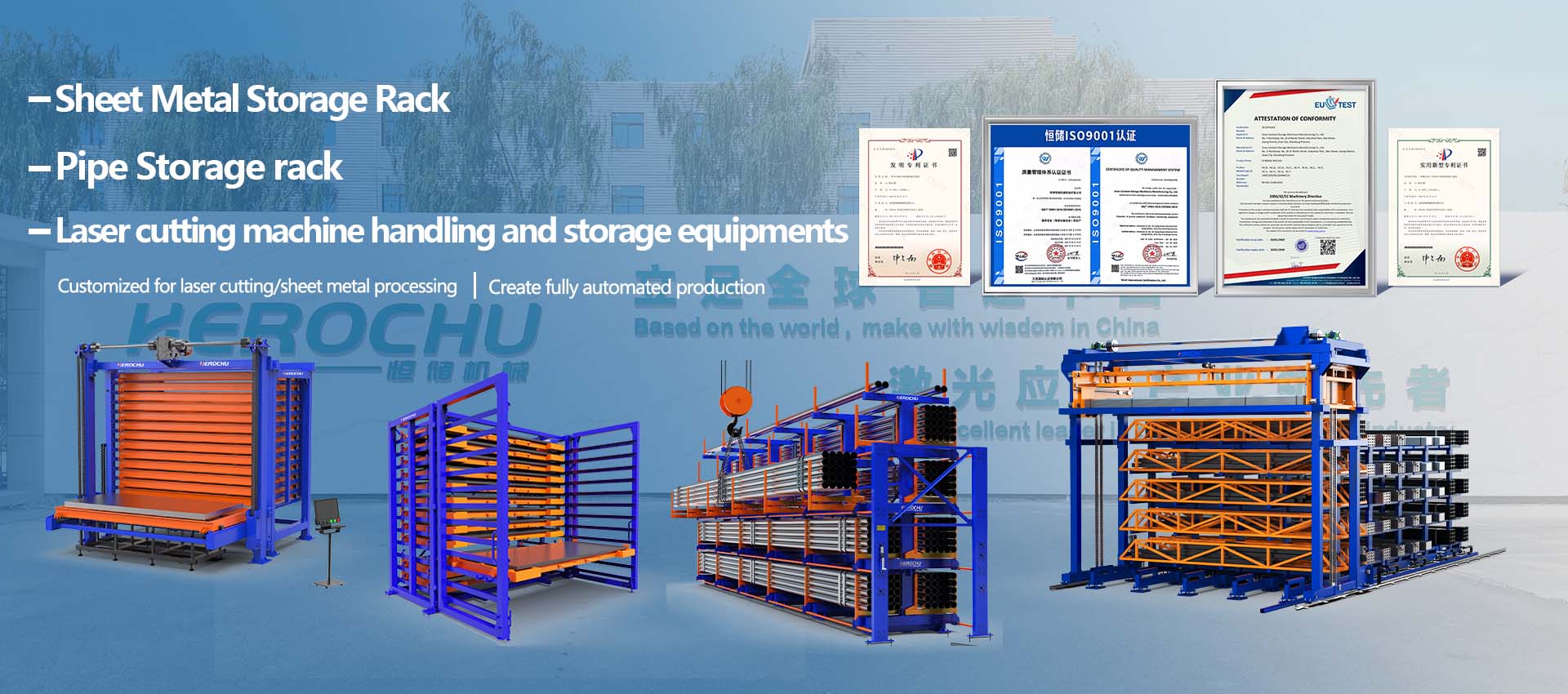
Steel service centers and heavy fabrication facilities face a storage challenge that conventional racking never adequately addresses: the need to handle both flat sheet stock and coiled material within a single warehouse management workflow. These two formats demand fundamentally different support geometries, and most facilities respond by dedicating separate zones to each—one bay of flat racking for plate, another for coil saddles, and a fleet of overhead cranes shuttling between them. The material handling labor, floor space consumption, and operational fragmentation that result from this split-format approach erode margins in an industry where every dollar per square meter counts. Herochu’s Vertical Lift ASRS for Steel Plate and Panel eliminates the format barrier by combining interchangeable storage cassettes, a dual-mode manipulator, and high-bay vertical architecture into a unified automated warehouse cell.
Hybrid Cassette Design for Dual-Format Storage
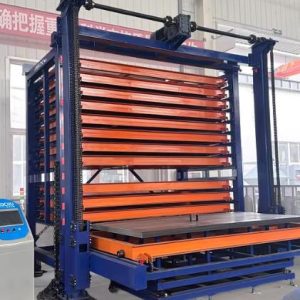
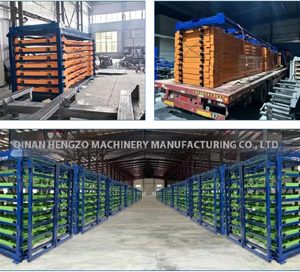
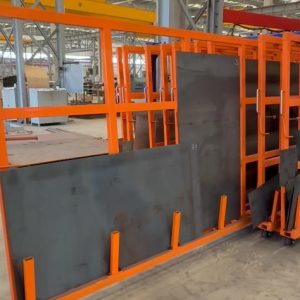
The core innovation enabling mixed-format storage is the interchangeable cassette system. For flat sheet storage, Herochu supplies heavy-duty flat deck cassettes constructed from welded Q235B structural channel with reinforced cross members spaced to prevent plate sag over extended storage periods. These cassettes accept standard sheet dimensions from 3,000 mm by 1,500 mm up to 6,000 mm by 2,000 mm, covering the range from the HC-S3015-63 through the HC-S6020-105 model variants.
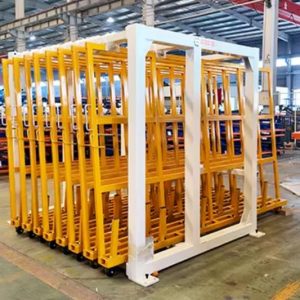
For coil storage, the system deploys 120-degree self-centering steel saddles that cradle cylindrical coil stock without the need for wooden dunnage, chains, or manual blocking. The saddle’s included angle is derived from the geometry of standard hot-rolled coil outer diameters ranging from 900 mm to 2,100 mm, providing stable three-point contact regardless of coil diameter within the design range. Each saddle cassette is structurally independent, meaning the facility can reconfigure the ratio of sheet-to-coil positions by physically swapping cassettes during a scheduled maintenance window rather than committing to a fixed format allocation at installation.
Dual-Mode Gantry Manipulator
Material transfer between cassettes and the loading station is performed by an overhead gantry manipulator equipped with a quick-change utility head. For sheet handling, the manipulator deploys a zoned vacuum matrix gripper—the same architecture used across Herochu’s sheet-specific systems—with individually addressable suction cup zones and integrated double-sheet detection. For coil handling, the manipulator swaps to a pair of telescoping C-hooks that extend into the coil eye and lift from the inner diameter.
The head change sequence is executed automatically by the gantry controller without operator intervention. The manipulator carriage moves to a tool-change docking station positioned at one end of the gantry runway, releases the active head onto a registered cradle, indexes to the alternate head, and engages the mechanical and pneumatic couplings. Locking pins driven by pneumatic cylinders provide positive retention, and proximity sensors on each coupling confirm full engagement before the PLC authorizes the next lift cycle. The complete swap takes under 60 seconds from command to confirmation.
This dual-mode capability removes the need for a dedicated coil-handling crane and its associated operator. A facility that previously required a crane operator on every shift to move coils between storage and the slitting or cut-to-length line can now execute those transfers through the same automated system that services its laser and plasma cutting cells.
High-Bay Vertical Architecture and Space Economics
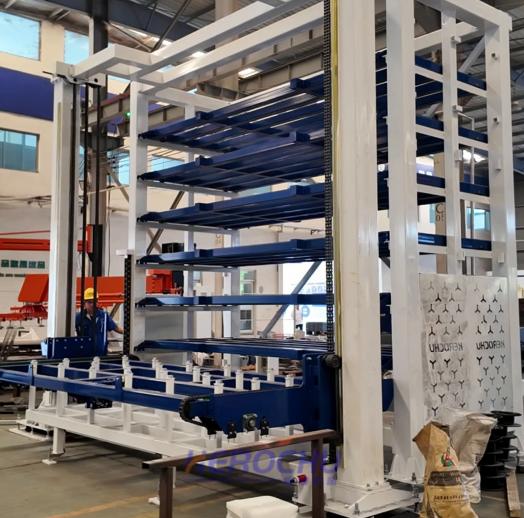
The Herochu ASRS exploits factory ceiling height to multiply storage density without expanding the building footprint. A standard installation reaches 15 meters in height with rack-supported construction that uses the storage frame itself as the primary structure, eliminating the cost and space consumption of a separate building column grid within the ASRS aisle.
The floor area comparison illustrates the density gain. Traditional ground-level storage for a mixed inventory of 800 to 1,000 tonnes of plate and coil might occupy 800 square meters of factory floor organized in drive lanes and crane access aisles. The Herochu Vertical Lift ASRS delivers the same inventory capacity within a 180-square-meter footprint—a 77 percent reduction in floor space consumption. At industrial lease rates in manufacturing hubs, this square footage recovery translates into a direct operating cost reduction that pays back the capital investment in the ASRS within 24 to 36 months before accounting for labor savings.
Aisle width within the ASRS is held to the minimum required for gantry manipulator travel plus the thickness of the stored material, with no allowance needed for forklift turning radii or pedestrian walkways. The enclosed cell design also eliminates the physical hazards associated with coil storage at floor level, where a dislodged coil represents a fatal crush risk to personnel working in adjacent areas. All material movement occurs within the gated, interlocked ASRS cell with no human access during automated operation.
Control System and Inventory Management
The Herochu ASRS control architecture builds on the same PLC and touchscreen HMI platform used across the company’s automation product line, providing a common operator interface regardless of which Herochu system a facility deploys. The HMI displays a real-time rack map showing occupied and vacant cassette positions, material grade and dimension data for each stored item, and live weight readings from cassette-level load cells.
Inventory transactions are timestamped and logged to the system database, with automatic synchronization to the factory ERP through standard industrial communication protocols. When the ERP issues a production order calling for a specific material grade and gauge, the ASRS controller identifies all eligible stock locations, selects the retrieval sequence that minimizes gantry travel distance, and executes the pick. The system can also enforce first-in-first-out inventory rotation automatically—a requirement for steel service centers that charge storage fees and must track material age for billing purposes.
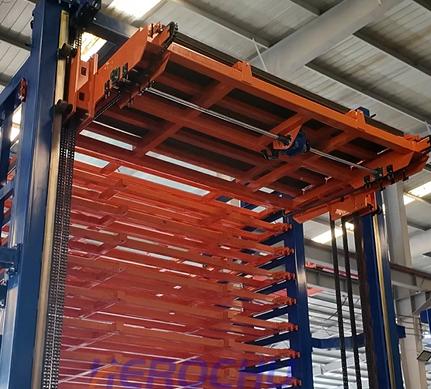
At the loading station, the ASRS integrates with existing material handling equipment including forklifts and overhead cranes. The loading bay features open front access with removable guarding that allows an operator to deposit incoming pallets or coils at the designated load position. Once the operator clears the loading zone and confirms through the HMI, the gantry takes over and transfers the material into an assigned storage location.
Structural Safety and Load Verification
Each cassette position in the Herochu ASRS is instrumented with strain-gauge load cells calibrated at installation and verified during scheduled preventive maintenance. The PLC monitors real-time weight at every position and compares it against the cassette’s rated capacity. If a cassette exceeds its design load—whether through over-stacking, water absorption in stored material, or a data entry error in the inventory record—the system locks out retrieval at that position and generates an alarm on the HMI.
The rack structure itself undergoes full-load deflection testing during factory acceptance, with dial indicators positioned at mid-span on the longest unsupported beams. Deflection under 125 percent of rated load must remain within L/1000 of the span, where L is the beam length between supports. This is a more stringent criterion than typical warehouse racking standards and reflects the precision positioning requirements of an automated retrieval system where a sagging beam can cause the manipulator to miss its target location by millimeters that accumulate into a collision.