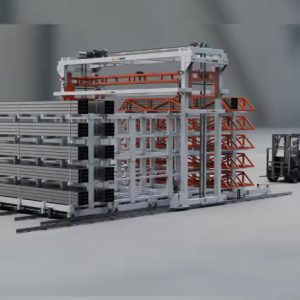
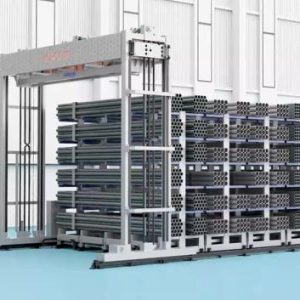
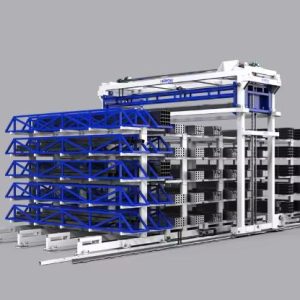
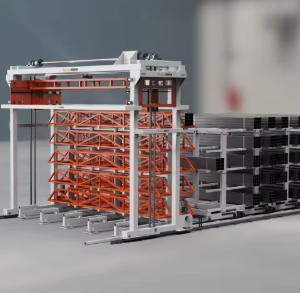
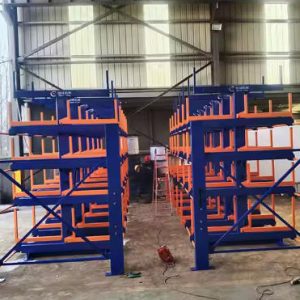
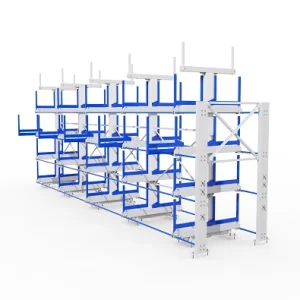
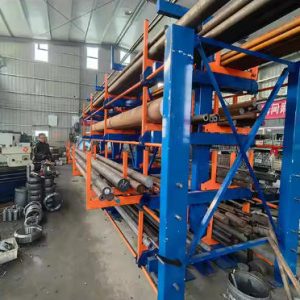
Auto-Classified Industrial Profile Storage System by Herochu: Precision Classification for 500 Tonnes of Mixed Profiles
Profile storage presents a unique challenge that generic pallet racks or cantilever systems cannot solve effectively. Unlike uniform palletized goods, industrial profiles – including I-beams, channels, angles, square tubes, rectangular hollow sections, aluminum extrusions, and specialty shapes – vary dramatically in cross-section, weight per meter, surface finish sensitivity, and length. A storage solution that handles a 200mm steel H-beam must also accommodate a delicate anodized aluminum extrusion without surface damage. Furthermore, classification matters. Production lines require the right profile, in the right grade, delivered in the right sequence.
Auto-Classified Industrial Profile Storage System by Herochu: Precision Classification for 500 Tonnes of Mixed Profiles
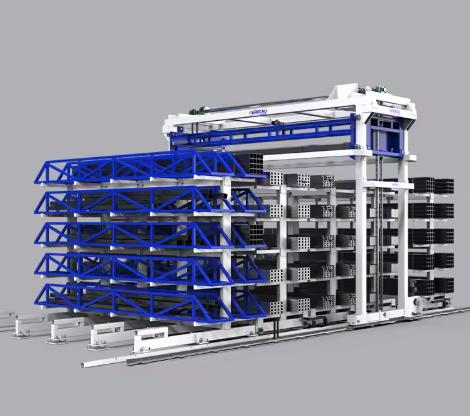
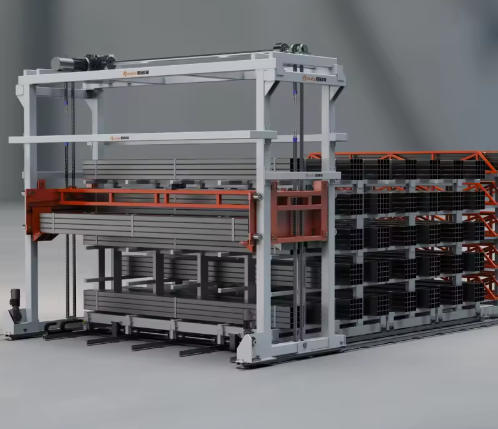
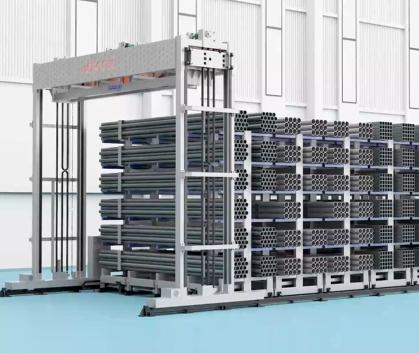
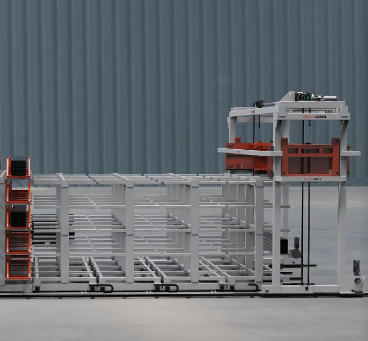
Profilestorage presents a unique challenge that generic pallet racks or cantilever systems cannot solve effectively. Unlike uniform palletized goods, industrialprofiles – including I-beams, channels, angles, square tubes, rectangular hollow sections, aluminum extrusions, and specialty shapes – vary dramatically in cross-section, weight per meter, surface finish sensitivity, and length. A storage solution that handles a 200mm steel H-beam must also accommodate a delicate anodized aluminum extrusion without surface damage. Furthermore, classification matters. Production lines require the right profile, in the right grade, delivered in the right sequence. Herochu has engineered an auto-classifiedindustrial profilestorage system that integrates high-densityvertical storage with automated retrieval and, critically, automatic classification logic.
The Classification Imperative
In traditional profile warehouses, classification is a manual, error-prone activity. Workers visually inspect incoming profiles, record dimensions on paper or tablets, and then direct forklift operators to place the material in a designated racking area. Over time, as profiles are consumed and new stock arrives, the mental map of “where things are” degrades. Misplaced profiles lead to search time, production delays, and occasionally the costly error of retrieving the wrong alloy or wall thickness. Herochu eliminates this variability by embedding classification directly into the storage system’s operational logic.
The auto-classified industrial profile storage system begins with an entry station equipped with dimensional sensors. As a profile enters the system – whether delivered by overhead crane, roller conveyor, or fork truck – laser-based measurement systems capture critical parameters: length, width, height (for rectangular profiles), flange width (for I-beams), and web thickness. Optical sensors identify surface characteristics that differentiate between, for example, black steel pipe and galvanized or stainless steel. For aluminum extrusions, the system can be integrated with barcode or QR code labels applied at the extrusion press, linking each profile to its alloy temper, heat lot, and anodizing batch.
Based on these measurements and any pre-existing identifiers, the Herochu control software assigns the profile to an optimal storage location. The assignment algorithm considers multiple factors. Weight distribution ensures that heavier profiles are stored on lower levels close to the floor, maintaining the system’s center of gravity within safe limits. Length compatibility groups profiles of similar length together, minimizing gantry travel distances. Retrieval frequency places high-turnover profiles near the input/output station for rapid access. Surface sensitivity separates bare aluminum from steel profiles to prevent galvanic corrosion or scratching from contact.
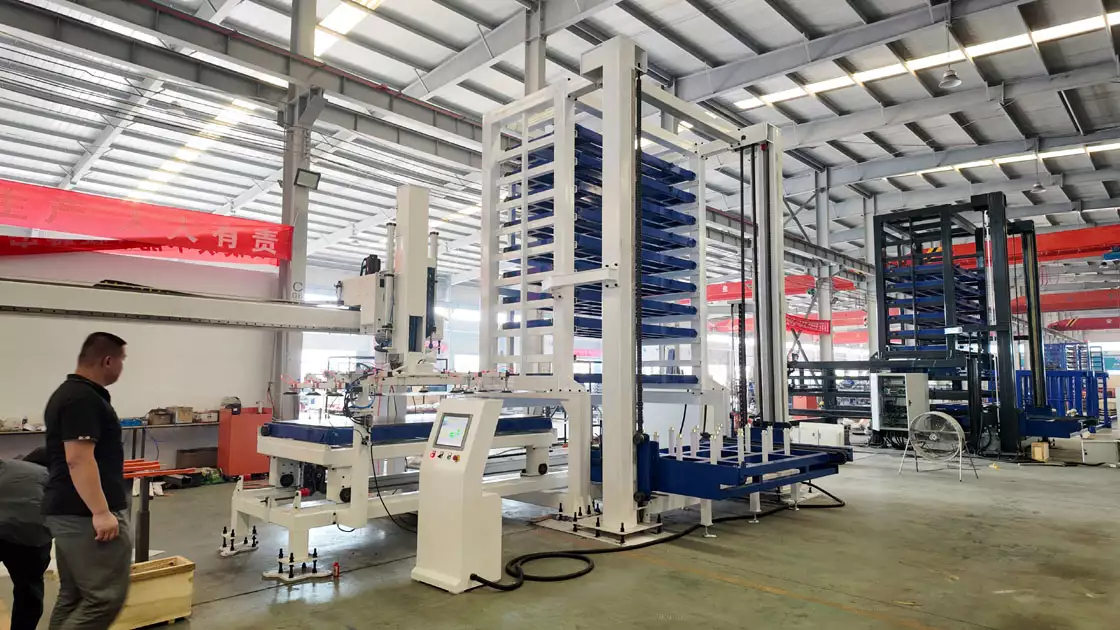
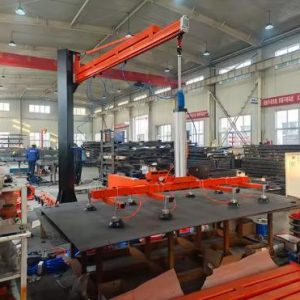
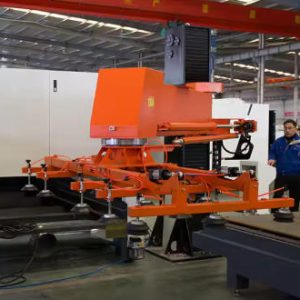
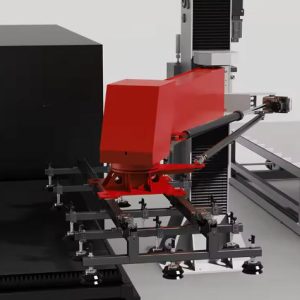
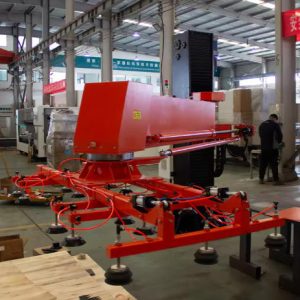
The enabling hardware for this classification capability is the same precise gantry robot described for pipe storage, but with enhanced end-effector versatility. Profiles, particularly aluminum extrusions or finished steel sections with primer coatings, require gentle handling. The Herochu gantry utilizes configurable grippers – vacuum lifters for smooth surfaces, soft-touch clamps with urethane pads for sensitive finishes, and electromagnetic lifters for ferrous profiles. The system automatically selects the appropriate gripping method based on the profile’s classification data.
Positioning accuracy is paramount. When retrieving a specific profile from a dense array of up to 13 levels, the gantry must approach the correct storage slot with millimeter precision. Encoders on the linear guide rails provide real-time position feedback with resolution down to 0.1mm. The chain drive transmission, while robust, includes a closed-loop speed control that compensates for chain stretch or wear over time. Regular calibration cycles, performed automatically during low-demand periods, ensure that the gantry’s stored position map remains accurate to within acceptable tolerances.
The retrieval process itself is multi-stage. Upon receiving a work order request for a specific profile – say, a 6-meter length of 100x50x5mm aluminum rectangular tube, 6061-T6 alloy, anodized clear – the system queries its database. The database returns the storage coordinates: level 7, slot 42, position 3 (left end). The gantry travels horizontally to the correct column, then vertically to level 7. At the slot, an integrated camera or proximity sensor confirms that the expected profile is present. The gripper extends into the slot, engages the profile, retracts, and the gantry carries the profile to the output station. Throughout this motion, the control system actively damps oscillation by varying acceleration profiles based on the retrieved profile’s weight and length.
Throughput and Reliability Metrics
The auto-classified industrial profile storage system achieves a sustained retrieval rate of 15–20 picks per hour. While that number may appear low compared to high-speed AS/RS for small parts, the comparison is inappropriate. Each pick in a profile storage system involves moving a load that often exceeds 2 tonnes and spans 6 to 12 meters in length. The physical work performed – lifting, translating, positioning – dwarfs the work of retrieving a tote of small components. Moreover, the 15–20 picks per hour figure includes the time required for automatic classification of incoming material. A system dedicated solely to retrieval without inbound classification could achieve higher rates, but most facilities require bidirectional flow.
Reliability engineering prioritizes uptime over speed. Chain drives, linear guide rails, and AC vector motors are selected for mean time between failures (MTBF) exceeding 50,000 hours. The control system includes redundant safety circuits that monitor for overcurrent, overtravel, and load instability. In the event of a power interruption, the gantry automatically applies spring-engaged brakes to all axes, preventing load drift or dropping. Recovery from power restoration requires a manual verification sequence, but the system retains its inventory map in non-volatile memory, avoiding the need for full re-initialization.
Customization for Specific Profile Types
No two profile storage applications are identical. A facility storing structural steel for bridge girder fabrication has different requirements than a facility storing aluminum extrusions for window and door manufacturing. Herochu addresses this variability through modular design. The main structural widths of 6015mm, 6020mm, and 6025mm refer to the distance between the two vertical gantry support columns. Wider spans accommodate larger cross-section profiles but reduce the number of independent storage columns. Narrower spans maximize density for small profiles.
The load capacity per level ranges from 3 to 5 tonnes. For applications involving predominantly lightweight aluminum profiles, the system can be configured with more levels (up to 13) but lower per-level capacity, increasing total piece count. For heavy steel profiles, fewer levels (8 to 10) with higher per-level capacity optimize volumetric efficiency. The number of floors is selected during system design based on the facility’s clear height, the weight of the heaviest profile, and local seismic requirements.
The auto-classified system does not operate in isolation. It functions as the core of a broader automatic profiles material storage network. Upstream, the system connects to production lines, cutting machines, or sawing stations. When a saw receives a cutting list, it communicates required lengths to the storage system, which retrieves full-length profiles and delivers them to the saw infeed. Downstream, finished cut pieces can be returned to the storage system as remnants, where they are classified as “shorts” and made available for smaller jobs. This closed-loop material flow maximizes yield and minimizes scrap.
For large facilities, multiple Herochu systems can be arrayed in parallel, each dedicated to a profile family. A typical configuration might assign one system to steel I-beams and channels, a second system to aluminum extrusions, and a third system to copper or stainless steel pipe. Common buffer conveyors and transfer cars move profiles between systems and production equipment. The entire operation is managed by a central material repository controller that tracks all inventory across all subsystems.
Conclusion
The Herochu auto-classified industrial profile storage system transforms a traditionally chaotic storage environment into a precise, automated, and intelligent material repository. By capturing dimensional and attribute data at the point of entry, optimizing storage location assignment algorithmically, and retrieving with gantry precision, the system eliminates the inefficiencies of manual profile warehousing. For operations where profile variety, surface sensitivity, or retrieval accuracy directly impact production throughput, Herochu delivers a scalable, reliable, and space-efficient solution.
FAQ
Here are some frequently asked questions about our sheet metal racks and pipe storage solutions. We hope you find them helpful!
Q1: Can I request a custom size or color? Absolutely. We offer complimentary design services and deliver efficient, tailored solutions to meet your specific requirements.
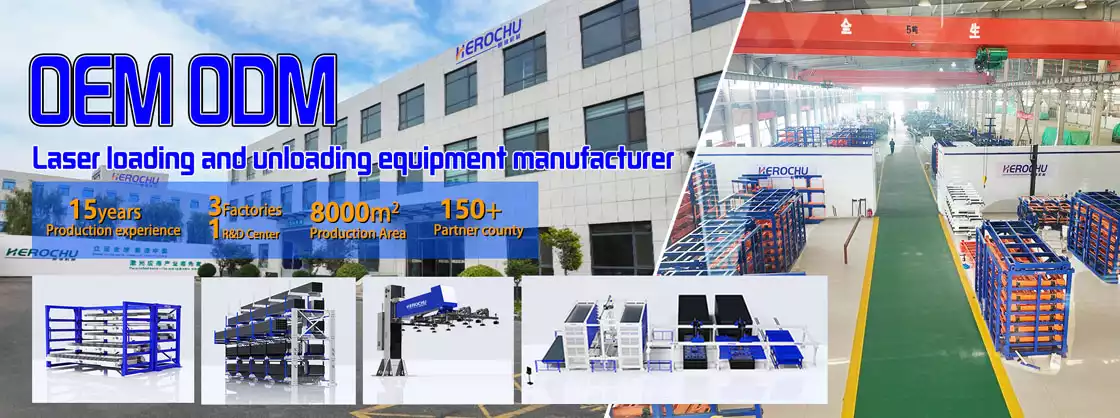
Q2: Are you a manufacturer or a distributor? We are a direct manufacturer with over 15 years of industry experience and expertise.
Q3: Is there a minimum order quantity? No. We welcome orders of any size, starting from a single unit.
Q4: How can I get detailed product information? Click the “Get a Quote” button to receive product images, detailed specifications, and videos. Our team is always ready to assist.
Q5: How do I provide my storage rack requirements? Simply share the type, dimensions, and quantity of materials you plan to store, along with any other specific needs. We will develop a professional storage solution for you. Alternatively, leave your contact details for a personalized consultation.
Q6: Do you offer automated loading systems or robotic arms? Yes. We provide loading robotic arms and integrated loading/unloading systems tailored to your laser cutting machine’s table size and material handling method (e.g., board rack, exchange platform, or material warehouse). Contact us with your details for a customized proposal.
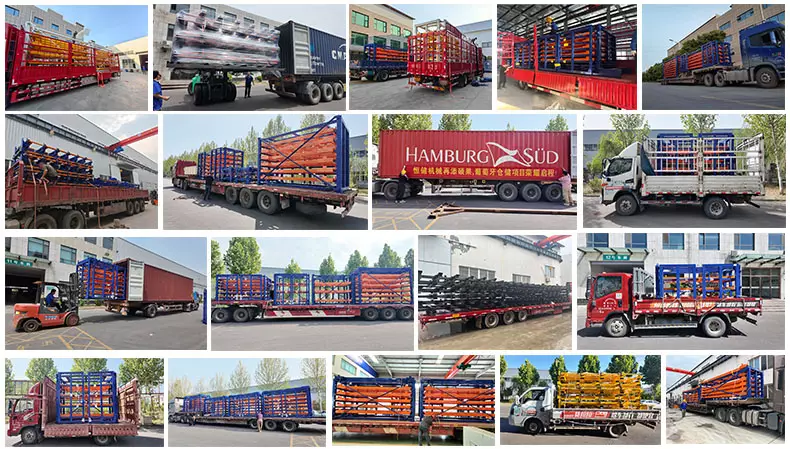
Q7: Do you provide on-site installation and debugging? Yes. Our technicians can travel to your facility for installation and debugging, ensuring successful operation. We have served clients globally, including in the USA, South Korea, Russia, Qatar, Mexico, South Africa, Egypt, and Lebanon.
Q8: How do you ensure product quality? Our quality assurance includes:
A team of over 40 technical engineers for professional debugging and support.
A dedicated quality control department compliant with ISO9001 standards.
CE certification for all exports.
Rigorous load testing before shipment to ensure structural safety and reliability.
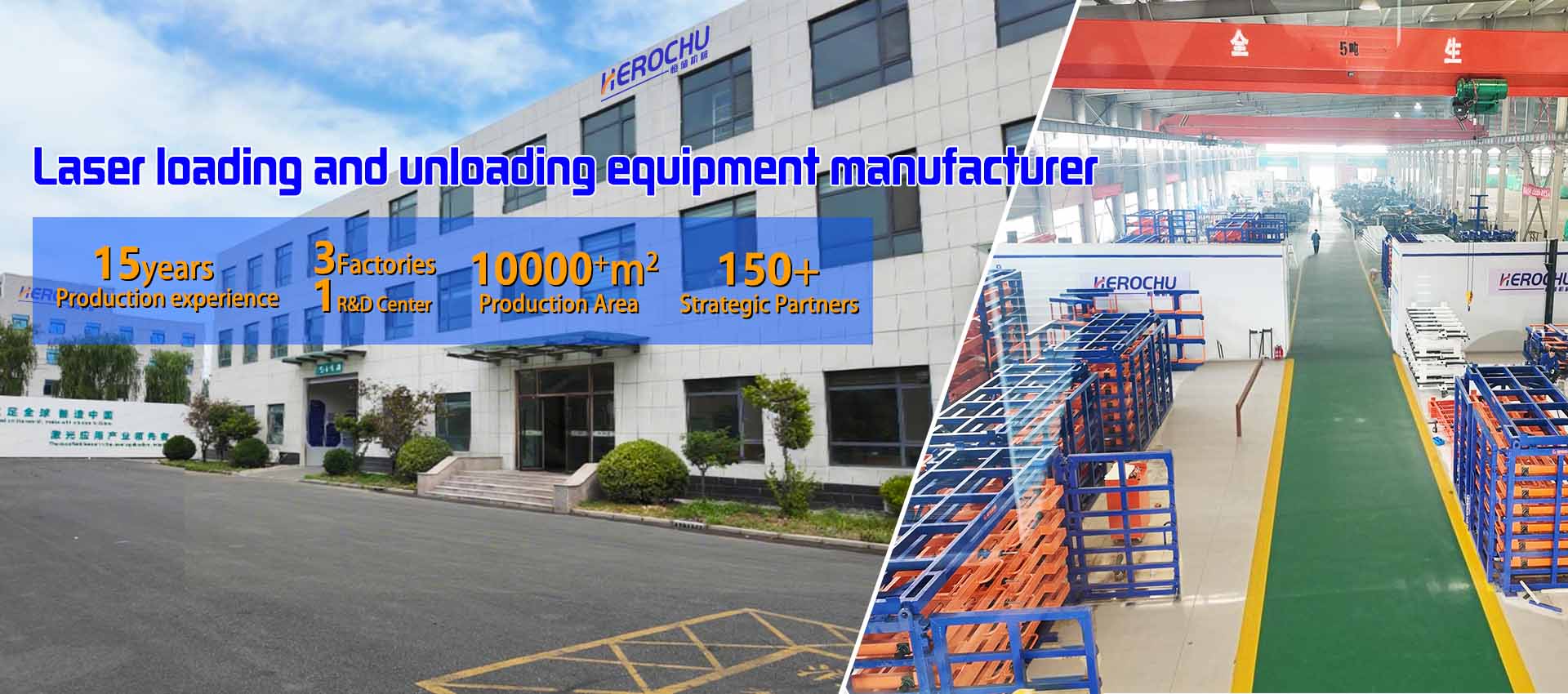
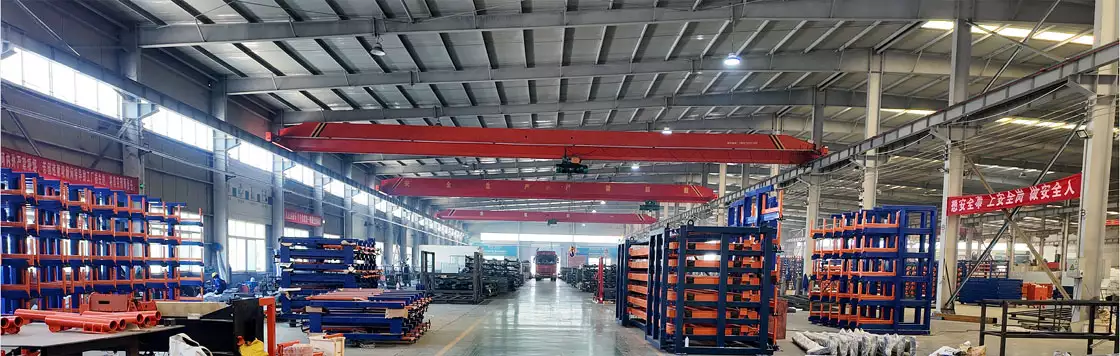
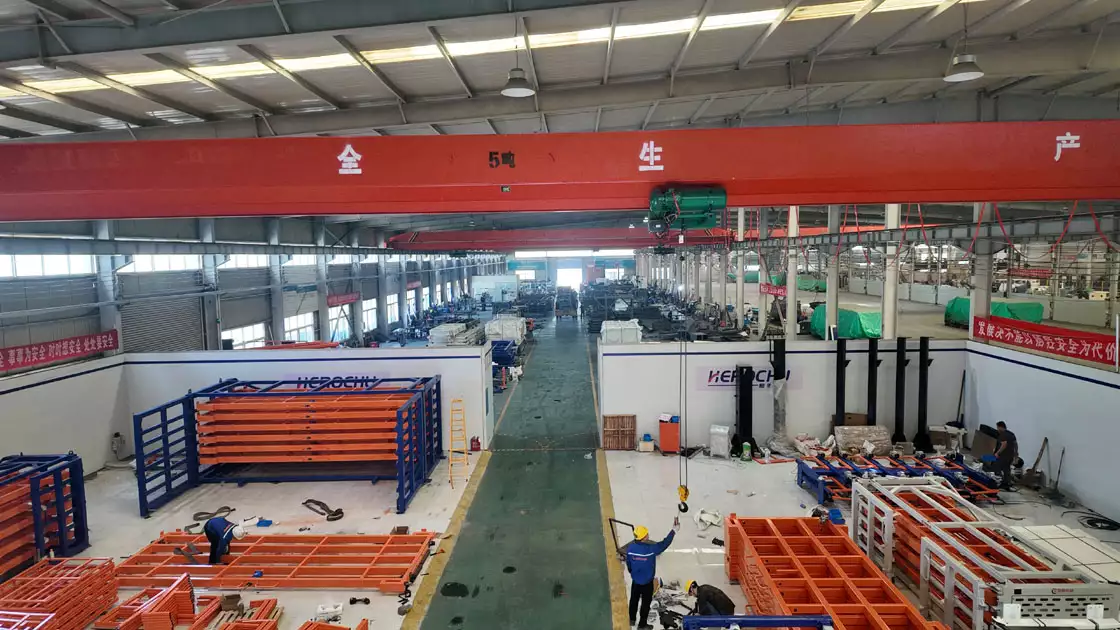
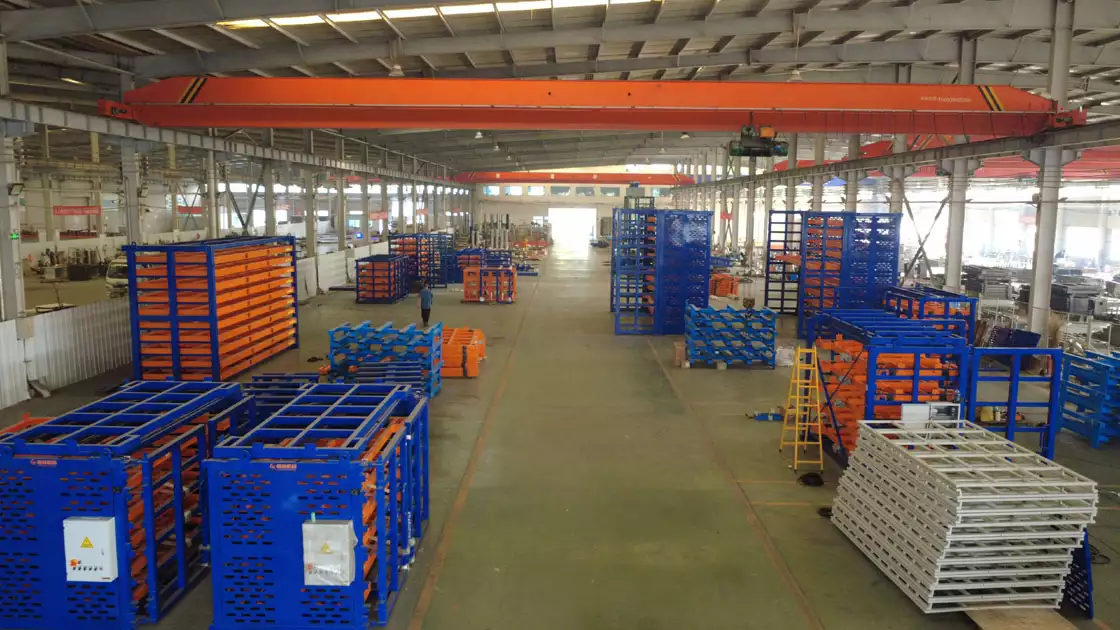
Q9: Where is your factory located? Our modern 10,000-square-meter manufacturing facility is located in Jiyang Industrial Park, Jinan, Shandong, China.
Q10: How can I evaluate your company’s capabilities? We offer virtual video factory tours and warmly welcome on-site visits.
Q11: What does your company specialize in? Jinan Constant Storage Machinery Manufacturing Co., Ltd. is a high-tech enterprise specializing in the R&D, production, sales, installation, and service of intelligent storage solutions. Our product range includes sheet material warehouses, drawer-style shelves, cantilever racks, servo manipulators, gantry loaders, and fully automated handling systems. Supported by a skilled technical team and advanced equipment, we are committed to delivering high-performance storage products and solutions to customers worldwide.
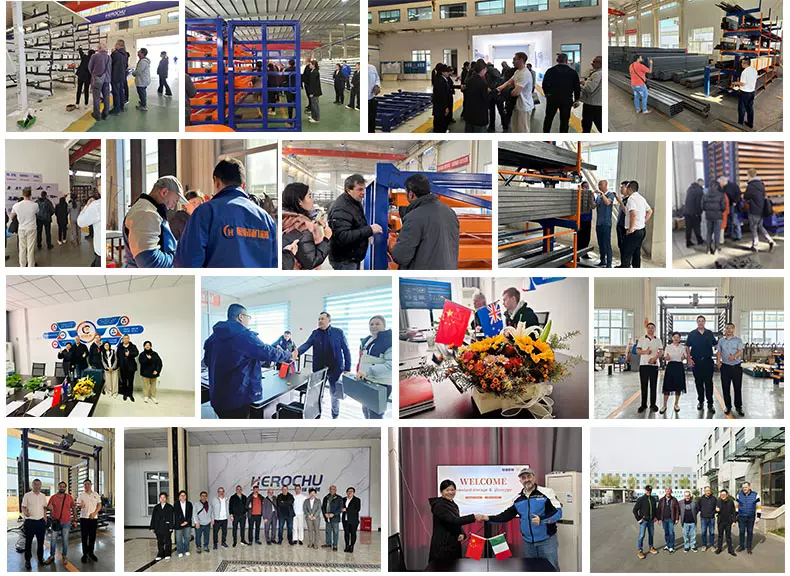
Customer visit
Herochu has always been adhering to the market-centric approach to meet customer requirements to the maximum extent, and the business philosophy of “creating brands with heart and gaining reputation with sincerity”. It provides customers with high-quality products and services with rigorous military quality, professionalism, and excellence, and has won unanimous praise in the Chinese aerospace, Chinese weapons, Chinese railways, automobile manufacturing, engineering machinery, non-ferrous metal titanium alloy and other industries.