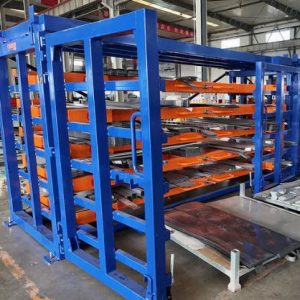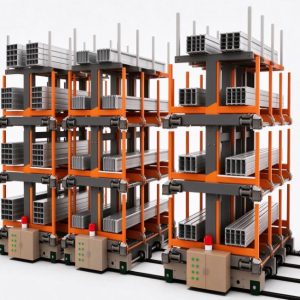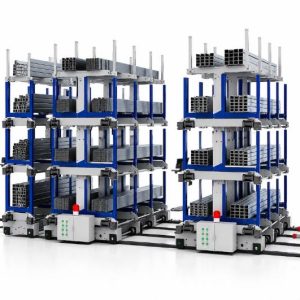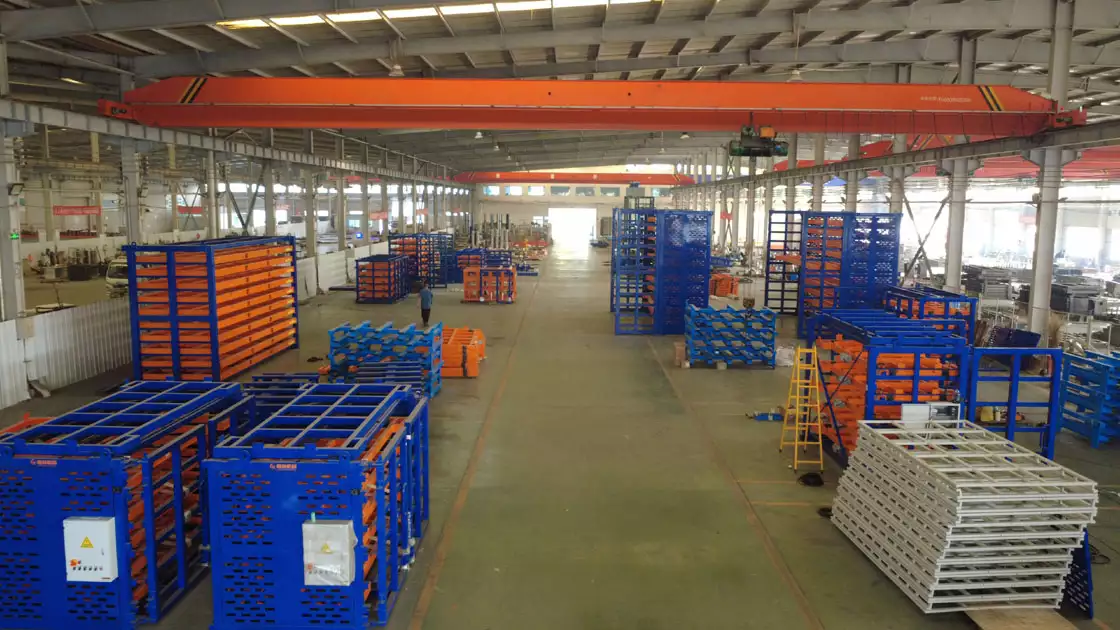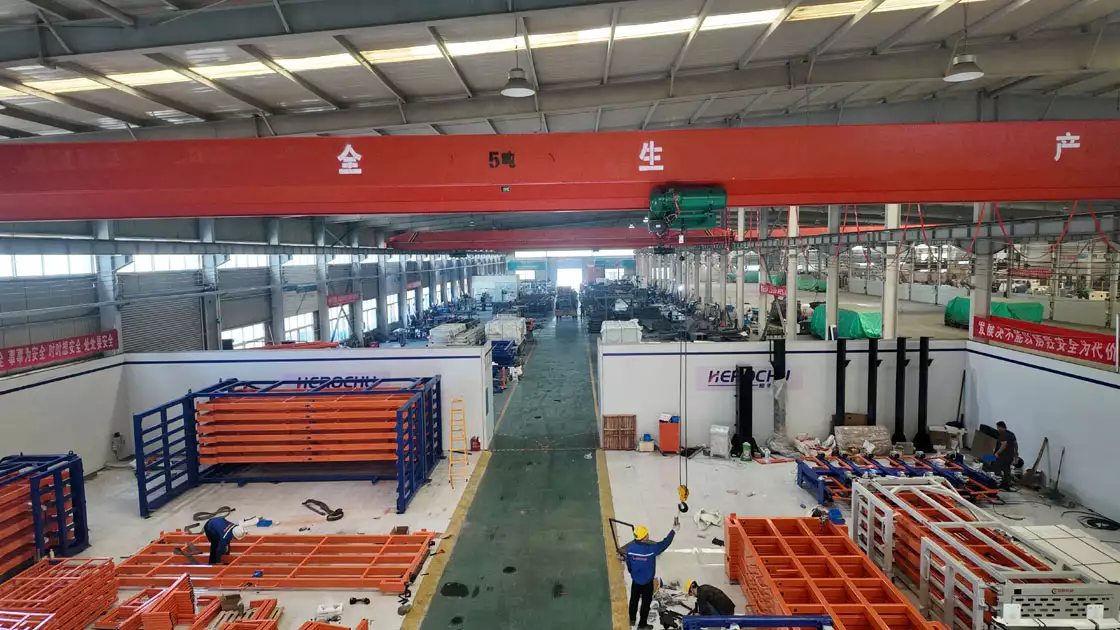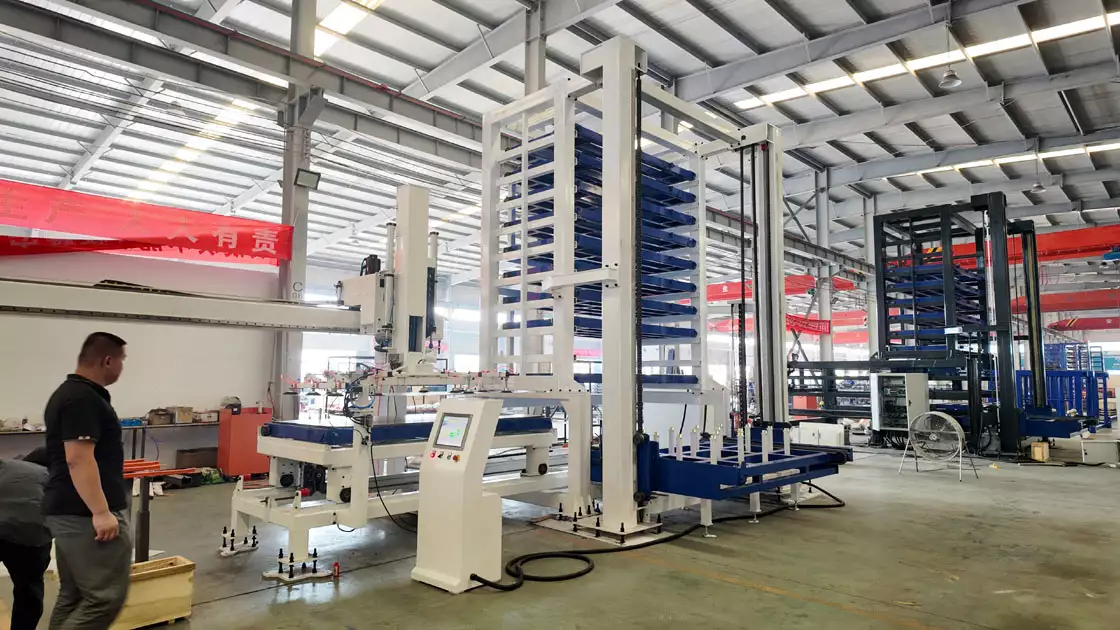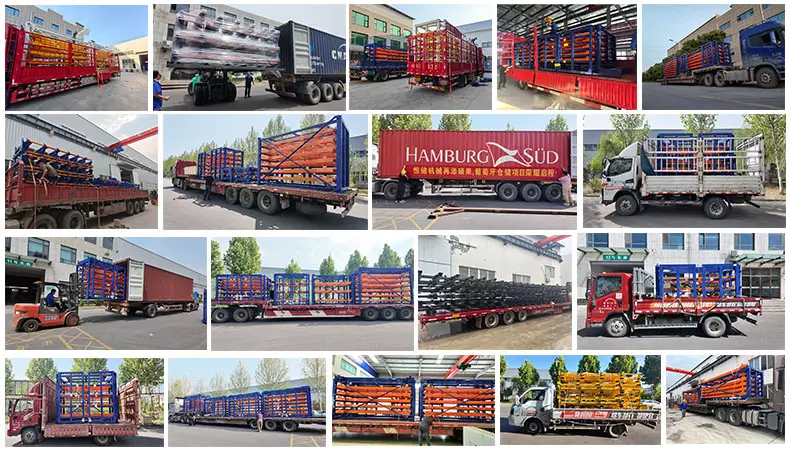
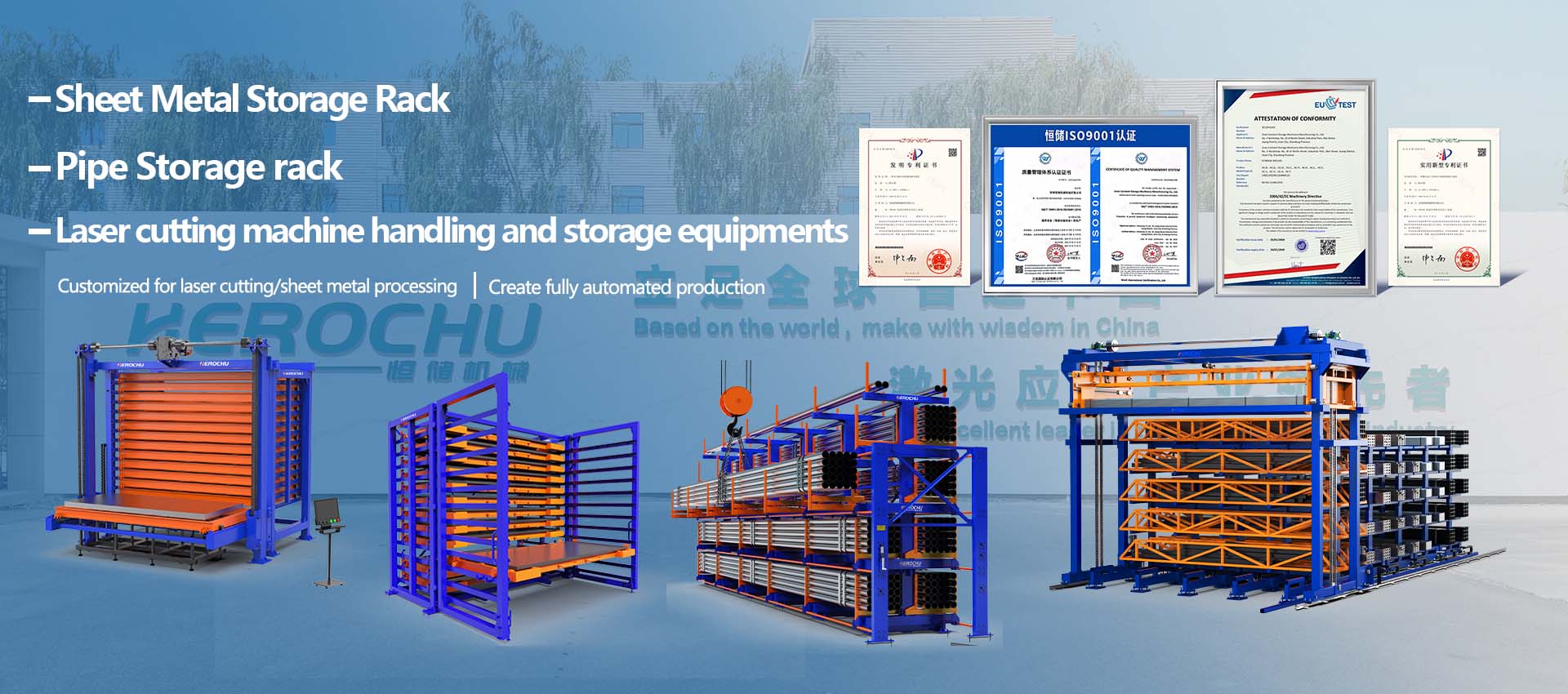
Not all long material is the same. A bundle of construction-grade rebar and a polished 316L stainless tube may share the same mill length, but they do not share the same storage requirements. The first tolerates contact. The second does not. A heavy duty cantilever rack for steel pipe, tube, and bar stock has to hold the load safely and preserve the surface condition of the product before it reaches the machine or the customer.
Herochu builds custom heavy duty cantilever systems for steel service centers, metal processors, and equipment manufacturers that cannot afford to treat storage as a rough-handling stage. The rack is engineered around the material mix and the handling method, not assembled from a one-size catalog frame.
The Hidden Cost of Secondary Handling
In a traditional floor stack or static rack, retrieving a specific heat number or diameter often means moving the top bundles to reach the one at the bottom. Every time a forklift fork contacts a bundle to shift it out of the way, the material is exposed to scratches, dents, and edge damage. For hygienic tubing, a single surface mark can condemn a length that was otherwise ready for fabrication. For aerospace aluminum, galvanic corrosion and handling marks are not cosmetic issues.
The cost is not only the damaged piece. It is the labor spent moving material twice, the machine time lost while the correct bundle is uncovered, and the inventory uncertainty that comes from material buried in a deep stack. Heavy duty storage that ignores access creates a slow, contact-heavy workflow regardless of how much weight it can hold.
What Makes a Cantilever Rack “Heavy Duty” in Practice
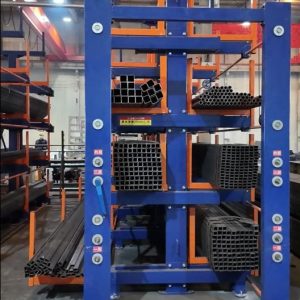
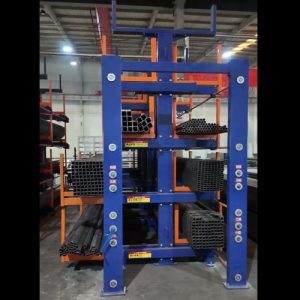
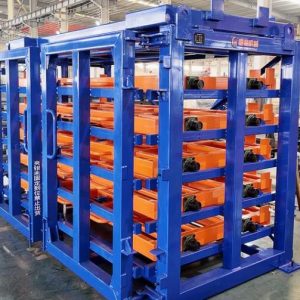
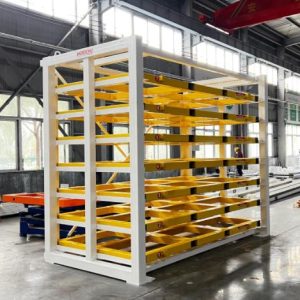
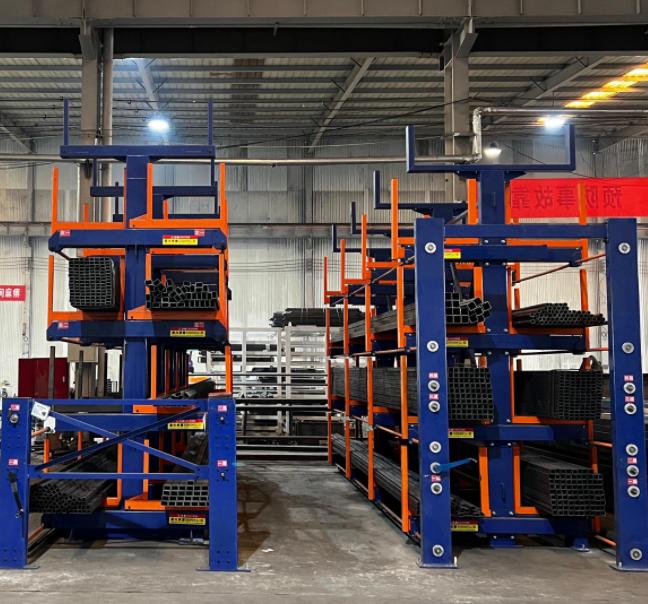
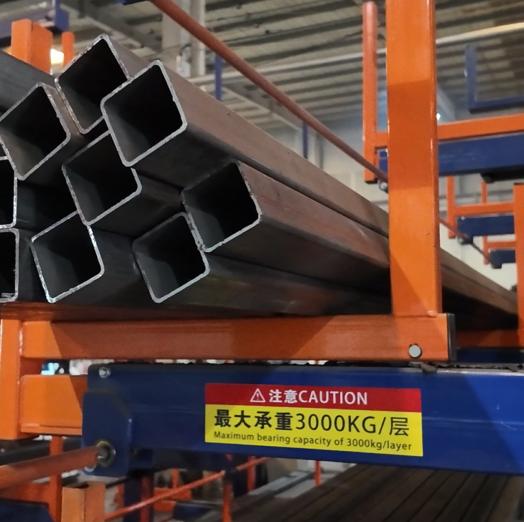
Load capacity is the starting point. Herochu heavy duty roll-out cantilever levels are engineered for dense bundles of solid stainless bar and heavy-wall pipe, with load ratings configured to the application rather than capped at a single figure. The structure uses Q355 carbon steel with a powder-coat finish, and column spacing is set to support the material lengths in the building.
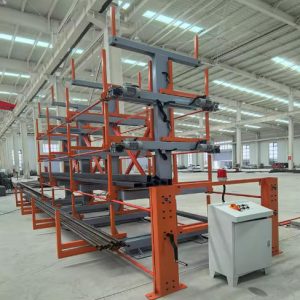
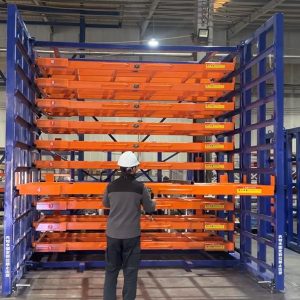
But capacity without access is only half a solution. A heavy duty rack that requires a forklift to enter a narrow aisle and side-pull a bundle is still a risk-heavy operation. The roll-out mechanism changes the handling geometry. Each level extends fully into the aisle, and an overhead crane lifts the load vertically. There is no side-to-side fork contact with the material, and no need to drag a bundle across the arm surface.
Surface protection is part of the specification. UHMW or polymer arm liners prevent carbon steel contamination on stainless products and reduce friction marks on polished or coated stock. Herochu also offers PVC or stainless-steel sleeves for bar stock and custom liners for sensitive alloys. The rack becomes a handling surface that is chosen for the product, not inherited from a generic steel frame.
Customization That Follows the Workflow
A steel service center and an aerospace subcontractor may both store long tube, but their retrieval patterns are different. A service center may pick full bundles for an order; an aerospace cell may pull individual pieces by alloy and heat number. A machinery builder may need to store drive shafts and hydraulic cylinders alongside structural profiles, with crane access from a fixed hook path.
Herochu reviews CAD drawings, inventory mix, forklift type, and seismic zone before finalizing a heavy duty rack layout. Options include hot-dip galvanized finish for outdoor yards, integrated weighing cells for real-time stock visibility, top-mounted crane rails, and explosion-proof motors for chemical environments. The rack is built around the material flow, not adapted to it after installation.
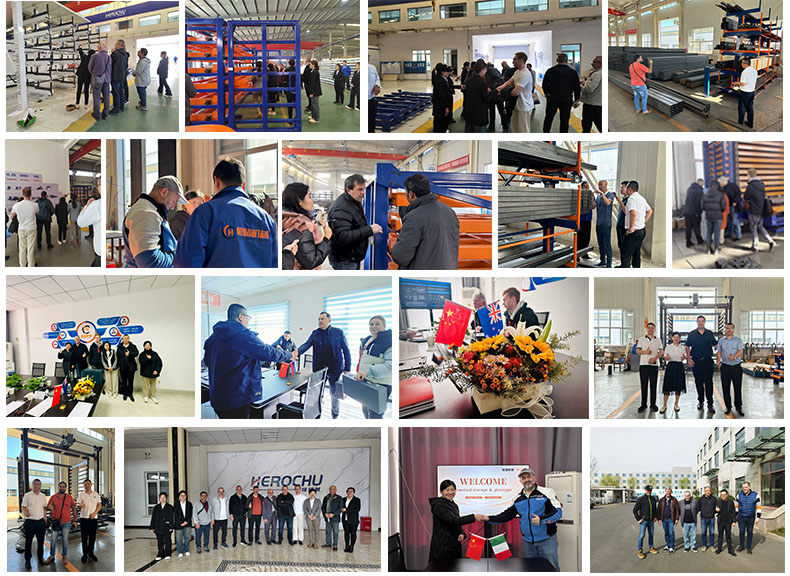
The company’s systems carry CE, UE, and ISO 9001 certification, with traceability on welds and motors. For a service center that needs to demonstrate process control to its own customers, that documentation matters as much as the load rating.
The Safety Case for Removing the Forklift from Retrieval
A forklift working inside a loaded rack aisle is exposed to pinch points, limited visibility, and the risk of contacting the rack structure. Heavy bundles at height amplify the consequence of any error. Moving the primary retrieval motion to an overhead crane removes the forklift from the storage face. The crane lifts vertically; the extended tier presents the load in free space; the operator stays at the aisle side.
Herochu’s heavy duty roll-out systems are designed for this crane-first workflow. The tier extends, the hook accesses the bundle from above, and the load returns to the rack without lateral dragging. For a facility handling dense stainless bar or heavy-wall pipe, that change in handling geometry reduces the contact events that cause damage and the traffic conflicts that cause injuries.
Where Heavy Duty Roll-Out Storage Fits
The strongest application is a facility that stores high-variety, high-value long stock and retrieves by specification. Steel service centers, metal processing plants, aerospace suppliers, shipbuilders, and heavy equipment manufacturers all share that pattern. They cannot afford to bury material, and they cannot afford to damage it while digging it out.
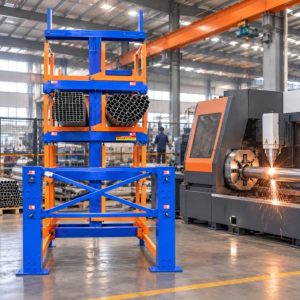
Herochu’s role is to configure the rack around the actual long goods and the actual crane path. A heavy duty cantilever rack is not judged by how much steel it can hold in a static pile. It is judged by whether the correct bundle reaches the saw, the laser, or the shipping door without a second handling step. That is the standard the design is built to meet.