Does a roll-out cantilever rack require an overhead crane?
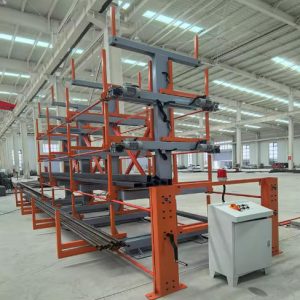
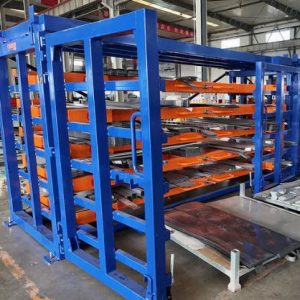
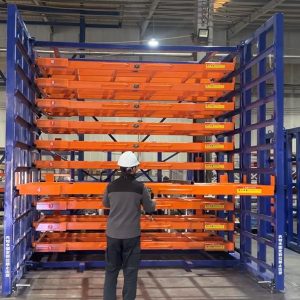
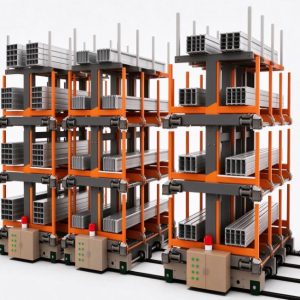
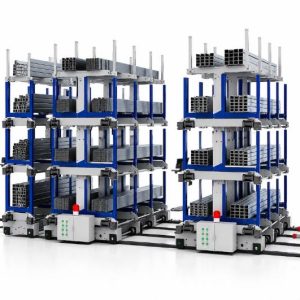
Yes. The value comes from vertical crane access to an extended tier. Without an overhead crane, a standard cantilever rack or a forklift-served system is the correct fit. Herochu will confirm crane capacity and hook height before recommending a configuration.
Can it store mixed profiles, not just one tube size?
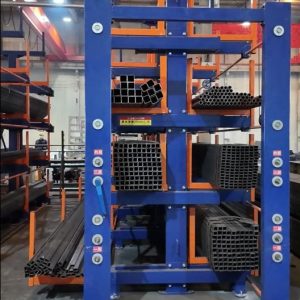
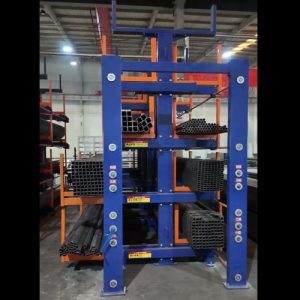
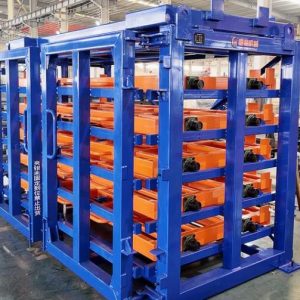
Yes. Each tier is independently selectable, which is exactly what mixed-inventory fabrication requires. Tubes, angles, flat bars, and round bars can share the same rack structure without one product blocking another.
How much floor space can a laser cell recover?
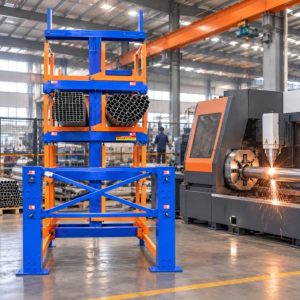
Aisle reduction alone can bring storage depth down to roughly 1.4 meters. Combined with vertical stacking and point-of-use placement, Herochu rack layouts routinely recover 30 to 50 percent of the floor area previously consumed by static storage and forklift lanes.
What is the difference between a manual crank and an electric telescopic rack?
Both extend the tier into the aisle. Electric drive removes the physical effort of cranking a loaded tier and is the better choice when bundles are heavy or picks are frequent. Herochu offers single-side and double-side assisted electric drive configurations.
Can one rack handle 6-meter pipes and 12-meter bars?
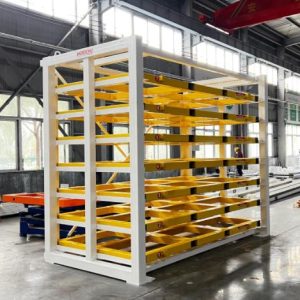
Yes, within the configured material length. Herochu sets column spacing and arm support based on the longest stock in the inventory, so the rack is not limited to a single mill length. Material lengths from 12 to 60 feet are commonly accommodated in roll-out cantilever systems.
Does the rack need a forklift aisle?
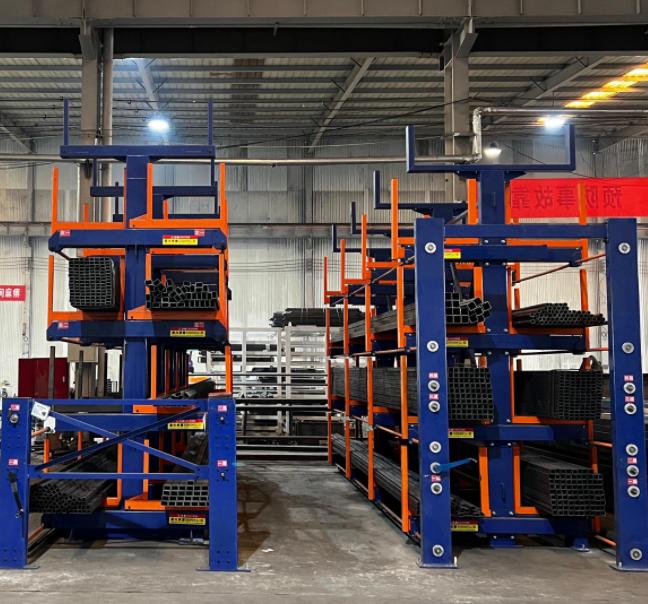
No. The electric telescopic design is built for crane access from above. The aisle requirement is driven by the extended tier and the operator, not by a forklift turning radius. That is the source of the floor-space saving.