
Automated Multi-Tower Steel Plate Storage System: Engineering and Operation
Steel plate inventory management sits at the intersection of three competing demands: maximizing storage density, protecting material quality, and feeding production lines at the speed they require. Traditional storage methods force facilities to compromise on at least one of these demands. Floor stacking maximizes access speed but wastes space and damages material. Dense rack storage saves space but slows retrieval. The Automated Multi-Tower Steel Plate Storage System from Herochu resolves all three demands simultaneously through vertical multi-tower architecture and integrated automation.
Automated Multi-Tower Steel Plate Storage System: Engineering and Operation
Steel plate inventory management sits at the intersection of three competing demands: maximizing storage density, protecting material quality, and feeding production lines at the speed they require. Traditional storage methods force facilities to compromise on at least one of these demands. Floor stacking maximizes access speed but wastes space and damages material. Dense rack storage saves space but slows retrieval. The Automated Multi-Tower Steel Plate Storage System from Herochu resolves all three demands simultaneously through vertical multi-tower architecture and integrated automation.
The System Architecture
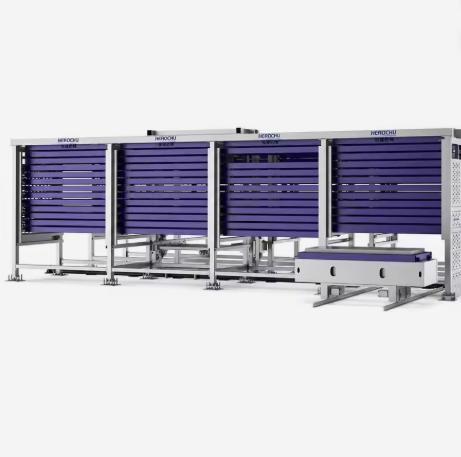
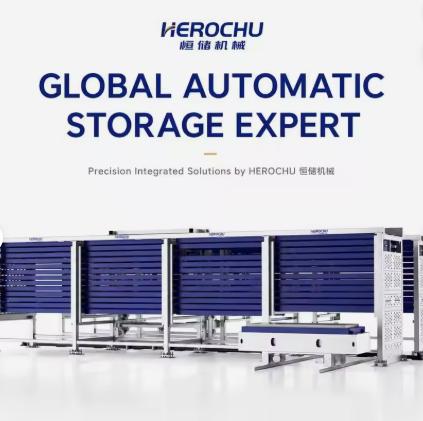
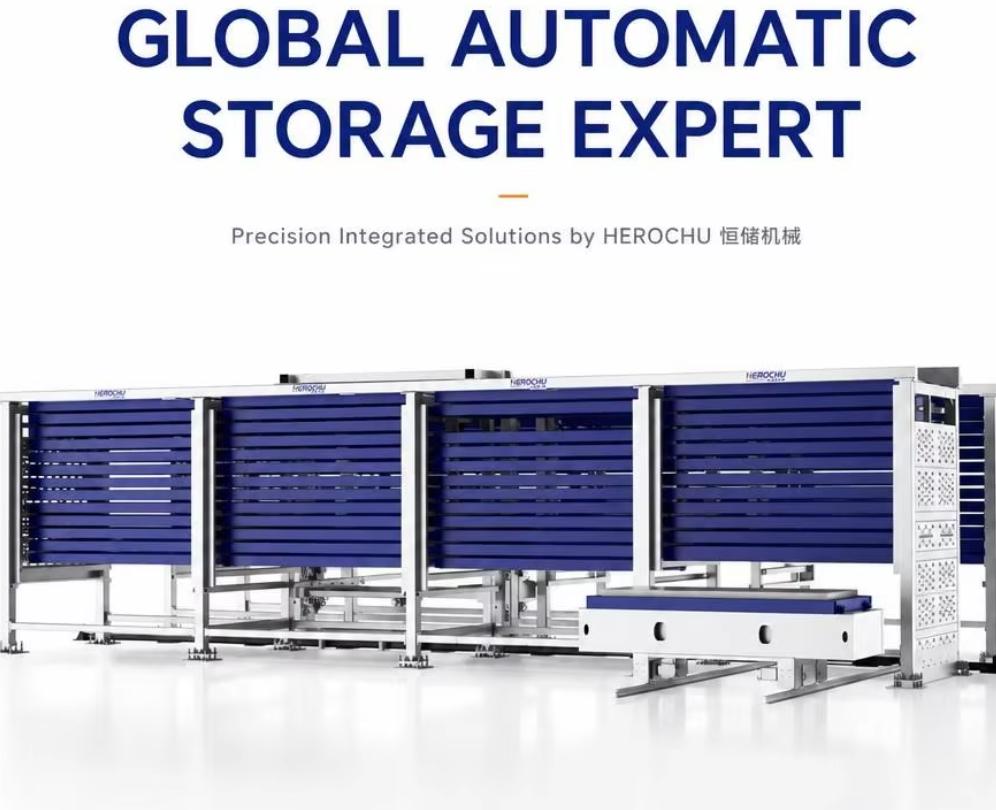
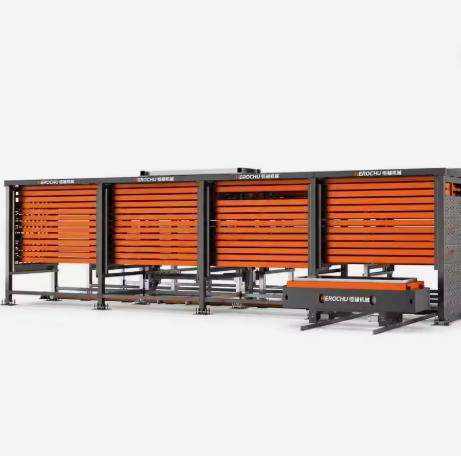
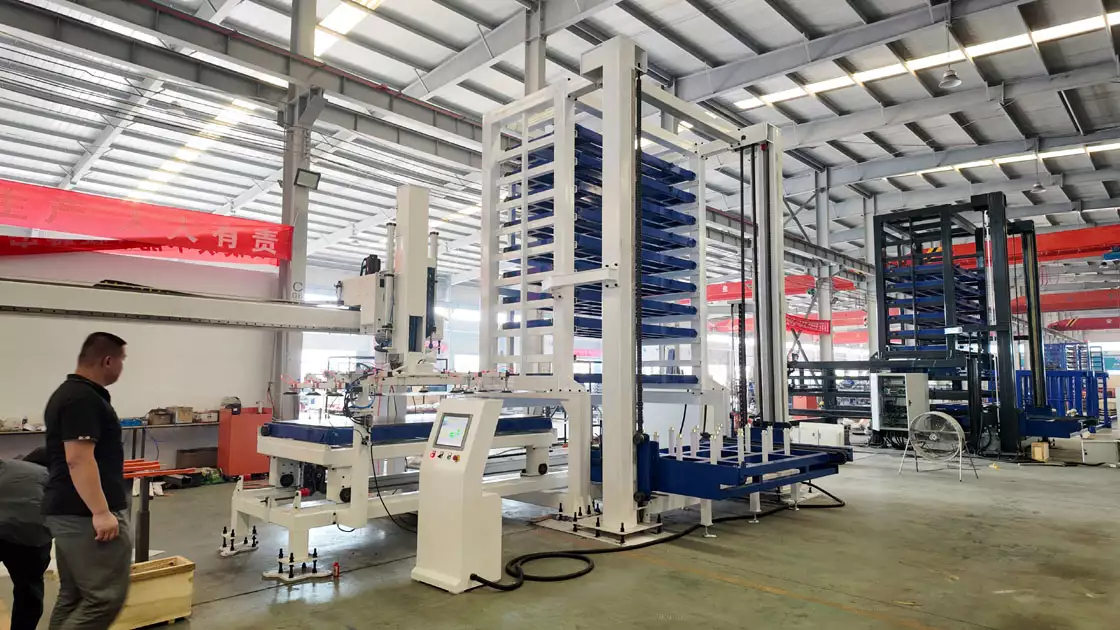
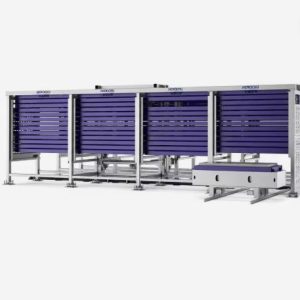
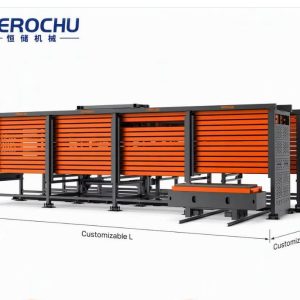
The Herochu multi-tower system is built around a modular framework of vertical storage towers. Each tower operates as a discrete storage structure with its own layer stack, but all towers within a system share common infrastructure: a unified PLC control system, a shared material transport mechanism, and an integrated digital inventory database.
This shared infrastructure is what differentiates a multi-tower system from a collection of independent storage units. An operator manages the entire storage operation through one touchscreen interface, regardless of how many towers the system contains. The PLC coordinates tower selection, carriage positioning, and material cart operation across the full system footprint.
Standard configurations range from two towers with six layers each to four towers with twelve layers each. Every parameter — tower count, layer count, clear height, sheet dimensions, and per-level load capacity — is customizable to match the facility’s material inventory profile.
Steel Plate Storage: Why Automation Matters
Steel plates represent one of the most challenging material categories for storage automation. Their combination of high weight, large surface area, and surface sensitivity creates handling requirements that exceed what manual methods can safely and efficiently provide.
Consider a single 6000×2000 mm steel plate at 15 mm thickness. This plate weighs approximately 1,410 kg. A batch of three such plates stored on one level weighs 4,230 kg — within the capacity of the 5,000 kg per-level heavy-duty models. Retrieving one plate from this batch manually requires a forklift or overhead crane, an operator to rig the lifting equipment, and sufficient floor space to maneuver the plate out of storage and transport it to the production area. The process takes 15 to 30 minutes and exposes the plate to point-loading damage from chains or forks.
The Herochu automated system retrieves the same plate in under three minutes, without operator intervention in the lifting process, and with full-width distributed contact that eliminates point-loading. The plate arrives at the delivery position ready for production, with its surface and edges intact.
Multi-Tower Configuration Options
The system’s modular tower architecture allows facilities to scale storage capacity to their actual inventory volume. Each model addresses a specific combination of plate dimensions and storage capacity:
| Model | Sheet Dimensions (mm) | Towers | Layers | Max Load per Level (kg) |
|---|---|---|---|---|
| HC-S3015-2-63 | 3000×1500 | 2 | 6 | 3,000 |
| HC-S4015-3-85 | 4000×1500 | 3 | 8 | 5,000 |
| HC-S4020-4-105 | 4000×2000 | 4 | 10 | 5,000 |
| HC-S6020-4-125 | 6000×2000 | 4 | 12 | 5,000 |
The HC-S3015-2-63 serves facilities working with standard sheet metal dimensions where inventory volume is moderate. Its two-tower, six-layer configuration provides 12 storage positions with 3,000 kg per-level capacity — suited for lighter gauge sheet stock up to approximately 10 mm thickness.
The HC-S4015-3-85 expands capacity in both dimensions and weight. Three towers with eight layers each create 24 storage positions rated at 5,000 kg per level. This model addresses medium to large fabrication operations handling 4000×1500 mm plates with heavier gauge requirements.
The HC-S4020-4-105 and HC-S6020-4-125 represent the system’s maximum standard configurations. The HC-S4020-4-105 provides 40 storage positions across four towers with ten layers each, handling 4000×2000 mm plates. The HC-S6020-4-125 provides 48 positions for 6000×2000 mm plates — the largest standard industrial sheet dimension — with twelve layers per tower.
Precision Handling and Positioning Accuracy
The automated retrieval mechanism defines the operational quality of the storage system. The Herochu material cart is engineered around a principle that distinguishes it from conventional handling equipment: distributed-load lifting.
When the cart extends into a storage layer, it positions itself beneath the target plate and lifts through full-width contact across the plate’s underside. This contact distribution means that lifting force spreads evenly across the plate surface rather than concentrating at two or three points. For thin gauge sheets, this prevents the flexing and edge bending that fork contact causes. For thick heavy plates, it prevents surface marring and coating damage.
Shuttle positioning repeatability holds at plus or minus 2 mm. This precision is not incidental — it is the result of precision guide rail engineering, high-tolerance carriage manufacturing, and PLC-driven positioning control that calculates the exact coordinate for each storage position.
The practical consequence of this repeatability is downstream integration capability. When a plate arrives at the delivery position at a known coordinate within 2 mm, automated loading arms, conveyor systems, and robotic positioning equipment can receive it without manual adjustment. The storage system becomes a reliable feed mechanism for the production line, not just a storage container.
Transfer Speed and Cycle Time
Transfer speed ranges from 5 to 15 meters per minute across the vertical lifting and horizontal transfer segments. The PLC system optimizes the carriage path based on the target tower and layer, minimizing unnecessary travel and completing each retrieval cycle efficiently.
For production planning, the key metric is cycle time — the elapsed time from operator command to plate delivery at the access point. In typical operation, this cycle completes in under three minutes. A facility running continuous plate processing can retrieve 20 or more plates per hour from the storage system, supporting high-throughput production lines without material supply bottlenecks.
Compare this to manual retrieval throughput. A forklift or crane operator retrieving plates from floor storage typically completes 2 to 4 retrievals per hour, including travel time, rigging, and transport. The automated system delivers a 5 to 10x improvement in material supply throughput, directly increasing machine utilization and reducing idle time on laser cutters, press brakes, and processing tables.
Digital Inventory Management
The Herochu system tracks every plate through its storage lifecycle within an integrated digital inventory database. After each storage or retrieval operation, the system updates:
- Material specifications: Plate dimensions, thickness, grade
- Position tracking: Current tower and layer for every stored plate
- Quantity management: Total plate count per storage position
- Weight data: Real-time weight per position via integrated load cells
This continuous data collection eliminates manual stocktaking. The inventory database reflects physical storage reality at all times, with weight sensor verification providing an independent check against specification errors.
Material Reservation for Production Scheduling
The digital inventory system supports material reservation — locking specific plates for designated production jobs. When a job schedule requires particular plate grades or dimensions, the operator reserves those plates in the system. The reserved stock is flagged in the database, preventing accidental retrieval for another purpose.
This reservation capability solves a persistent problem in multi-job fabrication environments: material allocation conflicts. Without reservation, two operators can request the same material for different jobs, creating a conflict that requires manual intervention to resolve. The Herochu system prevents these conflicts at the database level, ensuring that material allocation follows the production schedule.
ERP Integration and Industry 4.0
The storage system connects to factory ERP and MES software through standardized data interfaces. This connection enables bidirectional data flow:
- Outbound to ERP: Material consumption reports generated automatically with each retrieval, updating procurement and cost accounting systems in real time
- Inbound from ERP: Production schedule data that can drive automated material reservations and retrieval prioritization
This integration transforms the storage system from a standalone material handling tool into a networked data asset within the factory’s digital infrastructure. Material consumption data flows to procurement planning. Inventory levels synchronize across factory systems. Production scheduling connects directly to material availability. The result is a closed-loop material management process that supports Industry 4.0 manufacturing maturity.
Structural Quality and Manufacturing Standards
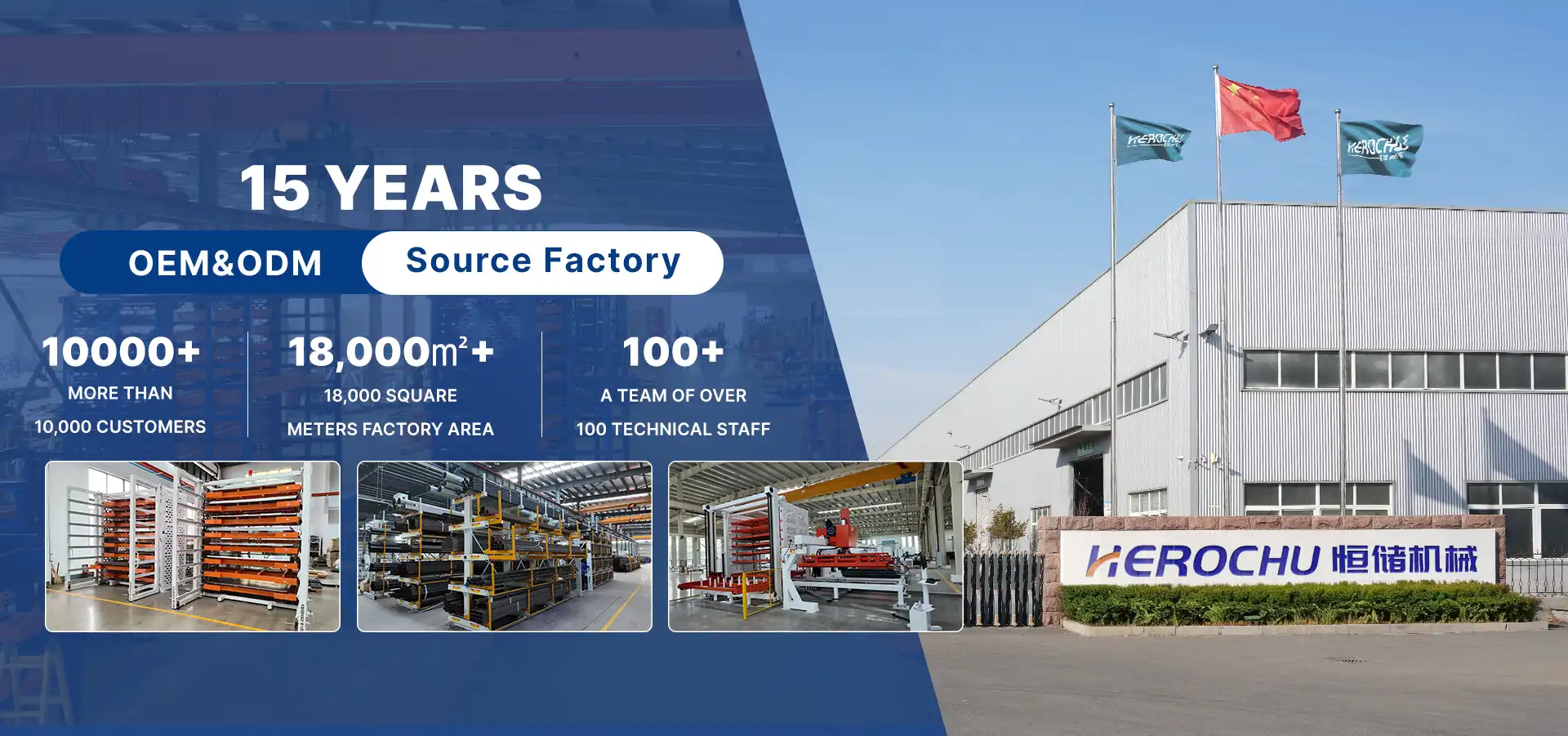
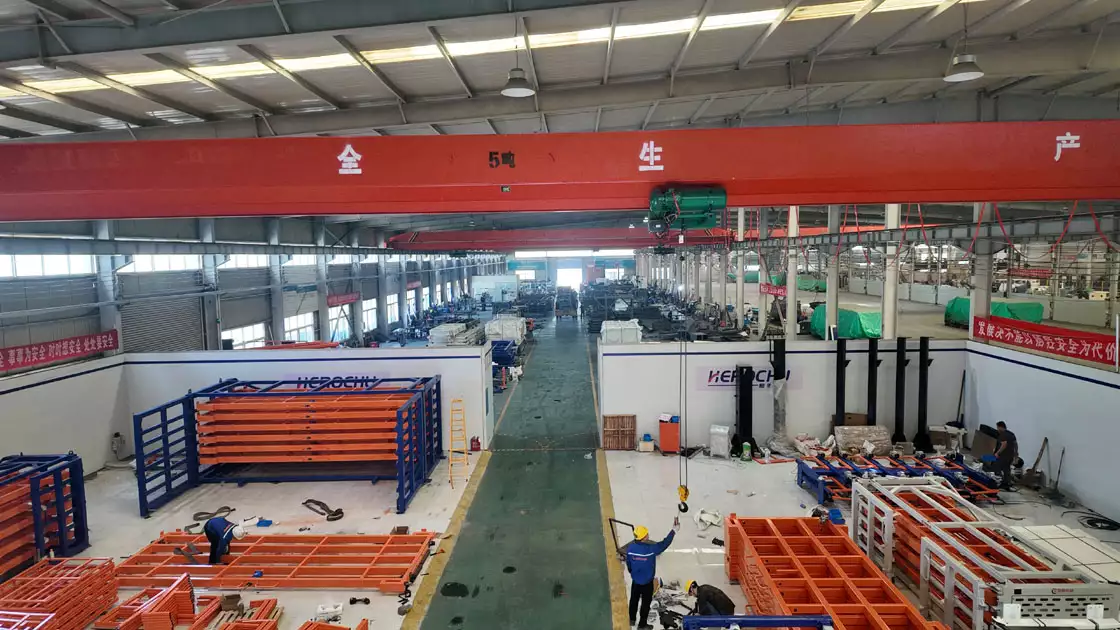
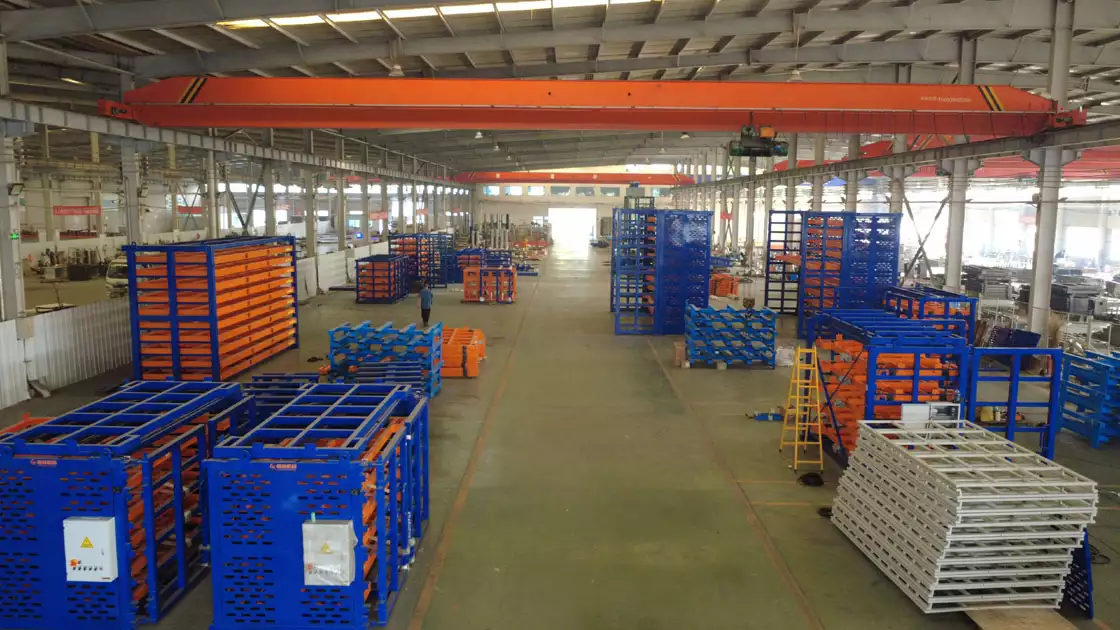
Herochu, as Jinan Constant Storage Machinery Co., Ltd., manufactures each multi-tower system from a 10,000 m2 facility under ISO9001 quality management and CE product certification standards. The structural framework uses Q235B high-strength steel throughout tower frames, guide rails, and carriage assemblies.
Every system undergoes pre-shipment load testing to verify that per-level capacity, structural deflection, and positioning repeatability meet published specifications. This testing protocol means that the performance parameters quoted during system specification — the 5,000 kg per-level capacity, the plus or minus 2 mm repeatability, the 5 to 15 m/min transfer speed — are verified on the actual equipment before installation, not merely projected from engineering calculations.
Selecting the Right Configuration
System selection follows three decision parameters. First, identify the largest plate dimension in the material inventory — this determines the minimum sheet dimension specification and narrows the model selection. Second, calculate the heaviest single-level plate batch weight — this determines whether the standard 3,000 kg or upgraded 5,000 kg per-level capacity is required. Third, assess total inventory volume — the number of distinct plate batches requiring simultaneous storage determines the tower and layer count.
The Automated Multi-Tower Steel Plate Storage System from Herochu is engineered to the specific requirements of each installation. Tower count, layer count, clear height, load capacity, and software integration are all configured during the engineering phase to match the facility’s operational profile. The result is a storage platform that maximizes density, protects material quality, and feeds production at automated speed — resolving the three demands that traditional storage methods force facilities to compromise.
FAQ
Here are some frequently asked questions about our sheet metal racks and pipe storage solutions. We hope you find them helpful!
Q1: Can I request a custom size or color?
Absolutely. We offer complimentary design services and deliver efficient, tailored solutions to meet your specific requirements.
Q2: Are you a manufacturer or a distributor?
We are a direct manufacturer with over 15 years of industry experience and expertise.
Q3: Is there a minimum order quantity?
No. We welcome orders of any size, starting from a single unit.
Q4: How can I get detailed product information?
Click the “Get a Quote” button to receive product images, detailed specifications, and videos. Our team is always ready to assist.
Q5: How do I provide my storage rack requirements?
Simply share the type, dimensions, and quantity of materials you plan to store, along with any other specific needs. We will develop a professional storage solution for you. Alternatively, leave your contact details for a personalized consultation.
Q6: Do you offer automated loading systems or robotic arms?
Yes. We provide loading robotic arms and integrated loading/unloading systems tailored to your laser cutting machine’s table size and material handling method (e.g., board rack, exchange platform, or material warehouse). Contact us with your details for a customized proposal.
Q7: Do you provide on-site installation and debugging?
Yes. Our technicians can travel to your facility for installation and debugging, ensuring successful operation. We have served clients globally, including in the USA, South Korea, Russia, Qatar, Mexico, South Africa, Egypt, and Lebanon.
Q8: How do you ensure product quality?
Our quality assurance includes:
A team of over 40 technical engineers for professional debugging and support.
A dedicated quality control department compliant with ISO9001 standards.
CE certification for all exports.
Rigorous load testing before shipment to ensure structural safety and reliability.
Q9: Where is your factory located?
Our modern 10,000-square-meter manufacturing facility is located in Jiyang Industrial Park, Jinan, Shandong, China.
Q10: How can I evaluate your company’s capabilities?
We offer virtual video factory tours and warmly welcome on-site visits.
Q11: What does your company specialize in?
Jinan Constant Storage Machinery Manufacturing Co., Ltd. is a high-tech enterprise specializing in the R&D, production, sales, installation, and service of intelligent storage solutions. Our product range includes sheet material warehouses, drawer-style shelves, cantilever racks, servo manipulators, gantry loaders, and fully automated handling systems. Supported by a skilled technical team and advanced equipment, we are committed to delivering high-performance storage products and solutions to customers worldwide.
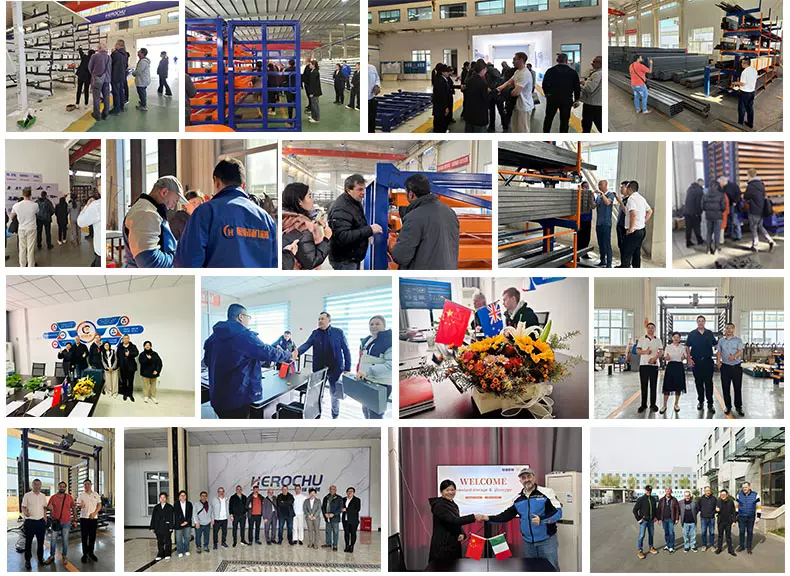
Customer visit
Herochu has always been adhering to the market-centric approach to meet customer requirements to the maximum extent, and the business philosophy of “creating brands with heart and gaining reputation with sincerity”. It provides customers with high-quality products and services with rigorous military quality, professionalism, and excellence, and has won unanimous praise in the Chinese aerospace, Chinese weapons, Chinese railways, automobile manufacturing, engineering machinery, non-ferrous metal titanium alloy and other industries.
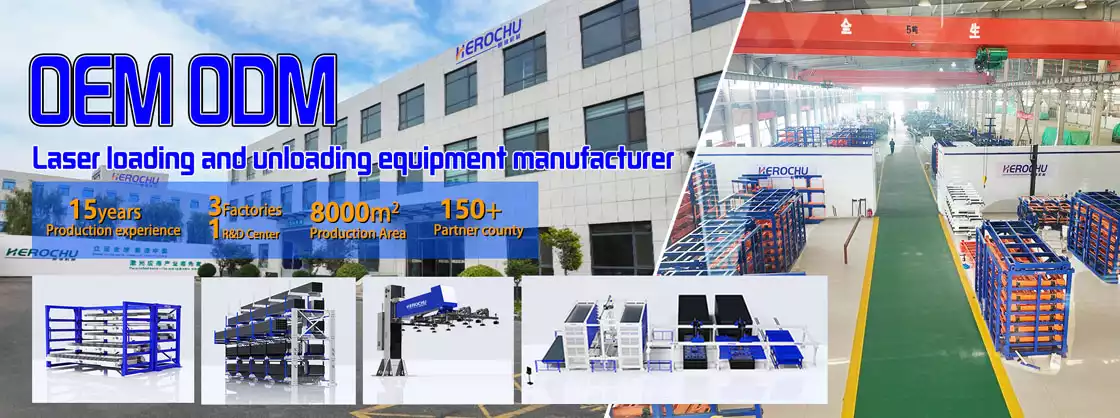
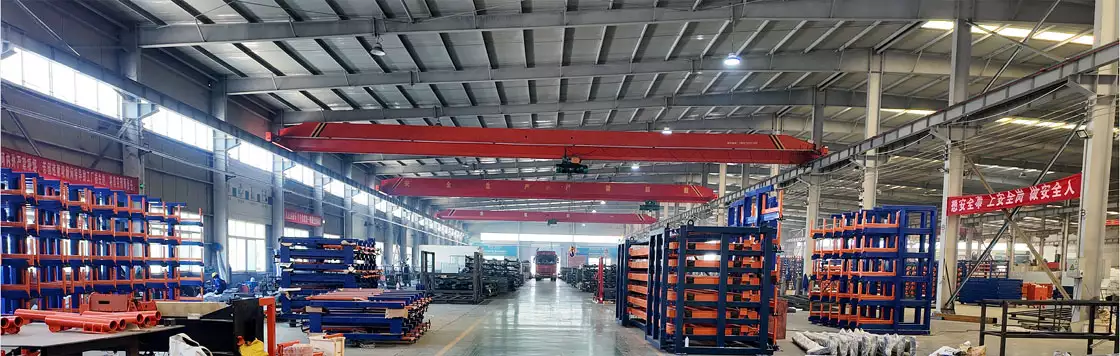
Factory

Hot Selling Machines
-
Multi-tower intelligent board material warehouse
Automated Multi-Tower Steel Plate Storage System: Engineering and Operation
Read moreRated 0 out of 5 -
Automation Sheet Metal Material Warehouse
Heavy Duty Vertical Panel ASRS Storage Tower for Industrial Workflows
Read moreRated 0 out of 5 -
Multi-tower intelligent board material warehouse
Automatic Multi-Tower Plate Storage Warehouse for Metal Fabrication
Read moreRated 0 out of 5 -
Multi-tower intelligent board material warehouse
Multi-Tower ASRS Vertical Sheet Metal Storage System Explained
Read moreRated 0 out of 5 -
Gantry Loading and Unloading Manipulator
Double-Sided Gantry Truss Loading Manipulator for Sheet Metal
Read moreRated 0 out of 5 -
Gantry Loading and Unloading Manipulator
Factory Custom Gantry Intelligent Manipulator Systems
Read moreRated 0 out of 5 -
Gantry Loading and Unloading Manipulator
Composite Truss Gantry Robotic Arm for Loading Unloading
Read moreRated 0 out of 5 -
Gantry Loading and Unloading Manipulator
Pneumatic Gantry Loading Manipulator for Factory Automation
Read moreRated 0 out of 5
Related products
Product Categories