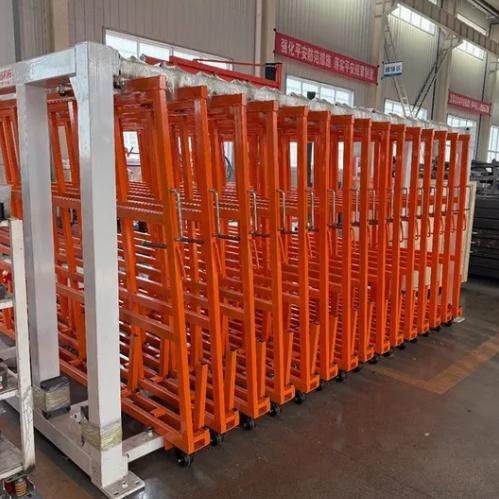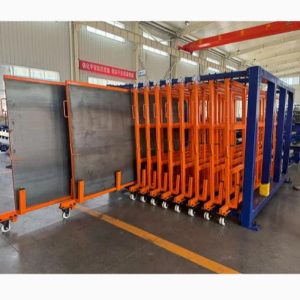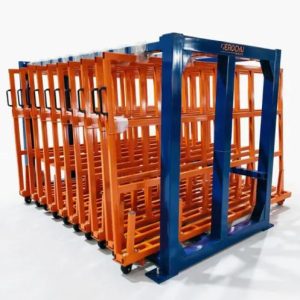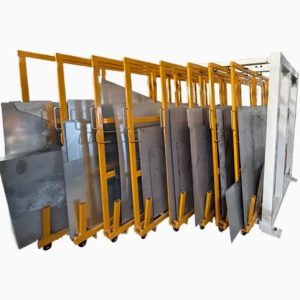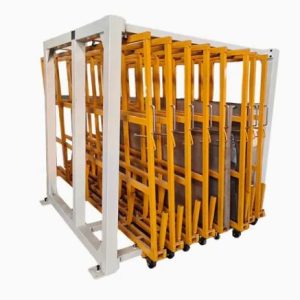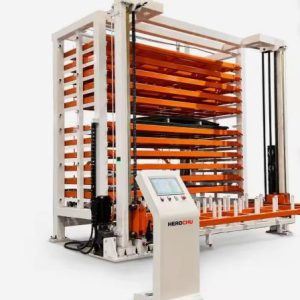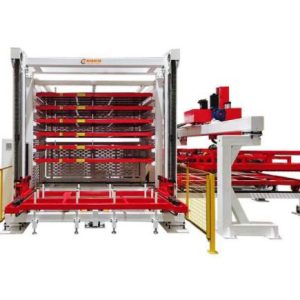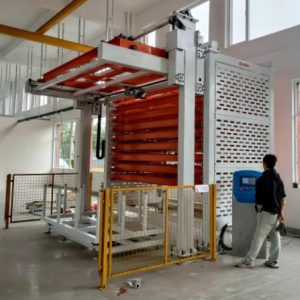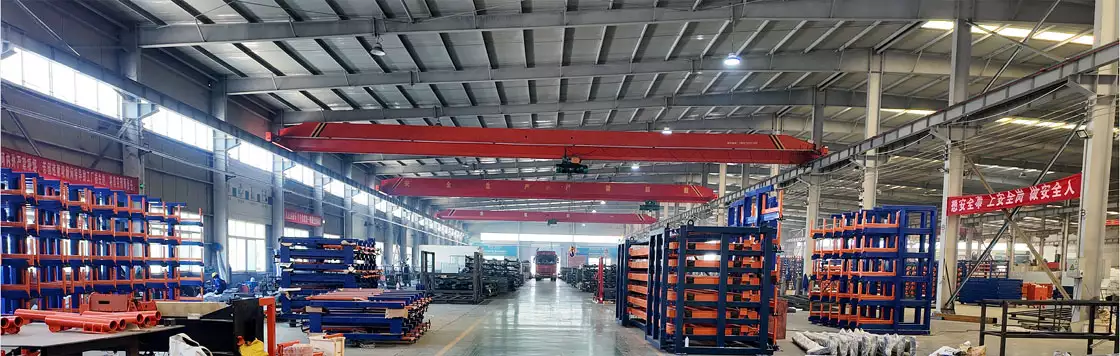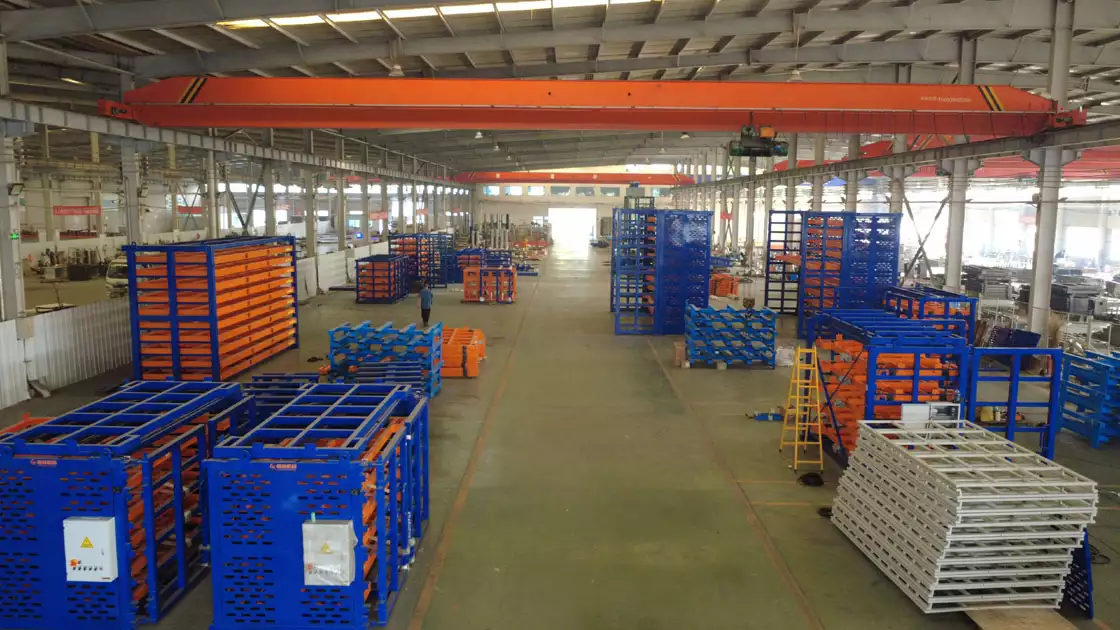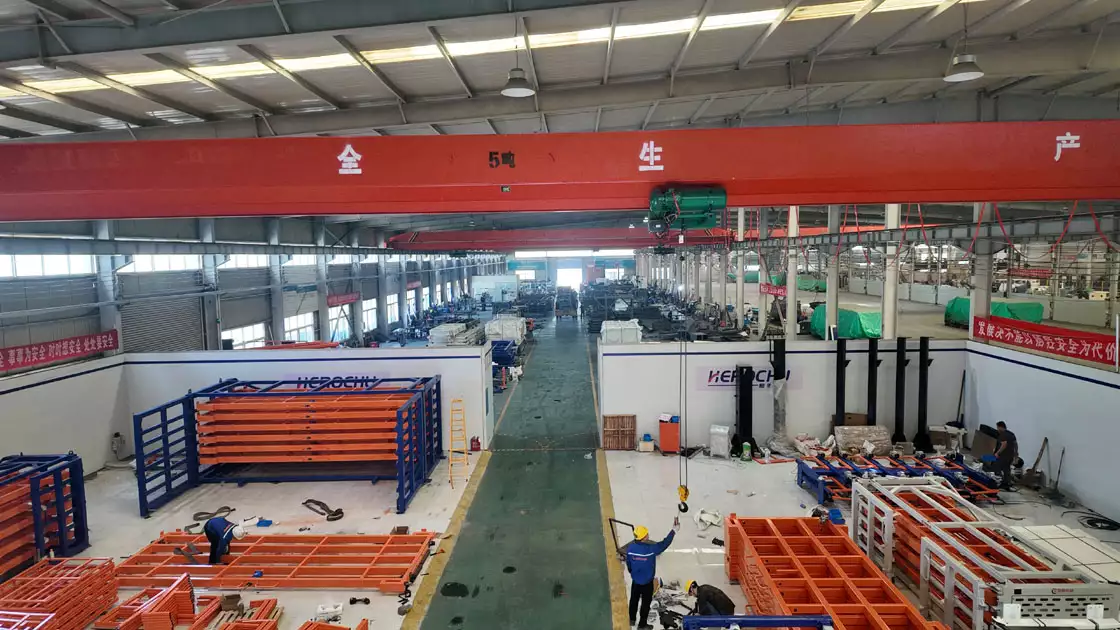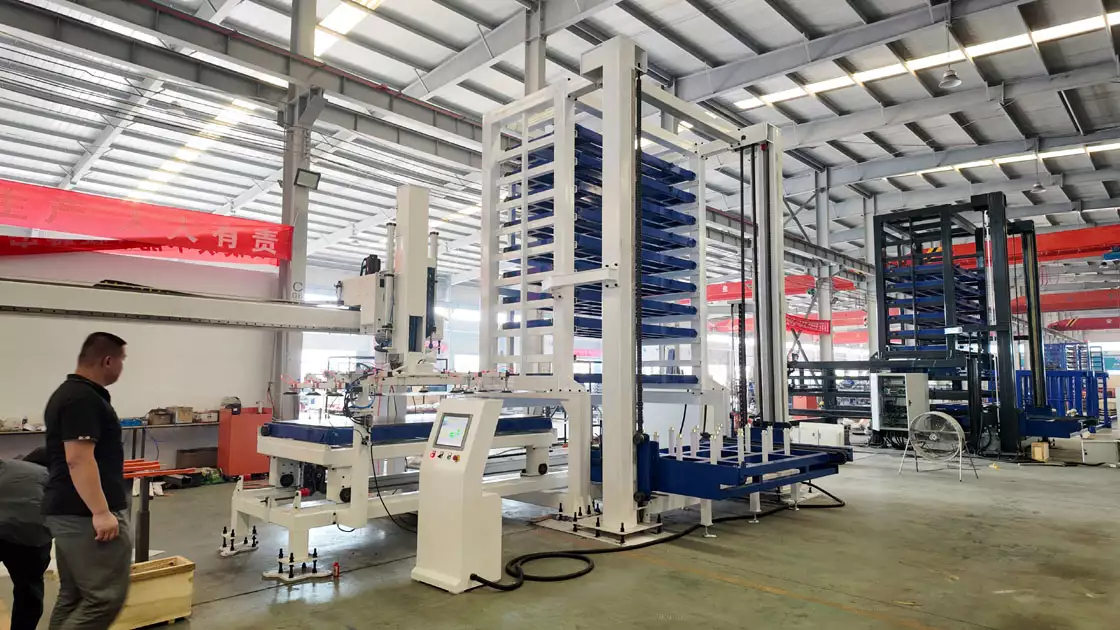
A laser cutting shop produces remnants every time a nest is optimized. Some of those pieces are large enough for the next order, some will be reused as spacers and brackets, and a few are genuine scrap. The difference between the two categories is decided by how they are stored. A vertical metal sheet remnant storage rack keeps every piece visible, labeled by its position, and accessible in seconds — which turns a pile of “maybe useful” steel into a real inventory. Herochu designs its vertical remnant racks around exactly this job.
The hidden cost of unordered remnants
Shops that leave remnants in flat piles pay for them three times. First, they reorder full sheets because nobody can confirm what is still in stock. Second, they damage material — stacked plates scrape each other, and thin offcuts bend under heavier ones. Third, they waste labor: finding a specific remnant means shifting sheets by hand, measuring, and guessing. Audits at fabrication shops routinely show that 15 to 25 percent of purchased steel ends up as remnants, and most of that value evaporates when the remnants are unmanageable. An organized vertical rack does not create new material — it makes the material you already paid for usable again.
Layered storage turns remnants into an inventory list
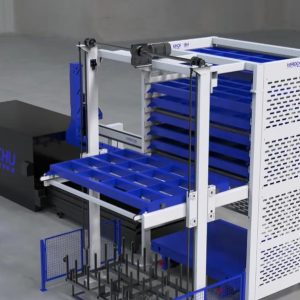
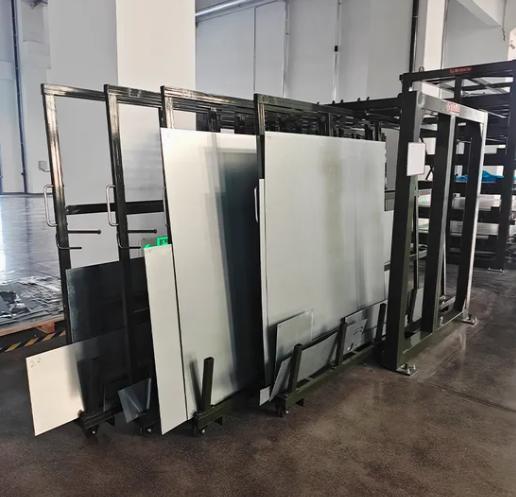
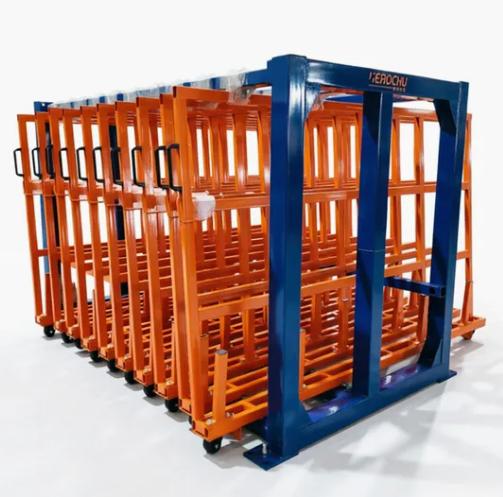
The principle behind the Herochu HC-V rack is simple: one layer, one piece, one position. Independent drawer layers form a complete inventory list, so the operator knows exactly what is in stock without opening a single drawer. Clear layering avoids the problem of forgetting material under a stack, which is how remnants usually become dead inventory. Because each drawer is dedicated to a specific size range or material type, the rack itself becomes the storage map of the shop. That structure makes the inventory auditable: a supervisor can walk the rack and read every material position at a glance, a two-minute walk that replaces a half-hour search through piles.
Technical parameters
| Parameter | HC-V2513-8 | HC-V3015-8 | Remarks |
|---|---|---|---|
| Sheet dimensions | 2500 × 1000 mm | 3000 × 1500 mm | mm |
| Number of layers | 8 | 8 | Customizable |
| Max. load per level | 1000 kg | 1000 kg | Kg |
| Clear space | 60 mm | 60 mm | Customizable |
| Material discharge | Mechanical assistance | Mechanical assistance | — |
For shops that track more categories — stainless, aluminum, galvanized, and carbon steel each get their own section — Herochu also offers 15-layer configurations (HC-V2010-15, HC-V2513-15, and HC-V3015-15) on the same 1,000 kg per-layer basis. More layers mean more categories can stay separated without taking extra floor space.
Find what you need in seconds
Sorting rules are easy to set and hard to keep. With a vertical remnant rack, the rack enforces the rule: remnants are sorted by size, material, and type, and each category lives in its own drawer. The operator looks at the front of the rack, reads the position, pulls the drawer, and takes the piece. In practice, this cuts retrieval time from several minutes of pile-shifting to under thirty seconds of drawer handling. For a busy laser cutting cell, those minutes add up across dozens of pick operations per shift.
How to size a remnant rack
Choosing the right vertical metal sheet remnant storage rack starts with three numbers: the largest remnant size you keep, the number of material categories you track, and the heaviest plate you handle. The largest remnant sets the model — HC-V2513-8 fits pieces up to 2500 × 1000 mm, while HC-V3015-8 covers 3000 × 1500 mm. The number of categories sets the layer count: eight layers suit shops that separate by size, while fifteen layers suit shops that separate by size and material together. The heaviest plate confirms the 1,000 kg per-layer rating, with reinforced versions available for thicker stock. Most shops underestimate their category count at first; Herochu recommends listing the materials actually in stock before ordering, because a layer per category is what keeps the system sustainable.
Space efficiency: reclaim the floor
Vertical storage uses the one dimension most workshops waste: height. A single Herochu vertical rack stands in the footprint of one pallet and holds eight or fifteen layers of material, freeing the floor area that flat piles and pallet racks consume. In cramped facilities, this can be the difference between a workable material flow and constant forklift maneuvering. The rack also keeps the area around the laser cleaner, which reduces the risk of stepping over or driving through scattered remnants. Retrieval speed improves planning as well: when a job calls for a specific remnant size, the operator checks the rack in seconds and knows within a minute whether the material exists on site. That certainty removes the most expensive habit in remnant management — ordering a full sheet to avoid hunting for a half sheet.
Maximum protection for expensive material
Aluminum, stainless, and pre-finished sheet cost real money, and their surfaces are easy to damage. Soft non-slip liners on every load surface prevent scratches and dents during storage and removal. Because plates rest on their own layer instead of on top of each other, there is no inter-sheet abrasion and no pressure marking from stacked weight. The vertical position also keeps edges away from forklift traffic, a common source of dents in floor-stacked material.
Compatible with your machining equipment
A remnant is only valuable if it reaches a machine. The Herochu vertical rack integrates with laser cutting, punching, shearing, and press brake workflows: the operator pulls a drawer, transfers the remnant directly to the machine table or a nearby cart, and returns the unused portion to its layer. High compatibility with various machining equipment means the rack slots into existing material flow instead of becoming a separate handling step.
Customization and service
Storage needs differ between a job shop and a production line, which is why Herochu customizes each order: rack dimensions to match your sheet sizes, layer count to match your material mix, load capacity for heavier plate, and finish color to suit your facility. On-site installation and debugging are included, with online guidance available for remote sites, and the standard delivery cycle is 30 days.
Remnants back into stock
A vertical metal sheet remnant storage rack from Herochu does not just tidy up the shop — it changes how remnants are treated. What was scrap becomes stock, what was lost becomes findable, and what was double-ordered becomes unnecessary. Send Herochu your sheet sizes, material types, and floor plan, and get a rack configured around the remnants your shop actually produces.