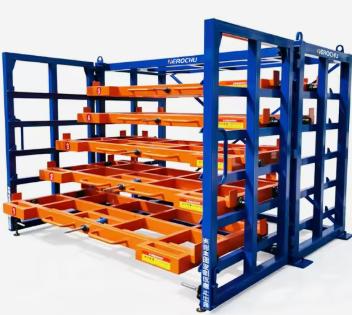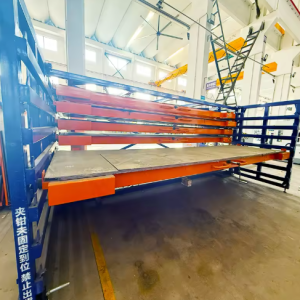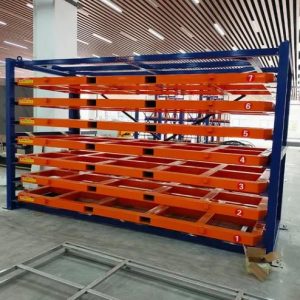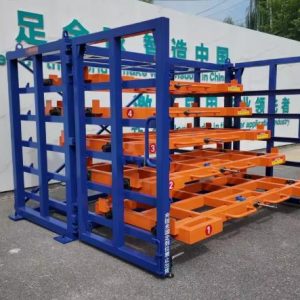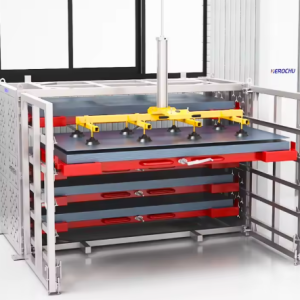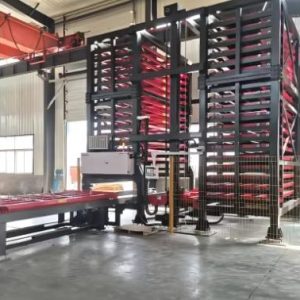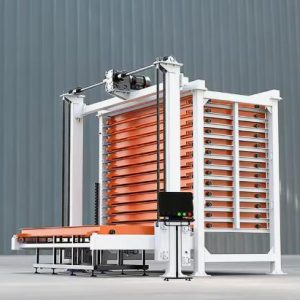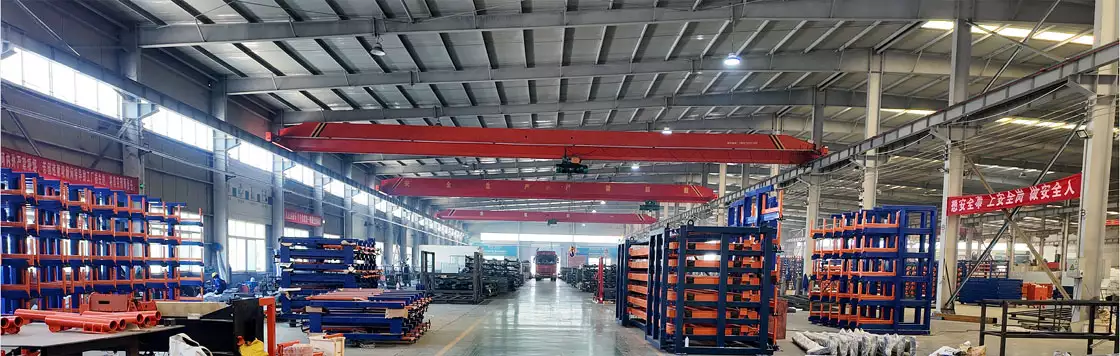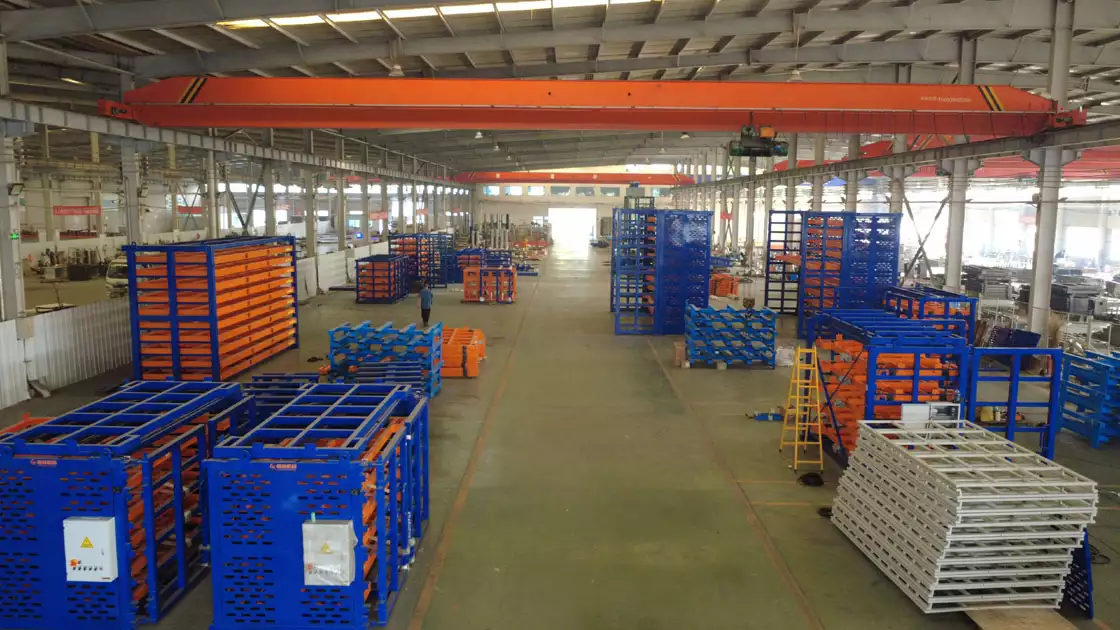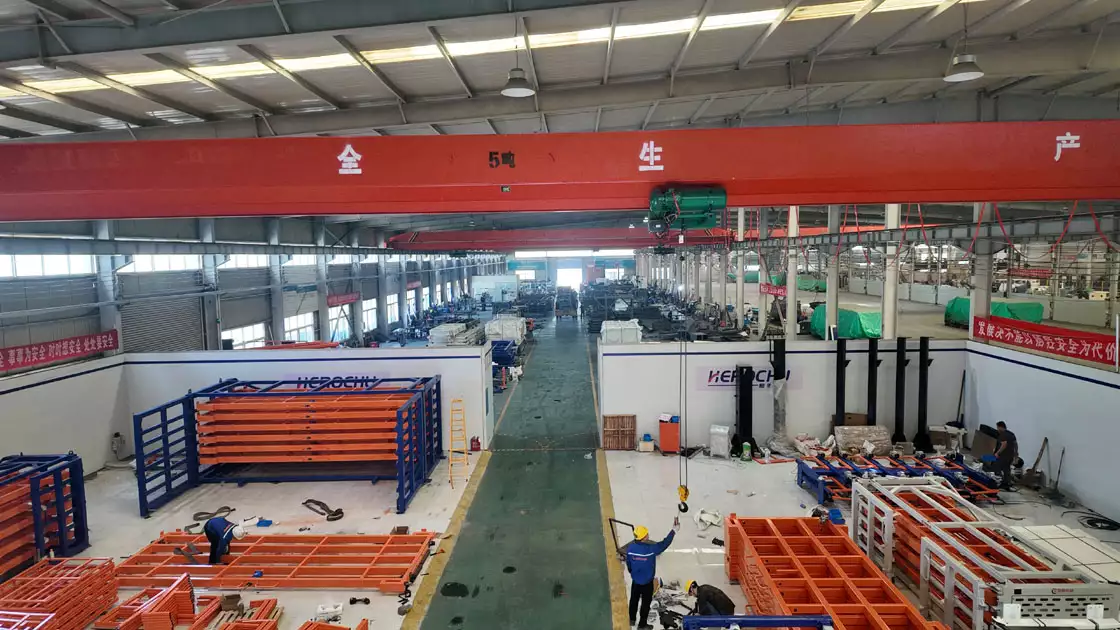
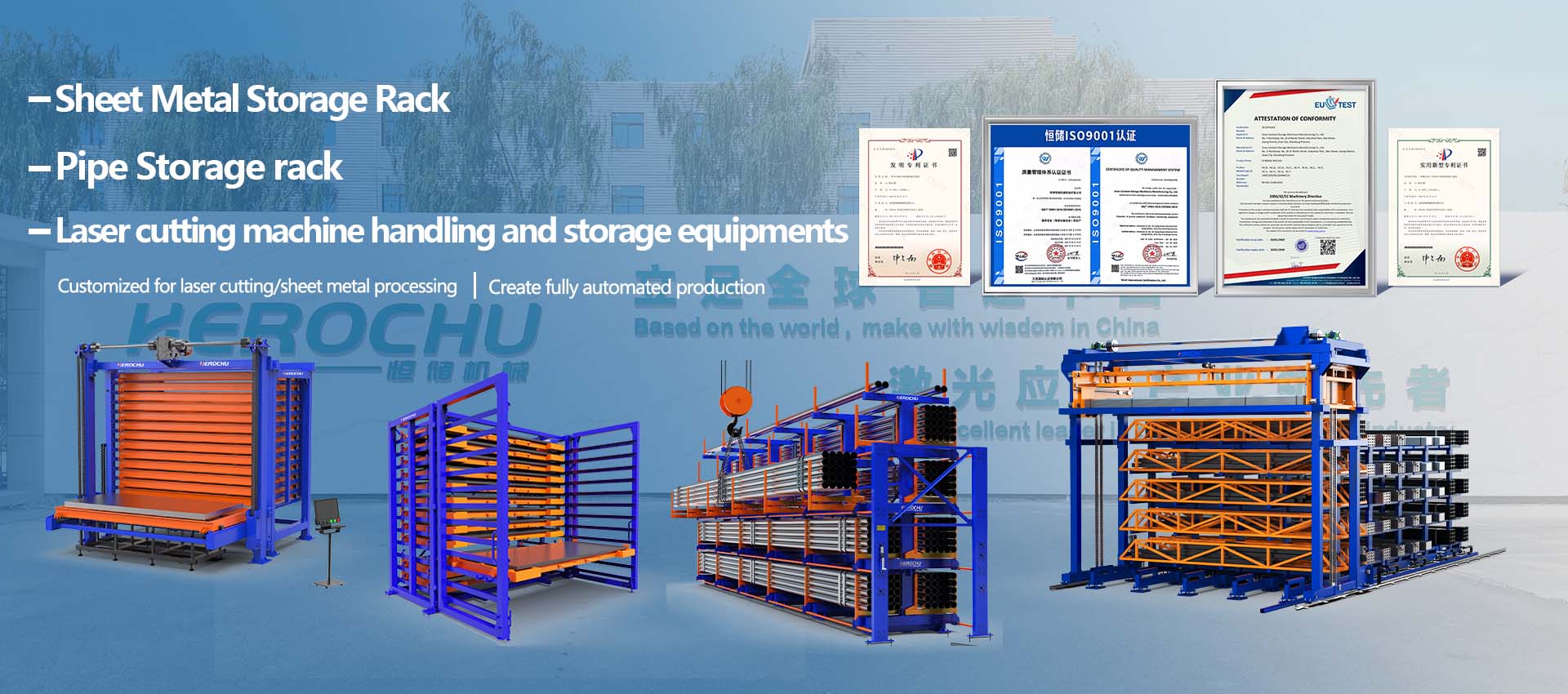
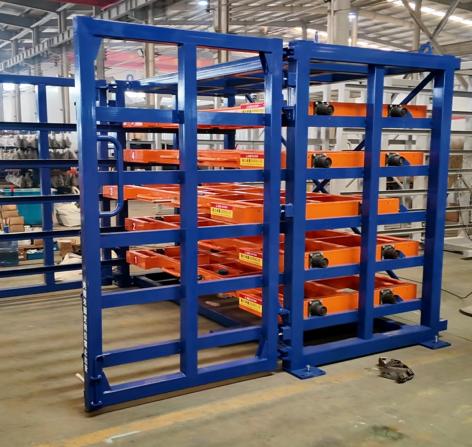
Moving heavy steel plate is normally a team job. Two or three people wrestle a sheet off a stack, guide it around machines, and risk pinched fingers and pulled backs with every move. A hand-cranked drawer steel plate storage rack changes the equation: one operator, one crank, and a multi-ton drawer that glides out under control. Herochu builds this rack for shops that want the safety of drawer storage without the cost of powered automation.
Precision Gears Turn a Multi-Ton Drawer by Hand
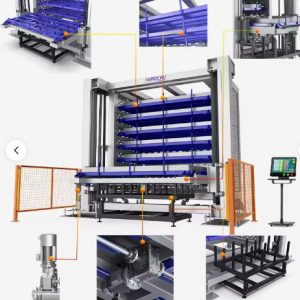
The hand-crank system is the heart of the rack. A precision gear mechanism converts each turn of the crank into smooth, controlled drawer travel, so a single operator can extend a fully loaded drawer weighing between 3,300 and 6,600 lbs (1.5 to 3 tons) safely and without strain. The mechanical assistance system carries the load during travel, which means the operator controls the drawer rather than fighting it. There are no hydraulics, no motors, and no electronics to maintain — just a robust gear train that keeps working shift after shift. When the drawer reaches the open position, it holds steady while the sheet is placed or removed.
The Risks That Disappear with Drawer Storage
The traditional alternative is shuffling plates with an overhead crane, which remains one of the highest-risk activities in any fabrication shop. Swinging loads, unbalanced lifts, and two-person handoffs create accidents, material damage, and compensation claims. A hand-cranked drawer rack replaces that dangerous routine with a standardized, one-person operation. The sheet never leaves the drawer path, never hangs overhead, and never requires a team to balance it. Shops that make the switch report fewer injuries and lower direct labor costs, because one operator does what used to require a full crew.
One Operator, Full Control, Faster Retrieval
Drawer storage also happens to be fast. Because every sheet sits on its own accessible tier, there is no digging through a stack to reach the plate at the bottom. The operator pulls out the required layer, completes the storage or retrieval task, and moves on — and Herochu measures up to 70 percent less retrieval time compared with traditional storage. The rack works alongside forklifts and cranes, which load the drawers directly, while lighter panels can be handled by hand. First-in, first-out rotation is easy to apply, so older plate gets used before it rusts or becomes obsolete. Full access is built into the design: every tier opens completely, so a sheet is never blocked by the tier above it.
Ergonomics That Protect the Operator
The hand crank is not a compromise; it is a deliberate ergonomic choice. Turning a crank keeps the operator in a stable standing position, away from the sheet’s travel path, with both hands on a controlled handle instead of on the edge of a heavy plate. Compare that with lifting a sheet edge to slide it out of a stack, or signaling a crane operator through a crowded aisle. The crank motion uses the large muscles of the back and legs through the gear reduction, not the wrists and fingers, which cuts fatigue during long shifts. Over a full working day, that difference in strain shows up in fewer mistakes and steadier production.
Electric Drive for High-Throughput Shops
For operations that move very high volumes of plate, Herochu offers an electric version with one-button start. The push of a button extends the selected drawer, removing physical effort entirely while keeping the same safety characteristics and the same drawer geometry. Material discharge is mechanically assisted in both versions, so the drawer extends and returns on a controlled path whether the power comes from a crank or a motor. Shops can standardize on the hand-cranked model and upgrade individual racks later if throughput grows. Both versions share the same Q235B high-strength steel frame, dual-beam construction, and powder-coated finish.
Maintenance That Stays Out of the Way
A storage rack that needs constant attention is not storage; it is another job to manage. The hand-cranked design keeps maintenance minimal by removing almost everything that can wear out: no motor, no hydraulic cylinder, no electronic controller. The gear train and rollers are the only moving parts that matter, and both are built for continuous industrial duty. Routine care comes down to keeping the rails clean and applying lubricant to the gear mechanism on a simple schedule — work a shop’s own maintenance staff can handle without specialist training or special tooling. Because the mechanism is mechanical, a fault is easy to see and easy to diagnose, and replacement parts are standard rather than proprietary. The same simplicity that keeps the rack affordable also keeps it running: Herochu builds the mechanism with generously sized components and sealed bearing points, so the rack spends its time holding plate rather than waiting for a repair.
Payload and Footprint in One System
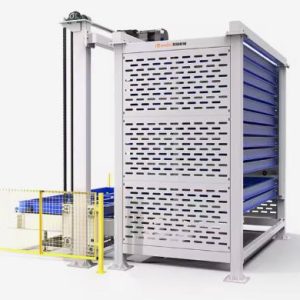
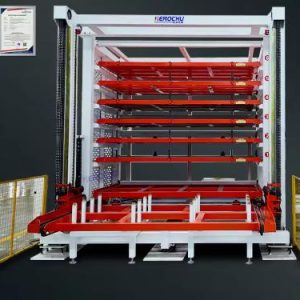
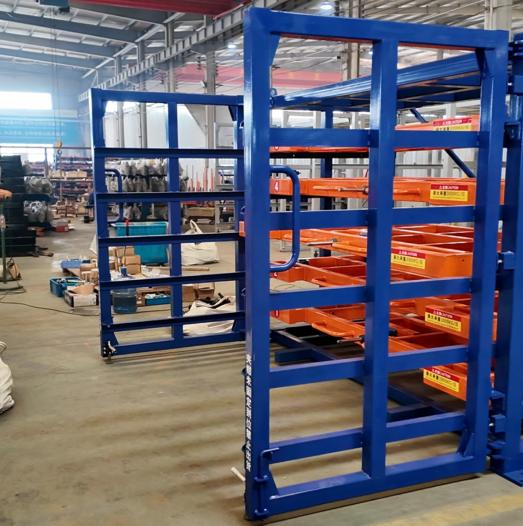
Hand-cranked racks are not light-duty equipment. Standard models carry between 3,000 kg and 5,000 kg per tier across six tiers, with 120 mm clear space between levels. The vertical layout reduces the floor area used for raw material by up to 80 percent, so a shop gains storage capacity and working space in the same purchase. Models are available for sheet sizes from 2500 x 1300 mm through 6000 x 2000 mm, and the number of drawers can be customized between three and eight.
Sized and Built by Herochu
Every rack is engineered around the customer’s inventory and building. Drawer dimensions match standard 4’x8′ or 5’x10′ panels or non-standard sheet sizes, shelf height and overall dimensions fit the available space, and load ratings match the heaviest plate in stock. The frame is precision welded and powder coated for a service life beyond ten years, and manual operation keeps maintenance to routine lubrication of the gear train.
For shops that want to take the team lift out of plate handling, the hand-cranked drawer steel plate storage rack from Herochu is the practical upgrade: safer, faster, and operable by one person from day one. Contact Herochu with your plate sizes and layout, and the engineering team will size a rack for your floor.