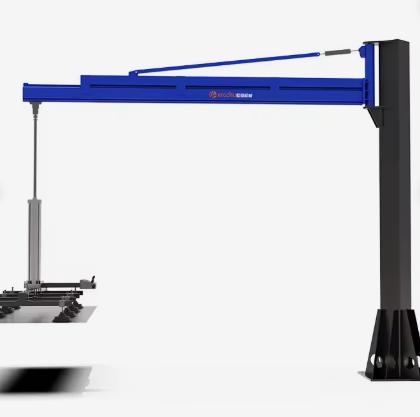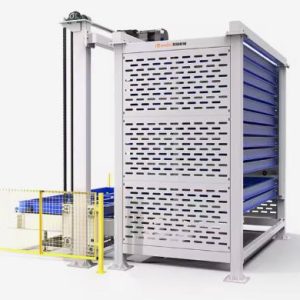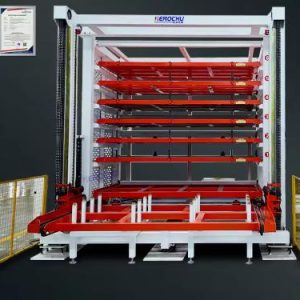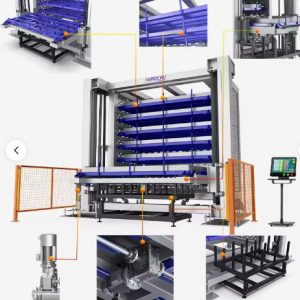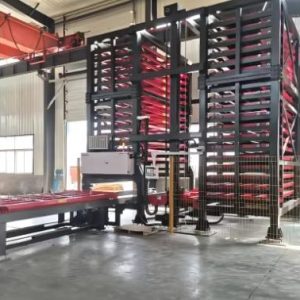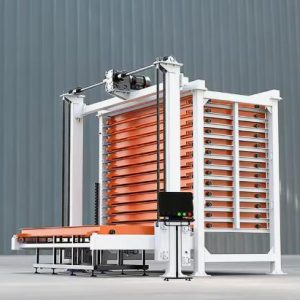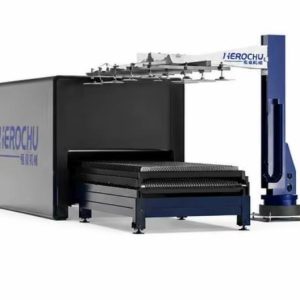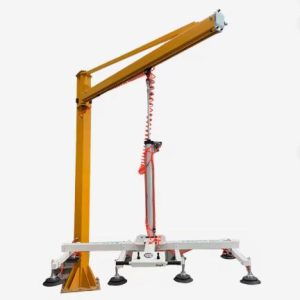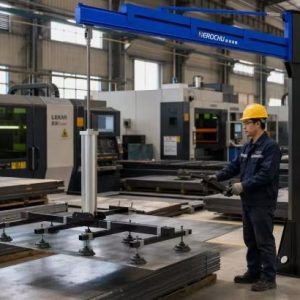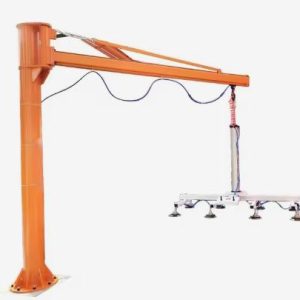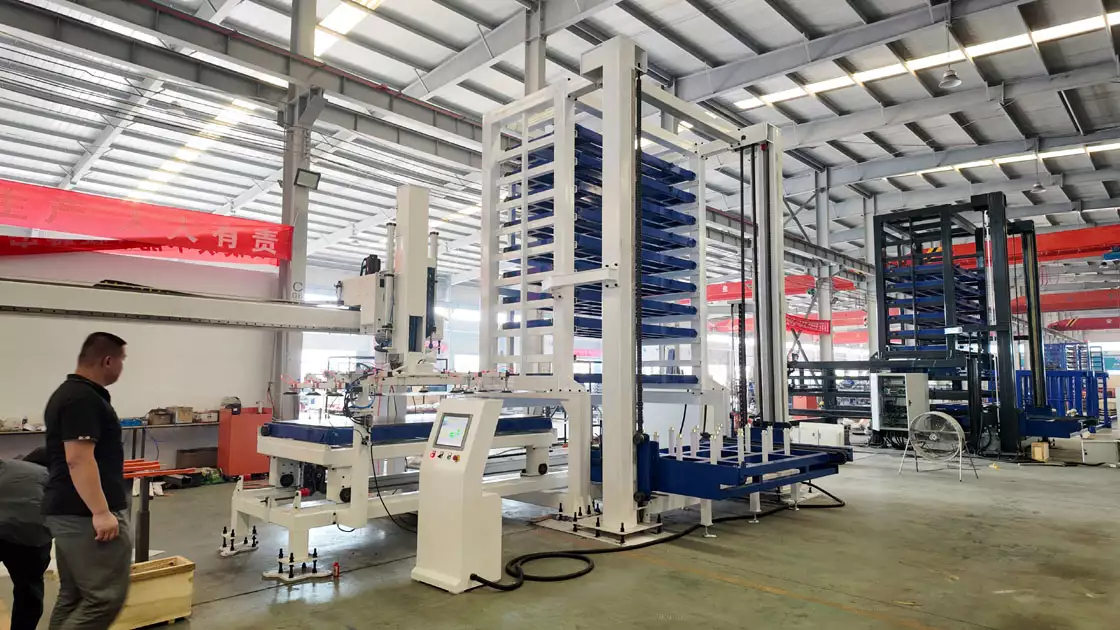
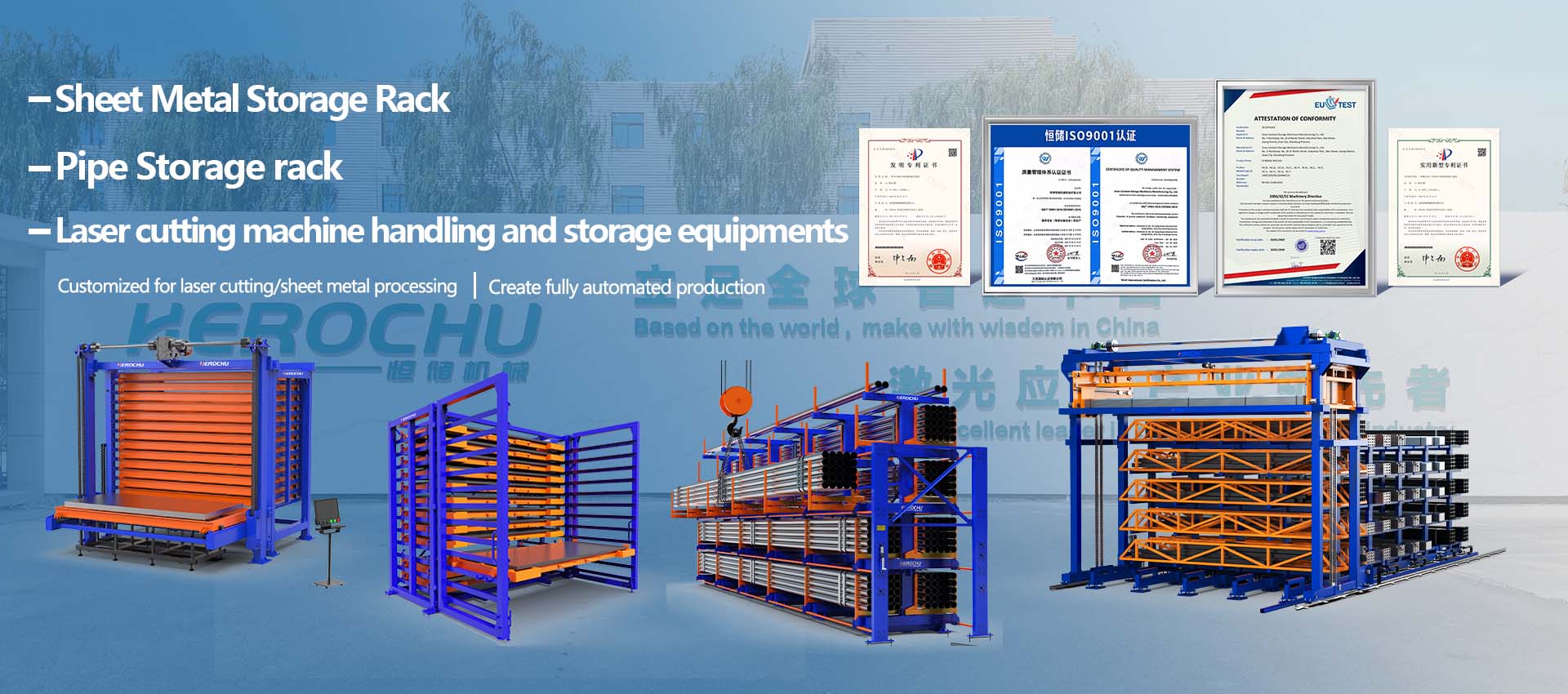
The 3000 x 1500 mm sheet is the workhorse format of the laser cutting industry. It fits on standard machines, nests well, and covers most job-shop work. The problem is the handling: a 1500 mm-wide plate weighing up to 300 kg is too heavy for one person and too awkward for two. A CNC laser loading robot for sheet metal 3000x1500mm takes the plate off the operator’s hands entirely. The Herochu unit picks a sheet from the stack, separates it from the plates below, and loads it onto the laser bed under full CNC control.
The machine is a servo-driven loading system built around the standard industrial formats: 3000 x 1250 mm in the HC-PR3015 series and 4000 x 1250 mm in the HC-PR4020 series. It feeds plates from 8 mm to 20 mm thick, weighing up to 300, 500, or 1000 kg depending on the model.
A Loading Robot Built Around the 3000 x 1500 mm Sheet
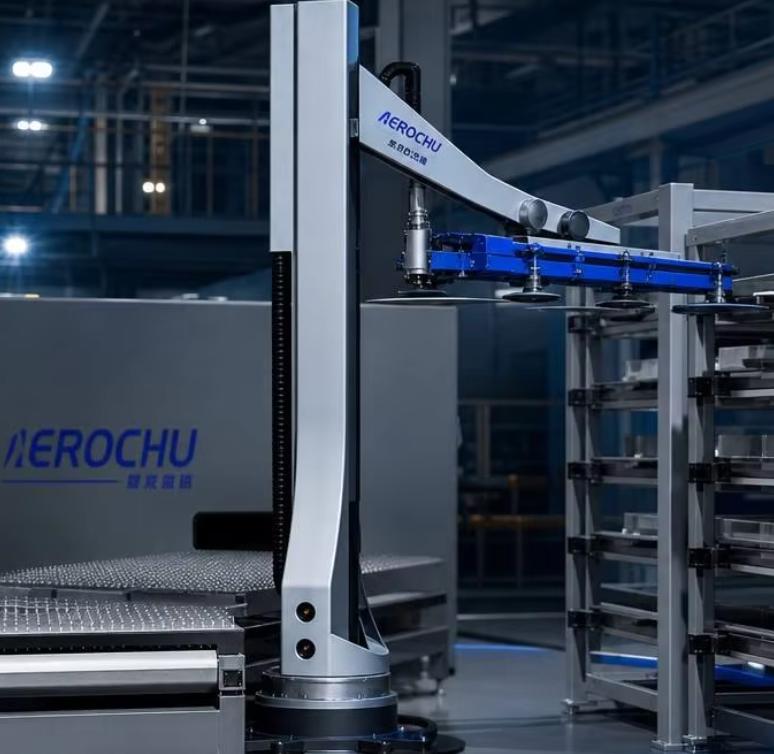
The format defines the machine. The cantilever reach and the suction cup layout are sized so an entire 3000 x 1500 mm sheet is supported at once – eight cups on the 300 and 500 kg models, ten cups on the 1000 kg model. The plate is held across its full width, so it does not sag or flex on the way to the bed. Loading a plate into a machine that is 3000 mm long starts with gripping it correctly, and the Herochu layout is built for exactly that.
The rotary manipulator adds a ±150-degree rotation range. The robot can pick a sheet from a stack on the left of the cell and place it on the bed rotated to the right, or serve two machines from one load position. Multi-station layouts stop requiring the operator to walk plates around the machines.
Servo Motion: Smooth, Fast, Repeatable
Every axis of the robot is driven by high-torque servo drives. The servos give the machine the three properties a loading robot needs: speed, because the cycle time counts against the laser’s cutting time; smoothness, because a jolting load shifts the plate in the cups and scratches the surface; and repeatability, because the laser program expects a sheet in the same place every cycle. The motion – rotating, lifting, traveling – is controlled at every point, not just at the endpoints.
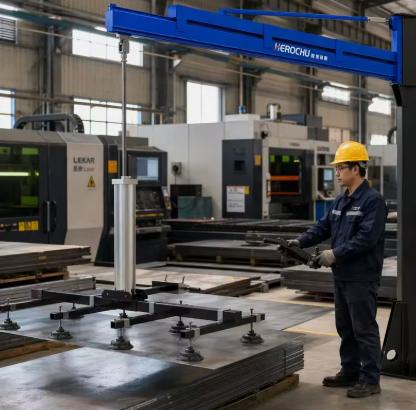
The drive layout also keeps the electrical footprint modest. The robot runs on pneumatic/electric power, draws no hydraulic oil, and needs no pump room, so the cell stays clean and the maintenance schedule stays short. Every component is sized for a duty cycle measured in shifts, not in one-off jobs.
±2 mm Accuracy and What It Protects
Repetitive positioning accuracy is ±2 mm. On a loading robot, that number has two jobs. The first is material economy: a sheet placed at the same coordinates every time wastes nothing on the cut layout, and nested parts stay within tolerance. The second is equipment protection: a sheet placed high, or skewed, can collide with the cutting head, the nozzle, or the focusing optics. Damage to optics is one of the most expensive failures on a laser line, and a robot that places plates accurately is the cheapest insurance against it.
Programming and CNC Synchronization
The intelligent PLC system programs the robot, monitors it in real time, and synchronizes it with the laser cutter’s CNC software. The operator teaches a new sheet size once, and the robot repeats the cycle until the job changes. When the cut program finishes, the CNC signals the robot, the finished parts are cleared, and the next sheet is loaded – without anyone walking to the machine.
For shops running nights or weekends, this is the foundation of unattended operation. A Herochu robot does not need breaks, does not slow down at the end of the shift, and does not forget where the stack is. The line runs with one operator covering several machines instead of one operator per machine.
Configuring the Robot for Your Plate Mix
The five standard models cover the common plate mixes in the industry. Shops feeding mostly 8 mm plate up to 300 kg choose the HC-PR3015-300 or the HC-PR4020-300. Shops handling 12 mm plate up to 500 kg step up to the -500 models. Shops running 20 mm plate up to 1000 kg take the HC-PR3015-1000 with its 10-cup, 250 mm suction layout. Minimum feeding width is 1250 x 1250 mm across the range, and all models run on pneumatic/electric power.
Running the Cell Unattended
The safety systems are what make unattended running possible. Active air pressure protection locks the load if air pressure drops, and the emergency braking module holds the plate if power is lost – the 300 kg load, or heavier, is stopped instantly instead of falling. Air cut-off protection and anti-collision devices cover the vacuum circuit and the travel path. Fail-safe behavior is built into every component, because a machine that runs without supervision has to be safer than one that does not.
Herochu HC-PR Series CNC Laser Loading Robot – Specifications
| Model | Thickness of feeding plate | Maximum feeding width | Minimum feeding width | Maximum plate weight | Number of suction cups | Suction cup diameter | Power mode |
| HC-PR3015-300 | 8 mm | 3000×1250 mm | 1250×1250 mm | 300 kg | 8 | 200 mm | Pneumatic/Electric |
| HC-PR3015-500 | 12 mm | 3000×1250 mm | 1250×1250 mm | 500 kg | 8 | 200 mm | Pneumatic/Electric |
| HC-PR3015-1000 | 20 mm | 3000×1250 mm | 1250×1250 mm | 1000 kg | 10 | 250 mm | Pneumatic/Electric |
| HC-PR4020-300 | 8 mm | 4000×1250 mm | 1250×1250 mm | 300 kg | 8 | 200 mm | Pneumatic/Electric |
| HC-PR4020-500 | 12 mm | 4000×1250 mm | 1250×1250 mm | 500 kg | 8 | 200 mm | Pneumatic/Electric |
Power mode: Pneumatic/Electric. Minimum feeding width applies across all models.
The jump from manual loading to CNC-controlled loading is a jump in what a laser line can promise: longer runs, tighter schedules, fewer damaged sheets, and fewer damaged optics. The Herochu CNC laser loading robot for sheet metal 3000x1500mm is built to make that jump a single purchase, not a project.