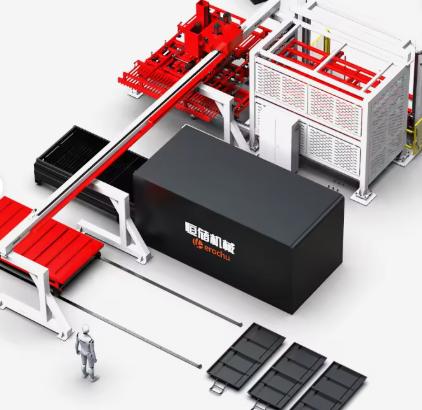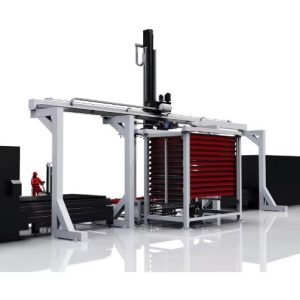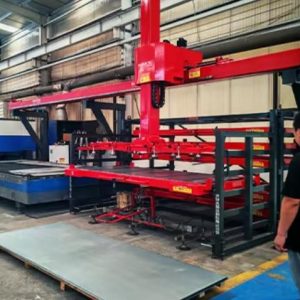
Most material handling arms hang from a single cantilevered joint, which works well for small loads but begins to flex the moment the payload grows. A 6-meter sheet of 10 mm plate is not a small load, and a flexing arm cannot place it accurately twice in a row. Herochu’s loading and unloading truss robot takes the opposite approach: the entire working envelope is spanned by a rigid truss frame, so the machine’s accuracy does not depend on how far the load extends from a pivot point.
Why a Truss Instead of an Articulated Arm
A truss structure distributes load across the whole frame instead of concentrating it at one joint. For sheet metal handling this buys three things. First, stiffness: the frame does not sag measurably under a full 6-meter sheet, so placement accuracy holds at the far end of the bed. Second, speed: a stiff frame can accelerate and decelerate without settling time, which keeps cycle times short. Third, cost per kilogram of payload: a welded steel truss carries heavy loads for a fraction of the price of an articulated robot rated for the same mass. Herochu builds the truss from welded rigid structures precisely because sheet handling rewards stiffness more than articulation.
The truss rides on precision guide rails along its full span, driven by servo-controlled rack-and-pinion drives. Servo drives hold position under load and report their actual position back to the controller, which is how a frame moving at speed still lands a sheet within tolerance of its target. The layout also keeps drive components clear of the cutting zone, where laser spatter and abrasive dust would otherwise shorten their service life.
Two Manipulators, One Cycle
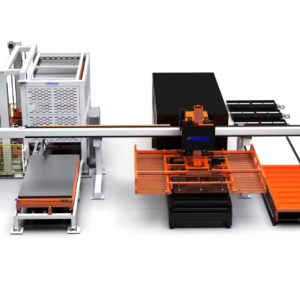
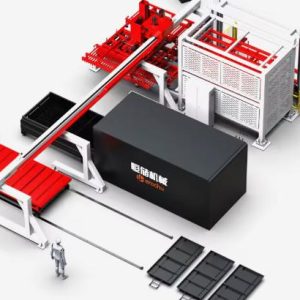
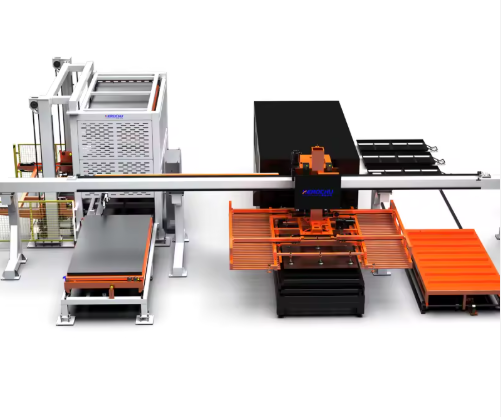
The key feature of this loading and unloading truss robot is its parallel dual-manipulator architecture. Two independent manipulators run on bilateral guide rails across the machine. One is dedicated to loading raw sheets onto the bed; the other is dedicated to unloading finished parts and skeleton frames. Because they move on separate rails, they operate at the same time: the unload manipulator clears the bed while the load manipulator brings the next sheet to the pickup position.
This concurrency is what removes the pause between cutting cycles. On a single-arm system, the sequence is load, wait, cut, wait, unload, wait — the arm is always either working or waiting. On a Herochu dual-manipulator truss robot, loading and unloading overlap, and machine idle time between cutting cycles drops by up to 25%. On a laser running three shifts, that recovered time is real output, not theoretical capacity.
Payload and Dynamics
The truss is engineered for heavy plate, not just thin sheet. Standard configurations support sheet loads up to 800 kg, and the same frame family expands to 5-tonne handling for structural plate lines. Positioning speed reaches 35 m/min with ±2.5 mm placement accuracy. The combination matters in practice: a 35 m/min traverse is only useful if the frame arrives on target without overshoot, and the welded structure is what keeps the deceleration controlled at the end of every move. For plate lines, Herochu offers hardened guide surfaces and heavier drives, so one truss family covers both sheet and plate work.
Feeding From a Storage Tower
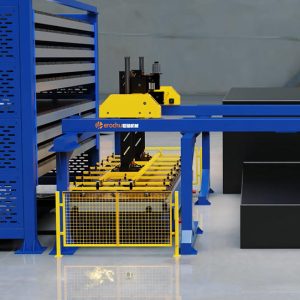
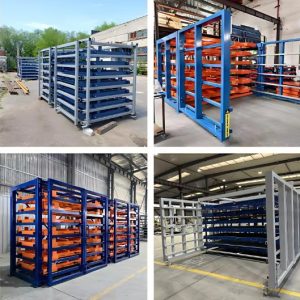
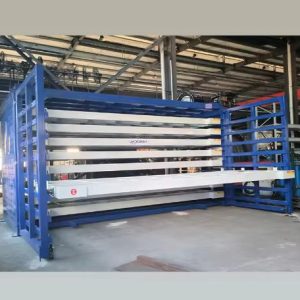
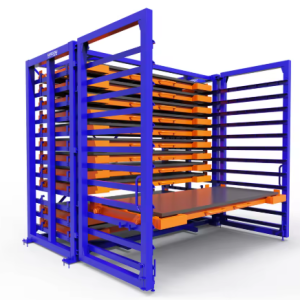
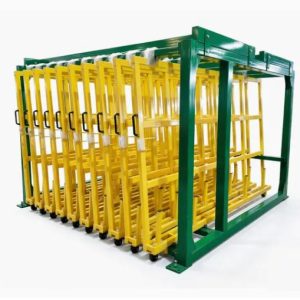
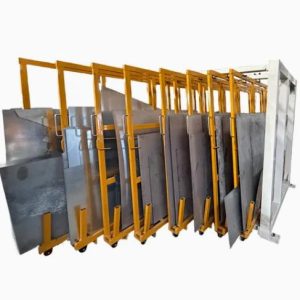
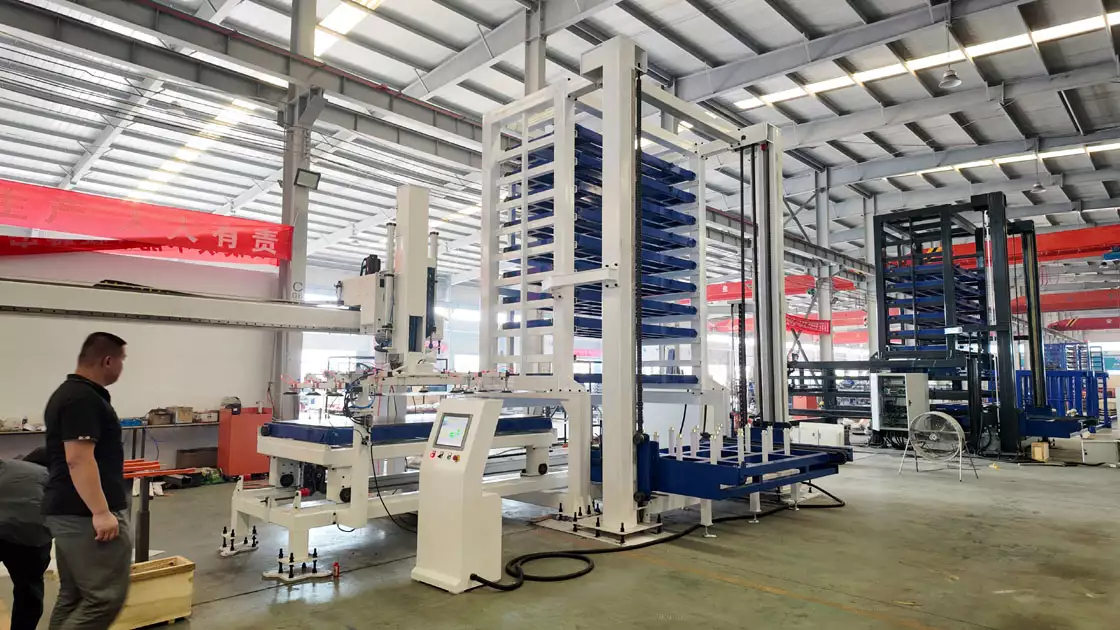
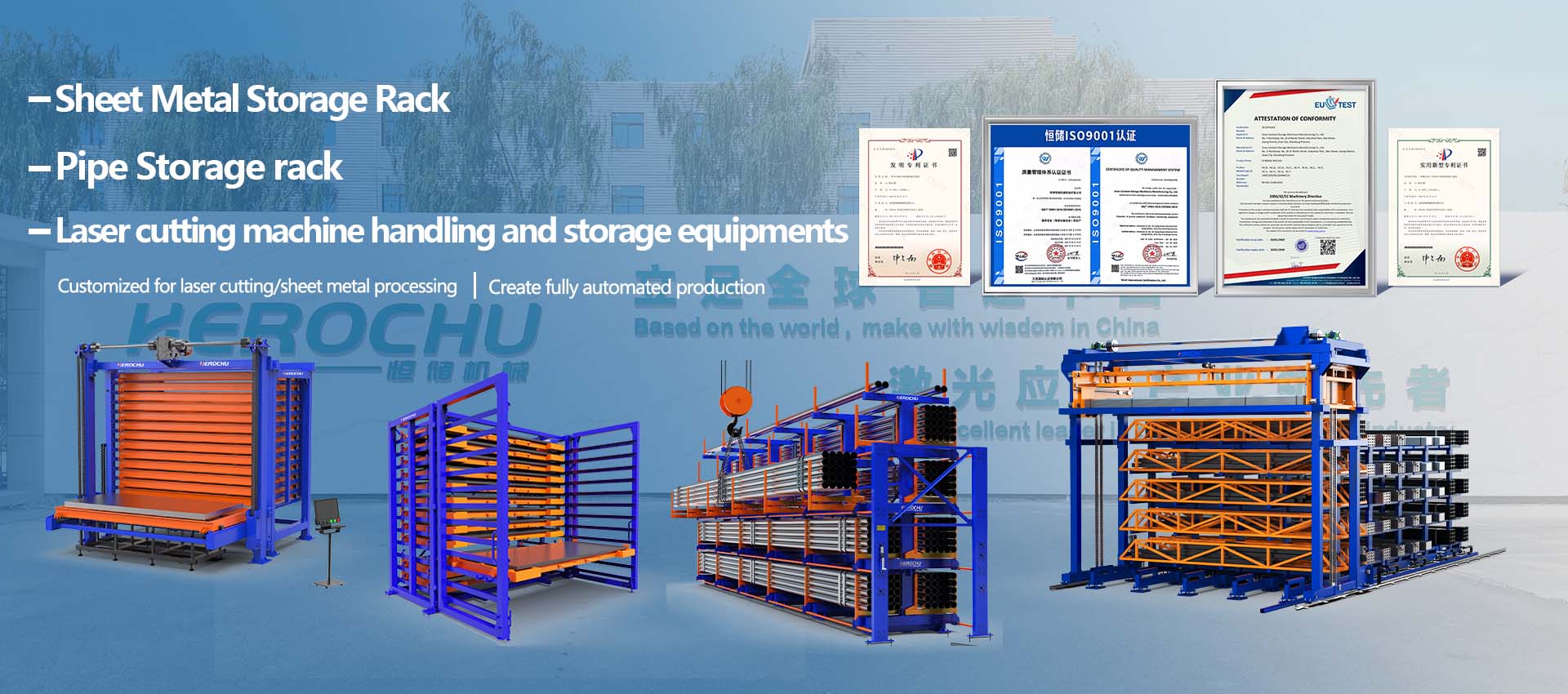
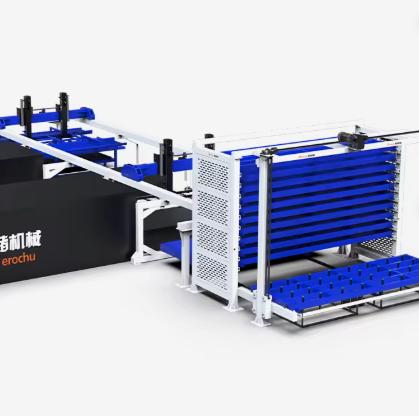
Where a shop needs hours of uninterrupted cutting, Herochu connects the loading and unloading truss robot to a multi-layer storage tower rather than a floor stack. The tower holds 8 to 13 layers, each rated for 3 to 5 tonnes, and the bilateral gantry retrieves sheets automatically. The control system verifies material thickness and alloy before every feed, so a 3 mm sheet never lands in a program written for 5 mm. Remnant sheets are tracked and returned to storage instead of being scrapped, and the tower stages several grades and gauges at once. A cell built this way runs unattended through a full shift on mixed stock. Operators define the day’s job sequence in the Herochu control software, and the tower feeds the jobs in order, including remnant sheets returned from earlier runs.
Control, Diagnostics, and Safety
The robot runs under CNC and PLC control, with real-time diagnostics and visual and audible safety alarms built into the sequence. It exchanges cycle status with the laser cutter’s controller, so a sheet is never placed while the previous job is still active. Systems are built to CE and ISO 9001 standards, and the safety interlocks cover the points where operators actually walk: the stack area, the bed edges, and the exchange car path. Maintenance access is a design requirement, not an afterthought — guide rails and drive components are positioned for inspection without dismantling the truss.
Maintenance and Service Life
A truss robot’s maintenance profile is simple because its moving parts are few: guide rails, rack-and-pinion drives, the vacuum circuit, and the gripper mechanisms. Herochu positions the service points at floor level or on the rail carriages, so a maintenance team can inspect drives and lubrication without scaffolding. Vacuum filters and cups are quick-change items, and the CNC logs runtime and cycle counts per axis, which gives the maintenance planner real data on when components need attention instead of a fixed calendar guess. Shops running the system three shifts typically plan one scheduled maintenance window per quarter.
FAQ
On typical fiber laser cycles, overlapping loading and unloading reduces machine idle time between jobs by up to 25% compared with single-arm handling.
What is the maximum sheet weight it can handle?
Standard configurations handle up to 800 kg, and the frame family extends to 5-tonne capacity for heavy structural plate.
Can it be connected to an automated storage system?
Yes. Herochu integrates the truss robot with multi-layer storage towers of 8 to 13 layers, including automatic thickness and alloy verification and remnant sheet reclaim.