
Smart Profiles Silo Storage Solution for Metal Profiles & Fabrication Lines
Herochu’s smart profiles silo storage solution closes that gap by integrating automated vertical storage directly with the factory’s production control system. Material enters the silo, receives a digital identity, and sits in an addressable tower position until the manufacturing execution system calls for it. The gantry retrieves the bundle, stages it at the line-side buffer, and logs the transaction. Nobody walks the yard with a pick list. No bundle leaves the silo without a matching work order.
Smart Profiles Silo Storage Solution for Metal Profiles & Fabrication Lines
The gap between raw material inventory and the fabrication line is where production schedules go to waste. A laser cutting cell sits idle waiting for the right plate. A beam drill line runs the wrong section because the correct bundle was buried three rows deep in the yard. A saw operator burns half a shift walking the racks looking for a heat number that the inventory spreadsheet insists is there.
Herochu’s smart profiles silo storage solution closes that gap by integrating automated vertical storage directly with the factory’s production control system. Material enters the silo, receives a digital identity, and sits in an addressable tower position until the manufacturing execution system calls for it. The gantry retrieves the bundle, stages it at the line-side buffer, and logs the transaction. Nobody walks the yard with a pick list. No bundle leaves the silo without a matching work order.
From Warehouse to Workflow: The Smart Silo Concept
A conventional material warehouse operates as a distinct function: steel comes in, gets stored, and eventually gets pulled when production asks for it. The storage system and the production system talk through people—forklift drivers, material handlers, supervisors with radios. The latency in that communication chain is measured in minutes or hours, and the error rate climbs with every handoff.
Herochu’s smart silo collapses the chain. The silo controller connects directly to the factory’s Warehouse Management System (WMS), Enterprise Resource Planning (ERP), or Manufacturing Execution System (MES) through an industrial communication protocol. When the ERP creates a work order that consumes five bundles of 50 mm x 50 mm x 5 mm SHS, the silo controller receives that order as a retrieval command. The gantry fetches the bundles in sequence, stages them at the line-side output station, and confirms fulfillment. The entire sequence runs without a human decision point between order creation and material delivery.
This changes how the fabrication line operates. Instead of building schedule buffers around material availability uncertainty, production planners can sequence jobs knowing that the silo will deliver the right material at the right time. Machine utilization rises because the cutting, drilling, and welding stations spend less time waiting for steel to show up.
Silo Architecture: Vertical Density Meets Line-Side Access
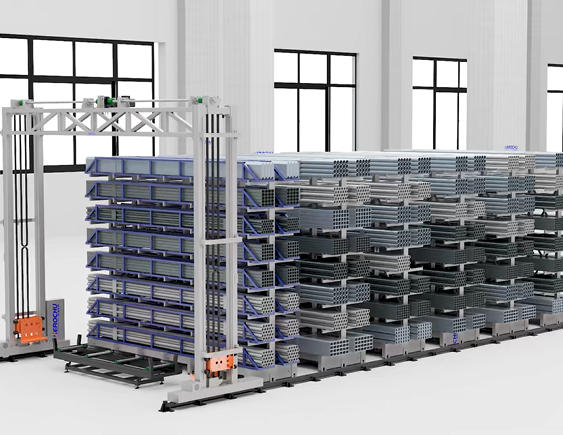
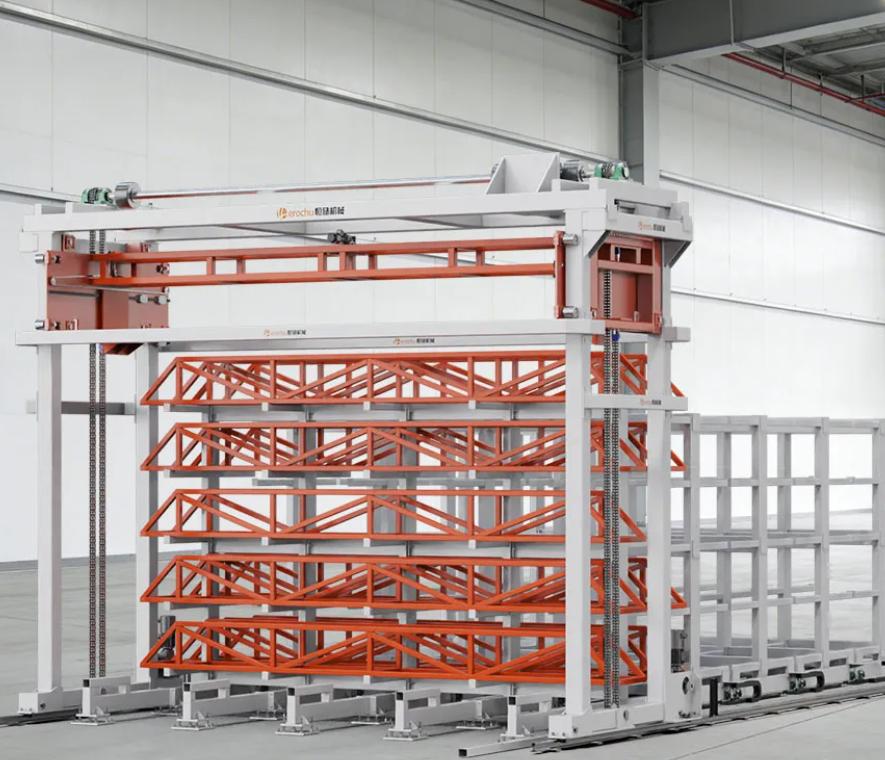
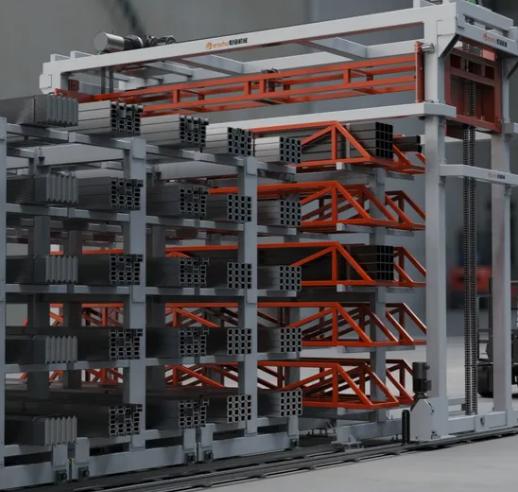
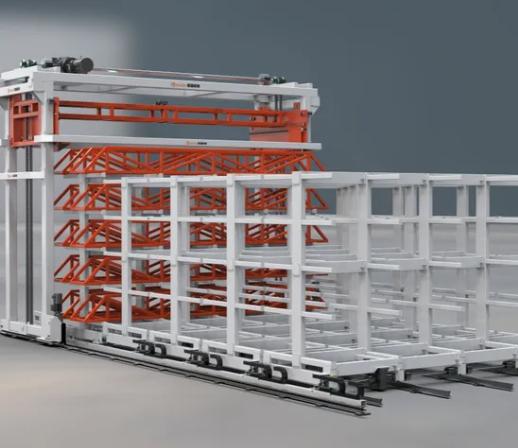
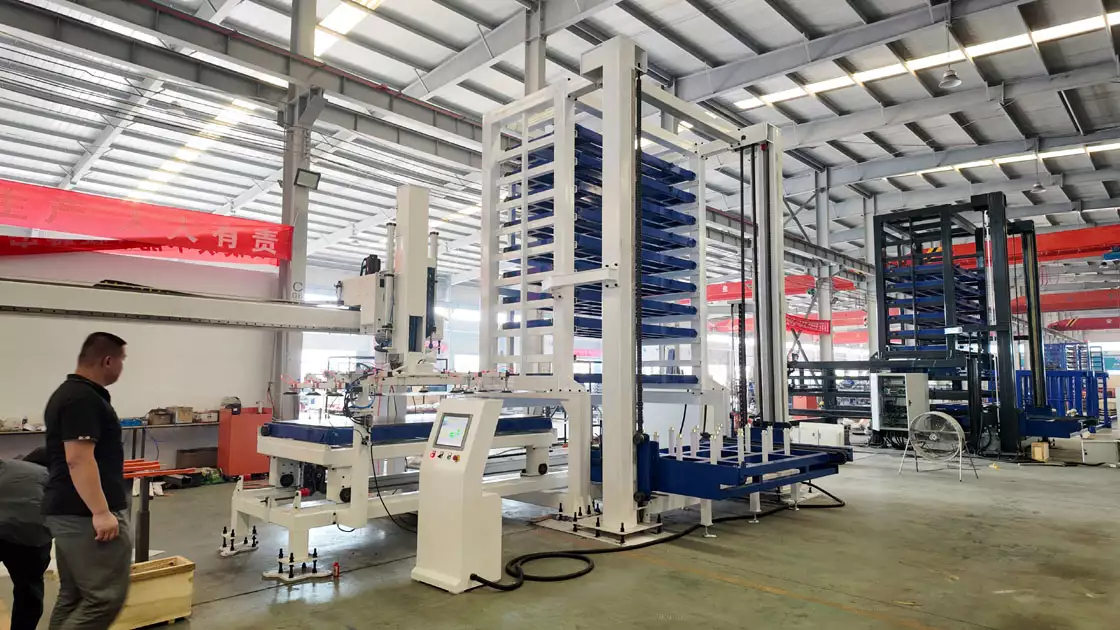
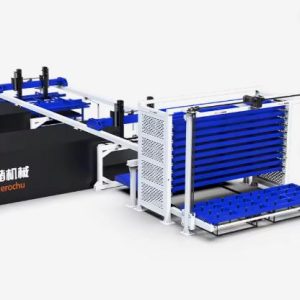
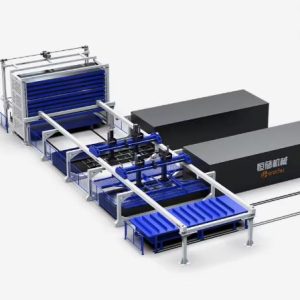
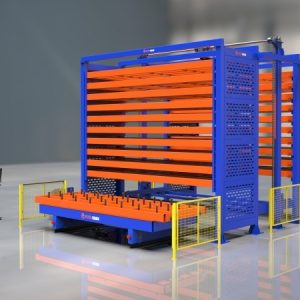
The physical design of a Herochu smart profiles silo follows the same vertical tower and gantry architecture as the company’s other automated storage systems, with one important difference: the output station layout is configured for fabrication line integration.
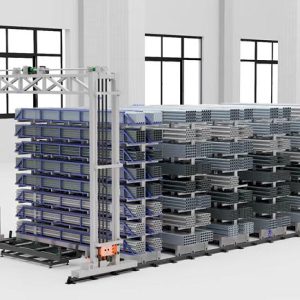
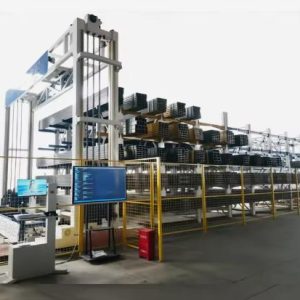
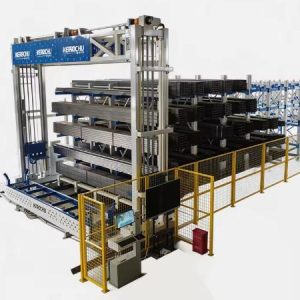
Towers hold multiple layers of dedicated cradles, each layer rated for up to 5,000 kg depending on the model. Pipe lengths up to 8,000 mm fit within the standard envelope. The gantry spans the full tower row on floor-mounted rails and retrieves any bundle in any order, depositing it at one or more output stations positioned along the rail.
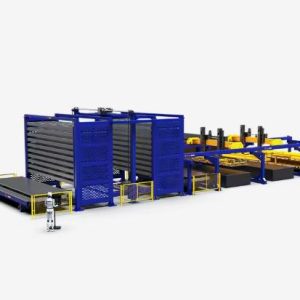
The output station design varies by downstream process. For a facility feeding a single CNC saw, a simple roller conveyor buffer at the station lets the saw loader pick up bundles as they arrive. For a multi-machine line—laser, saw, drill, and cope stations in sequence—Herochu configures multiple output positions along the rail, each mapped to a specific machine. The gantry routes material to the station that needs it next, eliminating intermediate forklift transfers.
The picking aisle stays shared across all tower positions. Shelf spacing drops to the minimum clearance needed for the gantry end effector, because there is no forklift turning radius to accommodate. The storage density gain translates directly into shorter gantry travel distances and faster retrieval cycles compared to a spread-out yard layout.
Digital Identity and Traceability
Every bundle that enters a Herochu smart silo receives a digital record that follows it through storage, retrieval, and line-side delivery. The operator scans or enters the material data at the inbound station: grade, heat number, dimensions, mill certificate reference, and supplier. The system assigns a storage position and records the GPS-like coordinates in the database.
When the gantry retrieves the bundle for a production order, the transaction links the material identity to the work order, the machine, and the operator. For fabrication shops working to certified material traceability standards—EN 1090 for structural steel, API Q1 for OCTG, ISO 9001 for general manufacturing—this digital chain replaces the paper trail that manual systems depend on.
Audit support is a secondary but valuable benefit. If a customer rejects a fabricated assembly and the investigation points to a material defect, the silo’s transaction log pinpoints the supplier, the heat, the inbound date, and every production order that consumed material from that bundle. Root cause analysis that might take days of file-cabinet searching in a manual system takes minutes with a database query.
Production Scheduling Built on Real Inventory
The most persistent problem in fabrication production scheduling is the gap between what the inventory system says is on hand and what is actually in the racks. Cycle counts close the gap periodically, but they are labor-intensive and disruptive—the yard has to stop moving while the counters do their work.
A smart silo eliminates the gap by design. The gantry is the only mechanism that moves material. Every movement writes a database transaction. The inventory count displayed on the HMI or pushed to the ERP is not a periodic snapshot; it is the live state of the silo, accurate to the second.
This real-time accuracy enables production scheduling features that manual warehouses cannot reliably support:
Just-in-time staging: The scheduler programs the silo to retrieve and stage material for the next shift before the shift starts. Operators arrive to find their bundles waiting at the line-side station.
Minimum-level reorder triggers: The silo controller monitors consumption rates per SKU. When a material drops below a programmed threshold, it can push a reorder alert to the ERP or flag the SKU on the HMI. Procurement acts before the stock-out, not after.
Kit sequencing: For assembly or welding stations that need matched sets of profiles—say, four pieces of 100 mm channel and two pieces of 50 mm angle per assembly—the silo retrieves the full kit in sequence and stages it as a grouped delivery. The assembler receives a complete material set without sorting through mixed bundles.
Integration Protocols and Compatibility
Herochu’s control system communicates over standard industrial protocols, so integration with existing factory IT infrastructure does not require custom middleware. Supported interfaces typically include EtherNet/IP, PROFINET, Modbus TCP, and OPC UA, among others. The field engineering team confirms the protocol match during the quotation phase and pre-configures the communication module before shipment.
On the ERP/WMS side, the integration layer maps silo transactions to the business system’s data model. Inventory receipts, issues, reservations, and adjustments flow in both directions. The ERP sees the silo as a warehouse location with sub-locations (tower positions) and automated handling. From the ERP’s perspective, the silo is a location that happens to move its own inventory.
For facilities that do not run a full ERP, the Herochu silo controller operates as a standalone inventory management system. The HMI provides stock reports, transaction histories, reorder alerts, and consumption trend graphs without any upstream system. As the operation grows and an ERP becomes necessary, the integration interface is already built in.
Safety in Automated Line-Side Handling
Line-side material delivery puts automated equipment in closer proximity to production personnel than a fenced-off warehouse does. Herochu accounts for this with safety architecture that scales to the risk profile of the specific installation.
The gantry zone remains behind perimeter fencing with interlocked gates, as in any Herochu automated storage system. The output stations where bundles exit the automated zone incorporate light curtains or pressure-sensitive mats that stop the delivery sequence if a person is present. The conveyor or roller buffer that bridges the silo output and the machine loader runs at low speed with guarded pinch points.
The control system differentiates between safety-critical stops and process stops. A safety event—gate open, light curtain break, E-stop press—drops power to all drive axes through the safety relay chain and requires a manual reset. A process stop—bundle not at expected position, weight out of tolerance, communication timeout—halts the sequence in a controlled manner with the load held in place and a fault message on the HMI. This distinction prevents operators from becoming desensitized to stops, which is a known risk in systems that treat every halt as an emergency.
Fabrication Line Scenarios
Herochu’s smart silo installations serve a range of fabrication workflows:
Structural steel fabrication: Beam drill lines, cope stations, and welding cells receive sequenced bundles of wide-flange beam, channel, and angle from a shared silo. The silo tracks heat numbers for EN 1090 compliance and stages kitted sets for each assembly.
Tube laser cutting: Multiple laser cutting machines draw from a central tube inventory in the silo. The gantry delivers round, square, and rectangular tube in the diameters and wall thicknesses that each machine’s job queue demands, in the order the jobs run.
CNC sawing and drilling: Long-bar and pipe-fed saw lines receive material from the silo’s output station on a just-in-time schedule. The saw operator runs the machine; the silo handles the material supply.
Press brake and plate processing: Flat bar, plate strip, and sheet stacks stored in compartmentalized silo cradles feed press brakes, shears, and punching stations in fabrication cells that process multiple part numbers per shift.
In each of these scenarios, the value of the smart silo lies less in the storage itself and more in the predictability it brings to the production schedule. When the material is always where the system says it is, and the system delivers it when the schedule says it is needed, the fabrication line runs closer to its nameplate capacity.
Modular Growth and Future-Proofing
Smart silos grow with the operation. A facility that starts with four towers and a single output station can add towers along the rail bed and additional output stations at new positions as production volume increases. The PLC program accepts new position coordinates through a configuration update. The gantry already covers the full rail length, so extending the storage field is a mechanical installation task—no control system rebuild.
The communication interface that connects the silo to the ERP and MES remains unchanged through expansions, because the silo presents itself to the upstream system as a single logical warehouse location regardless of how many physical towers sit behind the controller.
For fabrication operations where material handling is the invisible constraint on machine utilization, Herochu’s smart profiles silo storage solution turns the material flow from a source of schedule variance into a controlled, predictable process step. The steel goes in, the data goes with it, and the gantry puts it where the production line needs it, when it is needed.
FAQ
Here are some frequently asked questions about our sheet metal racks and pipe storage solutions. We hope you find them helpful!
Q1: Can I request a custom size or color?
Absolutely. We offer complimentary design services and deliver efficient, tailored solutions to meet your specific requirements.
Q2: Are you a manufacturer or a distributor?
We are a direct manufacturer with over 15 years of industry experience and expertise.
Q3: Is there a minimum order quantity?
No. We welcome orders of any size, starting from a single unit.
Q4: How can I get detailed product information?
Click the “Get a Quote” button to receive product images, detailed specifications, and videos. Our team is always ready to assist.
Q5: How do I provide my storage rack requirements?
Simply share the type, dimensions, and quantity of materials you plan to store, along with any other specific needs. We will develop a professional storage solution for you. Alternatively, leave your contact details for a personalized consultation.
Q6: Do you offer automated loading systems or robotic arms?
Yes. We provide loading robotic arms and integrated loading/unloading systems tailored to your laser cutting machine’s table size and material handling method (e.g., board rack, exchange platform, or material warehouse). Contact us with your details for a customized proposal.
Q7: Do you provide on-site installation and debugging?
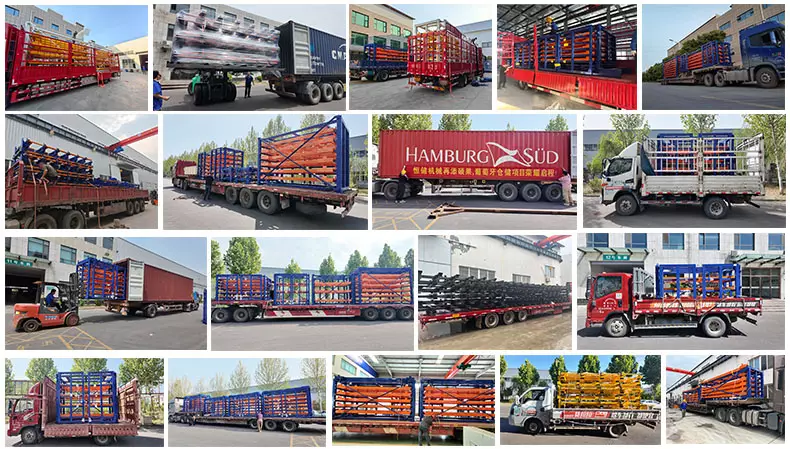
Yes. Our technicians can travel to your facility for installation and debugging, ensuring successful operation. We have served clients globally, including in the USA, South Korea, Russia, Qatar, Mexico, South Africa, Egypt, and Lebanon.
Q8: How do you ensure product quality?
Our quality assurance includes:
A team of over 40 technical engineers for professional debugging and support.
A dedicated quality control department compliant with ISO9001 standards.
CE certification for all exports.
Rigorous load testing before shipment to ensure structural safety and reliability.
Q9: Where is your factory located?
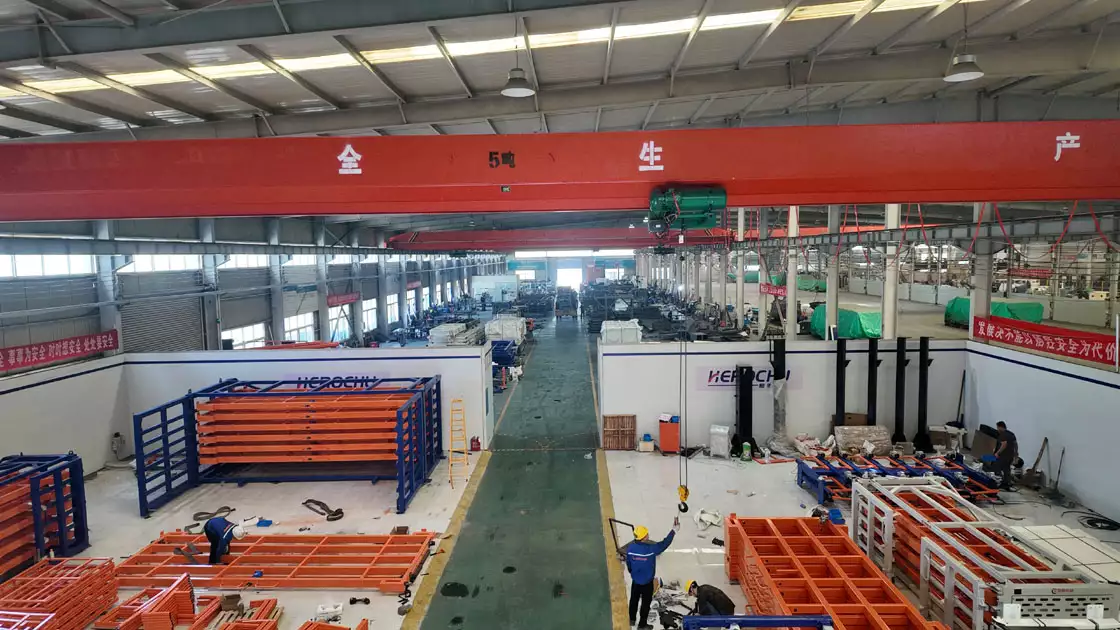
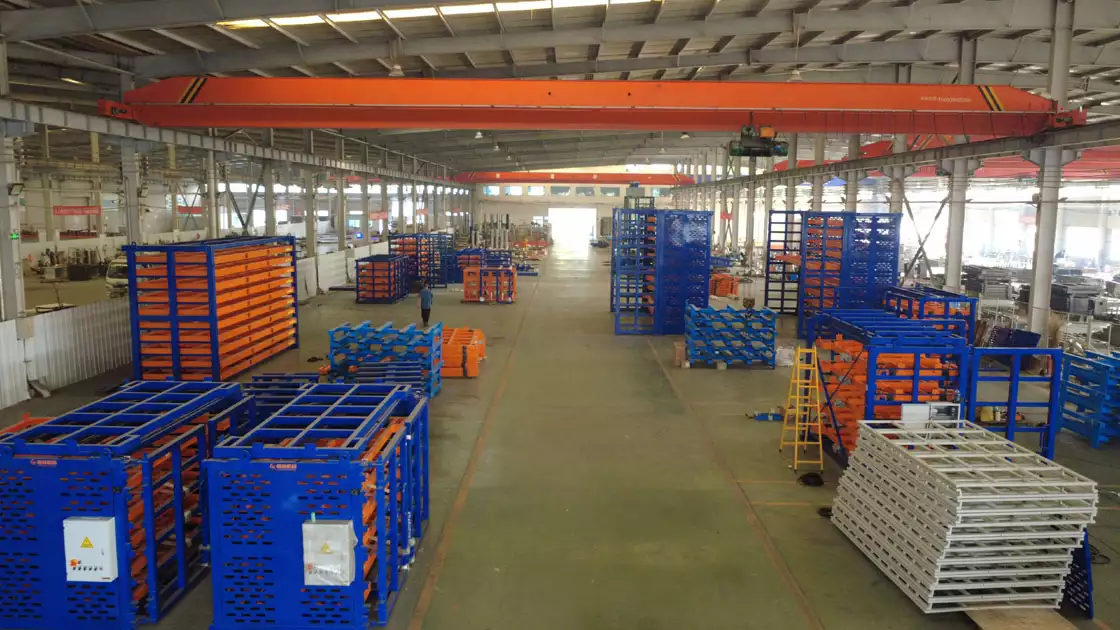
Our modern 10,000-square-meter manufacturing facility is located in Jiyang Industrial Park, Jinan, Shandong, China.
Q10: How can I evaluate your company’s capabilities?
We offer virtual video factory tours and warmly welcome on-site visits.
Q11: What does your company specialize in?
Jinan Constant Storage Machinery Manufacturing Co., Ltd. is a high-tech enterprise specializing in the R&D, production, sales, installation, and service of intelligent storage solutions. Our product range includes sheet material warehouses, drawer-style shelves, cantilever racks, servo manipulators, gantry loaders, and fully automated handling systems. Supported by a skilled technical team and advanced equipment, we are committed to delivering high-performance storage products and solutions to customers worldwide.
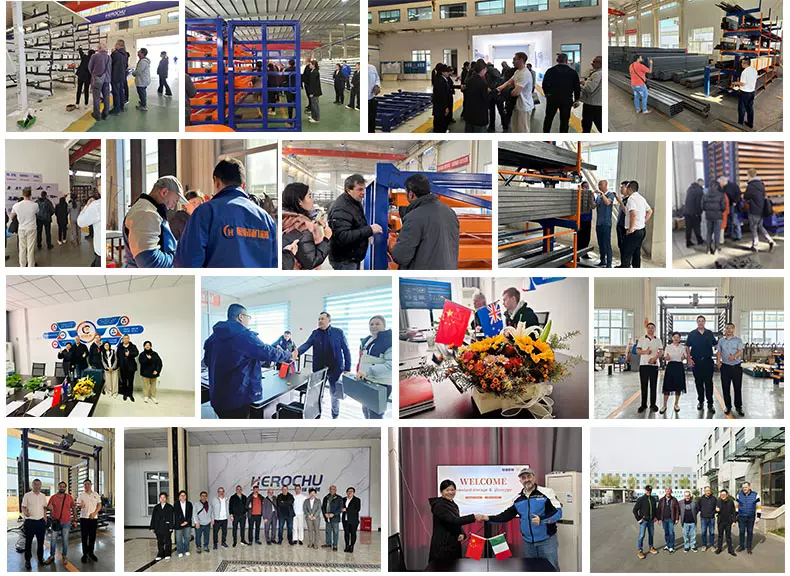
Customer visit
Herochu has always been adhering to the market-centric approach to meet customer requirements to the maximum extent, and the business philosophy of “creating brands with heart and gaining reputation with sincerity”. It provides customers with high-quality products and services with rigorous military quality, professionalism, and excellence, and has won unanimous praise in the Chinese aerospace, Chinese weapons, Chinese railways, automobile manufacturing, engineering machinery, non-ferrous metal titanium alloy and other industries.
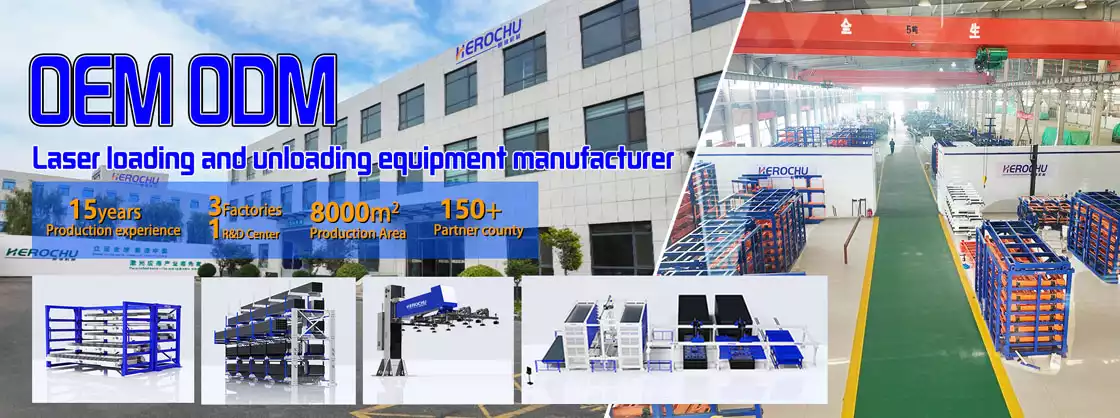
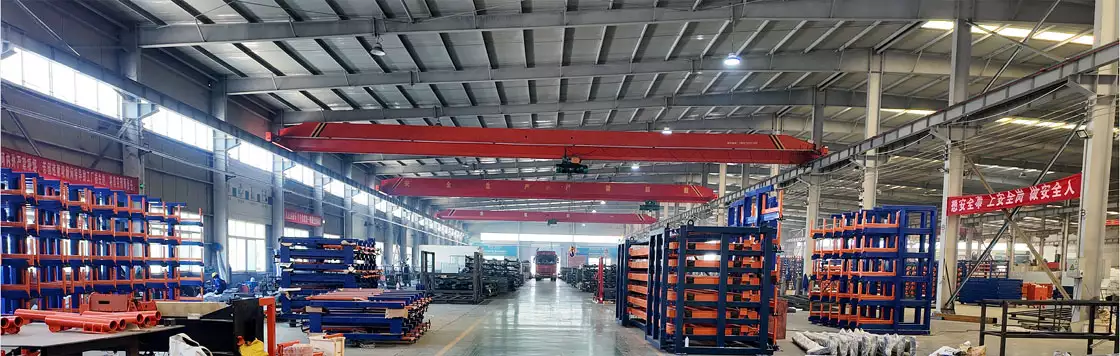
Factory

Hot Selling Machines
-
Gantry Loading and Unloading Manipulator
Single Gantry Automatic Feeding Manipulator for Laser Cutting | CNC Vacuum Control
Read moreRated 0 out of 5 -
Gantry Loading and Unloading Manipulator
Automatic Gantry Palletizer Workstation for Laser Cutting | Complete Sheet Metal Handling System
Read moreRated 0 out of 5 -
Automated Handling and Storage Solutions
Smart Loading & Unloading Equipment for High-Capacity Industrial Warehouse Automation
Read moreRated 0 out of 5 -
Gantry Loading and Unloading Manipulator
Automated Gantry Loading & Unloading Robot for Fiber Laser Cutting
Read moreRated 0 out of 5 -
Sheet Metal Handling Equipment
Herochu Sheet Material Handling Automation for Laser Cutters
Read moreRated 0 out of 5 -
Automatic Profile Material Library
Smart Profiles Silo Storage Solution for Metal Profiles & Fabrication Lines
Read moreRated 0 out of 5 -
Automatic Profile Material Library
Heavy-Duty Fixed Vertical Storage System for Profiles & Long Materials
Read moreRated 0 out of 5 -
Automatic Profile Material Library
Mobile Automated Vertical Storage System for Heavy-Duty Profile Management
Read moreRated 0 out of 5
Related products
Product Categories