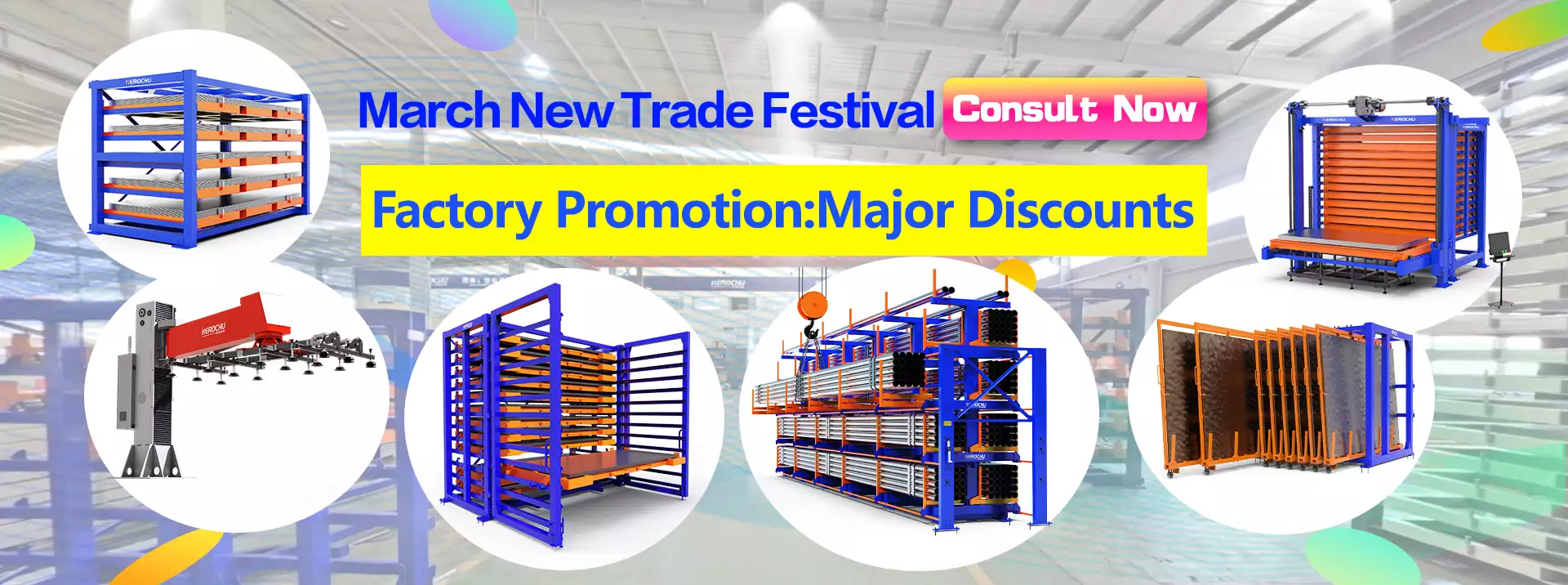
In the high-stakes world of industrial logistics, floor space is the most expensive commodity. For businesses dealing with bulky, heavy materials like steel plates, the challenge of storage is magnified. Traditional horizontal racking systems consume vast amounts of valuable real estate, often leaving warehouses cluttered and inefficient. Enter the Vertical Roll Out Sheets Rack Storage Racks, a specialized engineering marvel designed to defy gravity and maximize cubic volume. This article explores how implementing a Heavy Duty Sheet Metal Rack for Sheets Storage can revolutionize your inventory management, turning vertical air space into a highly productive asset.
The Vertical Advantage: Redefining Density
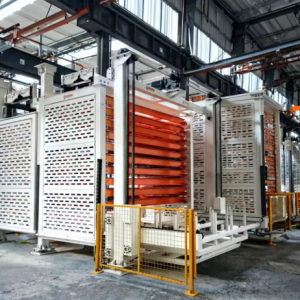
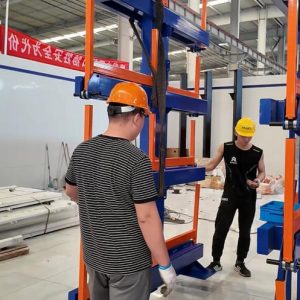
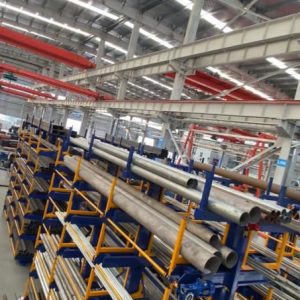
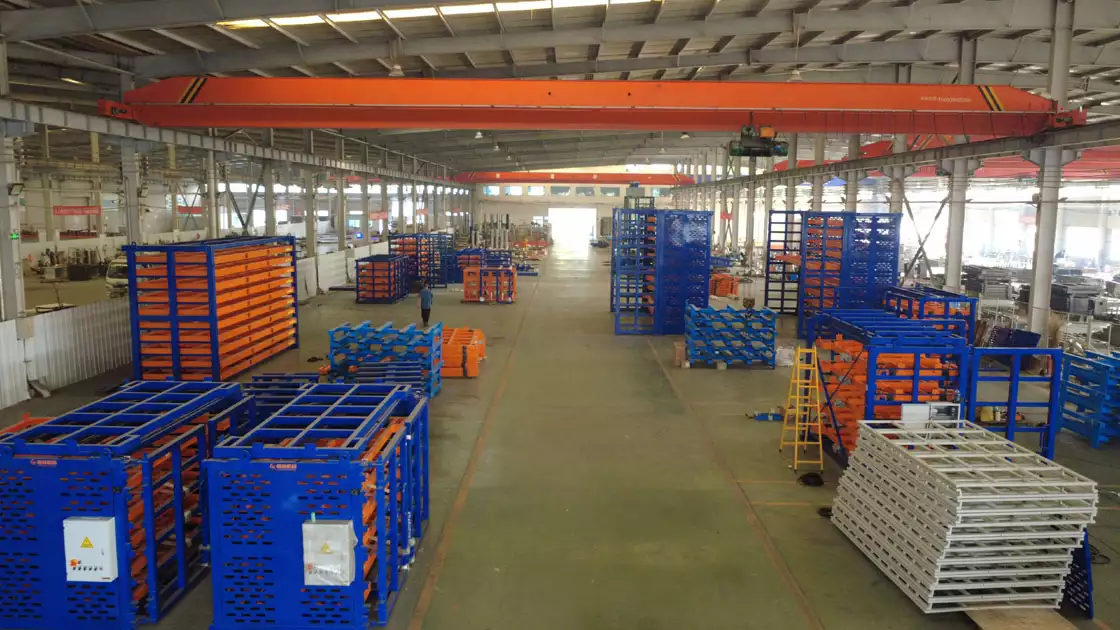
The fundamental principle behind the Vertical Roll Out Sheets Rack is simple yet profound: store up, not out. Traditional methods require wide aisles to accommodate forklifts reaching for materials stored at ground level or on low shelves. In contrast, vertical storage towers consolidate inventory into a compact footprint. By stacking handling units vertically within a robust welded structure, these systems can accommodate the same volume of material in a fraction of the floor area.
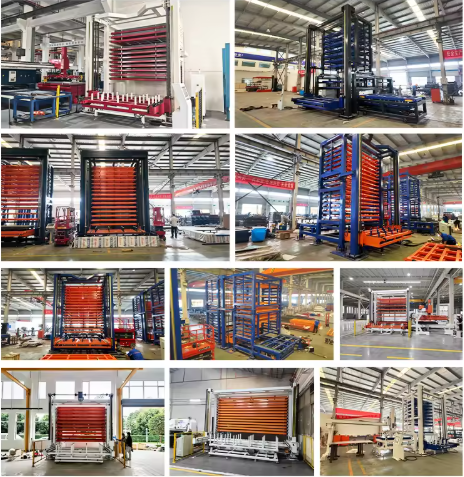
Consider the mathematics of a typical installation. A standard tower might feature 8, 10, or even 16 levels of storage, with a height between pallets of merely 120mm. This tight tolerance ensures that almost no vertical space is wasted. When compared to conventional shelving, the Large Load Capacity Warehouse Storage Sheet Rack can increase material storage capacity by 200% under the same factory area conditions. This dramatic improvement in density allows facilities to either downsize their physical footprint or, more commonly, utilize the freed-up space for value-added activities like assembly, quality control, or additional machining centers.
Robust Construction for Heavy Loads
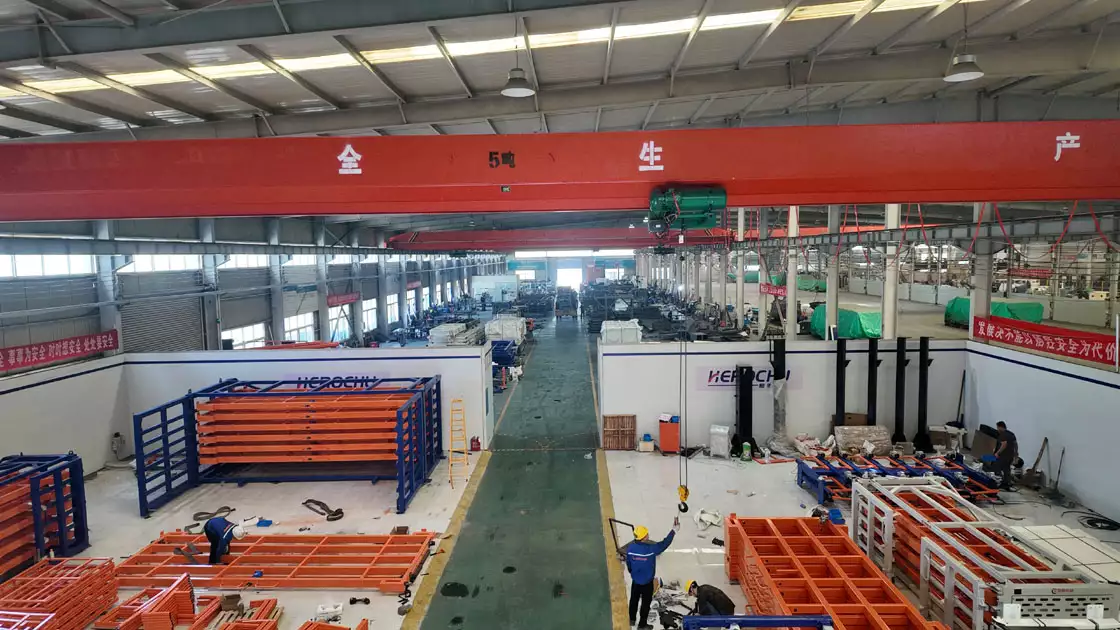
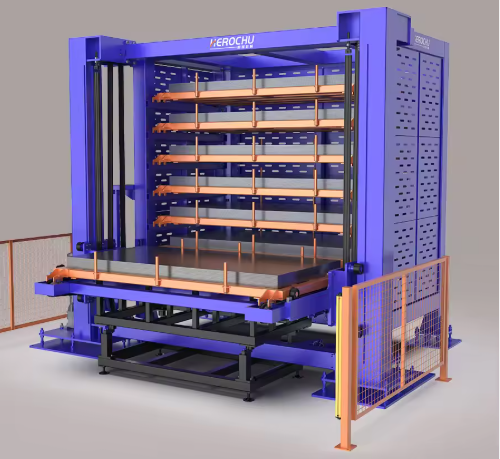
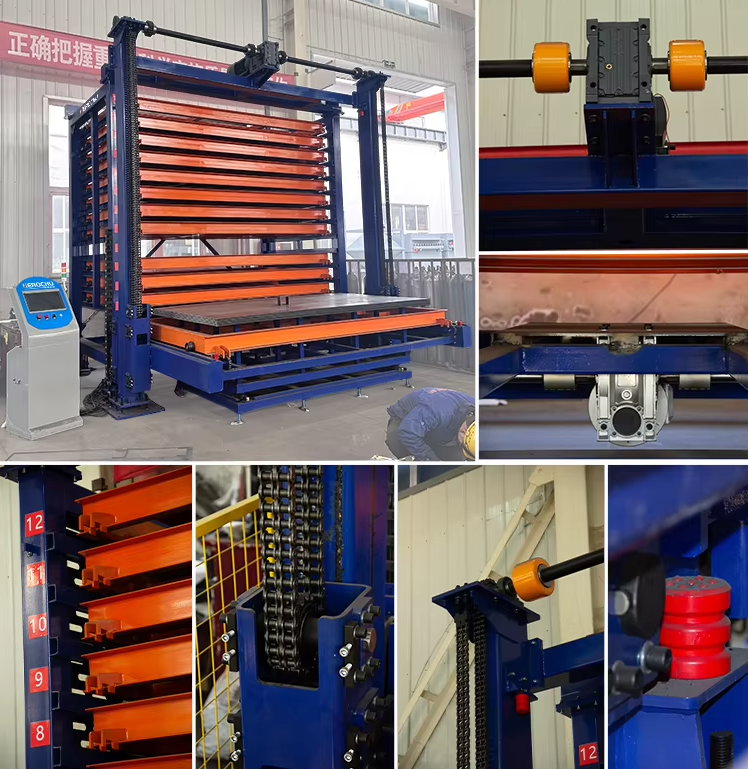
Storing steel sheets vertically introduces unique engineering challenges, primarily concerning stability and load distribution. A Heavy-Duty Electric Powered Steel Metal Sheet Rack must be capable of supporting immense weights while moving dynamically. Each single shelf in these advanced systems is engineered to support between 1 to 6 tons. To achieve this, manufacturers utilize high-strength steel and employ finite element stress analysis during the design phase. Tools like Ansys and Simsolid simulate various stress points, ensuring that the welded structure can handle the dynamic forces of acceleration, deceleration, and static loading without deformation or failure.
The core components of these racks are selected for industrial endurance. High-torque motors drive the lifting manipulators, while precision gearboxes and bearings ensure smooth, vibration-free operation. The result is a system that feels solid and secure, even when retrieving a 3-ton plate from the topmost level. The weight of the unit itself, often exceeding 10,000 kg, acts as a stabilizing anchor, preventing tipping and ensuring safe operation even in busy warehouse environments.
The Mechanics of the Roll-Out System
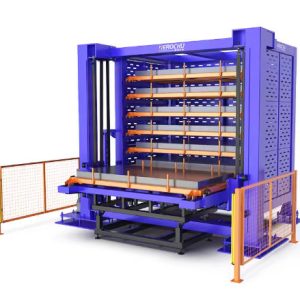
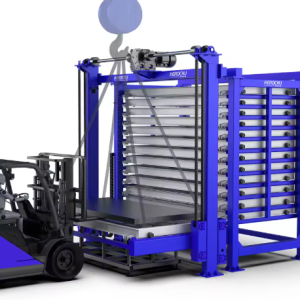
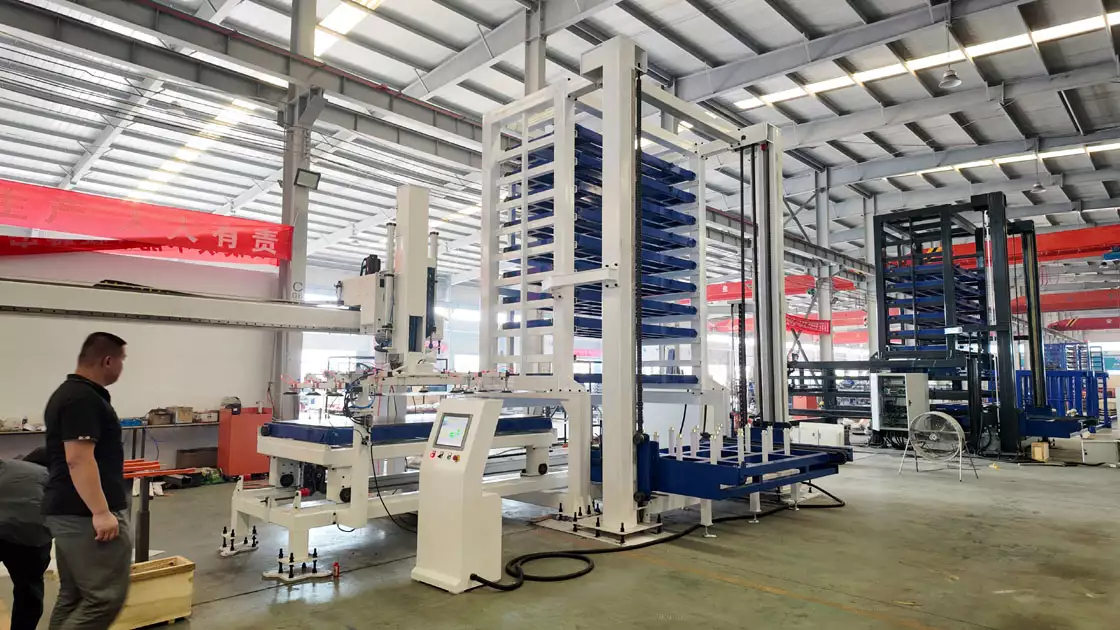
What sets the Vertical Roll Out Sheets Rack Storage Racks apart from simple vertical lift modules is the “roll-out” mechanism. Inside the tower, individual handling units (cassettes) are designed to slide horizontally out to a transfer position. This action is performed by an extractor mechanism that is part of the lifting manipulator. Once the cassette is extended, it presents the material at an ergonomic height for access.
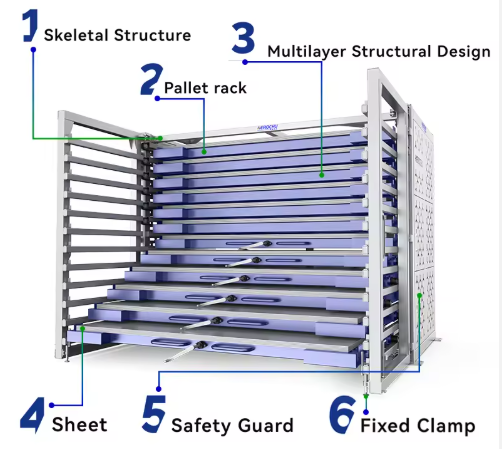
This design facilitates a seamless handover to downstream processes. The transfer point is equipped with a mobile dispensing table that provides a slight “lift” to the material on the container. This feature is crucial for logistics; it allows whole bundles of boards to be transferred easily using a standard forklift truck. For more granular operations, individual boards can be removed using suction vacuum manipulators or magnetic lifters. This dual capability makes the system versatile, serving both bulk storage needs and precise, single-sheet production requirements.
Integration with Modern Production Flows
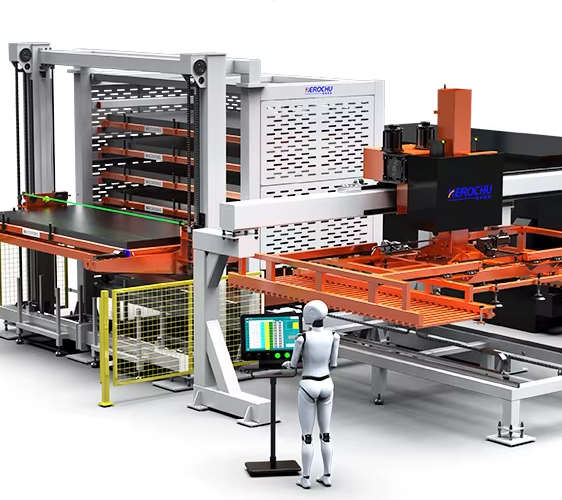
A Heavy Duty Sheet Metal Rack for Sheets Storage is not merely a closet for steel; it is an active participant in the production workflow. These systems are ideally suited as buffer tanks near cutting machines or as inter-operational warehouses. The “goods-to-operator” mode means that the machine does the traveling, not the human. When a laser cutter requires a specific sheet, the storage system retrieves it automatically.
This integration is powered by sophisticated control systems, often centered around a Programmable Logic Controller (PLC). The system can be programmed to invoke sheet metals based on production plans, enabling unmanned cutting operations. In advanced setups, the storage rack communicates directly with the cutting machine and AGV transfer systems. A high-precision robotic arm can pick the sheet directly from the extended cassette and load it into the laser cutter, achieving a single material retrieval time of less than 10 seconds. This speed and synchronization eliminate bottlenecks, ensuring that the most expensive machines in the shop—the lasers and punches—are never idle waiting for material.
Safety and Ergonomics
Beyond efficiency, the shift to vertical roll-out racks significantly enhances workplace safety. Manual handling of heavy steel sheets is one of the leading causes of industrial injuries, including back strains, crushed fingers, and foot injuries. By automating the retrieval process, the Smart Steel Panel Storage Rack System removes humans from the danger zone. Workers no longer need to climb ladders, operate heavy forklifts in tight spaces, or manually drag heavy plates.
Furthermore, the organized nature of the vertical tower eliminates the risk of collapsing stacks, a common hazard in traditional floor storage. The “one item, one code” management system, utilizing RFID tags, ensures that every movement is tracked and verified. This traceability not only improves inventory accuracy but also provides a digital audit trail for safety compliance. Real-time monitoring via IoT sensors adds another layer of protection, automatically detecting anomalies in weight distribution or mechanical performance and issuing warnings before a failure can occur.
Customization and Scalability
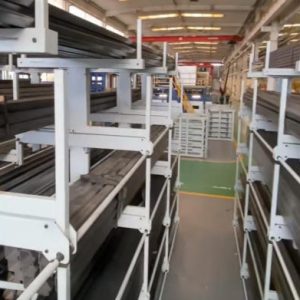
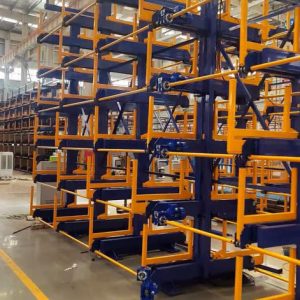
Every warehouse has unique constraints and requirements. Recognizing this, manufacturers of Vertical Roll Out Sheets Rack Storage Racks offer extensive customization. The tower’s height and floor plan can be selected to fit the specific dimensions of the facility. Sheet size compatibility is broad, ranging from small 1250×1250 mm panels to large 4000×2000 mm sheets. The number of pallets can be tailored, and the load-bearing capacity adjusted to match the specific weight profile of the materials being stored.
Even the power supply is flexible, with standard configurations at 380V/50Hz but adaptable to customer requests. Custom colors allow the equipment to blend into the facility’s safety color-coding scheme. This adaptability ensures that whether you are a small job shop or a massive fabrication plant, there is a vertical storage configuration that fits your needs perfectly.
Conclusion
The adoption of Vertical Roll Out Sheets Rack Storage Racks represents a strategic leap forward for any organization involved in metal fabrication or heavy storage. By leveraging vertical space, these Heavy Duty Sheet Metal Rack for Sheets Storage solutions offer unparalleled density, safety, and efficiency. They transform the warehouse from a passive storage area into a dynamic, automated hub that drives production forward. As industrial real estate costs rise and the demand for faster throughput increases, the vertical roll-out rack stands out as the definitive solution for modern, intelligent warehousing.