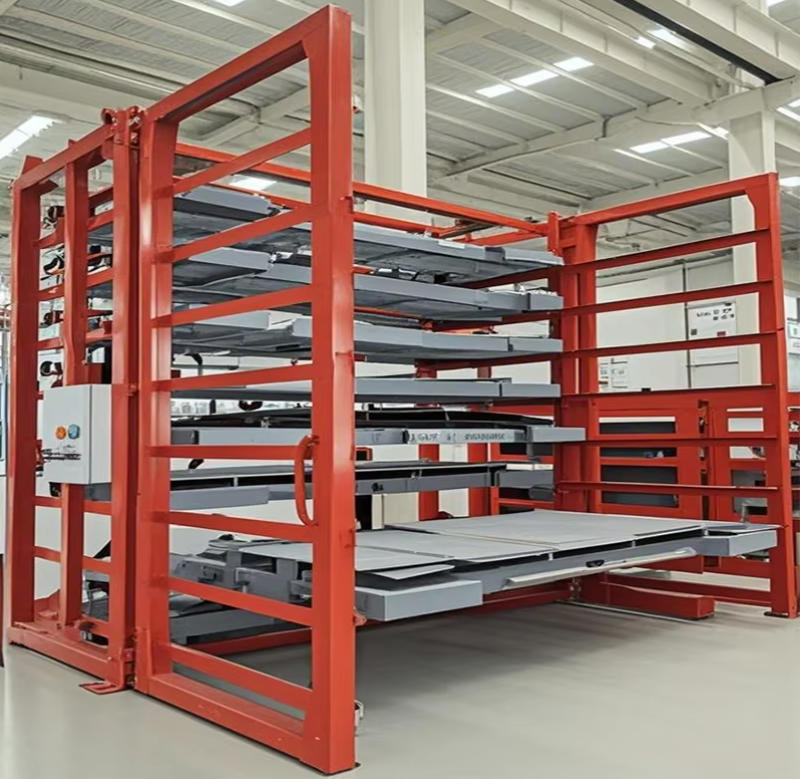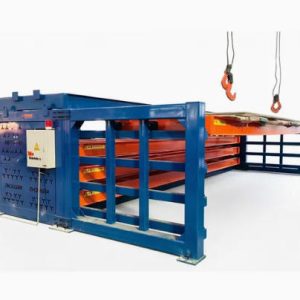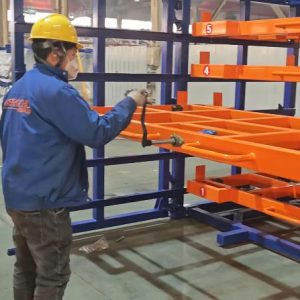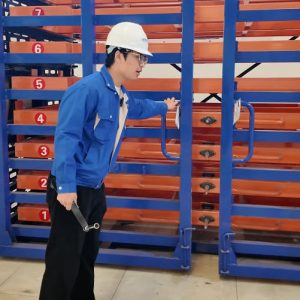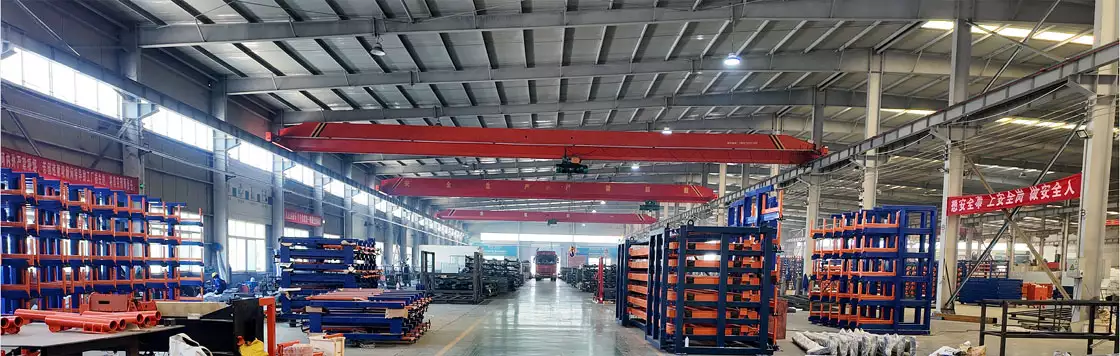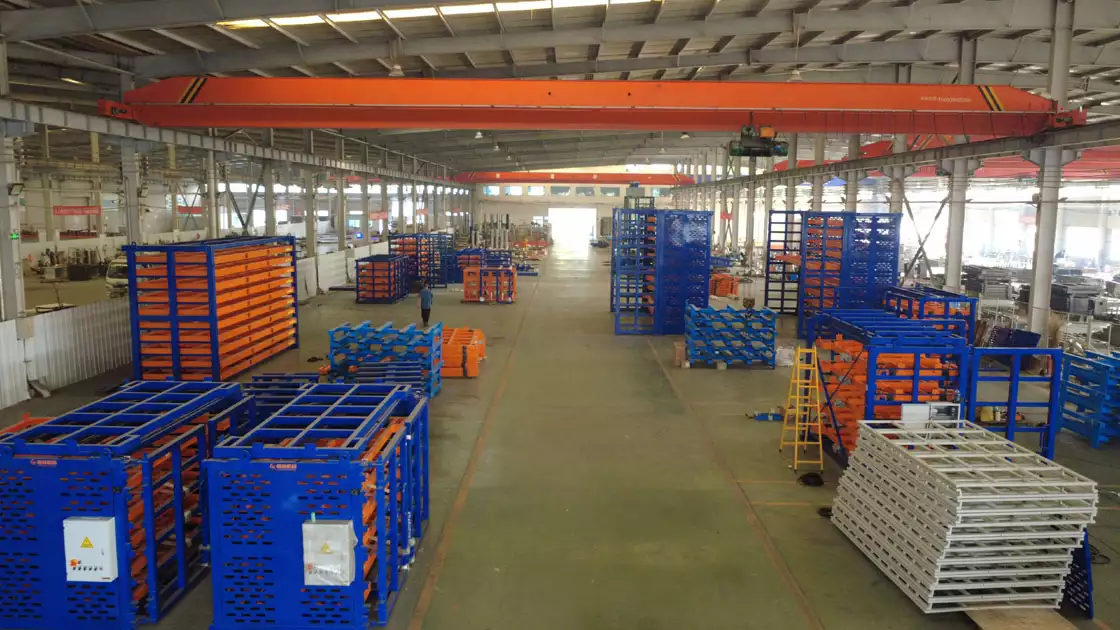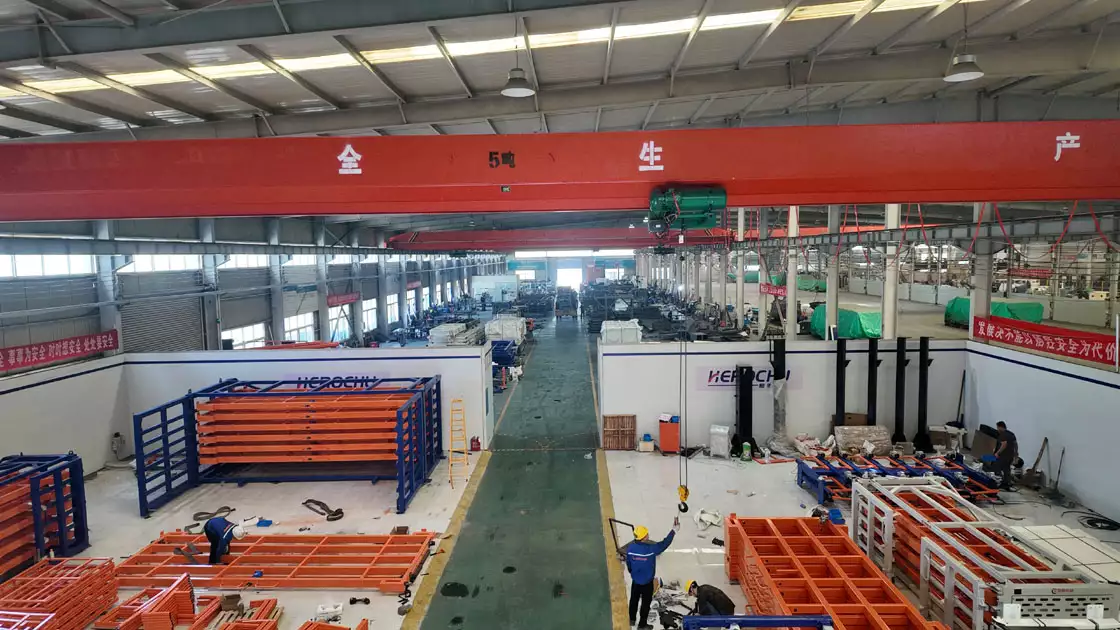
Material handling in the metalworking industry requires a delicate balance between density and accessibility. You need to store as much material as possible in a limited footprint, but you also need to access that material quickly to keep production lines moving. The Heavy Duty Roll out Sheet Metal Storage Rack, often referred to as a sliding steel plate organizer, represents the pinnacle of high-density storage technology.
This article delves into the mechanics of the sliding organizer system, exploring how it maximizes space and streamlines the handling of heavy steel plates.
The Mechanics of the “Roll-Out” System
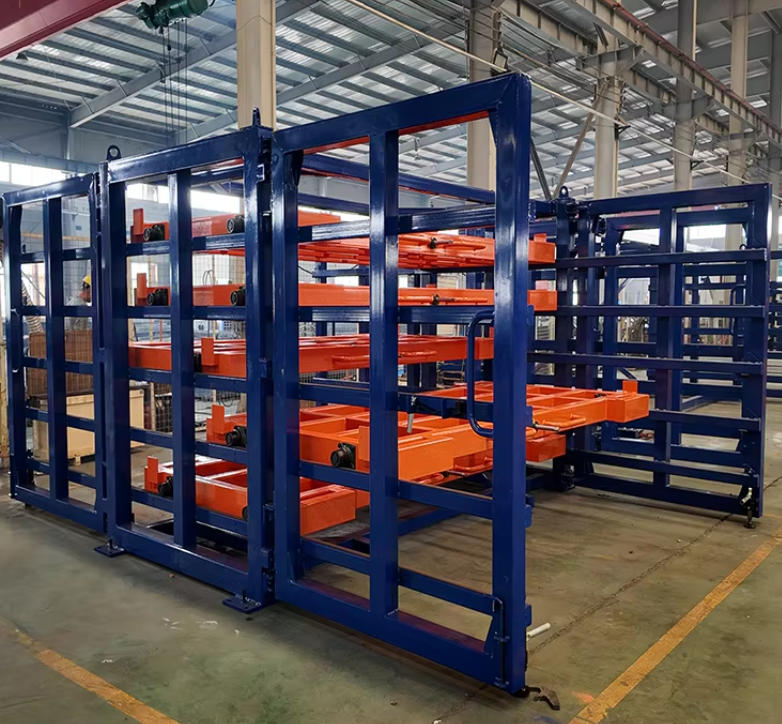
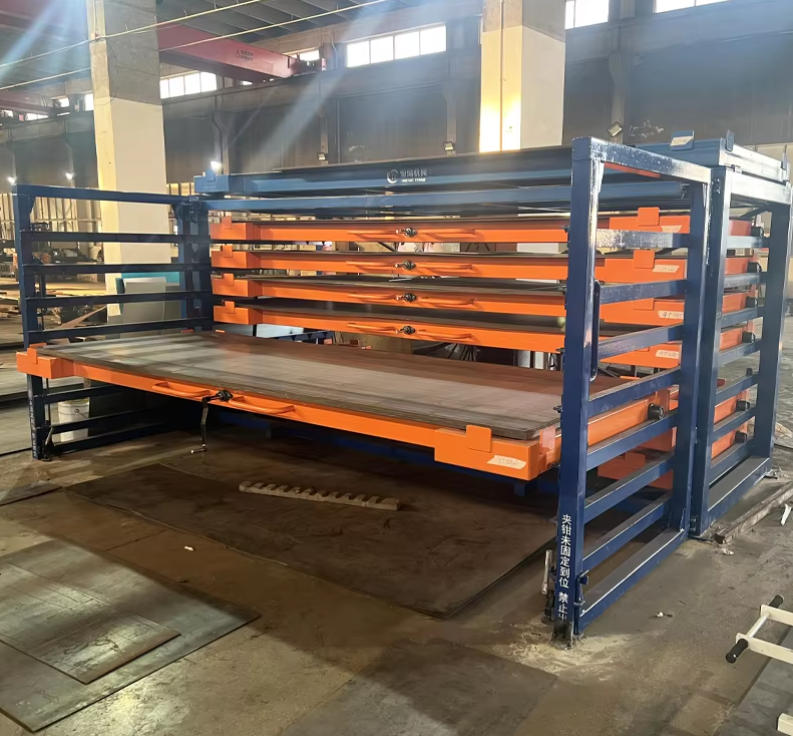
At first glance, a roll-out rack may look like a standard heavy-duty shelving unit. However, the internal mechanics are sophisticated. The “sliding” action is achieved through a robust track and bearing system designed to support eccentric loads. When a drawer is extended, the weight of the steel plates creates a moment force that tries to tip the rack. To counter this, these organizers are built with reinforced columns and often require anchoring to the floor or linking multiple bays together for stability.
The Sliding Mechanism:
- Bearings: High-capacity roller bearings are housed within the channel beams. These are often sealed to prevent dust and debris from interfering with the smooth sliding action.
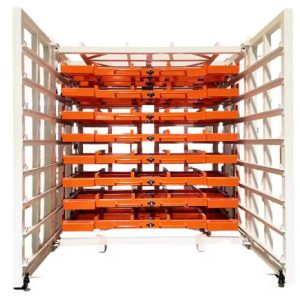
- Extension Ratio: A key feature of a quality organizer is 100% extension. Unlike kitchen drawers that stop halfway, these industrial drawers slide completely clear of the frame. This is essential for handling 6-meter long plates, as it allows forklifts or cranes to approach from the side or above without the rack structure getting in the way.
- Locking: Safety latches or braking systems are often integrated to prevent drawers from rolling unintentionally when the rack is not in use or during seismic events.
Maximizing Vertical Space
One of the distinct advantages of a Heavy Duty Roll out Sheet Metal Storage Rack is the ability to utilize the full height of a warehouse. Because the retrieval mechanism is horizontal (sliding out) rather than vertical (forklift stacking), these racks can be stacked vertically.
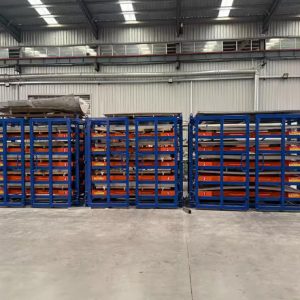
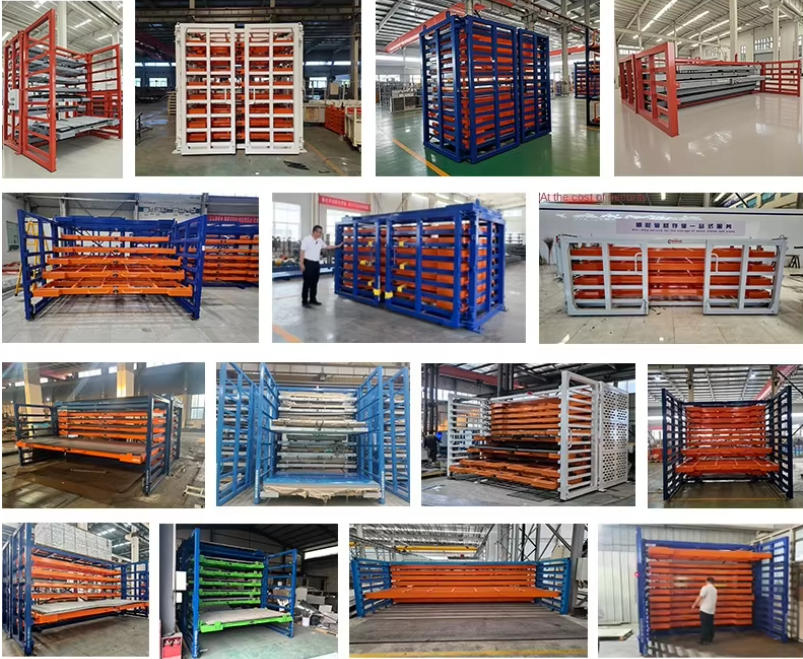
A typical configuration might include a base unit with 5 sliding drawers and a top fixed shelf (a “5+1” configuration). In a warehouse with a 6-meter ceiling, you might stack these units or use tall立柱 (columns) to create a system with 8 or 10 layers. This turns a single pallet position on the floor into 5 or 6 tons of sheet metal storage.
Space Saving Calculation:
If you were to store 6 tons of steel plates on the floor, you would need a large footprint to allow forklift aisles around the stack. With a sliding organizer, that same 6 tons is contained within a footprint of roughly 6 square meters, with no aisles needed between the “shelves” since they slide out to the aisle.
Versatility in Storage
While the primary keyword is “Steel Plate,” these sliding organizers are incredibly versatile. They are effectively “universal drawers” for heavy industry.
- Bar Stock and Tubes: With the addition of dividers, the drawers can hold long bars or tubes, preventing them from rolling around.
- Mixed Materials: A single rack can store stainless steel in the top drawers (for lighter loads and easier access) and thick carbon steel in the bottom drawers.
- Pallet Storage: Some sliding racks are designed specifically to hold pallets of smaller metal parts, acting as a high-density pallet flow system.
The ability to customize the “Single layer height” (from 220mm to over 300mm) means you are not paying for empty air. You can configure the drawer spacing to match your exact inventory profile, ensuring every millimeter of vertical space is utilized.
Durability and Maintenance
Industrial environments are harsh. They involve dust, metal shavings, oil, and heavy impacts. A Heavy Duty Roll out Sheet Metal Storage Rack is built to withstand this.
- Surface Treatment: The steel components are typically treated with acid washing and phosphating, followed by electrostatic powder coating. This provides a hard, durable finish that resists chipping and rust. Standard colors are often blue for the frame and orange for the drawers, adhering to industrial safety color codes.
- Maintenance: The maintenance requirements are low. The primary task is keeping the bearing tracks clean. Because the system relies on mechanical rolling rather than hydraulics or electronics (in manual versions), there are very few points of failure.
Integration with Automation
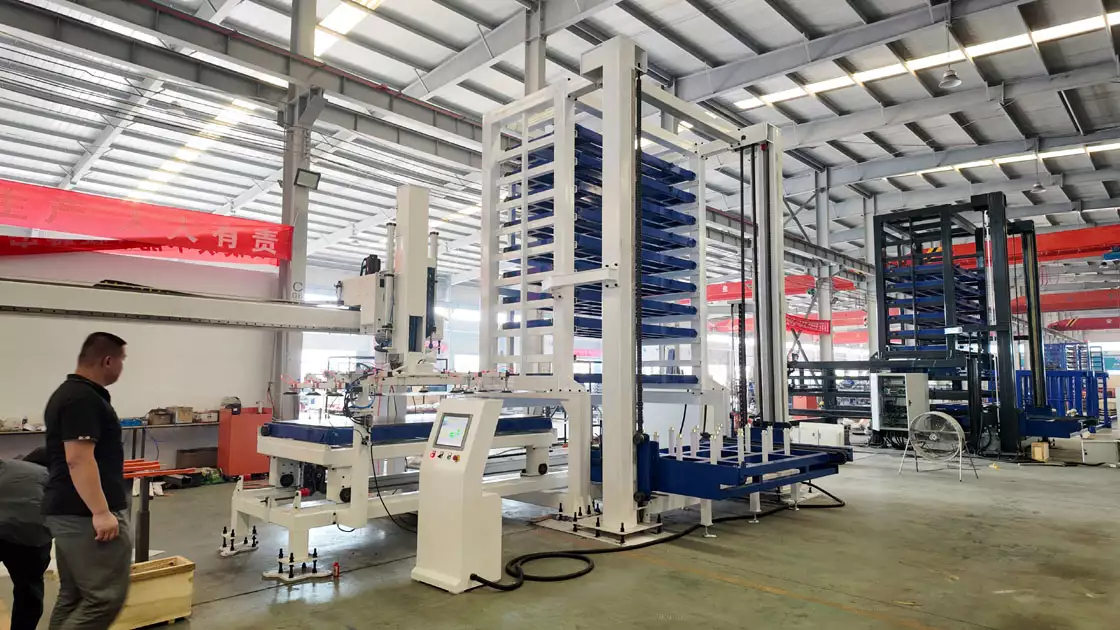
As warehouses move towards automation, the sliding rack evolves. The “Electric extension” option mentioned in the specifications allows these racks to be integrated into semi-automated retrieval systems. An operator can press a button, and the heavy drawer glides out smoothly. This not only saves labor but also ensures that the load is moved at a controlled speed, preventing the “swinging” of heavy loads that can occur with crane-only retrieval.
Summary
The Heavy Duty Roll out Sheet Metal Storage Rack Sliding Steel Plate Organizer is more than just a shelf; it is a spatial optimization tool. By converting vertical space into accessible, sliding storage, it allows facilities to store more material in less space while maintaining the safety and organization required for modern manufacturing.