Meta Description: Discover the power of a Pneumatic Cantilever Loading Manipulator for your workshop. Learn how this Industrial Sheet Metal Handling Robot reduces downtime, prevents material damage, and pays for itself. Models start at 300kg capacity.
For the modern fabrication workshop, the gap between manual labor and full automation is often filled by one indispensable piece of equipment: the Pneumatic Cantilever Loading Manipulator. As manufacturers face increasing pressure to improve throughput while maintaining safety, these workhorses of material handling have become a standard sight in progressive shops. Unlike complex servo-driven gantries, the pneumatic cantilever offers a unique blend of simplicity, power, and cost-effectiveness that is hard to beat.
Whether you are running a small laser cutting job shop or a large-scale steel service center, understanding how to leverage this technology can be a game-changer for your workflow.
What is a Pneumatic Cantilever Loading Manipulator?
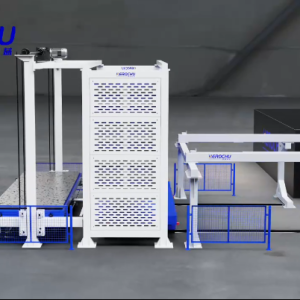
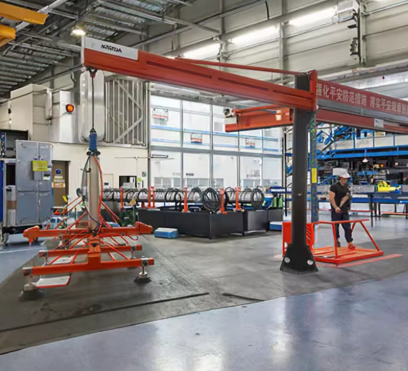
At its core, a Pneumatic Cantilever Loading Manipulator is a material handling device designed to lift, maneuver, and position heavy sheet materials—such as steel, aluminum, or plastic—using compressed air. The “cantilever” design refers to the horizontal arm that extends from a vertical mast or column, allowing for a wide range of movement without the need for overhead crane runways.
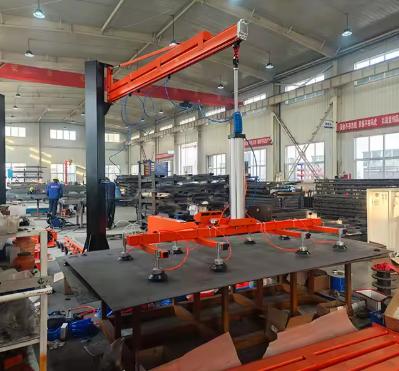
These systems typically utilize a vacuum lifting mechanism to grip materials. By combining the reach of a cantilever with the gentle but secure hold of suction cups, operators can handle delicate finished sheets or heavy raw plates with equal ease. As highlighted in industry analyses, this equipment excels in environments where budget constraints exist but manual handling is no longer viable due to safety regulations or production demands .
Key Benefits of Switching to Pneumatic Handling
If you are currently relying on overhead cranes with slings or manual teams to move plates, upgrading to a dedicated manipulator offers several distinct advantages:
1. Damage-Free Material Handling
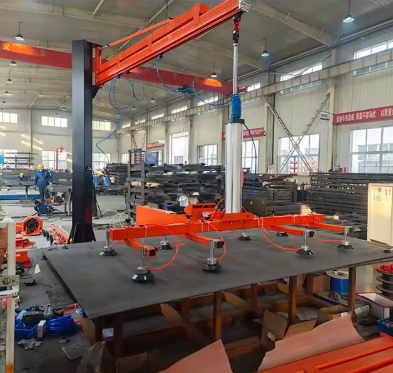
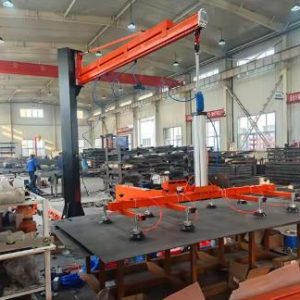
One of the most significant costs in sheet metal fabrication is scrap caused by damaged material. Traditional lifting methods often involve chains, clamps, or hooks that can scratch, dent, or warp the edges of a sheet. A Pneumatic Cantilever Loading Manipulator uses multi-point adsorption vacuum surfaces. For example, the Herochu Vacumaster series utilizes 8 suction cups (200mm diameter each) to distribute the load evenly, ensuring the lifting force is uniform across the workpiece. This prevents “can-opening” (bending) of thin sheets and eliminates surface marring on polished or coated materials.
2. Enhanced Workplace Safety
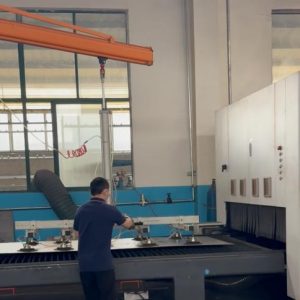
Ergonomic injuries from repetitive heavy lifting are a drain on manufacturing productivity. By empowering a single operator to handle loads up to 500kg or more, these manipulators drastically reduce the physical strain on your team. The pneumatic system inherently provides a degree of “float” or weightlessness, allowing a worker to guide a heavy plate into a punch press or onto a CNC table with just 5-8kg of force .
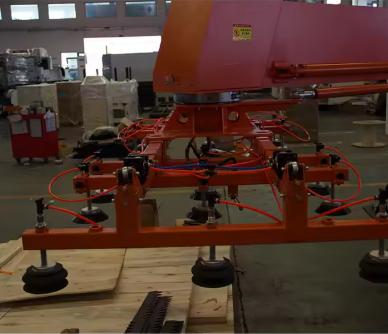
3. Optimized for Short-Distance, High-Frequency Moves
While a forklift is ideal for moving pallets across the facility, it is inefficient for feeding a machine every few minutes. The Pneumatic Cantilever Loading Manipulator is designed for precisely this niche. Its compact structure maximizes hook travel in tight spaces, and the built-in walking mechanism—often using engineering plastic wheels with roller bearings—ensures low friction and smooth movement between the stack and the machine.
Technical Deep Dive: Models and Capacities
Not all manipulators are created equal. To meet the diverse needs of the industry, manufacturers offer a range of configurations. A typical series, like the Herochu HC-PR line, illustrates the options available:
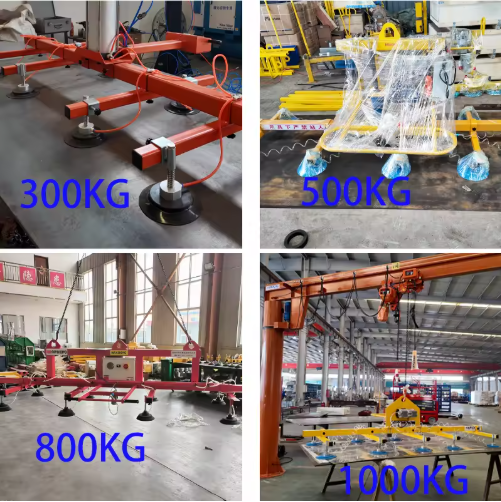
- Standard Models: Most workshops find their needs met by models handling 300kg to 500kg. The HC-PR3015-300, for instance, is designed for plates up to 3000x1250mm and a thickness of 8mm, making it ideal for light to medium fabrication.
- Heavy-Duty Models: For thicker materials, such as those found in heavy machinery manufacturing, a Heavy-Duty Pneumatic Cantilever Loading Manipulator like the HC-PR3015-1000 can handle up to 1000kg and plates up to 20mm thick.
- Suction Cup Configuration: The number and size of suction cups are critical. While 8 x 200mm cups handle most flat sheets, heavier or more flexible materials may require 10 x 250mm cups to ensure adequate grip and stability .
Integration into the Automated Workflow
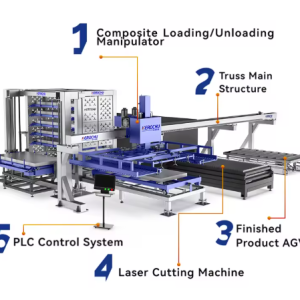
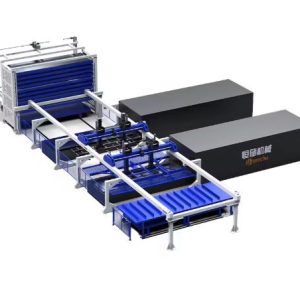
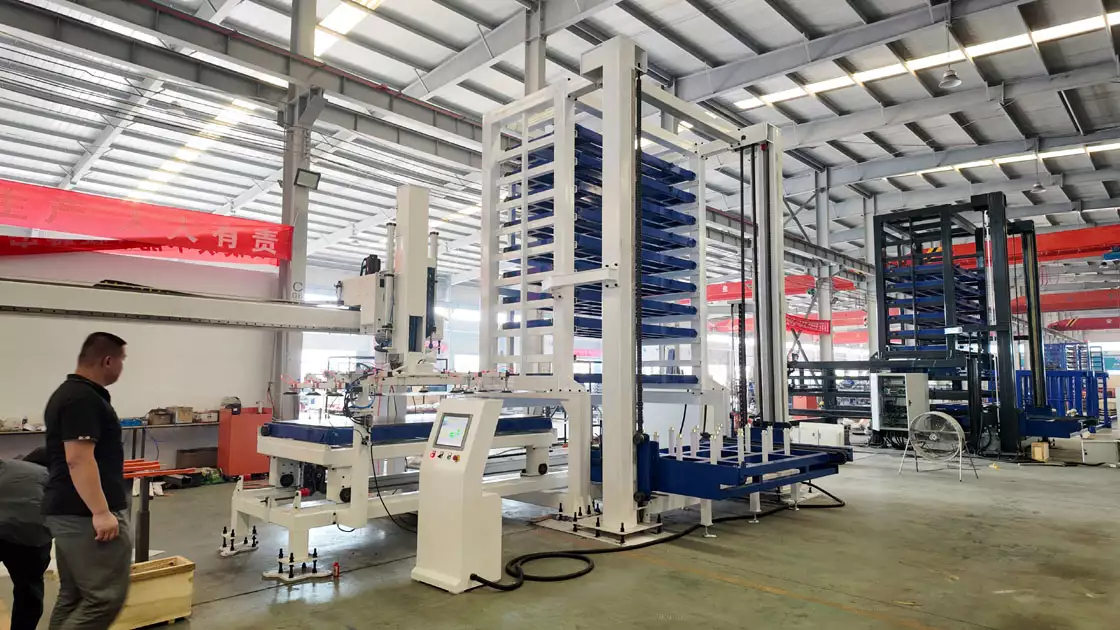
While a pneumatic manipulator is often seen as an entry-level automation solution, it plays a crucial role in hybrid systems. Many factories deploy these manipulators alongside more advanced servo arms. In this synergy, the pneumatic unit handles the “rough” handling—unloading a bundle of sheets from a delivery truck or storage rack—while a servo arm handles the final precision placement on the laser table .
This approach optimizes both cost and performance. The pneumatic arm is tolerant of the dust, moisture, and temperature swings common on shop floors, making it a reliable first point of contact for raw materials.
Safety Features You Can Rely On
Given the heavy loads involved, safety is paramount. A CE-Certified model, such as those meeting ISO 9001 standards, comes equipped with multiple fail-safes. Look for systems that include:
- One-way valves and pressure holding mechanisms: These ensure that if power or air pressure is lost, the vacuum remains locked on the load, preventing accidental drops.
- Real-time alarm systems: Audible or visual alerts warn operators of pressure fluctuations.
- Anti-collision devices: These protect the machine and the workpiece if the arm impacts an unexpected obstacle.
Investing in a Pneumatic Cantilever Loading Manipulator is not just about moving heavy objects; it is about creating a seamless, safe, and efficient production flow. By reducing the handling cycle to a continuous, easy process, you free up skilled labor to focus on value-added tasks, ensuring your business remains competitive in a demanding market.