Meta Description: Automated Storage and Retrieval for Laser Cutting is the key to lights-out manufacturing. Learn how to connect your tower system with your laser, ERP, and material handling robots.
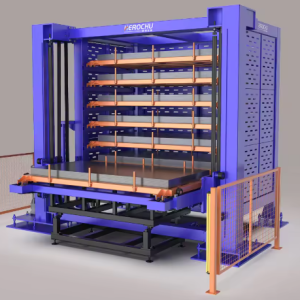
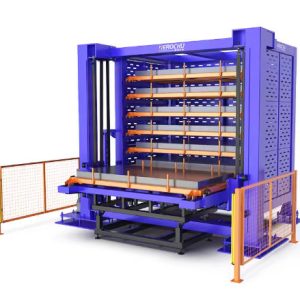
The standalone automated storage tower is a powerful tool for organization. But its true potential is unlocked only when it becomes an active participant in the production process. Automated Storage and Retrieval for Laser Cutting is not merely about storing plates; it is about creating a continuous, autonomous flow of material from the receiving dock to the finished part bin. This integration is the cornerstone of Industry 4.0 in the fab shop.
From Tower to Table: The Physical Interface
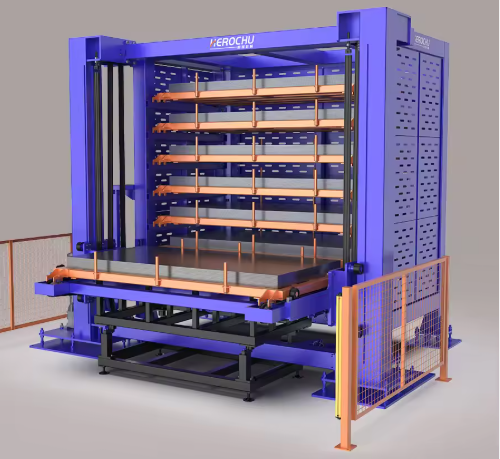
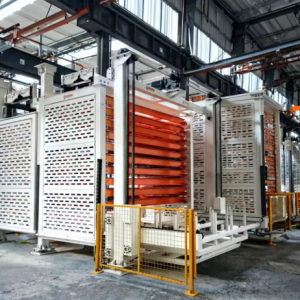
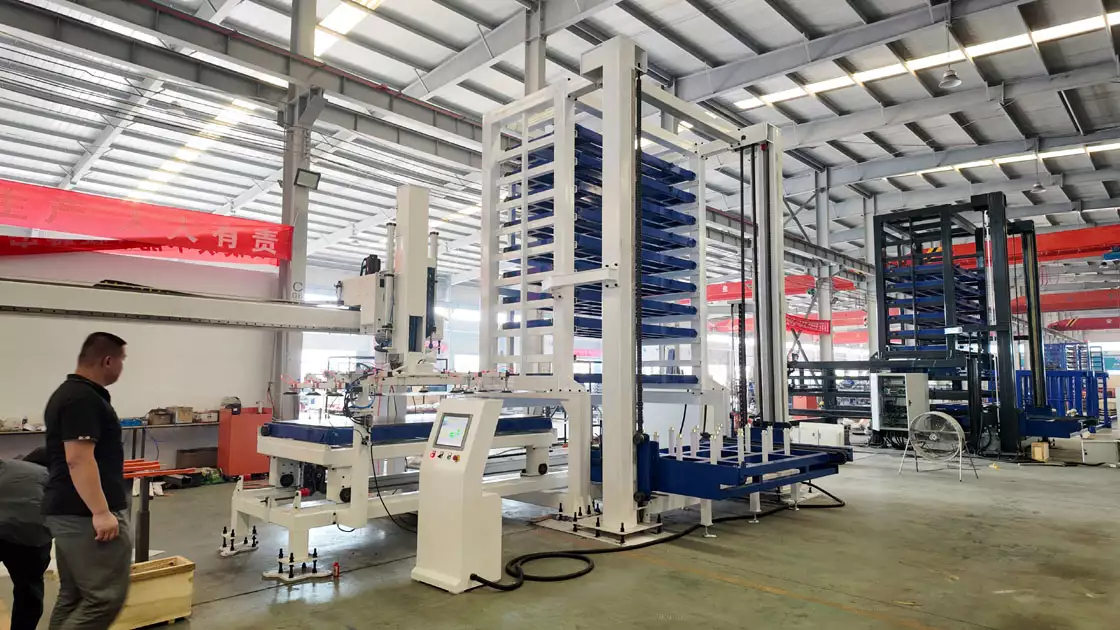
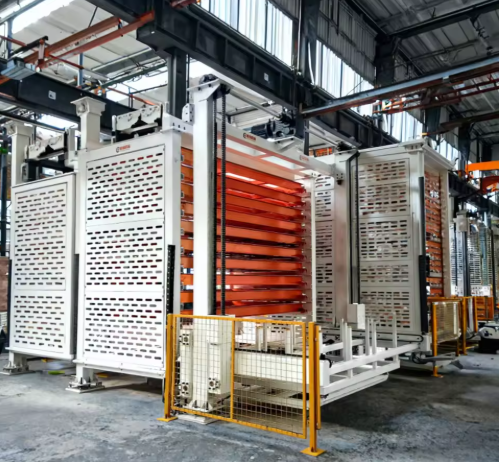
The physical link between the storage tower and the laser cutter is where engineering meets execution. Modern systems utilize a gantry-style manipulator or a dedicated shuttle table to bridge the gap. For instance, a system might feature two sheet manipulators suspended from a gantry that projects from the storage tower .
One manipulator uses suction cups to lift the raw sheet from the storage tray. It places it onto a pick-and-place table. A second shuttle table then travels on rails, transporting the sheet directly into the cutting envelope of the laser . This entire sequence occurs without human intervention. The laser finishes cutting Job A; the shuttle table retracts with the remnants and finished parts; the next raw sheet slides into place. The cycle time is reduced to seconds.
The Software Stack: FMS and ERP Integration
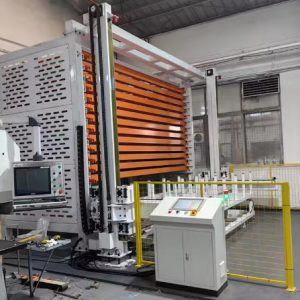
The hardware handles the weight, but the software handles the logic. At the heart of this ecosystem is the FMS (Factory Management System) or a specialized scheduling software. This system acts as the “brain” alongside the CNC of the laser and the PLC of the storage unit .
With a one-click task assignment, the operator—or the system itself—can schedule an entire night’s work. The FMS queries the inventory database in the Automated Storage and Retrieval for Laser Cutting system, checks the available material against the nesting files, and sequences the jobs. When integrated with an ERP system, this becomes even more powerful. The ERP sends a production order; the FMS checks material availability; the storage tower retrieves the plate; the laser cuts it; and the ERP is updated in real-time that the job is complete .
Lights-Out Manufacturing: The Ultimate Goal
The ultimate expression of this integration is “lights-out” manufacturing—the ability to run a production shift with no human workers on the floor. This is only possible when the material handling is as reliable as the cutting process.
To achieve this, the system must handle not only the loading of raw material but also the removal of finished parts and scrap. This requires an automated unloading robot. These robots, often using fork-type grippers, remove the skeleton from the cutting table and place finished parts on a sorting table or conveyor . The storage tower must have designated locations for remnants and finished goods, allowing the system to “put away” the results of the cut cycle, clearing the table for the next job.
Real-Time Monitoring and Alerts
When the machines are running unattended, visibility becomes critical. Integrated systems provide real-time monitoring of equipment and production. Managers can view machine status, loading/unloading commands, and job progress from a remote dashboard .
If an error occurs—such as a sheet failing to separate or a thickness detection failure—the system can send an alert to a remote operator. It can pause the job, preventing a costly crash, and await instruction. This safety net allows manufacturers to push the boundaries of automation without risking catastrophic damage.
Future-Proofing Through Scalability
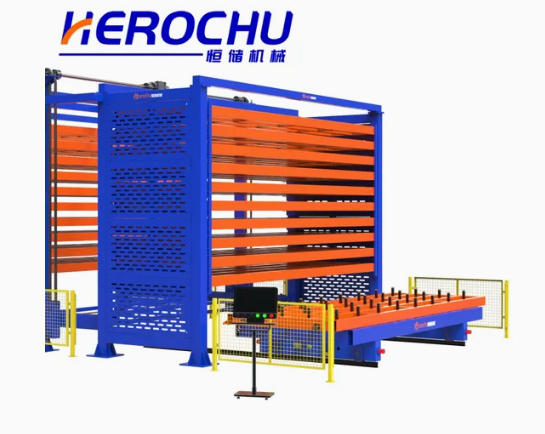
The integration strategy must account for growth. A modular architecture allows for flexible module combinations based on production needs. You might start with one tower feeding one laser (1-to-1). As volume grows, you can expand the system to feed two or three lasers from the same storage tower (1-to-N) . Reserved interfaces for MES (Manufacturing Execution Systems) ensure that as your software capabilities grow, your physical equipment can keep pace.
For the fabricator looking to dominate their market, the message is clear: the laser is the heart, but the automated storage and retrieval system is the circulatory system. Investing in the connection between them is investing in the lifeblood of the business.