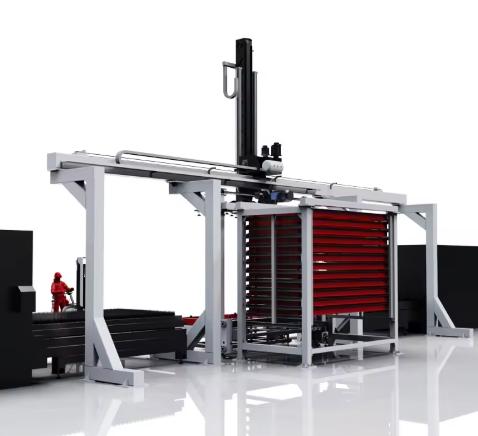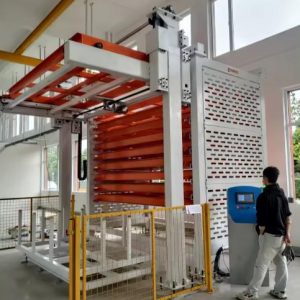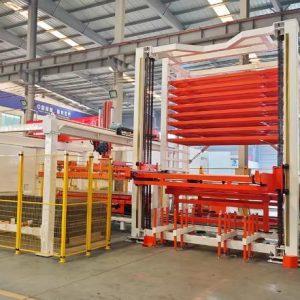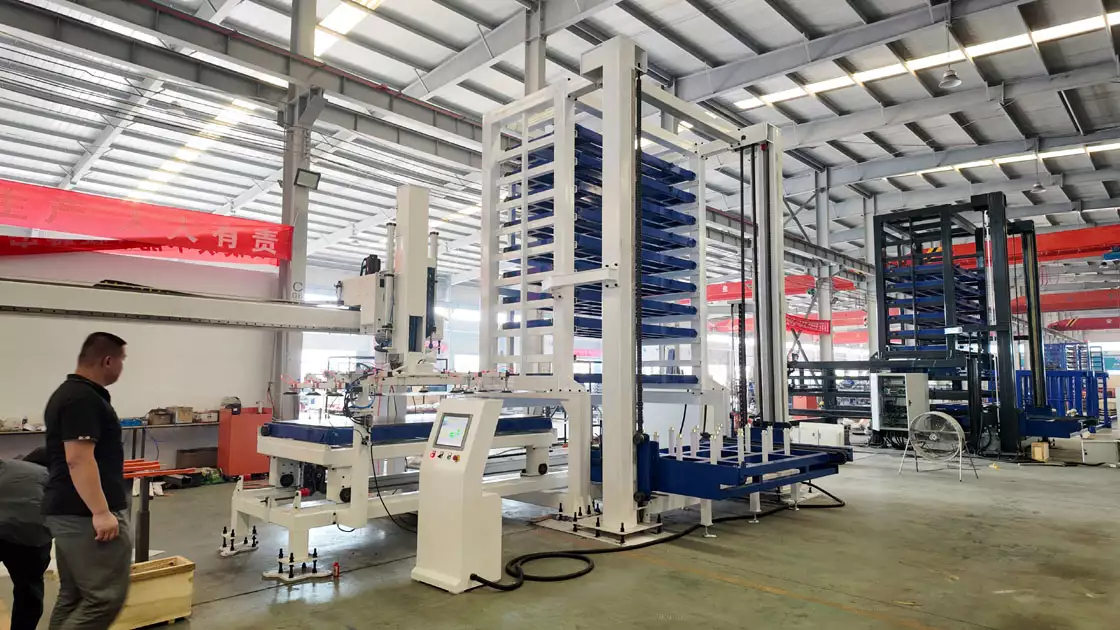
The modern manufacturing floor is a study in contrasts. On one side, laser cutters and punch presses whir with robotic precision, spitting out parts in seconds. On the other side, the raw material staging area often looks like a scene from a bygone industrial era: towering, unstable stacks of steel plates, forklifts weaving through narrow aisles, and workers manually measuring thicknesses with tape measures. This disconnect between high-speed fabrication and low-speed logistics is the single biggest drag on productivity in the sheet metal industry. The solution lies in vertical integration, both literally and figuratively, through the implementation of an Automatic Plate Storage Warehouse.
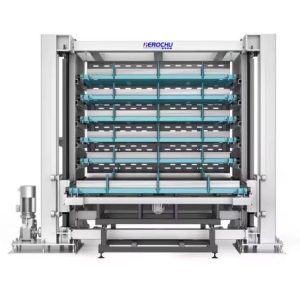
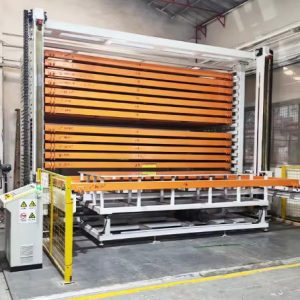
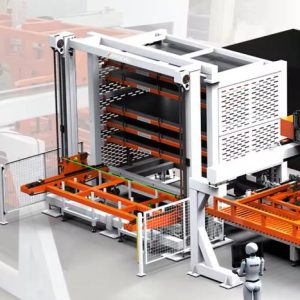
An Automatic Plate Storage Warehouse is not merely a set of shelves; it is a comprehensive logistics hub that bridges the gap between material receiving and production. By leveraging vertical space, automated retrieval mechanisms, and intelligent control software, these systems eliminate the bottlenecks associated with manual handling. They ensure that the right plate, in the right size and grade, arrives at the machine exactly when it is needed, transforming a chaotic storage area into a streamlined extension of the production line.
Centralized Three-Dimensional Storage: Reclaiming Your Floor Space
The most immediate and visible benefit of an Automatic Plate Storage Warehouse is the dramatic consolidation of inventory. Traditional floor stacking consumes vast amounts of expensive factory real estate. Plates are spread out horizontally, often segregated by material type or thickness in different areas of the shop. This sprawl forces fork trucks to travel long distances, wasting time and fuel.
By contrast, an automated system utilizes three-dimensional storage. It reaches upward, often to heights of 10 meters or more, creating a dense vertical inventory. This centralized approach means that all steel, aluminum, and specialty alloys are housed in a single, compact footprint. The floor space recovered is not just empty square footage; it is an asset. It can be converted into additional production cells, assembly areas, or finished goods storage. For a fabrication shop, reclaiming space is equivalent to expanding the facility without the cost of a new building, making the ROI on an automatic plate storage warehouse immediately tangible.
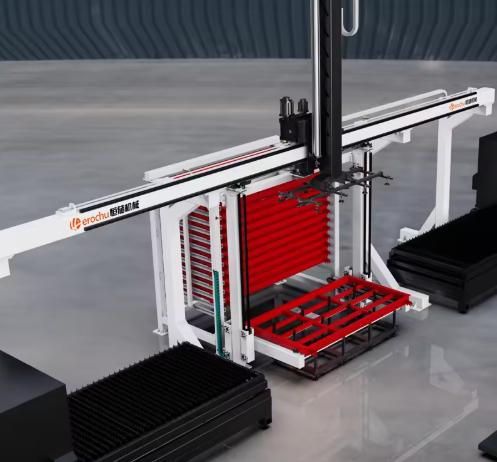
The Mechanics of Automated Retrieval: Speed and Precision
The “automatic” in Automatic Plate Storage Warehouse refers to the mechanical handling of materials. These systems typically utilize a stacker crane or a dedicated lifting carriage that travels vertically and horizontally within the rack structure. The mode of movement often relies on linear guide rails combined with chain drives.
This combination is critical for handling sensitive materials. Linear guide rails provide a precise, low-friction path, while chain drives offer the robust, consistent power needed to lift multi-ton loads. The result is smooth, vibration-free movement. When the system operates at a vertical lifting speed of 9 meters per minute and an inlet/outlet speed of 12 meters per minute, it can retrieve a plate quickly. However, because the motion is controlled and guided, it prevents the swinging and jarring that occurs when a fork truck jostles a heavy load. This protects the integrity of the plate edges and surfaces, ensuring that the material arriving at the saw or laser is free from handling-induced damage.
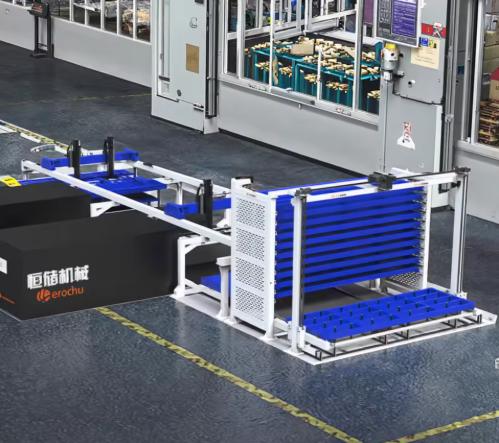
Intelligent Control: The Brain Behind the Operation
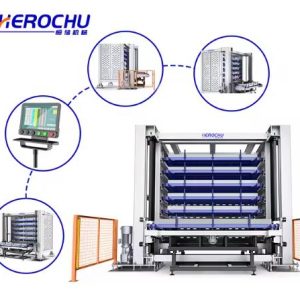
An automated storage system is only as good as the software that drives it. High-end Automatic Plate Storage Warehouse solutions are governed by a sophisticated Intelligent Control System for Large-Scale Long-Term Bulk Storage. This usually takes the form of a PLC (Programmable Logic Controller) paired with a user-friendly touch screen interface.
This control system does more than just move plates. It performs classified visual management of the inventory. When a plate enters the system, its weight is automatically detected, verifying it against the expected specifications. This feature alone can prevent costly discrepancies in material purchasing. The software then tracks that plate’s location, thickness, grade, and even its remnant status after a cut has been made. Operators no longer need to climb through stacks with a thickness gauge. They simply consult the touch screen, which shows a real-time digital map of the inventory. This level of visibility prevents the loss of remnant material and ensures that production planners know exactly what is available, down to the kilogram.
Dual Loading Modes: Forklift vs. Overhead Crane Integration
No two factories are laid out the same, and the receiving areas differ drastically. A premium automatic plate storage warehouse accommodates these differences through flexible loading interfaces. Systems are typically designed to support two primary modes of loading: forklift and overhead crane.
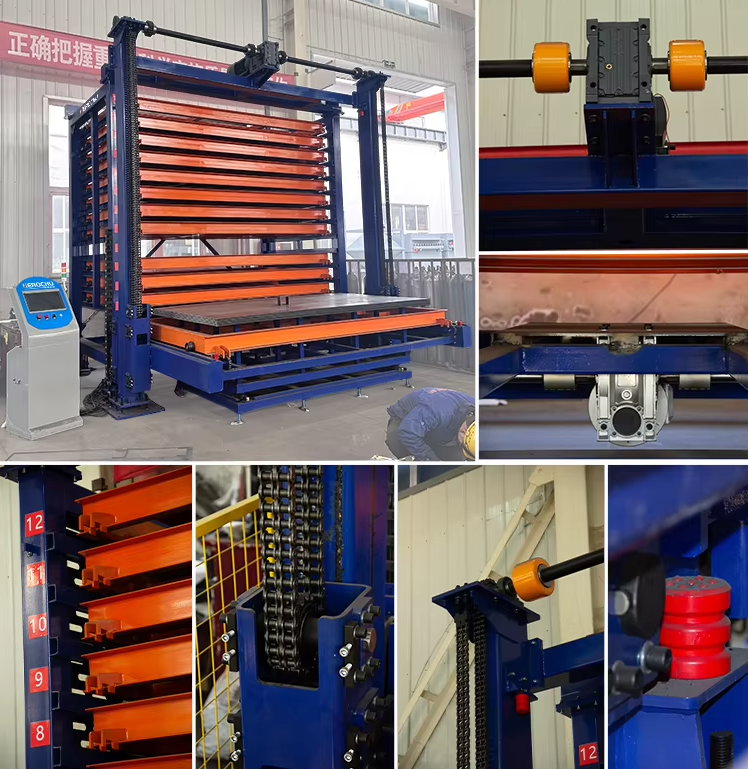
For facilities where materials arrive on flatbed trucks, a forklift is the standard tool. The system can be configured with a front-loading station where a forklift deposits a new pallet of plates onto a powered conveyor or a dedicated input shuttle. For heavier plates or shops already equipped with bridge cranes, an overhead crane interface is available. The crane lowers the plates onto the input station, where the automated system takes over. This flexibility ensures that the transition from receiving to storage is seamless, utilizing the equipment the facility already owns and operates, rather than forcing an incompatible workflow.
Handling the Unusual: Long Plates and Heavy Loads
One of the most compelling features of these Intelligent Sheet Metal Rack Warehouse solutions is their ability to handle heavy and untypical goods storage. In many fabrication shops, inventory is not limited to standard 4×8 foot sheets. Manufacturers frequently deal with extra-long plates, bulky frames, pipes, and rods that can extend up to 12 meters in length. Manual handling of such items is not only slow but poses severe ergonomic risks to workers.
The automated system described here is engineered to support loads of up to 8,000 kg per shelf and lengths up to 12 meters. Whether the material is steel, aluminum, plastic, or wood, the system treats it with precision. The Automated Sheet Metal Rack Steel Plate Automatic Lifting Library ensures that every item, regardless of its weight or awkward shape, is retrieved and delivered to the operator at waist height. This ergonomic advantage drastically reduces worker fatigue and eliminates the need for overhead cranes for every single pick, thereby speeding up the entire production cycle.
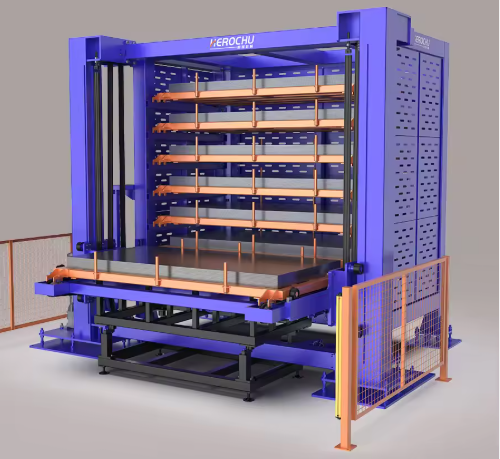
Safety and Stability in High-Density Environments
Safety is another non-negotiable aspect of industrial operations. Traditional storage methods often lead to unstable stacks of heavy plates, creating a risk of collapse. Forklifts maneuvering in tight aisles between stacks increase the likelihood of collisions and product damage. The Automated Sheet Metal Storage Systems mitigate these risks by enclosing the inventory within a robust steel structure.
The movement is guided by linear guide rails and chain drives, ensuring smooth, vibration-free operation. The vertical lifting speed of 9 meters per minute and inlet/outlet speeds of 12 meters per minute allow for rapid turnover without compromising stability. By removing humans from the immediate vicinity of heavy lifting operations, the system significantly improves working conditions and reduces insurance liabilities.
Conclusion
The transition from a manual, floor-based storage method to an Automatic Plate Storage Warehouse is a fundamental upgrade to a factory’s infrastructure. It addresses the core challenges of space utilization, labor efficiency, inventory accuracy, and material protection. By integrating intelligent controls with robust mechanical engineering, these systems ensure that your raw material inventory becomes a seamless, automated part of the production process, driving down costs and elevating throughput.