Sheet Metal & Pipe Storage Racks Manufacturer

Professional Installation Process for Industrial Cantilever Storage Racks

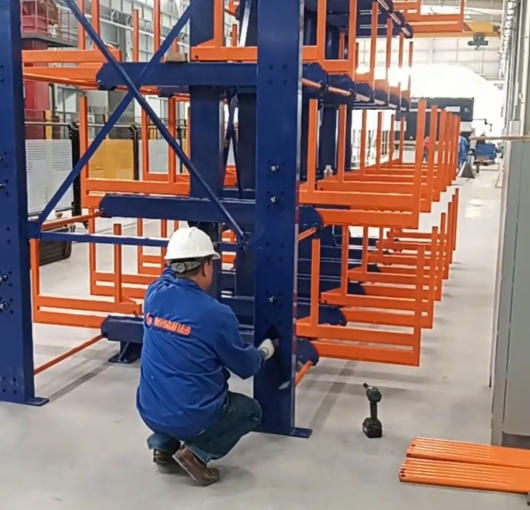
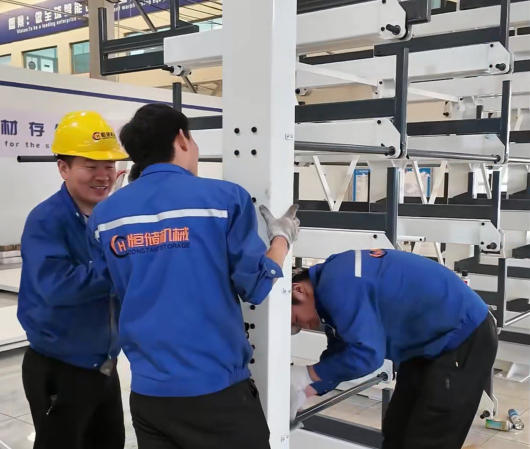
Industrial operations demand storage systems that marry brute strength with intelligent design. Heavy-duty telescopic cantilever racks meet this need—but only when installed by trained professionals following a rigorous protocol. This article outlines the industry-standard installation process that ensures safety, compliance, and peak performance.Begin by connecting the top square tube headers across the first upright pair. Place them on pre-marked spots and secure with temporary clamps. Install front cross braces using M16 bolts. Then add rear cross braces and diagonal knee braces to form a rigid cell.

Professional Installation Process for Industrial Cantilever Storage Racks

Industrial operations demand storage systems that marry brute strength with intelligent design. Heavy-duty telescopic cantilever racks meet this need—but only when installed by trained professionals following a rigorous protocol. This article outlines the industry-standard installation process that ensures safety, compliance, and peak performance.

The Stakes of Professional Installation

DIY attempts often lead to:
  • Uneven load distribution
  • Arm jamming or bending
  • Base uplift under load
  • Voided warranties
Manufacturers universally require certified installers for warranty validation. Here’s why.

Stage 1: Structural Framing

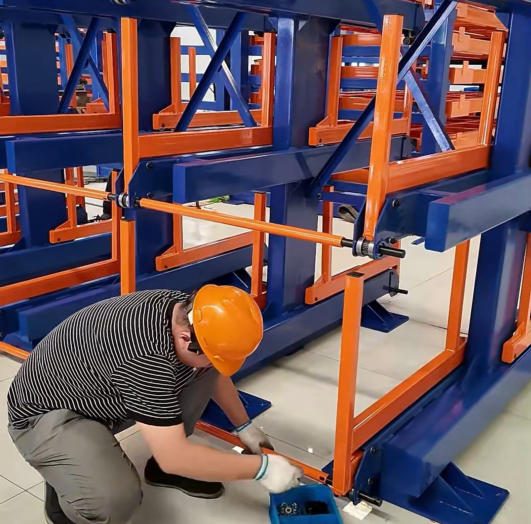
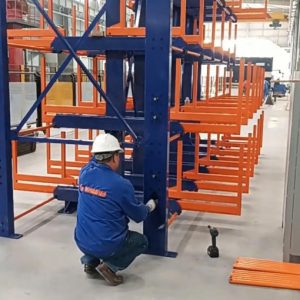
Begin by connecting the top square tube headers across the first upright pair. Place them on pre-marked spots and secure with temporary clamps. Install front cross braces using M16 bolts. Then add rear cross braces and diagonal knee braces to form a rigid cell.
Repeat for adjacent columns, always maintaining consistent bay width (typically 2,500–3,000 mm). Use string lines to verify straightness over long runs.

Stage 2: Arm Rail Integration

Slide precision-ground round tubes into mounting brackets on the uprights. These serve as linear bearings for the arms. Set vertical spacing based on inventory profiles—common setups include 500 mm, 600 mm, or 750 mm increments.
Do not overtighten. Leave 1–2 mm play for thermal expansion and alignment correction.

Stage 3: Drive System Setup

Mount chain boxes at the top or bottom (design-dependent). Link left and right chains with a synchronization shaft or angle iron coupler. Test manual cranks for smooth rotation before final mounting.
Electric systems require PLC integration for coordinated multi-layer operation—best handled by automation specialists.

Stage 4: Metrology and Calibration

Use a total station or laser tracker to measure:
  • Plumb of each upright (tolerance: ±0.5°)
  • Elevation consistency of rails (±2 mm)
  • Parallelism of opposing arms
Make micro-adjustments using base shims or eccentric bolts. Only then proceed to final torqueing.

Stage 5: Anchoring and Certification

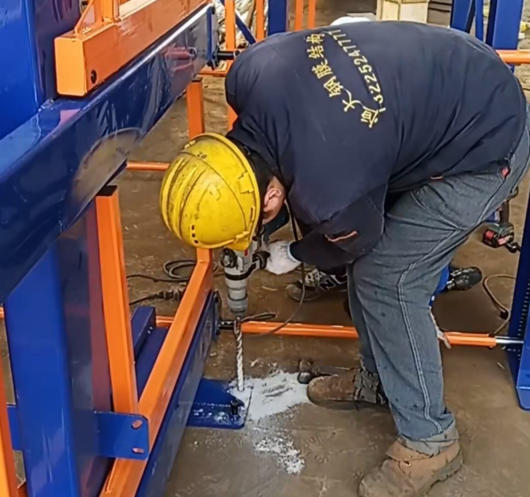
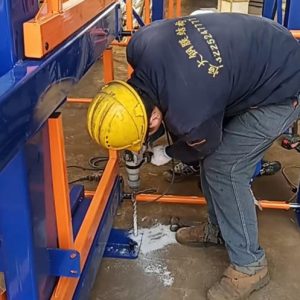
Install epoxy-set anchor bolts through base plates. Torque in a star pattern to prevent warping. After curing, conduct a dynamic load test simulating real-world conditions—forklift impacts, sudden unloading, etc.
Issue a compliance certificate including:
  • Installer credentials
  • Torque records
  • Test results
  • Maintenance schedule

Operational Excellence Through Design

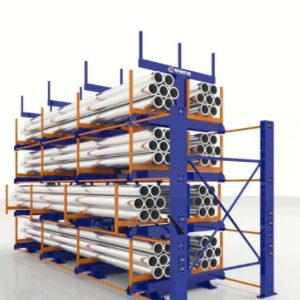
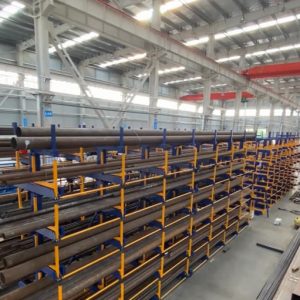
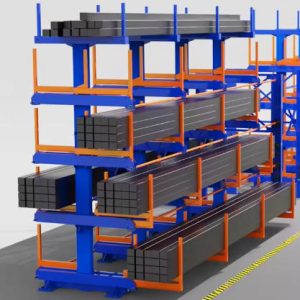
These racks aren’t just storage—they’re workflow enablers. With 330 mm ground clearance, pallet jacks can access bottom layers. The single or double-side assist means operators never walk around racks searching for items.
And because arms retract, you can pack racks back-to-back, achieving triple the density of static cantilever systems. For a steel distributor storing 6-meter bars, this could mean 1,200 tons vs. 400 tons in the same footprint.
Color customization (white, blue, red) aids visual management—blue for aluminum, red for stainless steel, etc. Combined with barcode labeling, it slashes picking errors by up to 70%.
In summary, professional installation isn’t an expense—it’s an investment in safety, efficiency, and ROI. Cut corners here, and you risk everything.

FAQ

Here are some frequently asked questions about our sheet metal racks and pipe storage solutions. We hope you find them helpful!

Q1: Can I request a custom size or color?
Absolutely. We offer complimentary design services and deliver efficient, tailored solutions to meet your specific requirements.

Q2: Are you a manufacturer or a distributor?
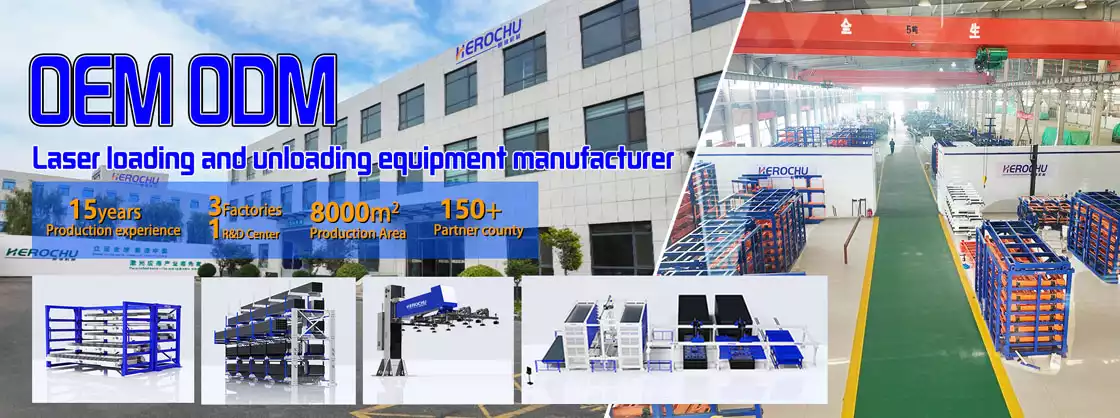
We are a direct manufacturer with over 15 years of industry experience and expertise.

Q3: Is there a minimum order quantity?
No. We welcome orders of any size, starting from a single unit.

Q4: How can I get detailed product information?
Click the “Get a Quote” button to receive product images, detailed specifications, and videos. Our team is always ready to assist.

Q5: How do I provide my storage rack requirements?
Simply share the type, dimensions, and quantity of materials you plan to store, along with any other specific needs. We will develop a professional storage solution for you. Alternatively, leave your contact details for a personalized consultation.

Q6: Do you offer automated loading systems or robotic arms?
Yes. We provide loading robotic arms and integrated loading/unloading systems tailored to your laser cutting machine’s table size and material handling method (e.g., board rack, exchange platform, or material warehouse). Contact us with your details for a customized proposal.

Q7: Do you provide on-site installation and debugging?
Yes. Our technicians can travel to your facility for installation and debugging, ensuring successful operation. We have served clients globally, including in the USA, South Korea, Russia, Qatar, Mexico, South Africa, Egypt, and Lebanon.

Q8: How do you ensure product quality?
Our quality assurance includes:

  • A team of over 40 technical engineers for professional debugging and support.

  • A dedicated quality control department compliant with ISO9001 standards.

  • CE certification for all exports.

  • Rigorous load testing before shipment to ensure structural safety and reliability.

Q9: Where is your factory located?
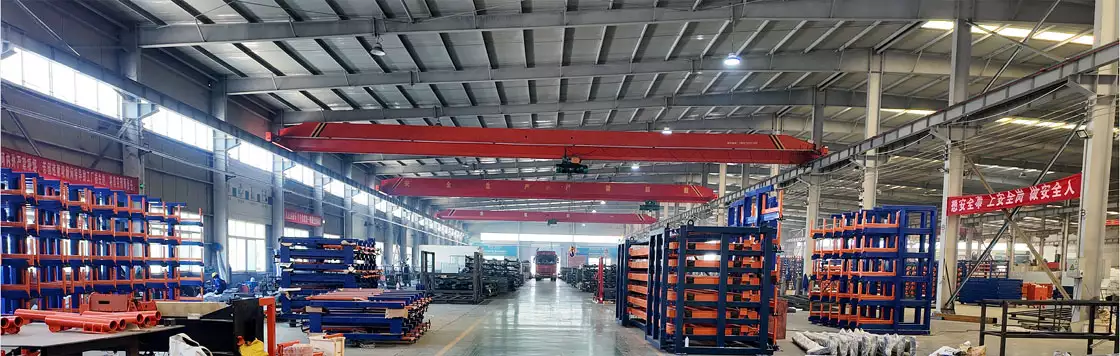
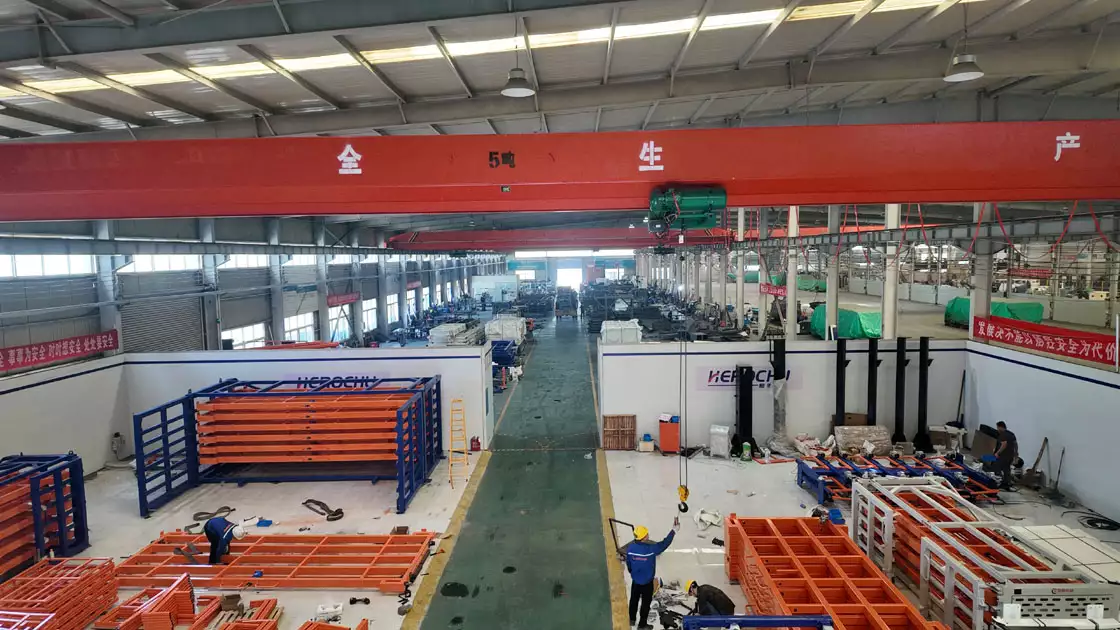
Our modern 10,000-square-meter manufacturing facility is located in Jiyang Industrial Park, Jinan, Shandong, China.

Q10: How can I evaluate your company’s capabilities?
We offer virtual video factory tours and warmly welcome on-site visits.

Q11: What does your company specialize in?
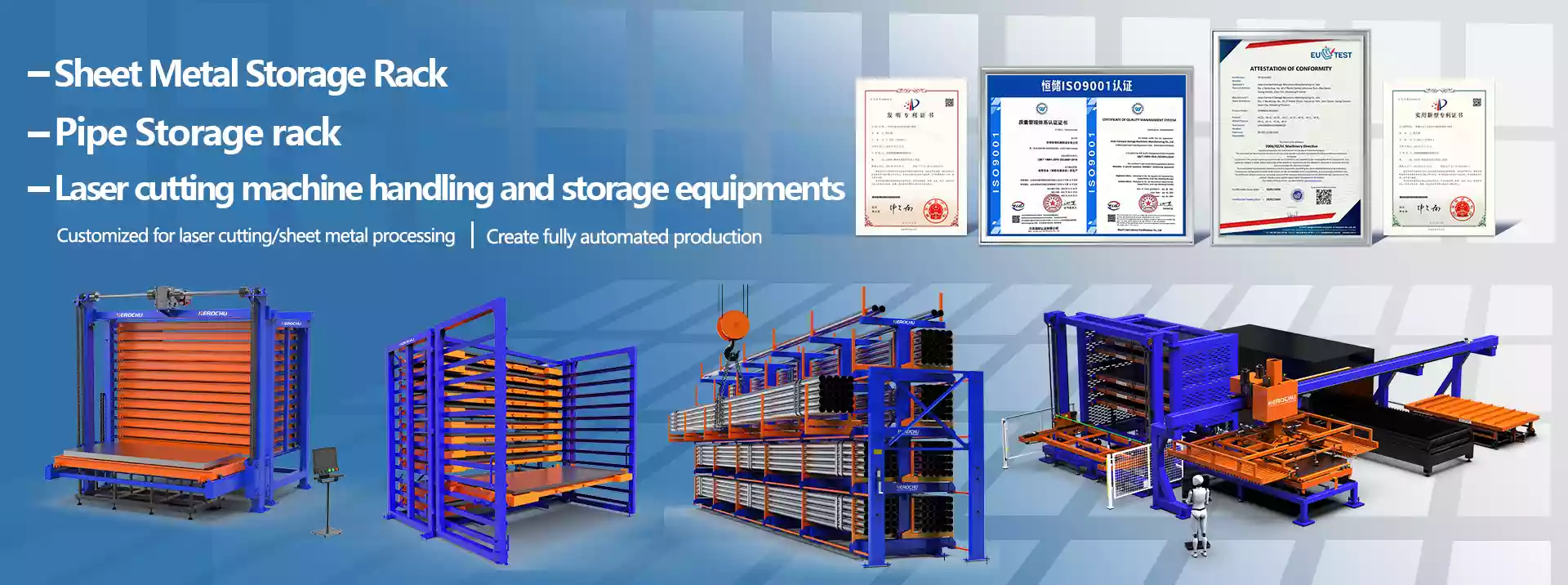
Jinan Constant Storage Machinery Manufacturing Co., Ltd. is a high-tech enterprise specializing in the R&D, production, sales, installation, and service of intelligent storage solutions. Our product range includes sheet material warehouses, drawer-style shelves, cantilever racks, servo manipulators, gantry loaders, and fully automated handling systems. Supported by a skilled technical team and advanced equipment, we are committed to delivering high-performance storage products and solutions to customers worldwide.

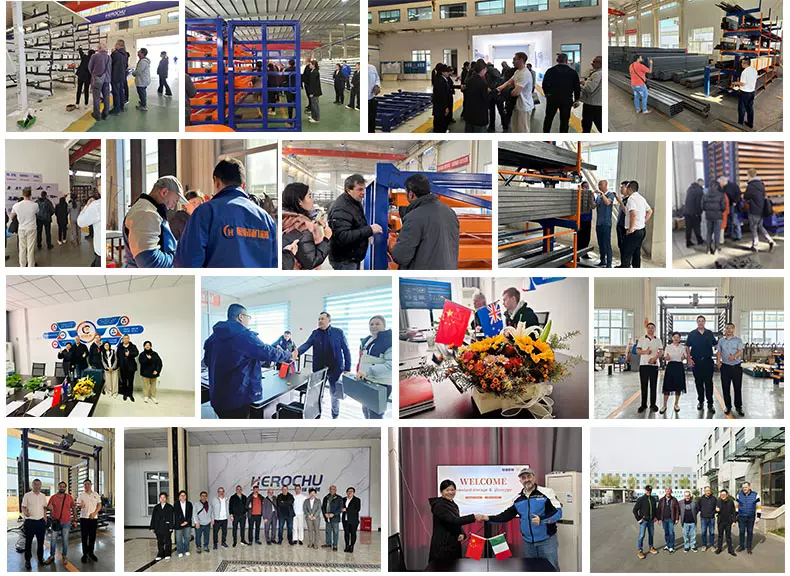
Customer visit

Herochu has always been adhering to the market-centric approach to meet customer requirements to the maximum extent, and the business philosophy of “creating brands with heart and gaining reputation with sincerity”. It provides customers with high-quality products and services with rigorous military quality, professionalism, and excellence, and has won unanimous praise in the Chinese aerospace, Chinese weapons, Chinese railways, automobile manufacturing, engineering machinery, non-ferrous metal titanium alloy and other industries.

customers

Factory

Factory
Factory
Factory
Factory
Factory
customers2
honor

Product Categories

Roll Out Sheet Metal Rack
Pipe Cantilever Storage Rack
Sheet Metal Handling Equipment
Automated Sheet Metal Storage Systems
Automatic loading and unloading system for laser cutting machines
Scroll to Top

✶ ✶ ✶ Get a quote and more information now!!!