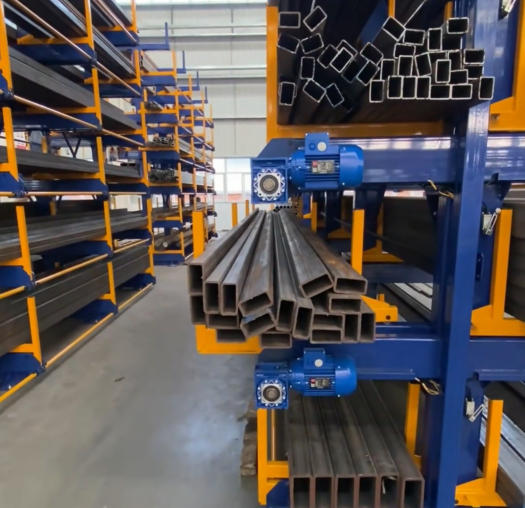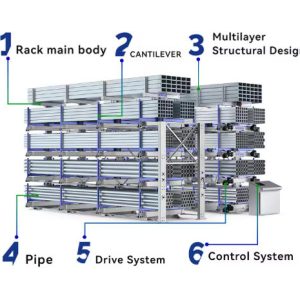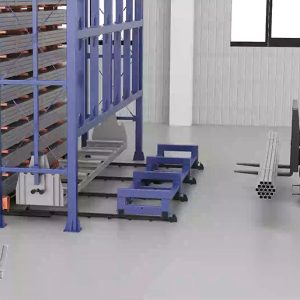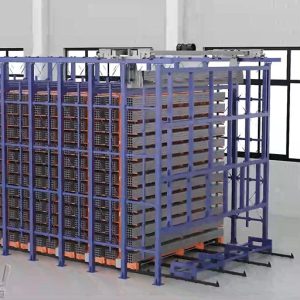
Selecting a storage solution for long, heavy materials like steel bars, aluminum tubes, or PVC pipes requires more than just measuring your warehouse. It demands a strategic evaluation of workflow, safety, scalability, and total cost of ownership. With numerous options on the market—from basic A-frames to advanced top-mounted mobile systems—how do you choose the right bar and pipe storage rack for your operation? This comprehensive buyer’s guide walks you through the key decision factors.
Step 1: Assess Your Material Profile
Not all racks suit all materials. Begin by cataloging what you store:
- Diameter range: From ¼” electrical conduit to 16″ structural pipe.
- Length: Standard 20-ft sticks vs. custom 40-ft drill stems.
- Weight per piece: Lightweight aluminum vs. dense carbon steel.
- Surface sensitivity: Does scratching matter? (e.g., architectural tubing)
This profile determines required arm width, spacing, and surface protection (e.g., rubber-lined arms for polished finishes).
Step 2: Evaluate Space Constraints and Layout
Measure your available footprint and ceiling height. Then consider:
- Vertical vs. horizontal orientation:
- Vertical racks save floor space but require overhead clearance and may limit access to bottom tiers.
- Horizontal racks offer full-length visibility and easier manual handling but need wider aisles.
- Aisle traffic: Will forklifts, AGVs, or pedestrians pass nearby? Open-base designs prevent obstruction.
- Doorways and columns: Ensure rack dimensions fit within existing infrastructure.
Tip: Sketch a scaled layout or use 3D planning software offered by many rack suppliers.
Step 3: Determine Mobility Needs
Ask: Will this rack stay in one place forever? If not, consider:
- Top-mounted mobile systems with industrial casters (rated for 2,000+ lbs each).
- Forklift-entry bases for occasional relocation.
- Knock-down designs that disassemble for transport.
Mobile racks shine in job sites, rental yards, or flexible manufacturing cells where material staging zones shift weekly.
Step 4: Prioritize Safety and Compliance
Verify that the rack meets relevant standards:
- ANSI MH26.2 (for industrial steel storage racks)
- OSHA 1910.176 (material storage and handling)
- Local building codes (especially for seismic zones)
Look for:
- Welded (not bolted) frames for rigidity
- Load capacity plaques permanently affixed
- Rounded edges to prevent snagging
Avoid “budget” racks with thin-gauge steel or untested designs—failure under load can be catastrophic.
Step 5: Plan for Future Growth
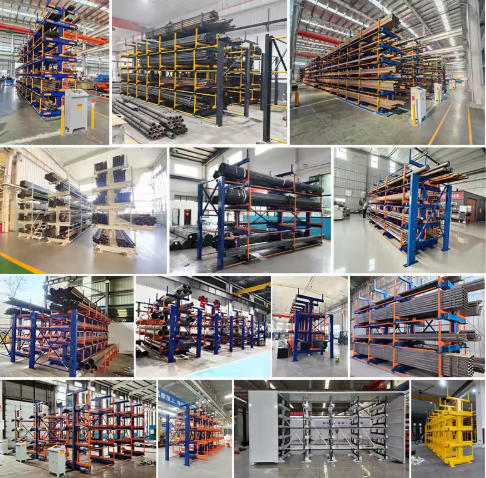
Your storage needs will evolve. Choose a system that scales:
- Modular bays that snap together
- Interchangeable arms for reconfiguration
- Expandable uprights for adding levels
A scalable system avoids the need for complete replacement down the line—a major cost saver.
Step 6: Calculate Total Cost of Ownership (TCO)
Don’t just compare upfront prices. Factor in:
- Installation labor
- Maintenance (painting, part replacement)
- Downtime avoided due to better organization
- Reduced material damage and waste

Real-World Selection Scenarios
- Scenario A: A small machine shop stores 10 types of cold-rolled steel bar (1–4″ diameter, 12 ft long).
→ Best choice: Compact vertical rack with adjustable arms, powder-coated finish, fixed base. - Scenario B: A pipeline contractor manages 30-ft API drill pipes in a coastal yard.
→ Best choice: Galvanized horizontal rack with forklift pockets, anti-corrosion coating, and mobile skid base. - Scenario C: An HVAC distributor ships copper tubing daily.
→ Best choice: Top-mounted mobile rack with rubber-lined arms, label holders, and caster locks for dock-side staging.
Partner with Reputable Suppliers
Work with manufacturers who offer:
- Engineering support for load calculations
- CAD drawings and layout assistance
- Warranty coverage (5+ years on frame integrity)
- Local service or replacement parts
Avoid generic importers with no technical backing—your safety depends on precise engineering.
Final Recommendation
The ideal bar and pipe storage rack isn’t the cheapest or the flashiest—it’s the one that aligns precisely with your material types, space, workflow, and growth trajectory. By methodically evaluating your needs using this guide, you’ll invest in a system that delivers safety, efficiency, and reliability for years to come.