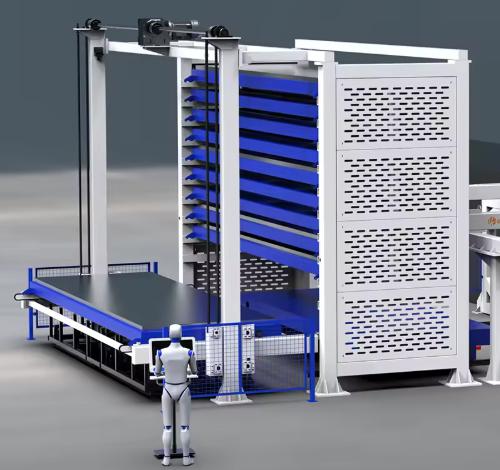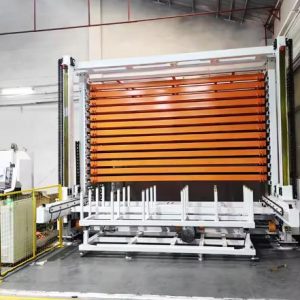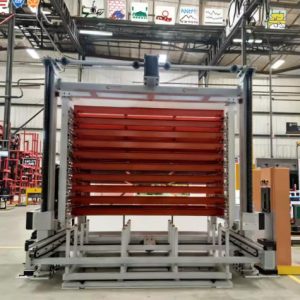
The modern factory is no longer just a collection of machines; it is a network of data. As manufacturing moves towards Industry 4.0, the storage systems that feed the production lines must become “smart.” An Automated Sheet Metal Storage System is not merely a physical container for steel; it is an intelligent device that communicates, calculates, and optimizes. This article delves into the technological underpinnings of these systems, exploring how software and hardware merge to create a seamless flow of materials.
The Brain of the Operation: WMS and ERP Integration
At the core of the Automated Sheet Metal Storage System lies its software architecture. The physical act of moving a steel plate is the final step in a complex digital process. It begins with the Warehouse Management System (WMS).
When a new batch of sheet metal arrives, it is not just thrown onto a shelf. It is scanned, measured, and weighed. This data is fed into the WMS, which acts as the traffic controller. The system determines the optimal location for the material based on algorithms that consider weight distribution, turnover rate (how often that specific material is used), and size.
Furthermore, this system does not operate in a silo. It integrates directly with the company’s Enterprise Resource Planning (ERP) software. This connectivity means that when a production order is generated in the ERP, the storage system is already aware of the material requirements. It can pre-stage materials or alert managers if inventory is running low. This “digital twin” of the inventory ensures that what is on the screen matches exactly what is in the rack, eliminating the discrepancies that plague manual warehouses.
Robotics and Autonomous Handling
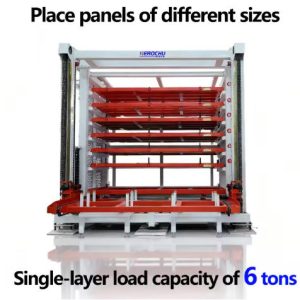
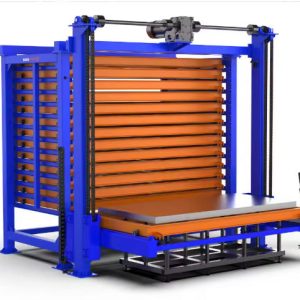
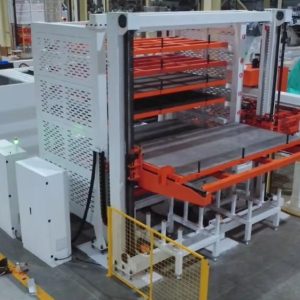
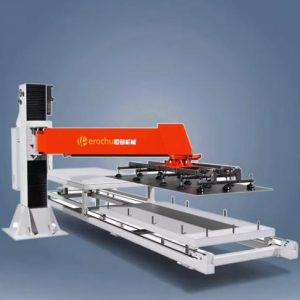
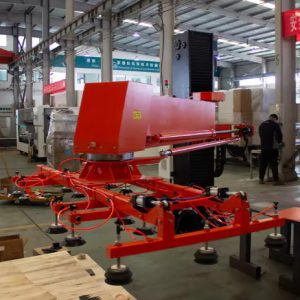
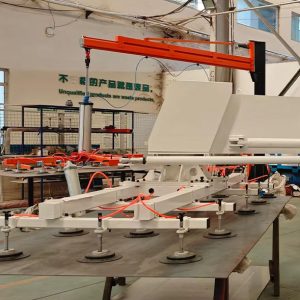
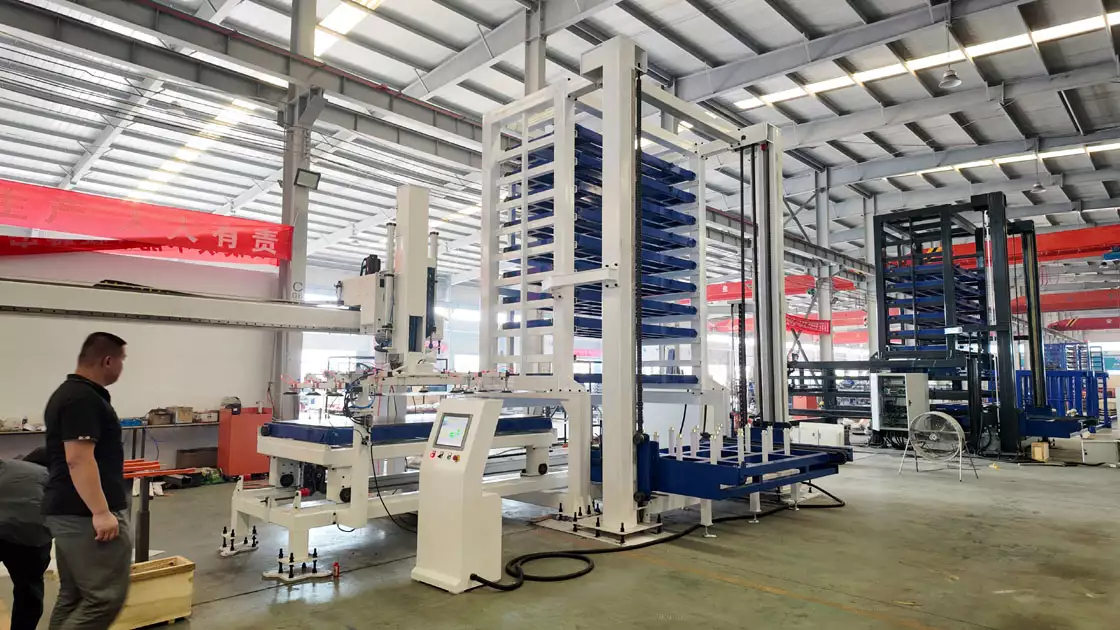
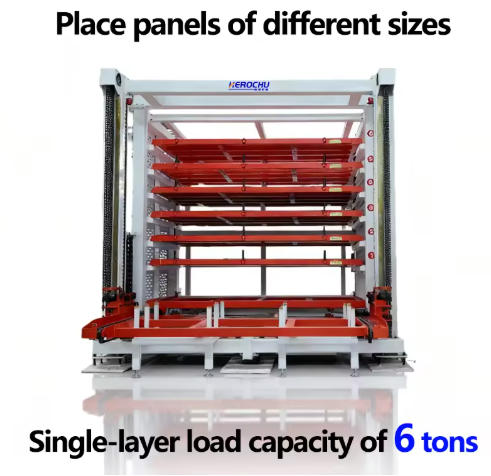
The “Automated” in the title refers to the sophisticated robotics involved in the handling process. The system typically employs a vertical lifting mechanism that operates with high precision. This is not a simple elevator; it is a robotic shuttle capable of independent movement.
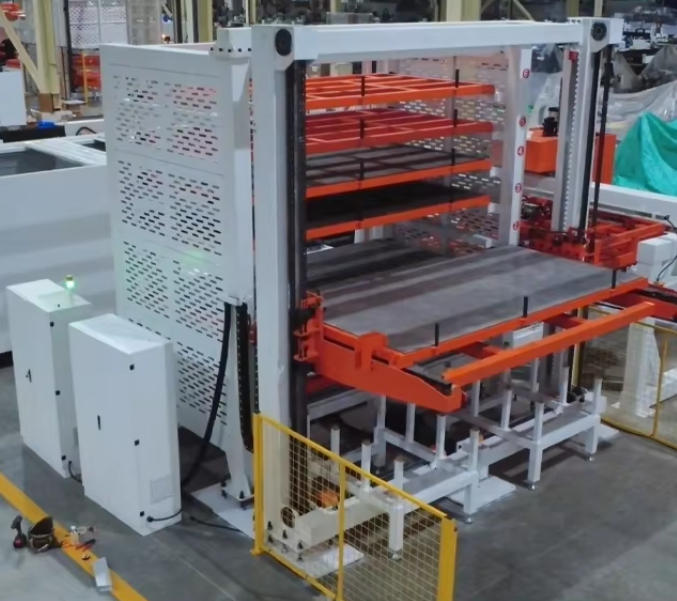
Using a “Goods-to-Operator” model, the robot retrieves the specific drawer or tray requested. The coordination between the lifter’s vertical movement and the drawer’s extraction mechanism is managed by a Programmable Logic Controller (PLC). This controller ensures that movements are synchronized to the millisecond. For example, the lifter must align perfectly with the drawer rails before the extraction forks can extend.
Advanced systems also feature “double-deep” handling capabilities or the ability to handle multiple trays in a single cycle, further increasing throughput. The robotics are designed to be autonomous, capable of running in “lights-out” mode—operating in the dark without human supervision during off-hours to prepare materials for the morning shift.
The Touch Screen Interface and User Experience
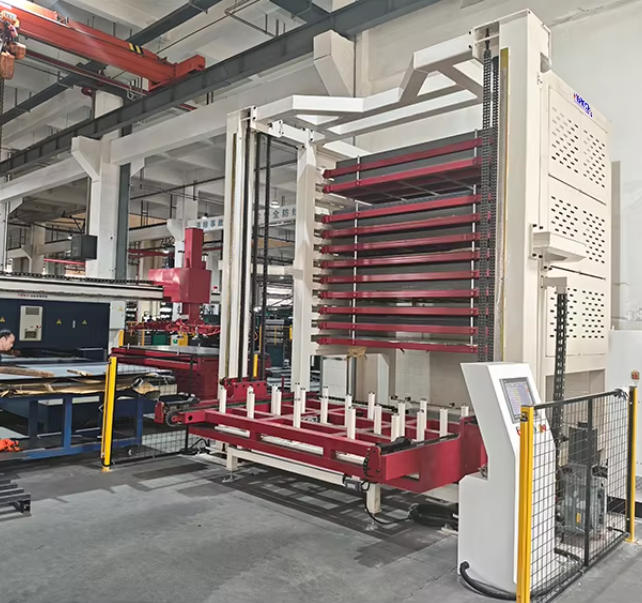
While the backend is complex, the frontend—the user interface—is designed for simplicity. The Automated Sheet Metal Storage System typically features a robust Touch Screen Control system at the loading bay.
This interface provides a visual representation of the inventory. Operators can see a diagram of the drawers and the materials they contain. They can search by material type, thickness, or batch number. The screen guides the operator through the loading and unloading process, confirming when a sheet has been removed or added.
This intuitive interface reduces the training time required for new employees. They do not need to memorize aisle locations or rack codes; they simply interact with the screen, and the machine does the rest. The system also provides real-time feedback on the status of the machine, alerting maintenance teams if a sensor is blocked or if a motor requires attention.
Precision Inventory Management
One of the greatest technological advantages of this system is the precision of its inventory management. In a manual rack, it is easy for a worker to take “one more sheet” than recorded, or to put a sheet back in the wrong spot. Over time, this leads to “ghost inventory”—items that the computer thinks are there, but aren’t.
The Automated Sheet Metal Storage System enforces discipline. To retrieve material, the operator must authenticate the transaction via the touchscreen or a connected scanner. The system tracks every movement. It supports batch traceability, which is crucial for industries like automotive or aerospace where the specific heat number of a steel batch must be tracked for quality assurance.
Additionally, the system can manage “partial sheets.” If a drawer holds ten sheets and three are removed, the system updates the count to seven. Some advanced versions even include weight sensors in the drawers to verify the remaining quantity physically, providing a double-check against the digital record.
Energy Efficiency and Smart Power Management
Despite their size and power, these automated systems are designed with energy efficiency in mind. The motors used in the lifters are often regenerative. When the lifter lowers a heavy load (like a 5-ton drawer), the motor acts as a generator, converting the potential energy of the descending mass into electricity, which is fed back into the grid or used to power other parts of the machine.
The control system also manages power consumption by putting non-essential components into “sleep mode” when the machine is idle. The lighting, screens, and cooling fans can be throttled down, waking up instantly when a user approaches or a command is received. This “green” approach to industrial storage aligns with the broader goals of sustainable manufacturing.
Conclusion
The Automated Sheet Metal Storage System is a triumph of mechatronics—the fusion of mechanical engineering, electronics, and computer science. It transforms a passive storage rack into an active participant in the manufacturing process. By leveraging intelligent software, precise robotics, and user-friendly interfaces, it ensures that the right material arrives at the right time, in the right condition. In the age of smart factories, this level of integration is not just a luxury; it is a necessity for staying competitive.