Automatic Profiles Material Storage: Herochu’s 13-Level Vertical Solution for 12-Meter Bars
The concept of an automatic material library – a computer-controlled repository where every long good is immediately accessible without forklift travel or manual searching – has existed in theoretical form for decades. Practical implementations, however, were historically limited by the engineering challenges of handling flexible or slender profiles without damage, managing variable lengths up to 12 meters, and achieving sufficient storage density to justify automation investment. Herochu has solved these challenges through a ground-up redesign of the automatic profiles material storage paradigm, focusing on vertical density, gantry precision, and modular scalability.
Automatic Profiles Material Storage: Herochu’s 13-Level Vertical Solution for 12-Meter Bars
The concept of an automaticmaterial library – a computer-controlled repository where every long good is immediately accessible without forklift travel or manual searching – has existed in theoretical form for decades. Practical implementations, however, were historically limited by the engineering challenges of handlingflexible or slender profiles without damage, managing variable lengths up to 12 meters, and achieving sufficient storage density to justify automation investment. Herochu has solved these challenges through a ground-up redesign of the automatic profiles material storage paradigm, focusing on vertical density, gantryprecision, and modular scalability.
Every industrial facility stores profiles. Steel service centers, aluminum extruders, construction material suppliers, and fabrication shops all maintain inventories of bars, tubes, angles, and custom shapes. The economic inefficiency of conventional storage is rarely calculated explicitly, but it is substantial. Consider a typical profile warehouse: 12-meter long steel bars stored on floor racks. Each rack bay requires a 3.5-meter aisle in front for forklift access and turning. The ratio of storage area to aisle area is approximately 1:1.5 – meaning 60% of the floor space serves not as storage but as access. If the facility has 2,000 square meters, 1,200 square meters are aisles.
Worse, the vertical dimension remains underutilized. Floor racks rarely exceed 3 meters in height because forklift visibility and mast reach become limiting. The upper 60% of the building volume – everything above 4 meters – holds nothing but air and lighting fixtures. Herochu’s automatic profiles material storage challenges this waste by abandoning floor racks entirely in favor of a structure that is itself the storage medium.
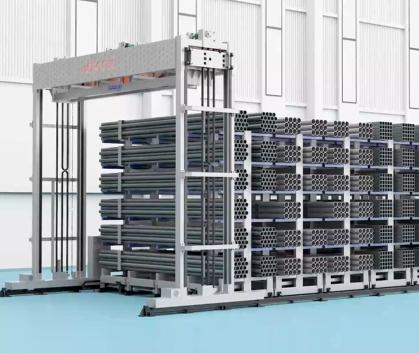
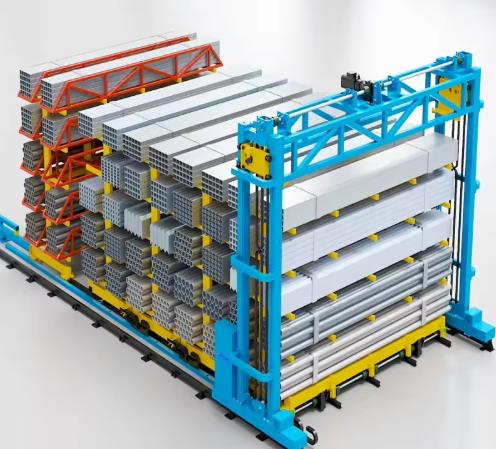
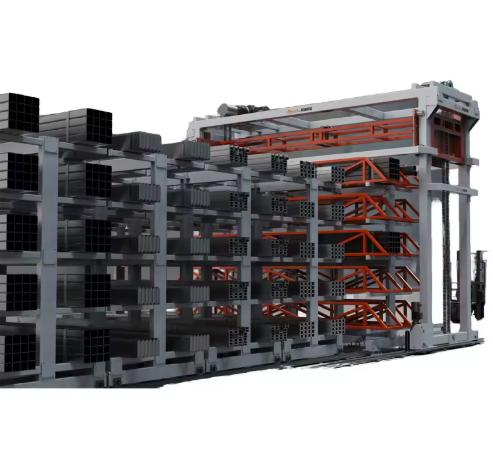
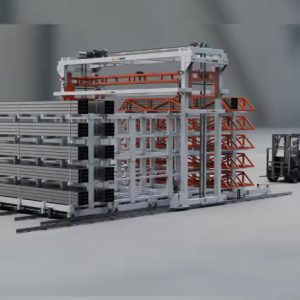
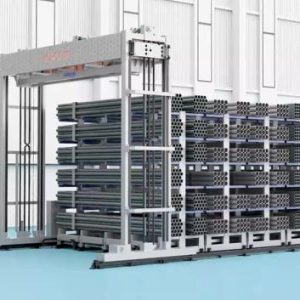
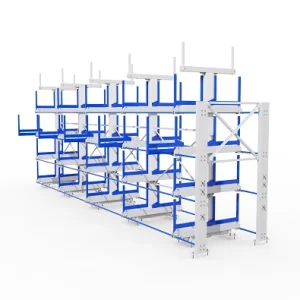
The system occupies a footprint of approximately 200 square meters for a typical configuration. Within that footprint, up to 13 vertical levels store profiles across the full 12-meter length. The effective storage density reaches 2.5 tonnes per square meter of footprint, a figure that conventional storage cannot approach. How is this possible? The answer lies in the elimination of access aisles. The gantry travels within the stored profiles themselves, moving vertically between levels and horizontally between columns. No aisle is required because the gantry is already inside the storage volume.
Detailed Vertical Configuration
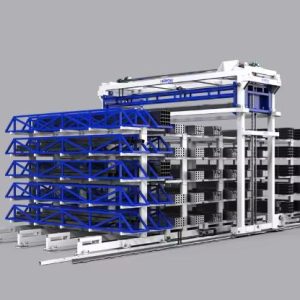
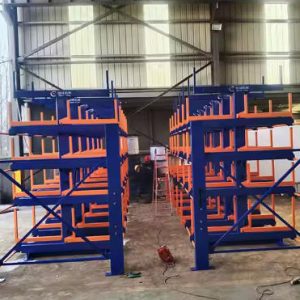
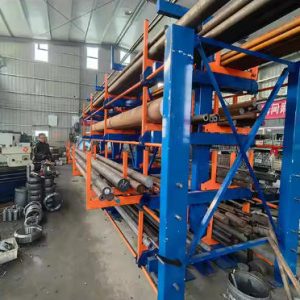
The number of levels – 8 to 13, depending on building height – determines both total capacity and the height of each storage bay. Each level is defined by a pair of longitudinal rails or cantilever arms that support the stored profiles. The vertical pitch between levels is not uniform; it can be optimized for the profile size mix. For a facility storing mostly 200mm diameter pipes, a level pitch of 300mm provides adequate clearance. For a mix that includes 400mm beams, selected levels can have increased pitch while others remain tighter. This mixed-pitch configuration is specified during system design based on the customer’s inventory profile.
The system assumes a standard bar length, typically 12 meters (approximately 40 feet) or 6 meters (20 feet). The length determines the overall depth of the system from front to back. For 12-meter profiles, the depth including clearance for gripper engagement and sensor mounting is approximately 13 meters. The width of the system varies based on the number of storage columns per level. A single wide column configuration – using the 6025mm wide gantry – can store multiple profiles side by side in each level, separated by vertical dividers. A narrow column configuration provides individual slots for each profile, simplifying retrieval logic but reducing total density.
Load capacity per level ranges from 3 to 5 tonnes. For automatic profiles material storage, the per-level capacity interacts with the number of levels. A system with 13 levels, each rated at 5 tonnes, would have a theoretical total capacity of 65 tonnes per column. Multiple columns increase that figure. However, structural engineering limits the total live load that the supporting frame can sustain. Real-world configurations balance per-level capacity and level count to stay within the structural limits of the building’s floor loading. For a typical industrial concrete slab rated at 5 tonnes per square meter, the Herochu system distributed over 200 square meters imposes a load of approximately 2.5 tonnes per square meter at full capacity – well within safe limits.
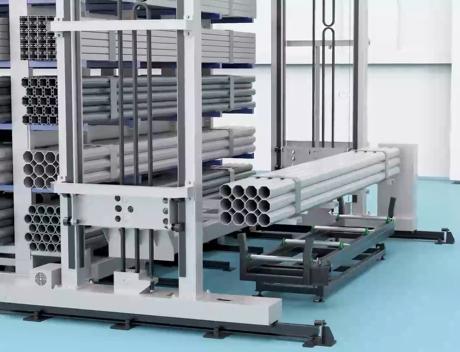
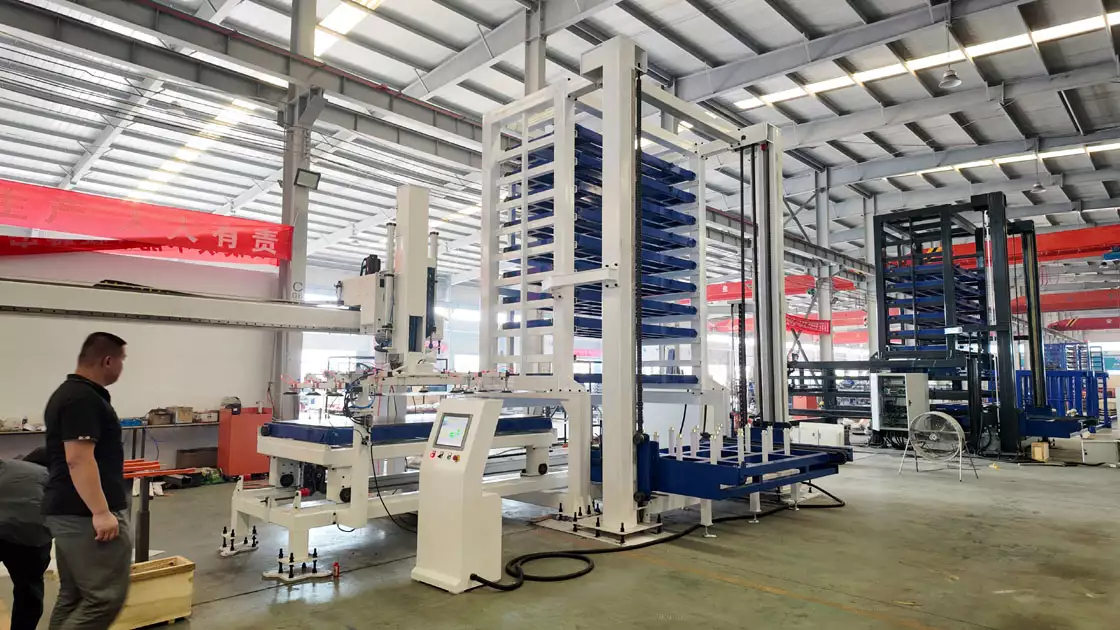
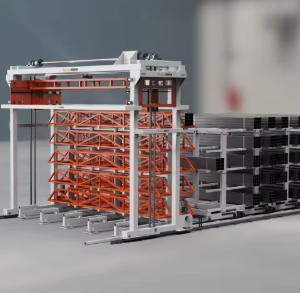
The gantry robot that performs storage and retrieval operations is the most sophisticated component of the automatic profiles material storage system. It consists of a horizontal beam spanning the width between the two vertical support columns. This beam travels vertically on linear guide rails mounted to the columns. Attached to the beam is a telescoping or articulated gripper assembly that extends into the storage slots to engage profiles.
The chain drive transmission powers both vertical and horizontal axes. Chains are selected over ballscrews for horizontal travel because the required travel distance – up to 12 meters – makes ballscrews impractical due to whirling at speed and cost. Chains are selected over rack-and-pinion for vertical travel because chains provide inherent safety: if power is lost, the chain cannot back-drive, while a rack-and-pinion system would allow the gantry to descend under gravity. The chain drive’s lower speed compared to rack-and-pinion is an acceptable trade-off given the heavy load requirements.
Operating speeds of 9 m/min vertical and 12 m/min horizontal are conservative by factory automation standards but optimal for profile handling. To understand why, consider the physics of a 12-meter steel beam weighing 4 tonnes. The moment of inertia around the beam’s center is enormous. Any rapid acceleration at the gripper induces bending moments that could permanently deform the beam or, in extreme cases, cause it to slip from the gripper. The moderate speeds ensure that the force applied to the profile during acceleration never exceeds 0.1g, keeping bending stress well below the elastic limit of even the most slender profiles.
Beyond the physical storage and retrieval hardware, the Herochu system functions as a complete automatic material library. The term “library” implies more than storage; it implies organization, cataloging, and retrieval by request. The Herochu software suite delivers these capabilities. Incoming profiles are entered into the digital catalog with all relevant attributes. The system then assigns a unique storage address and physically places the profile at that address. When a request for a specific profile arrives, the system retrieves the address and dispatches the gantry. The user never needs to know where a profile is stored – only that it is stored and available.
The software maintains a real-time inventory of all profiles in the library, including remnants. Remnantmanagement is a particular strength of the system. When a full-length 12-meter profile is retrieved, cut, and the unused portion (say, 3 meters) is returned, the system measures the remnant length, updates the database, and stores the remnant in a designated “shorts” area. Subsequent requests for a 2.5-meter length can be satisfied from the remnant inventory, avoiding the waste of cutting another full-length profile. Over time, this remnant optimization can reduce material consumption by 5% to 15% for facilities with high mix/low volume production.
User Interface and Operation
The automatic material library is operated through a touchscreen terminal or integrated with the facility’s existing ERP system. Standard operation involves selecting a profile from a list or scanning a work order barcode, then pressing “Retrieve.” The system handles everything else. For maintenance or manual override, the gantry can be jogged in all axes via a pendant control, but normal operation is fully automated.
Safety features include light curtains around the input/output station that halt gantry motion if an operator reaches into the retrieval area. Acoustic alarms sound before any gantry movement. Emergency stop buttons are located at multiple positions around the system perimeter. The structure itself is enclosed with wire mesh panels to prevent accidental contact with moving parts while still allowing visual inspection of stored profiles.
Conclusion
Automatic profiles material storage from Herochu transforms the economics of long goodswarehousing. By utilizing vertical space up to 13 levels high, eliminating access aisles through gantry-based retrieval, and providing intelligent remnant management, the system achieves storage densities that conventional methods cannot match. For any facility storing bars, tubes, beams, or custom profiles – whether steel, aluminum, copper, or plastic – the Herochu automatic material library offers a path to reduced footprint, lower labor costs, and improved inventory accuracy.
FAQ
Here are some frequently asked questions about our sheet metal racks and pipe storage solutions. We hope you find them helpful!
Q1: Can I request a custom size or color? Absolutely. We offer complimentary design services and deliver efficient, tailored solutions to meet your specific requirements.
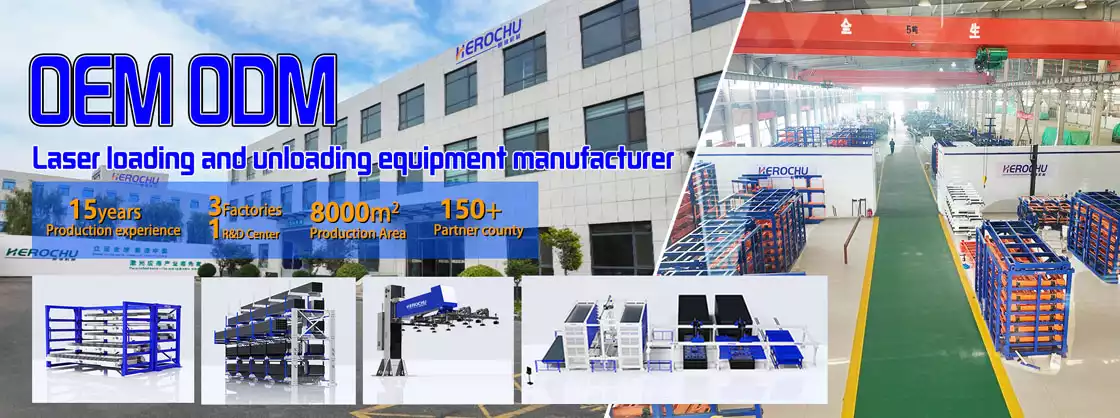
Q2: Are you a manufacturer or a distributor? We are a direct manufacturer with over 15 years of industry experience and expertise.
Q3: Is there a minimum order quantity? No. We welcome orders of any size, starting from a single unit.
Q4: How can I get detailed product information? Click the “Get a Quote” button to receive product images, detailed specifications, and videos. Our team is always ready to assist.
Q5: How do I provide my storage rack requirements? Simply share the type, dimensions, and quantity of materials you plan to store, along with any other specific needs. We will develop a professional storage solution for you. Alternatively, leave your contact details for a personalized consultation.
Q6: Do you offer automated loading systems or robotic arms? Yes. We provide loading robotic arms and integrated loading/unloading systems tailored to your laser cutting machine’s table size and material handling method (e.g., board rack, exchange platform, or material warehouse). Contact us with your details for a customized proposal.
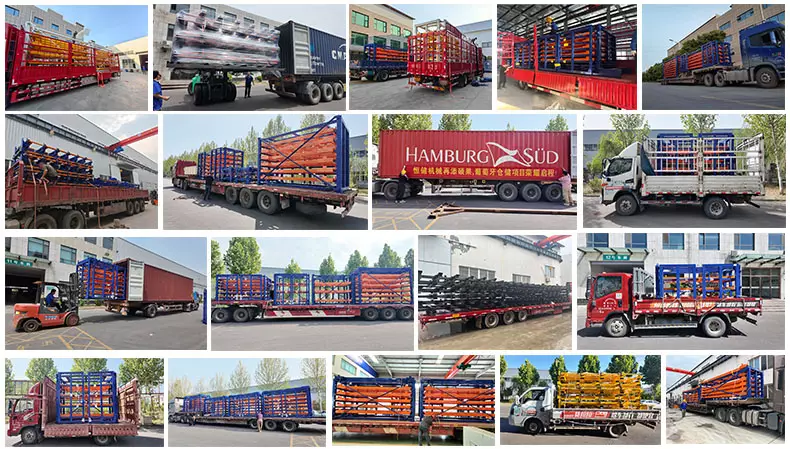
Q7: Do you provide on-site installation and debugging? Yes. Our technicians can travel to your facility for installation and debugging, ensuring successful operation. We have served clients globally, including in the USA, South Korea, Russia, Qatar, Mexico, South Africa, Egypt, and Lebanon.
Q8: How do you ensure product quality? Our quality assurance includes:
A team of over 40 technical engineers for professional debugging and support.
A dedicated quality control department compliant with ISO9001 standards.
CE certification for all exports.
Rigorous load testing before shipment to ensure structural safety and reliability.
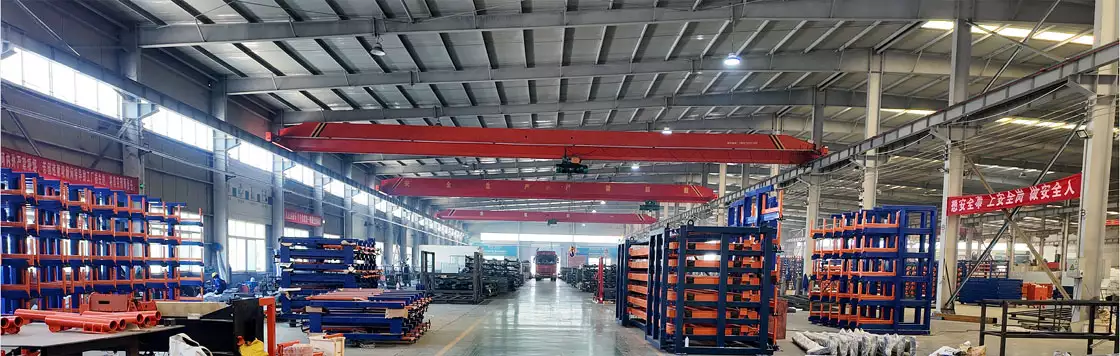
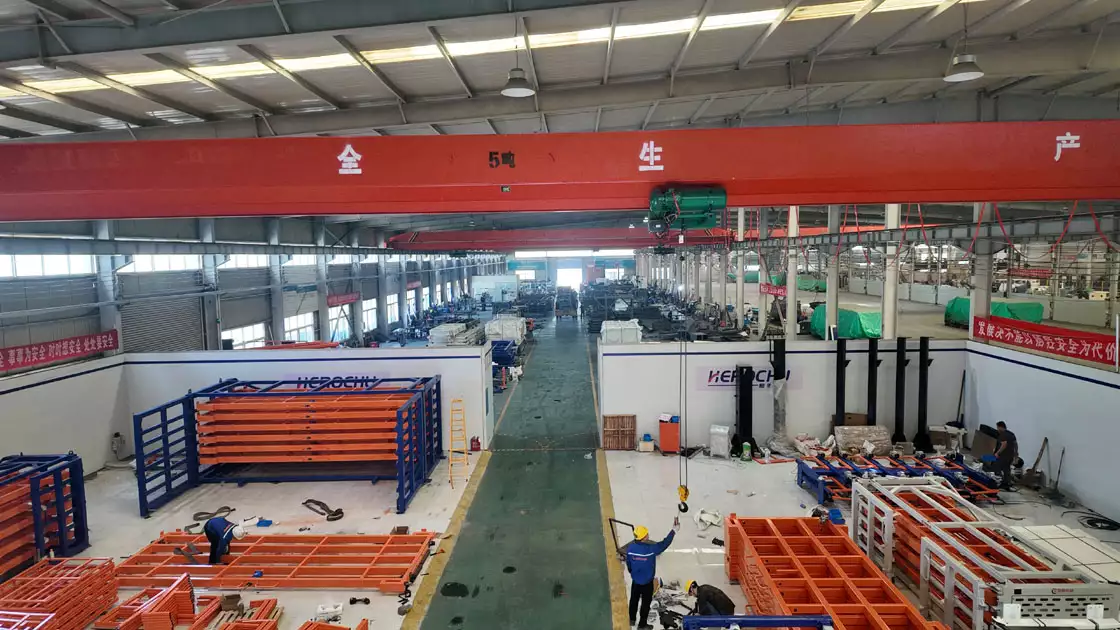
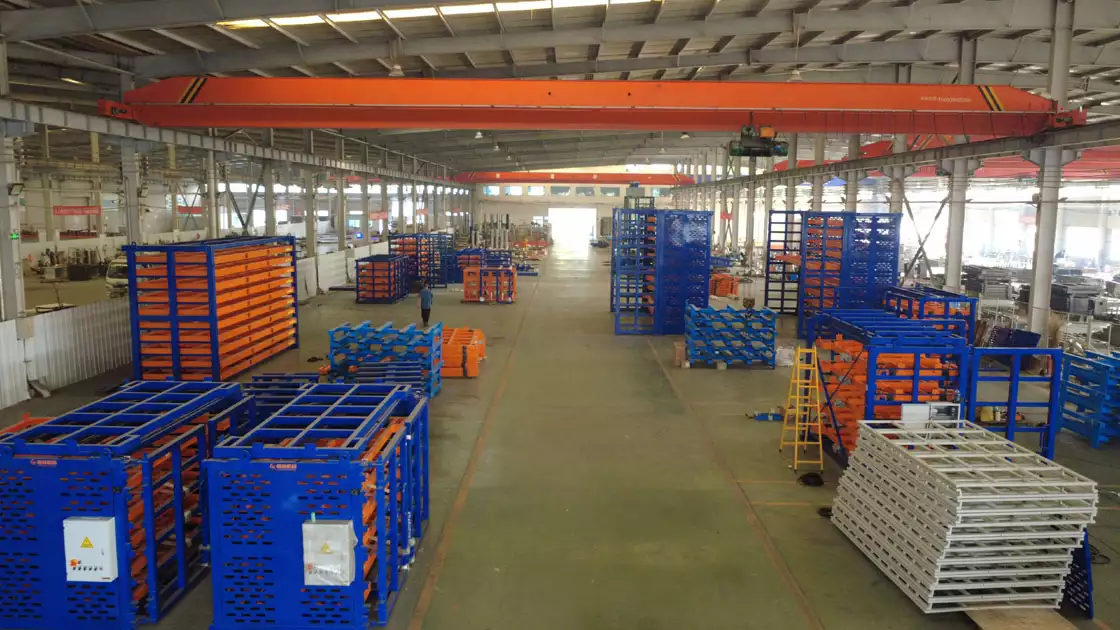
Q9: Where is your factory located? Our modern 10,000-square-meter manufacturing facility is located in Jiyang Industrial Park, Jinan, Shandong, China.
Q10: How can I evaluate your company’s capabilities? We offer virtual video factory tours and warmly welcome on-site visits.
Q11: What does your company specialize in? Jinan Constant Storage Machinery Manufacturing Co., Ltd. is a high-tech enterprise specializing in the R&D, production, sales, installation, and service of intelligent storage solutions. Our product range includes sheet material warehouses, drawer-style shelves, cantilever racks, servo manipulators, gantry loaders, and fully automated handling systems. Supported by a skilled technical team and advanced equipment, we are committed to delivering high-performance storage products and solutions to customers worldwide.
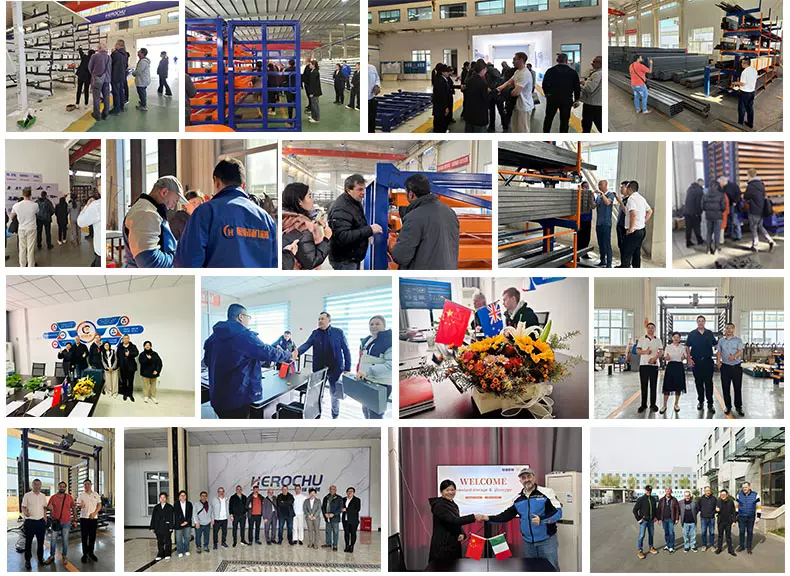
Customer visit
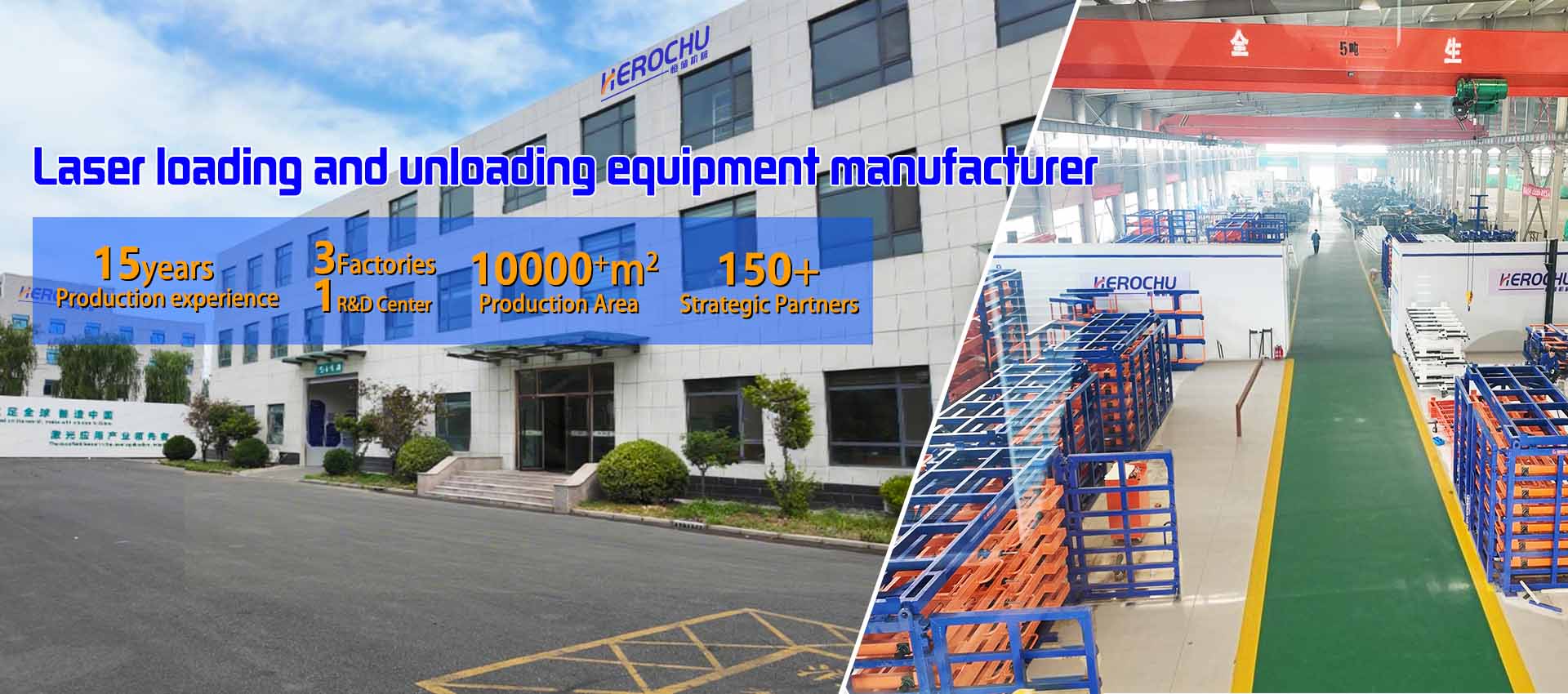
Herochu has always been adhering to the market-centric approach to meet customer requirements to the maximum extent, and the business philosophy of “creating brands with heart and gaining reputation with sincerity”. It provides customers with high-quality products and services with rigorous military quality, professionalism, and excellence, and has won unanimous praise in the Chinese aerospace, Chinese weapons, Chinese railways, automobile manufacturing, engineering machinery, non-ferrous metal titanium alloy and other industries.