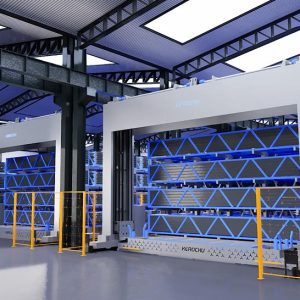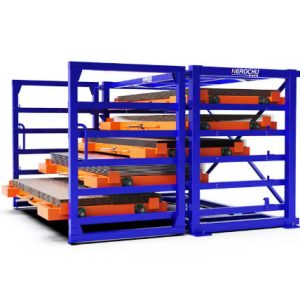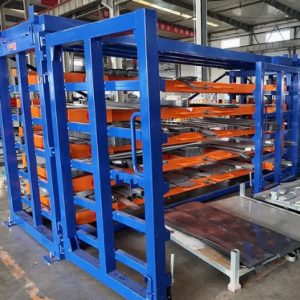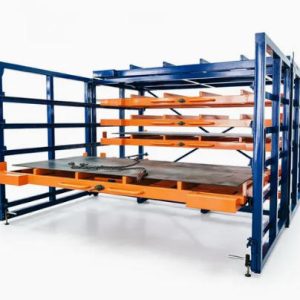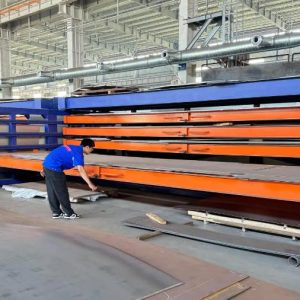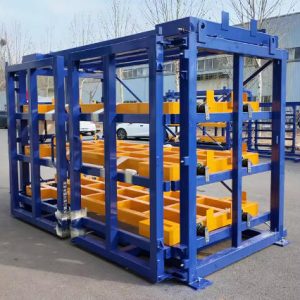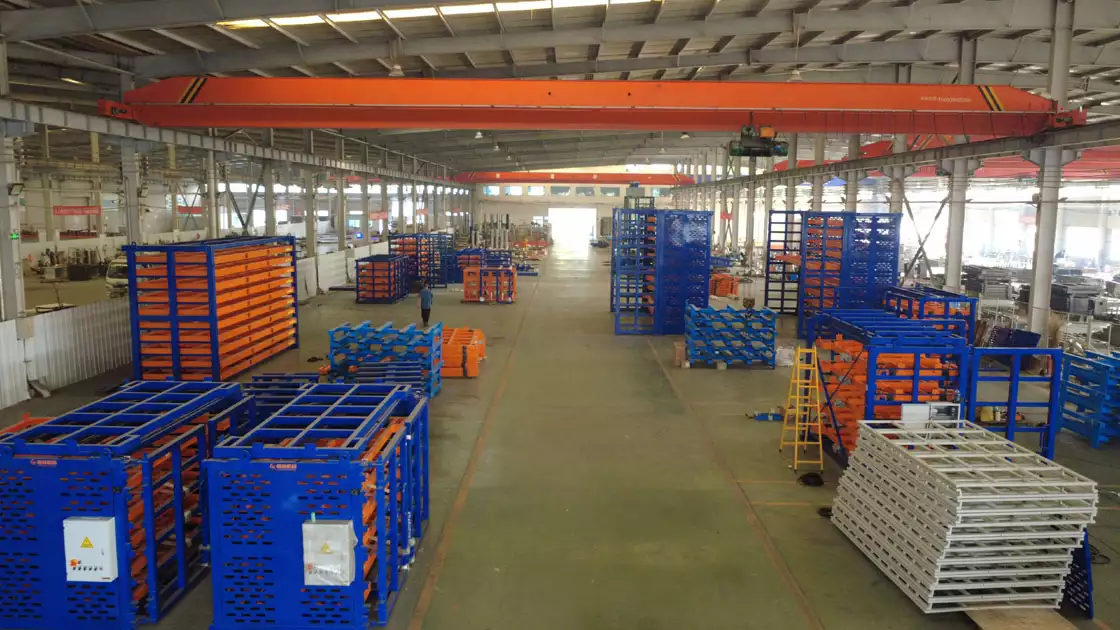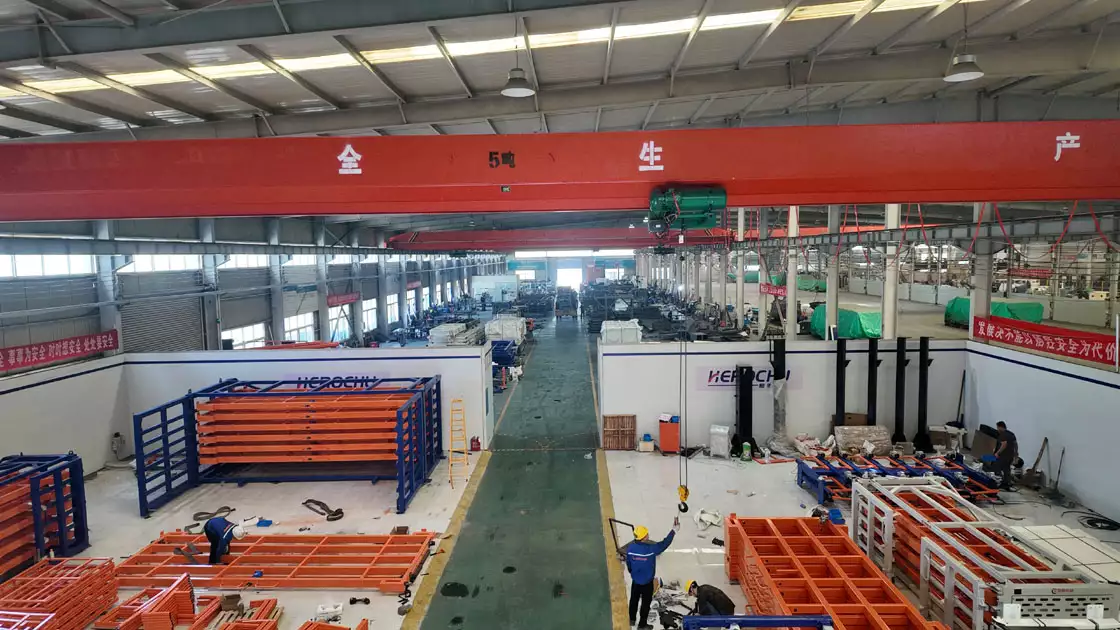
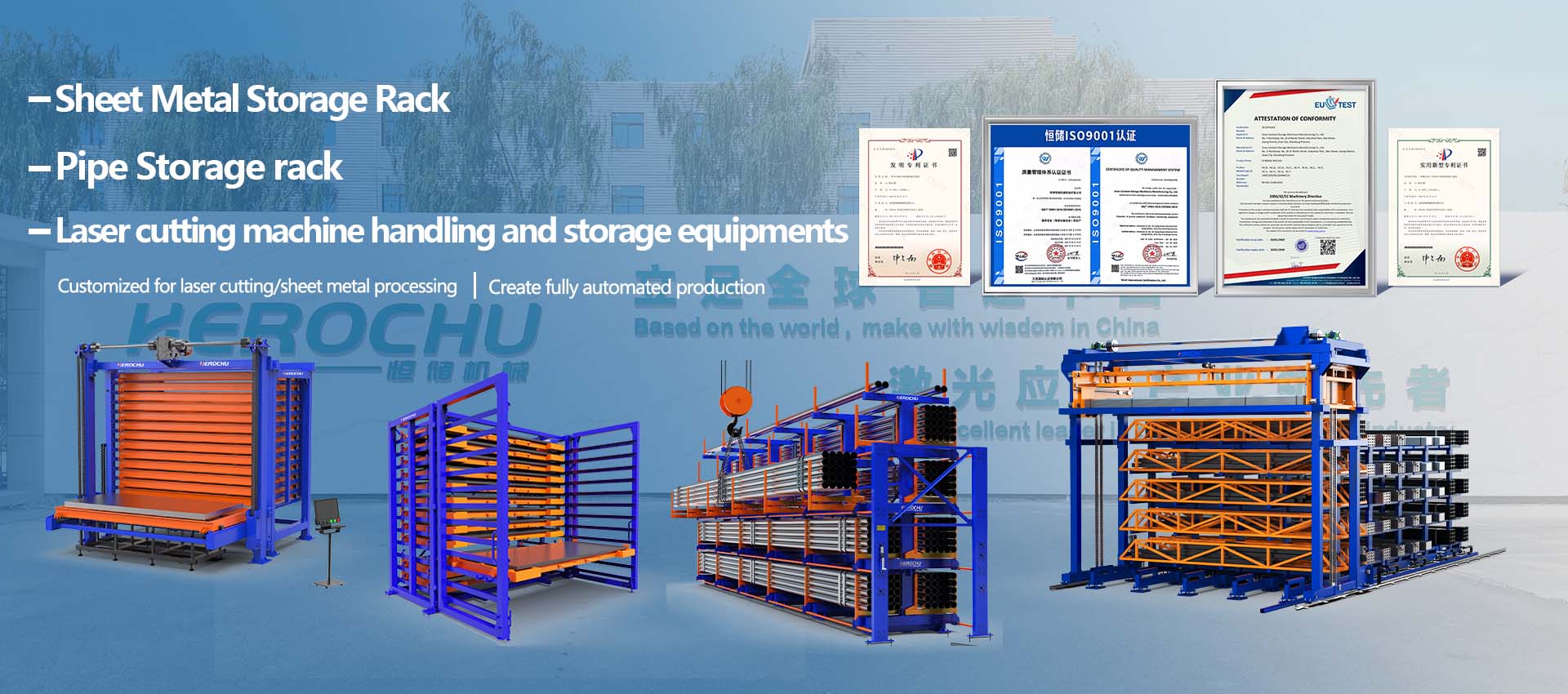
The relentless pressure on manufacturing margins makes the optimization of every square foot of factory space a critical business imperative. Traditional flat storage for sheet metal is one of the most egregious offenders of space inefficiency. It consumes vast tracts of premium floor real estate, creates hazardous aisles, and limits operational flexibility. The modern answer is to look up. A High Capacity Smart Storage Rack with Automated Management for Modern Warehouse represents a paradigm shift, leveraging vertical integration and smart software to achieve unprecedented storage density and workflow synergy, directly addressing the core issues of cramped and disordered spaces.
The principle is powerful in its simplicity: by stacking storage locations vertically within a secure structural frame, you multiply capacity without expanding your building’s footprint. A standard 6-tier storage capacity unit, for example, can store the equivalent of six traditional floor stacks in the area formerly occupied by just one. This vertical approach, central to an Automatic Vertical Storage System, can easily triple or quadruple your effective storage capacity. The freed-up floor space is transformative. It can be repurposed for additional value-generating activities: installing another CNC machine, creating a dedicated quality inspection station, establishing efficient packing and shipping lines, or simply improving material flow paths to reduce congestion and enhance safety. In urban settings or high-rent districts, this space reclamation alone can justify the investment, effectively increasing your productive capacity without the exorbitant cost of physical expansion.
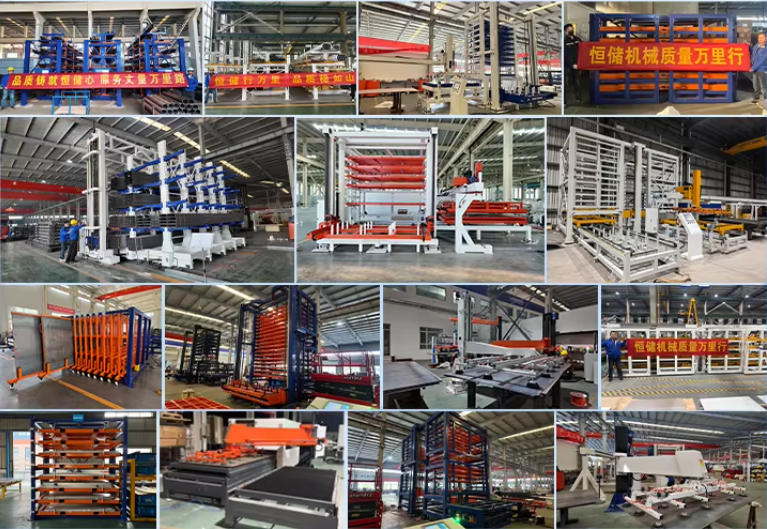
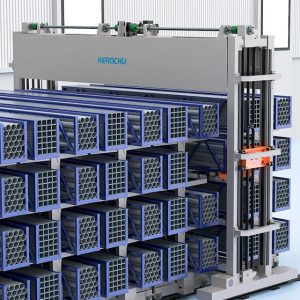
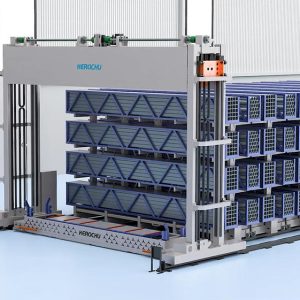
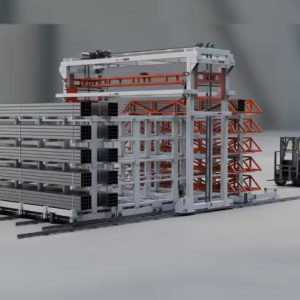
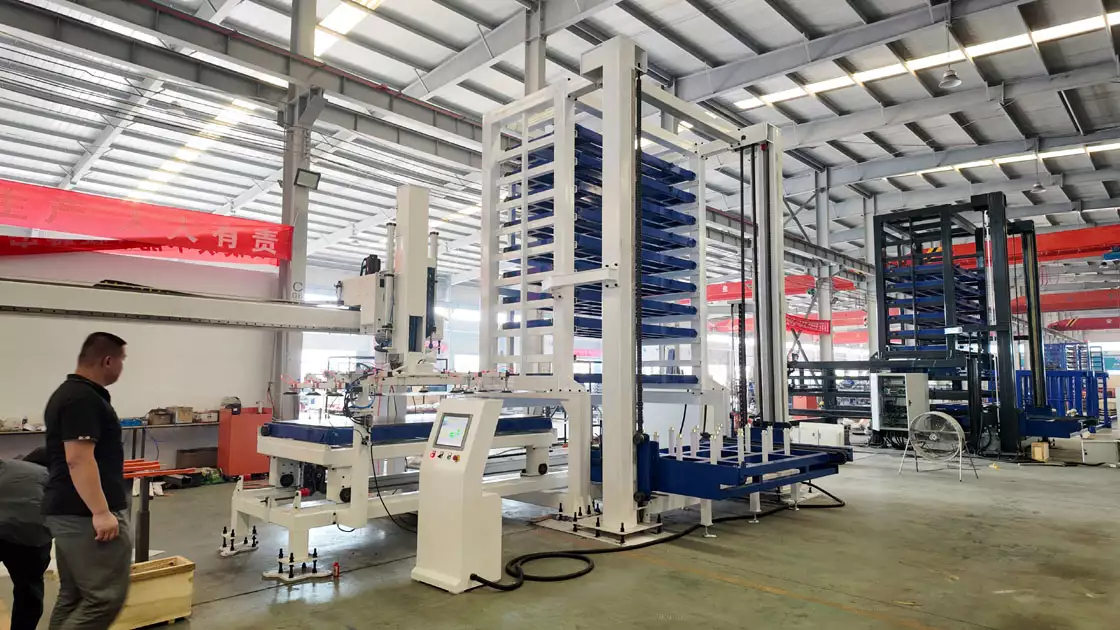
However, capacity is only one facet. The “Smart” in High Capacity Smart Storage Rack denotes the integrated automated management that makes this high density both accessible and efficient. A high-density manual rack would be a nightmare—a labyrinth requiring ladders, cranes, and endless searching. The smart system solves this through precision automation. The core of the access mechanism is a servo motor-driven composite manipulator or robotic retrieval unit. Servo technology is key here; it provides the exact positioning control, smooth acceleration, and deceleration needed to handle heavy, valuable plates safely within tight spaces. This manipulator travels on high-precision guide rails mounted on a robust truss structure, its movements dictated by the central control system.
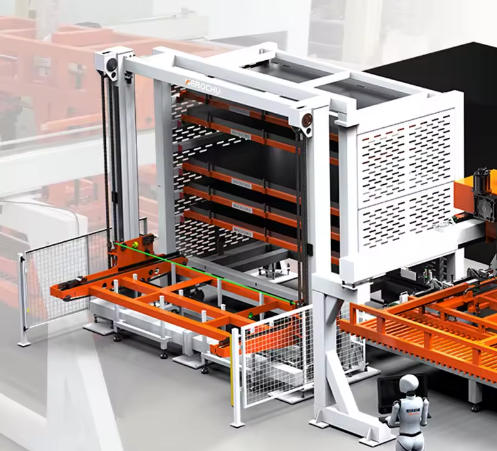
This is where automated management takes over. The system knows the exact location of every single plate, down to the millimeter. When a request is made, the manipulator doesn’t search—it proceeds directly to the precise X, Y, and Z coordinates. The integrated elevator system, also servo-controlled, smoothly moves the manipulator between the different vertical tiers. This “direct-to-location” access model slashes retrieval times from potentially tens of minutes (involving search, manual handling equipment setup, and careful extraction) to a consistent two or three minutes, regardless of the plate’s location within the rack. This speed and predictability are crucial for modern warehouse and workshop environments operating on Just-In-Time (JIT) or lean manufacturing principles.
The management intelligence extends to prioritization and scheduling. The system software can manage a queue of multiple storage and retrieval commands, optimizing the sequence to minimize the manipulator’s travel time and maximize throughput. For instance, if it receives two retrieval requests for plates on the same vertical level but different columns, it can plan a path that services both in one efficient trip. This software-driven optimization is a continuous, behind-the-scenes process that ensures the physical system operates at its peak mechanical efficiency.
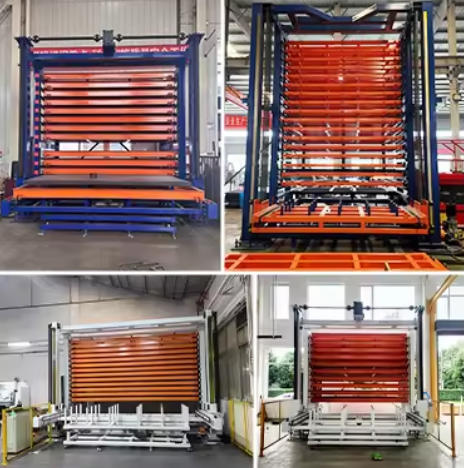
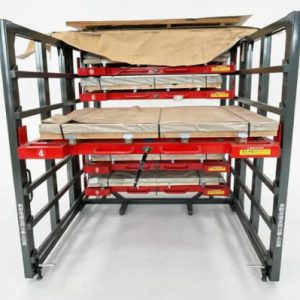
Material protection is engineered into the very design of these smart racks. High-density storage in a manual setting often leads to increased damage from friction, improper handling, and difficulty in accessing lower plates in a stack. The smart rack design eliminates these issues. Each plate rests on its own independent, palletized level or cradle. These cradles are often lined with polyurethane or other non-abrasive materials to prevent surface scratching. Precision positioning pins or clamping devices secure the plate gently but firmly, preventing any movement during storage or the retrieval process. This “one plate, one location” philosophy is the ultimate form of material care, virtually eliminating the dents, bends, and scratches that plague traditional stacking, thereby reducing scrap and improving the quality of the first operation, whether it’s laser cutting or punching.
Implementing such a system requires a Customized Solution based on a detailed analysis. Key factors include ceiling height (to determine maximum viable tiers), floor load-bearing capacity, the range of plate sizes and weights (from thin gauge aluminum to thick armor plate), and the required throughput speed. The control interface is designed for simplicity amidst this complexity, typically featuring a large industrial touchscreen that displays a clear graphical layout of the rack and inventory. Operators can interact with it intuitively, while the Siemens PLC in the background ensures rock-solid, reliable execution of every command.
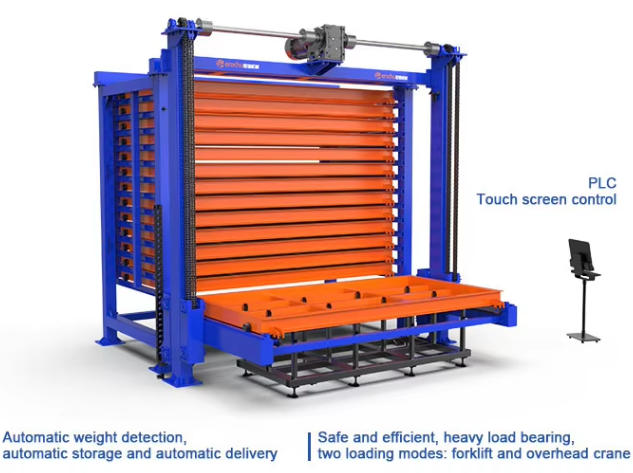
Ultimately, a High Capacity Smart Storage Rack with Automated Management is more than a storage device; it’s a strategic workflow modernizer. It compresses the footprint of your raw material inventory, liberating space for growth. It injects speed, accuracy, and predictability into your material handling, feeding your production machines with machine-like reliability. It safeguards your material investment. And it provides the scalable, high-density infrastructure needed for a modern, agile, and efficient sheet metal manufacturing operation ready to meet the demands of the future.