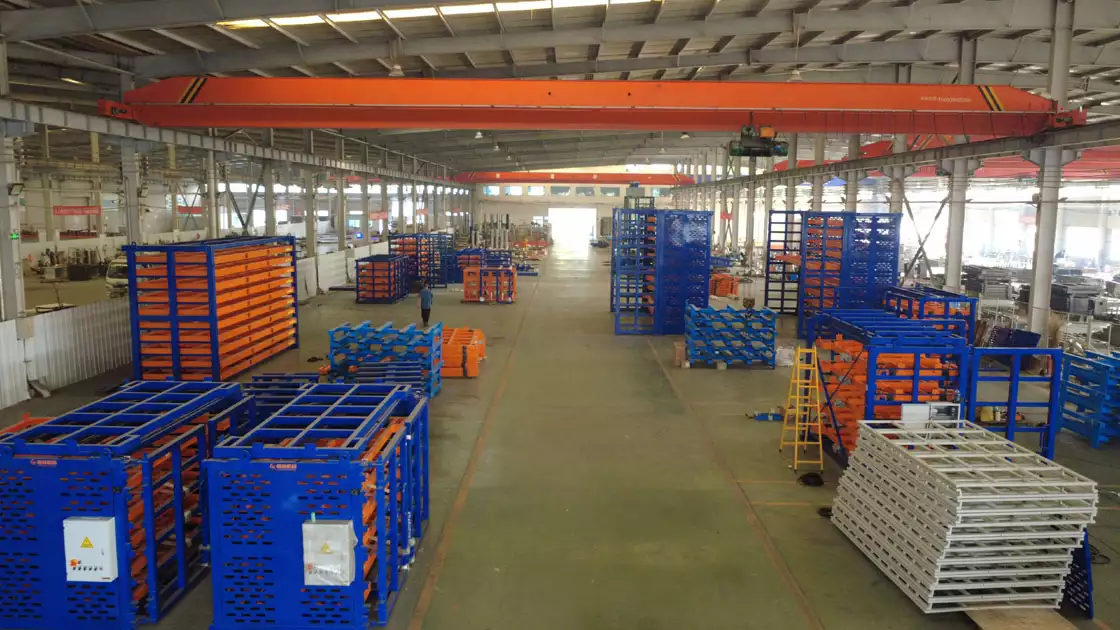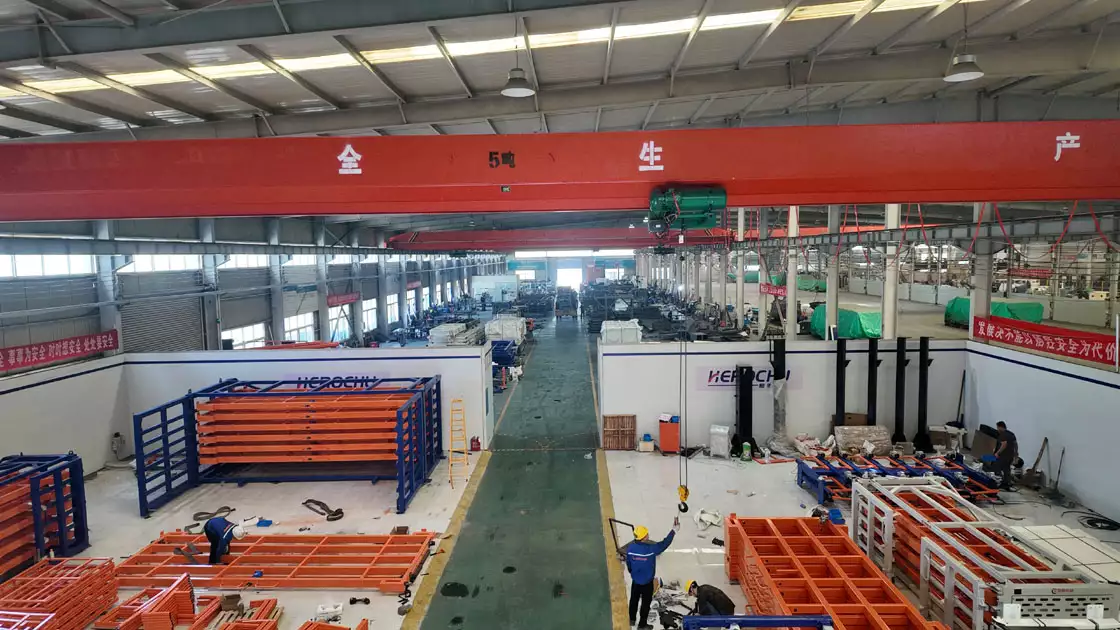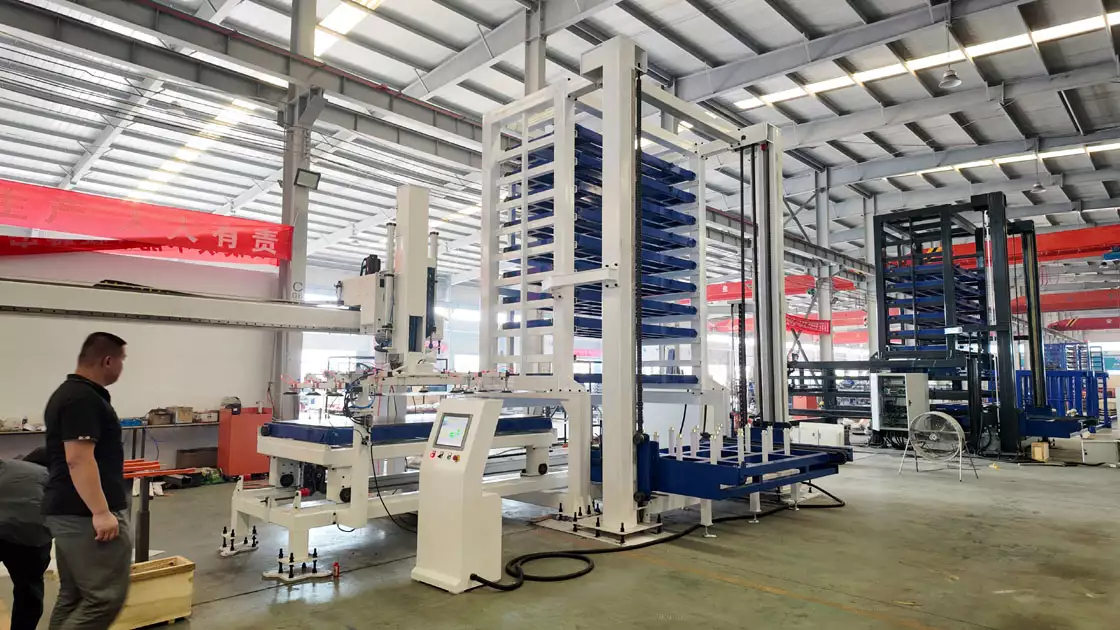
Choosing the right configuration for your sheet material is a strategic decision that impacts floor space, workflow, and material integrity. The two primary methodologies—horizontal and vertical sheet storage—each offer distinct advantages. Understanding the differences, ideal use cases, and innovative solutions within each category is key to optimizing your warehouse. This comprehensive guide compares these approaches, focusing on advanced sheet material racking storage solutions that cater to both methods.
Vertical Sheet Storage Solutions are champions of space efficiency. As the name suggests, sheets are stored on their edge, perpendicular to the floor. This vertical storage – solutions for vertical sheet storage approach is exceptionally compact, allowing you to store a large number of sheets in a relatively small footprint. It is an excellent choice for saving valuable floor space in crowded warehouses. Vertical racks are often simpler in construction, typically featuring sturdy dividers or cradles to hold sheets upright, making them a light and cost-effective option for many standard applications.
The primary advantage of vertical storage is density. However, access can be sequential; to retrieve a sheet from the middle of a stack, you may need to move others. Modern solutions mitigate this with designs that allow slight tilting or spacing. This method is ideal for materials that are less sensitive to edge pressure and where sheets are often used in bulk or in a first-in, last-out sequence. It’s a popular choice for storage systems for sheet metal storage of standard sizes and grades in stockholding environments.
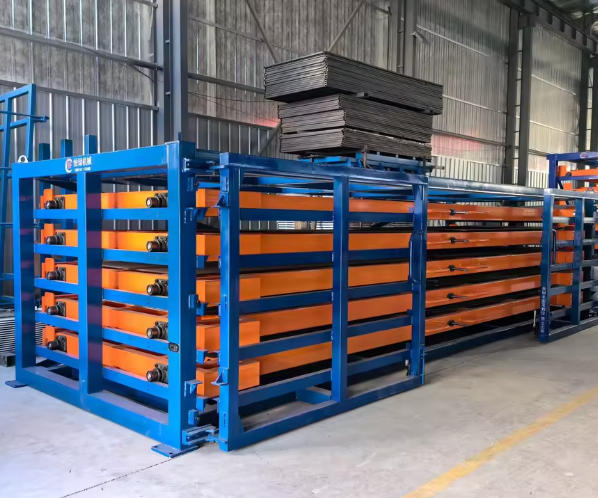
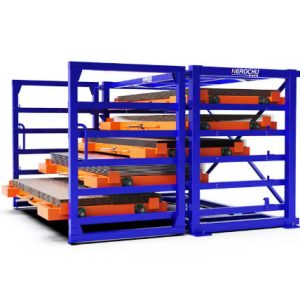
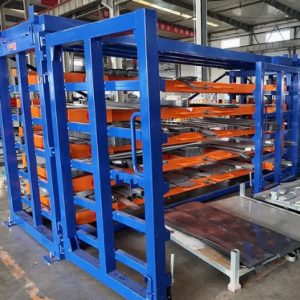
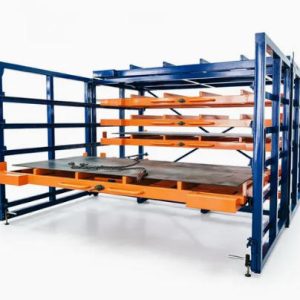
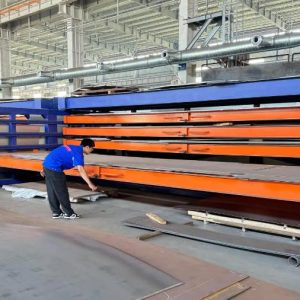
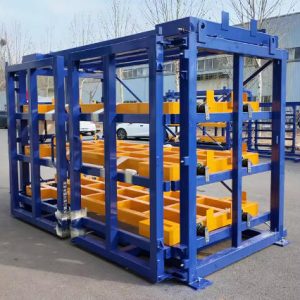
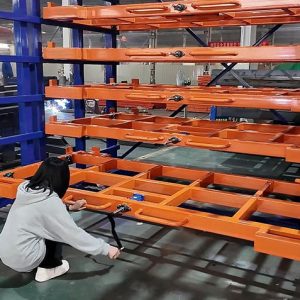
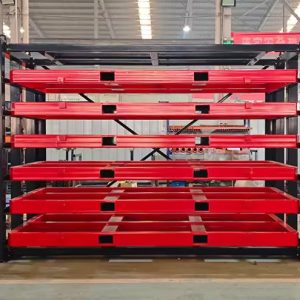
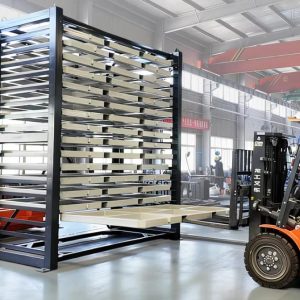
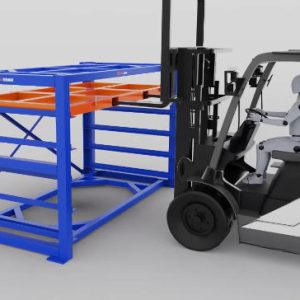
In contrast, Horizontal Sheet Storage systems, such as the advanced Drawer Sheet Metal Warehouse Rack, prioritize access and protection. Sheets are stored flat in layers or within roll-out drawers. This method provides 100% Accessibility & Efficiency, as each sheet or drawer can be accessed independently without disturbing others. This is invaluable in job-shop environments or for laser cutting metal sheet storage, where specific sheets from inventory are frequently pulled for different custom orders.
Maximum Material Protection is a hallmark of horizontal storage. Sheets rest flat, eliminating any risk of sagging or bending over time. In drawer systems, continuous trays with inclined supports prevent sliding and protect surfaces from scratches—a critical factor for polished, coated, or pre-finished materials. While horizontal systems may use more floor space per sheet than vertical options, their multilayer design efficiently uses vertical space, compensating with significant gains in organization and retrieval speed.
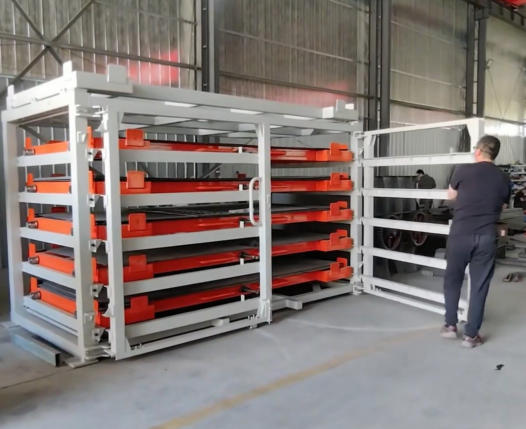
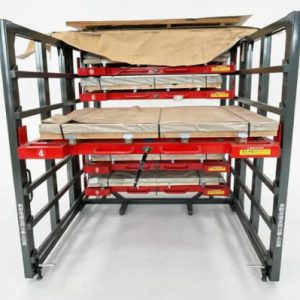
The choice between horizontal and vertical sheet storage often comes down to material type, handling frequency, and space constraints. A hybrid approach is also common in large facilities. The good news is that modern sheet material racking storage solutions are highly customizable for both. You can specify the plate size (e.g., 4000x1500mm, 6000x2000mm), number of layers, and load-bearing capacity to suit either orientation.
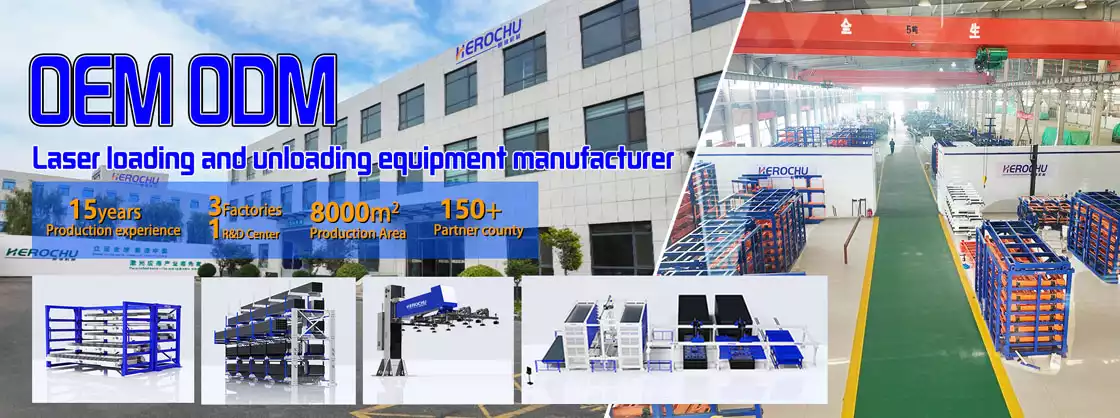
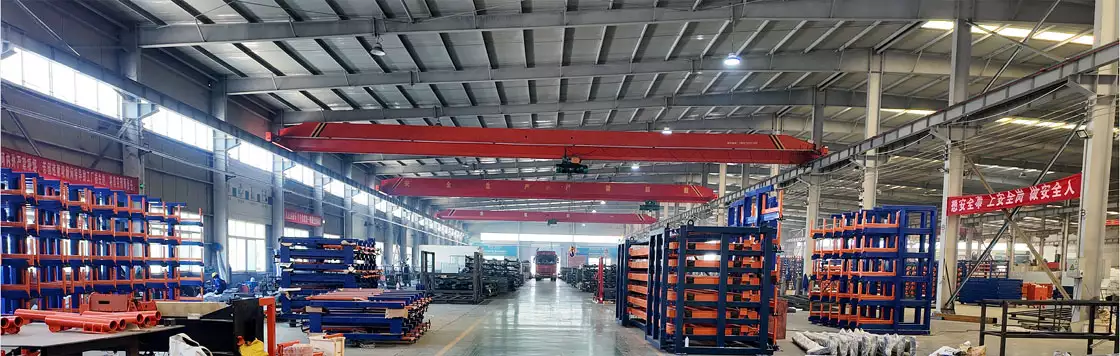
Leading manufacturers like Jinan Hengchuang specialize in both. They produce drawer racks with or without motor drive, board racks for vertical storage, and various magazines. As noted by industry experts, “Special construction is a standard service for us. Each rack system for sheet metal is unique.” This means whether you need a compact vertical rack or a massive heavy sheet metal storage rack with 5.5-ton drawers, solutions can be tailored.
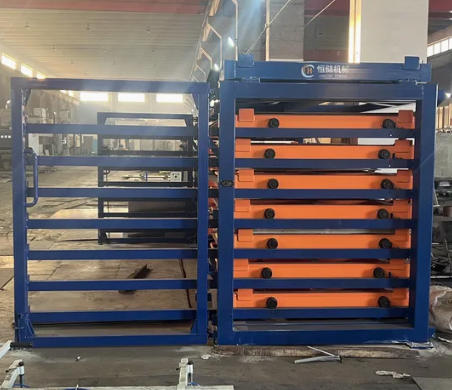
Key features to look for across both types include a corrosion protected & powder coated finish for durability and smooth rail systems for any moving parts. Safety features are paramount, especially in heavy duty shelving system for sheet metal applications.
Ultimately, whether you choose horizontal and vertical sheet storage, the goal is to bring order to your company, save space, and ensure gentle material handling. By analyzing your specific workflow, material mix, and facility layout, you can select or customize a storage system for sheet metal storage that delivers optimal performance, making your operation safer, faster, and more organized.