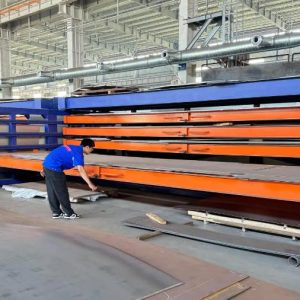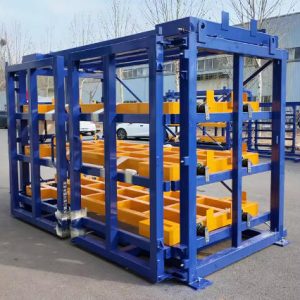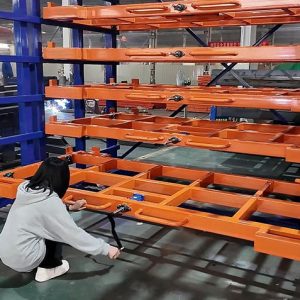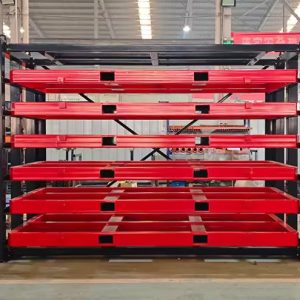
Investing in heavy-duty bar and pipe storage racks is a decisive step toward industrial organization. However, the next critical decision is choosing the optimal configuration: vertical or horizontal. Both are constructed from robust steel and offer durability and stability, but they serve different spatial and operational philosophies. This guide will help you navigate the choice between vertical and horizontal heavy-duty bar and pipe storage racks, ensuring you select the setup that best fits your operational needs and maximizes your return on investment.
Understanding the Core Designs
Vertical Bar and Pipe Racks: Reaching for the Sky
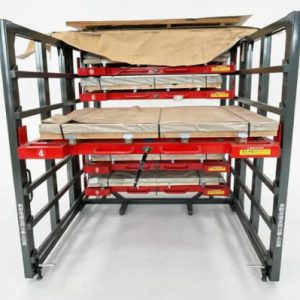
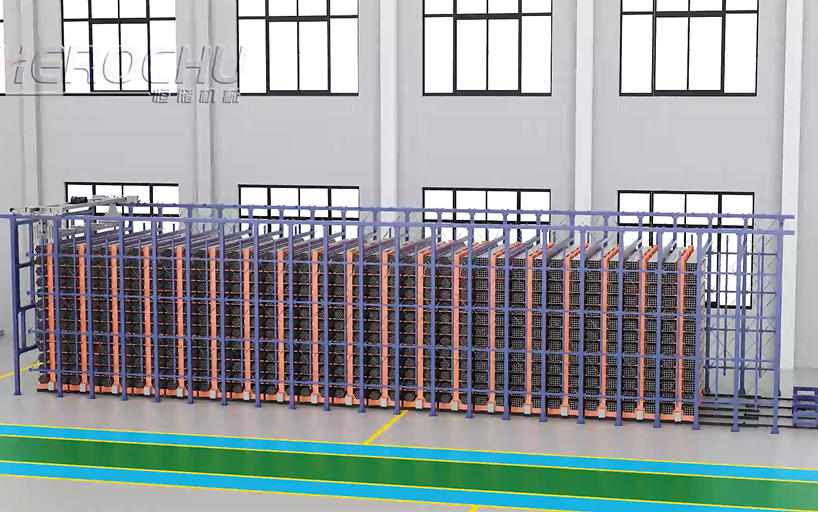
These racks are designed like giant filing cabinets for long materials. Pipes, bars, and tubes are stored standing on end in individual or grouped cells or bays.
- Ideal For: Storing very long lengths (often 12ft and above), including lumber, structural steel, conduit, and plastic piping.
- Primary Strength: Exceptional space-saving solution. They have the smallest floor footprint of any storage method for long items, making them perfect for facilities where floor space is at a premium but vertical clearance is available.
- Access Method: Items are typically inserted and retrieved from the top, often requiring an overhead hoist, forklift, or two-person lift for heavier/longer pieces.
Horizontal Bar and Pipe Racks: The Cantilevered Advantage
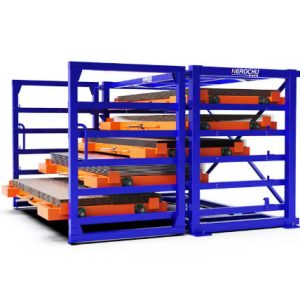
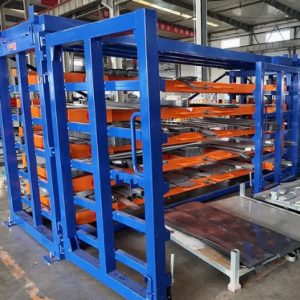
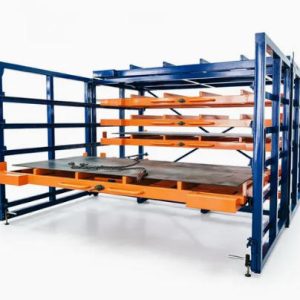
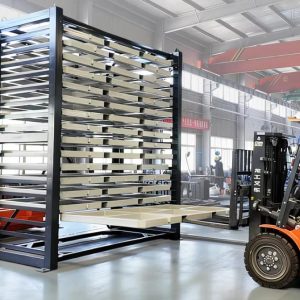
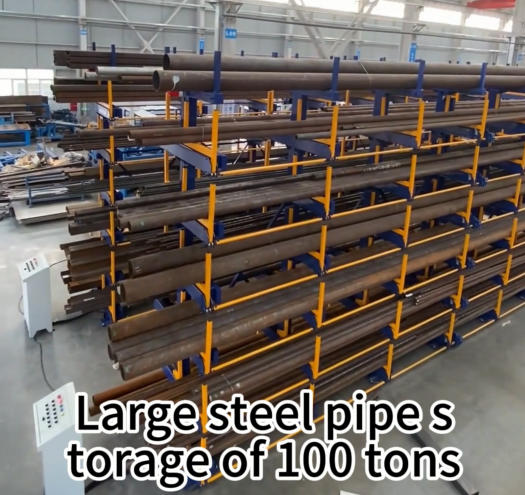
These racks feature sturdy vertical columns with cantilevered arms that extend outwards to support materials laid horizontally in layers.
- Ideal For: Storing shorter to medium lengths that are handled more frequently, such as cut pieces, stock for machining, or inventory needing regular picking.
- Primary Strength: Superior accessibility and visibility. Every piece is in clear view and can be accessed from the side without disturbing other items on the rack.
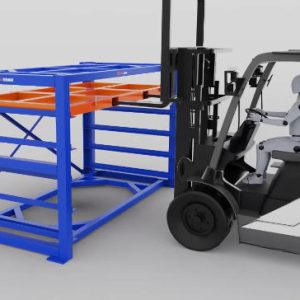
- Access Method: Items are loaded and unloaded from the side, often manually for lighter items or with forklifts for heavier loads. The open-base design facilitates this.
Comparative Analysis: Key Decision Factors
1. Space and Floor Plan Considerations
- Choose VERTICAL if: Your facility has high ceilings but limited floor space. Vertical racks optimize vertical… space and decrease floor space usage dramatically. They are excellent for warehousing large quantities of stock in a compact area.
- Choose HORIZONTAL if: You have more ample floor space and need clear, wide aisles for access. Horizontal racks create organized storage bays that define spaces within a warehouse. They are less about saving absolute space and more about organizing space efficiently for workflow.
2. Material Handling and Workflow
- Choose VERTICAL if: Your primary activity is bulk storage and retrieval of full-length materials for processing elsewhere. Access is less frequent but in larger batches. Handling usually requires mechanical assistance (forklifts with boom attachments, cranes).
- Choose HORIZONTAL if: Your workflow involves frequent picking of various lengths, visual inspection, or direct feeding to a nearby workstation. The easy access from multiple angles supports just-in-time manufacturing, retail supply, or job-shop environments where variety and speed are key.
3. Inventory Management and Accessibility
- Choose VERTICAL if: You store large quantities of similar items. While great for density, it can be harder to see and access items in the middle of a deep bay. It excels in “first-in, last-out” type storage.
- Choose HORIZONTAL if: Improved safety and accessibility for daily picking is paramount. Every item is visible and immediately accessible. This supports accurate cycle counting, FIFO (first-in, first-out) inventory management, and reduces time-consuming searches.
4. Safety and Ergonomics
- Choose VERTICAL if: You have the proper equipment (cranes, lifts) to handle vertical insertion and extraction safely. It keeps aisles completely clear, removing trip hazards.
- Choose HORIZONTAL if: You need to minimize manual handling risks for frequent access. Workers can slide pieces out from the side without lifting overhead. However, aisles must be kept clear in front of the rack arms.
Hybrid and Mobile Solutions
Remember, your solution doesn’t have to be purely one type. Many facilities use a combination: vertical racks for raw, full-length stock and horizontal racks near work cells for active project materials. Furthermore, both vertical and horizontal racks can be integrated into top-mounted mobile systems, adding a layer of flexibility to either configuration.
Conclusion
The choice between vertical and horizontal heavy-duty bar and pipe storage racks hinges on your specific spatial constraints and operational rhythms. Vertical racks are the champions of dense, space-saving solution for long-length bulk storage. Horizontal racks are the masters of accessible organization, ideal for frequent handling and picking. By carefully evaluating your floor plan, material flow, and safety protocols, you can select the configuration—or combination thereof—that will deliver the efficient storage and organization, improved safety, and productivity gains that define a world-class facility. Both are heavy-duty investments in a more organized and profitable future.