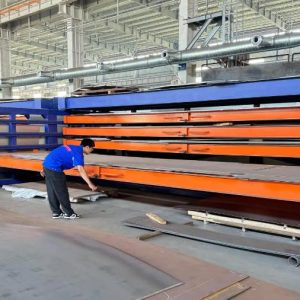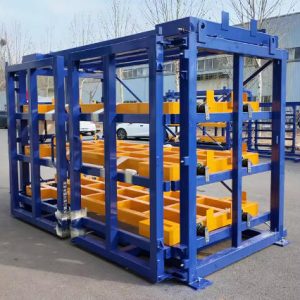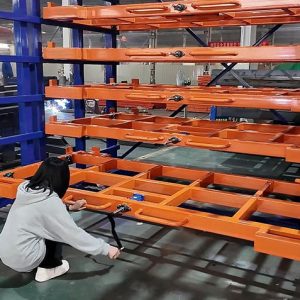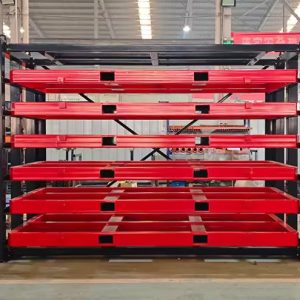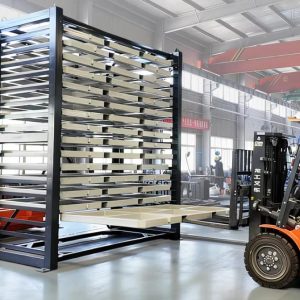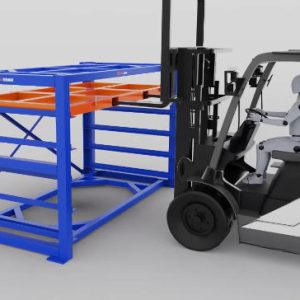
Selecting the right Heavy Duty Cantilever Racking System involves a critical decision about construction type: structural vs. roll-formed. Both styles fall under the umbrella of Heavy-Duty Cantilever Racks, but they differ in manufacturing, performance characteristics, and ideal applications. Understanding this distinction is key to making a cost-effective and safe choice for your warehouse.
The Fundamental Difference: How They Are Made
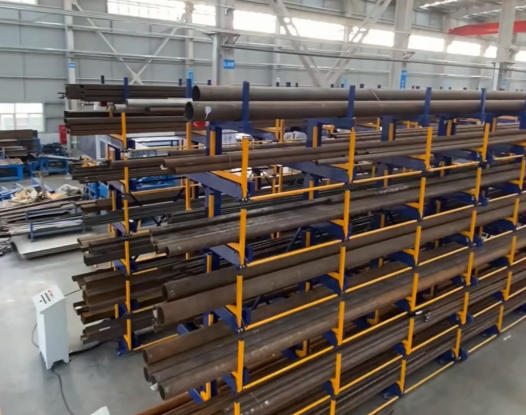
- Structural Cantilever Racks: These are built from structural steel shapes (like wide-flange beams or channels) that are cut, drilled, and welded together. This method creates incredibly strong joints and a monolithic structure. They are the undisputed choice for the most extreme Heavy-Duty Cantilever Racking applications.
- Roll-Formed Cantilever Racks: These are manufactured from steel coils that are fed through a series of rollers (a roll-former) that progressively shape the steel into the desired profile (like a C-channel or tubular column). Components are then fastened together, typically with high-strength mechanical bolts.
Performance and Application Comparison
| Feature | Structural Cantilever Racking | Roll-Formed Cantilever Racking |
|---|---|---|
| Primary Strength | Exceptionally high. Ideal for capacities exceeding 2,000-3,000 lbs per arm and for very long, unsupported spans. | High, but generally in a lower range than structural. Perfect for medium to heavy-duty applications, often up to 1,500-2,500 lbs per arm. |
| Typical Use Case | Extreme-duty applications: very heavy steel coils, massive concrete panels, dense bundles of thick-walled pipe. | Common heavy-duty applications: lumber, standard steel piping, bar stock, sheet metal, furniture. |
| Rigidity & Stability | Superior rigidity with minimal deflection under extreme loads. Behaves like a unified structure. | Very stable, but may have more flex under maximum load due to bolted connections. |
| Weight & Footprint | Heavier overall, requiring a robust floor. The base is often larger to distribute the immense weight. | Lighter relative to its capacity, potentially offering savings on freight and easing floor load concerns. |
| Customization | Highly customizable but modifications often require welding and re-engineering. | Easily customizable in the factory; arm positions, heights, and lengths are often adjusted with simple bolt relocation. |
Making the Choice for Your Operation
The guideline that “machine-loaded products require heavy-duty racking” holds true for both types, but the degree of “heavy-duty” needs clarification.
- Choose Structural if: Your products are at the absolute top end of the weight scale (e.g., individual items over 2,000 lbs per arm), you have very long spans (over 12-15 ft per arm), or you are storing items that create immense point loads or dynamic forces. This is the definitive choice for the most severe heavy duty pipe storage rack needs involving massive, thick-walled pipe.
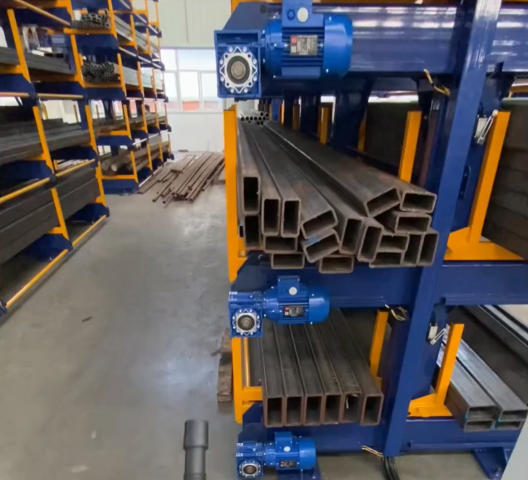
- Choose Roll-Formed if: Your loads are consistently within the high end of the manufacturer’s rated capacity (e.g., 1,000 – 2,000 lbs per arm), you value easier adjustability and reconfiguration, and you seek an excellent balance of strength and cost-effectiveness. Many Double-Sided Cantilever Rack systems for standard materials are efficiently built using heavy-duty roll-formed components.
Herochu’s Approach to Both Worlds
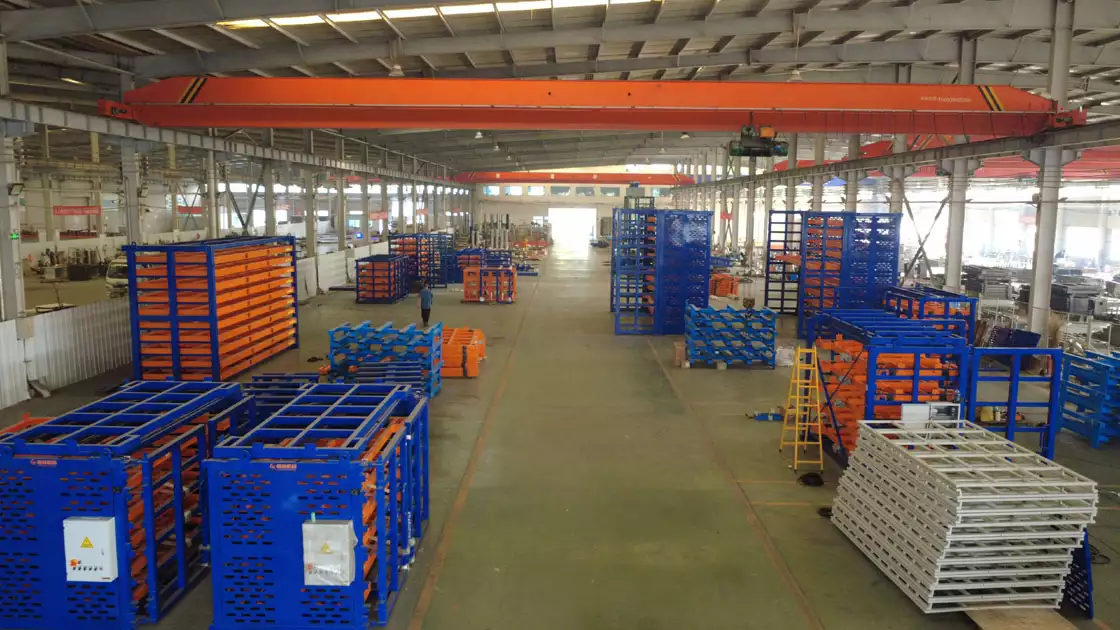
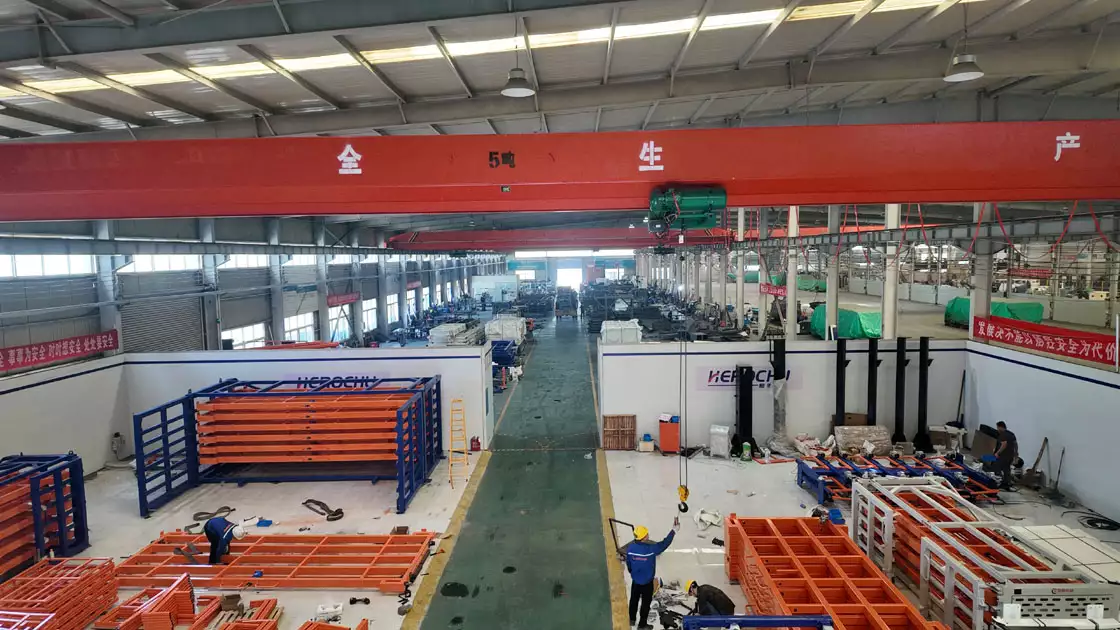
A supplier like Herochu typically offers solutions across the spectrum. Their Series 1000 through 3000 likely utilize advanced roll-formed technology for light to medium-duty needs. Their dedicated 5000 Series heavy-duty cantilever rack line may incorporate structural elements or specially engineered ultra-heavy roll-formed profiles to handle the “heftiest storage needs.” The specifications highlighting “high-strength steel” and “powder coated” surface treatment apply to both, ensuring durability regardless of construction method.
The Verdict: It’s About Right-Sizing
There is no universal “better” option—only the option that is better for your specific load profile, budget, and operational flexibility. A thorough analysis of your heaviest expected loads, handling methods, and future storage needs is essential. Consulting with a reputable supplier who can provide clear engineering ratings and recommendations—whether for a structural behemoth or a versatile, high-capacity roll-formed Cantilever Rack—will ensure you invest in a system that is not only heavy-duty by name but perfectly matched by design to your challenges, keeping your materials safe and your workflow efficient.