Heavy Duty Drawer Rack for Steel Plates: 2-Ton Capacity Per Layer Engineered for Precision Material Handling
That stack of steel plates leaned against the back wall of your shop isn’t just eating up floor space—it’s actively working against your production targets. Every time a fabricator spends twenty minutes hunting for a specific gauge, every time two workers strain to lift a buried sheet without scratching the ones above it, every time a forklift navigates a cramped aisle just to retrieve a single plate, you’re bleeding efficiency. The Heavy Duty Drawer Rack system reconfigures this dynamic entirely, treating steel plate storage not as a necessary evil but as a streamlined extension of your production line.
Why Drawers Outperform Traditional Racks
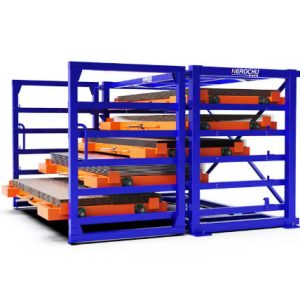
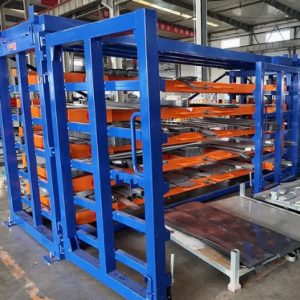
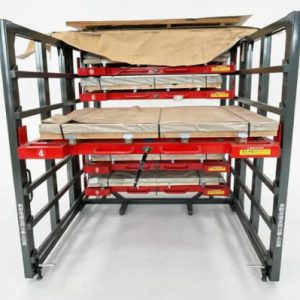
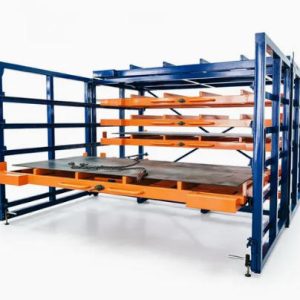
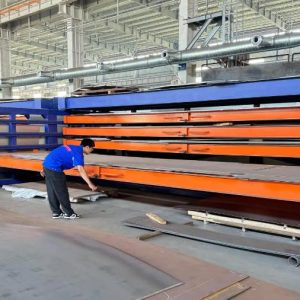
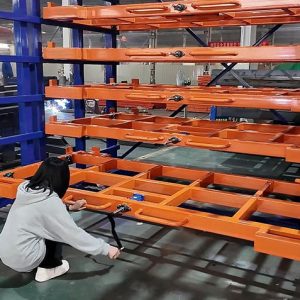
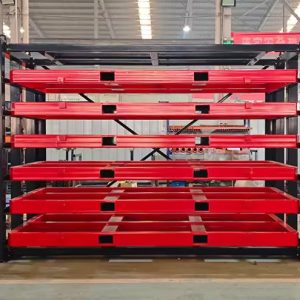
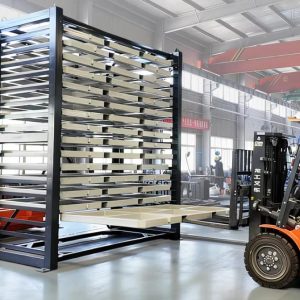
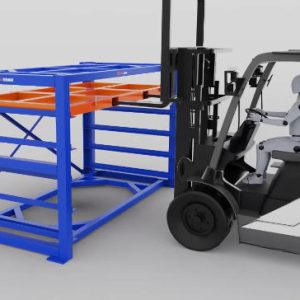
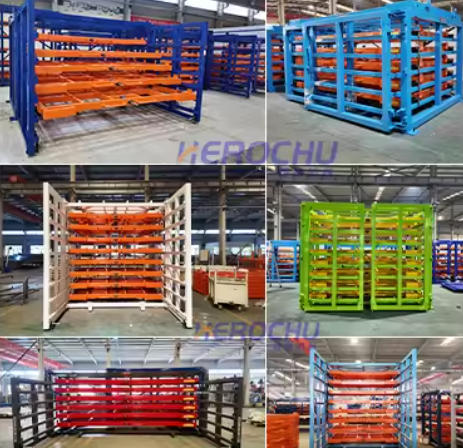
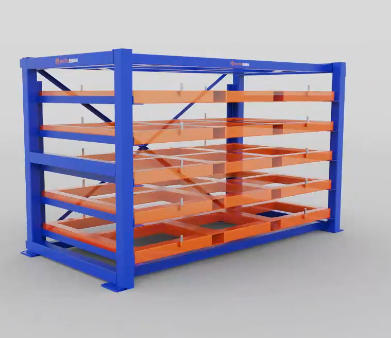
Vertical and cantilever rack systems made sense when material handling relied on brute force and heavy equipment. They maximize cubic storage but minimize accessibility. Our drawer-based approach sacrifices neither. Each layer operates as an independent, fully extendable platform that brings the material to the operator, not the other way around. Think of it as converting your static storage into an active retrieval system where every sheet becomes visible and reachable within seconds.
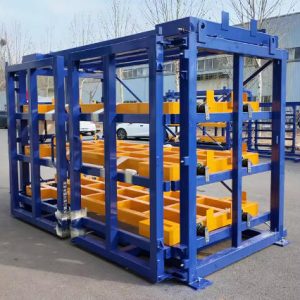
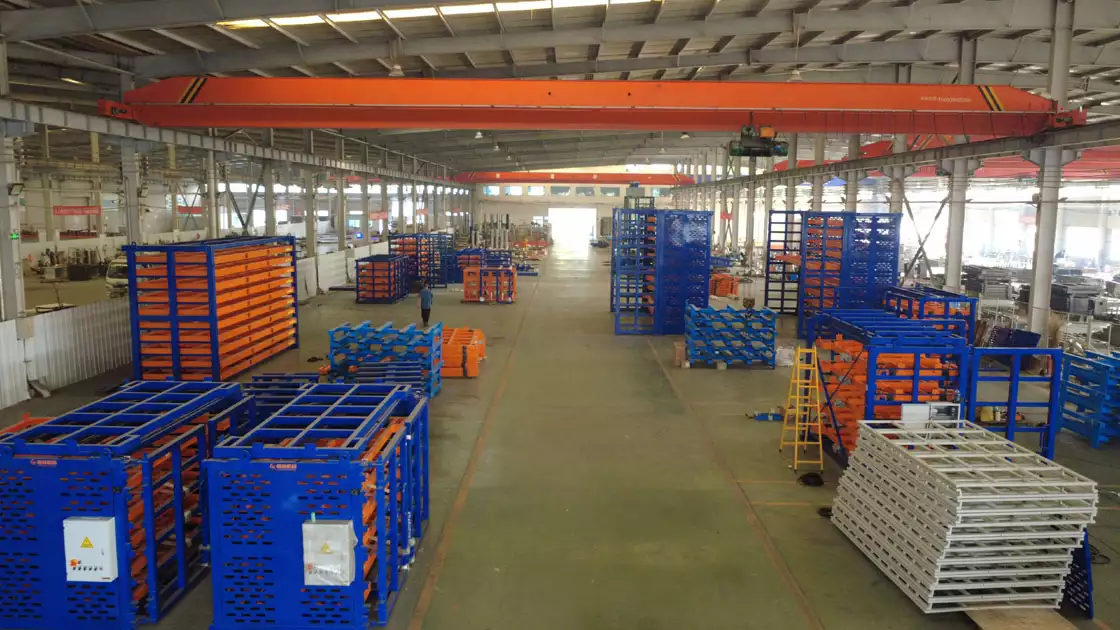
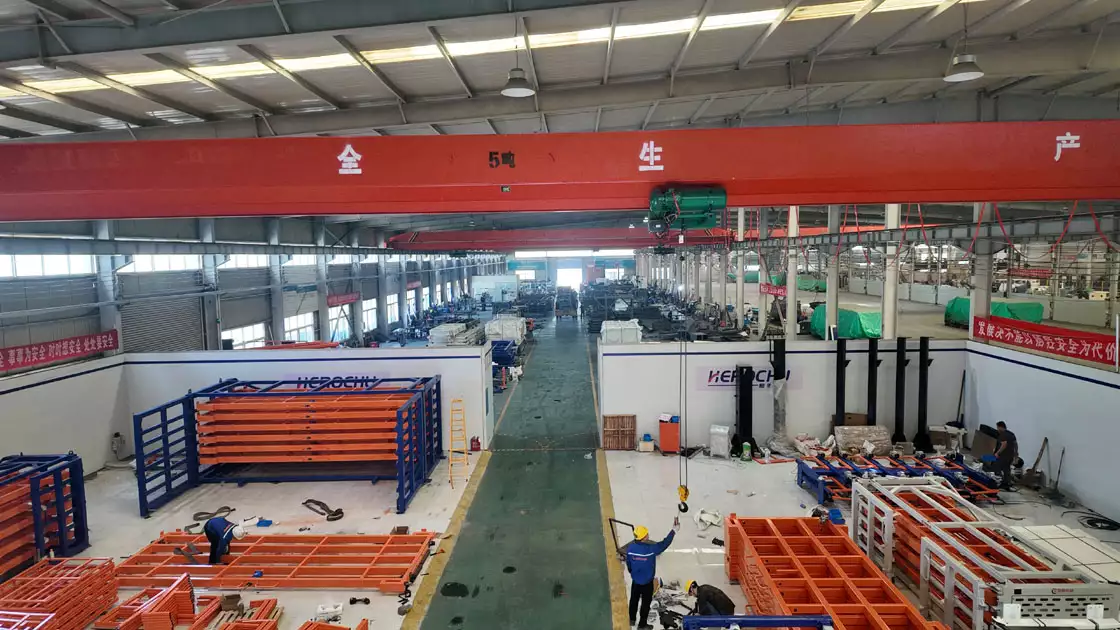
The architecture uses a welded H-beam frame with cross-braced uprights, creating a rigid structure that maintains drawer alignment under maximum load. The drawer boxes themselves are fabricated from 6mm thick checkered plate, reinforced with longitudinal stiffeners that prevent deflection across spans up to 6 meters. Unlike bolted shelving that loosens under vibration from nearby cutting or grinding operations, this welded construction locks in precision permanently.
Model Specifications That Match Real Workshop Needs
We manufacture four primary configurations, each designed around the actual dimensions and weights of commercially available steel plate. The “2-ton capacity per layer” designation in the title reflects our entry-level configuration, though the standard product line begins at 3 tons to accommodate typical industrial requirements.
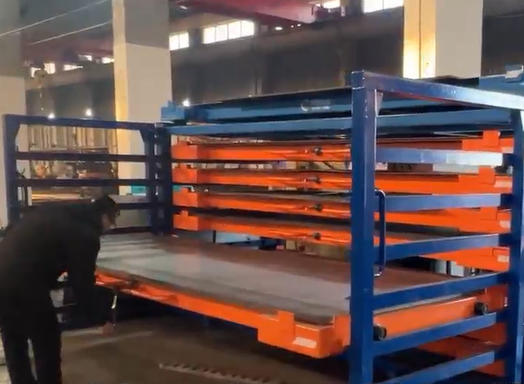
HC-B3015-63: The Compact Workhorse
- 3-ton load capacity per drawer
- Accommodates plates up to 3,000mm × 1,500mm
- Six-layer configuration stores 18 tons total in 3,505mm × 2,280mm × 2,000mm
- Ideal for job shops processing lighter gauge material in high-mix, low-volume scenarios
HC-B4015-65: The Mid-Range Performer
- 5-ton capacity per drawer handles multiple plates per layer
- 4,000mm × 1,500mm drawer size manages standard European sheet dimensions
- Overall footprint of 4,505mm × 2,280mm × 2,000mm
- Frequently specified for HVAC ductwork manufacturers and commercial steel fabricators
HC-B4020-68: The Heavy Plate Specialist
- 8-ton capacity per drawer manages substantial individual plates
- 4,000mm × 2,000mm dimensions accommodate oversized stock
- 4,505mm × 2,280mm × 2,500mm height provides extra vertical clearance
- Used extensively in ship repair facilities and heavy equipment rebuilding operations
HC-B6020-610: The Maximum Capacity Platform
- 10-ton capacity per drawer for the heaviest individual plates
- 6,000mm × 2,000mm drawer handles full-length structural plate
- 6,505mm × 2,280mm × 2,500mm overall dimensions
- Specified by primary steel service centers and large-scale manufacturing plants
Each model maintains the same 2,280mm depth, optimizing aisle width consistency across multiple units. All dimensions reflect actual usable space—not overall frame size minus clearance deductions. What you see is what you can store.
Customization: Built for Your Specific Material Profile
Six layers is our standard because it balances vertical reach with loading ergonomics, but it’s a starting point, not a limitation. We’ve built units with four layers for low-ceiling mezzanine installations and extended others to eight tiers for high-bay warehouses. The customization process begins with your material thickness inventory. A drawer holding 20mm plate stores fewer pieces than one dedicated to 5mm stock, so we adjust layer spacing accordingly. This isn’t a catalog option; it’s engineering based on your actual SKU data.
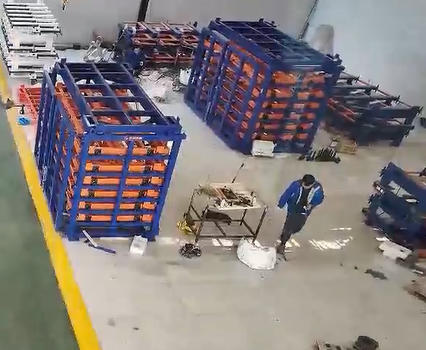
Load-bearing customization goes deeper than the headline tonnage rating. The HC-B4015-65’s 5-ton capacity might suffice for your heaviest single plate, but what about that stack of 8mm sheets that weighs 4.8 tons? We calculate roller spacing, rail gauge, and floor loading distribution specifically for your worst-case scenario. Sometimes this means upgrading from 100mm rollers to 120mm diameter units. Other times it involves adding a mid-span support rail that activates only when the drawer exceeds 70% extension, providing cantilever support without complicating full retraction.
Size customization addresses both material and facility constraints. For plate dimensions, we typically add 500mm to both length and width compared to your maximum sheet size. This accommodates handling clearance and prevents edge damage during loading. If your longest plate is 5,500mm, we design a 6,000mm drawer—not because we want to sell more steel, but because operators need space to maneuver hooks and slings.
Warehouse height customization maximizes cubic utilization. We measure from your floor to the lowest obstruction—whether that’s a crane rail, sprinkler head, or HVAC duct—and design the rack to sit 200mm below that point. In a 6-meter clear height facility, this often yields seven or eight layers instead of six, increasing storage density by 30% without changing the footprint.
Safety Engineering That Prevents Accidents, Not Just Compliance
Load signage is non-negotiable. Every drawer face carries a permanent laser-etched plate showing the maximum distributed load and a QR code linking to the specific load distribution diagram. This isn’t a sticker that peels off; it’s part of the drawer fabrication. Operators can instantly verify capacity before loading, preventing the gradual overloading that stresses structures over time.
The anti-pinch design uses a mechanical gap rather than relying on operator vigilance. Between each drawer and the frame upright, we engineer a 25mm clearance zone with recessed roller mounts. If an operator’s hand is present when the drawer closes, the frame pushes the hand outward rather than trapping it. For facilities with strict safety protocols, we offer an optional pressure-sensitive edge that stops drawer motion if resistance exceeds 50 newtons—similar to elevator door sensors but mechanically simpler and more robust.
Organization and Integration: Beyond Basic Storage
The label system seems minor until you realize how much time it saves. Each drawer features a transparent polycarbonate sleeve sized for A5 documents, protected from grinding sparks and welding spatter. Insert a printed card showing material grade, thickness range, heat number, or project assignment. One glance from across the shop tells operators which drawer holds the 10mm S275JR plate for the Johnson job. This visual management cuts retrieval errors by roughly 80% in facilities transitioning from unmarked vertical storage.
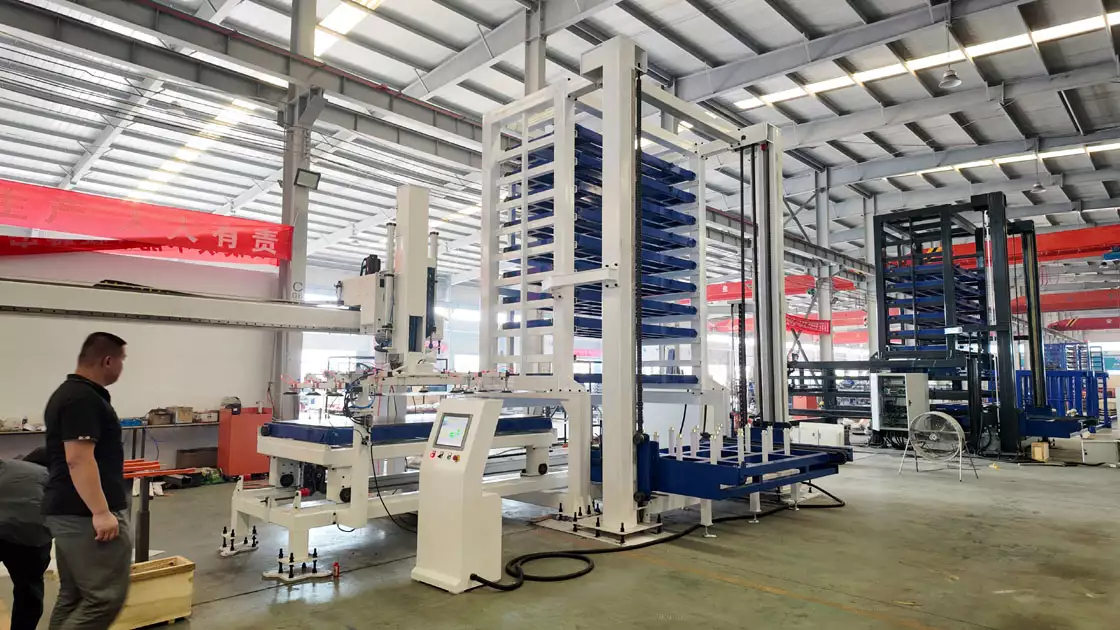
Integration with lifting systems transforms the rack from passive storage to active material handling. The frame includes pre-drilled lifting lug locations every 500mm along the top beam, rated for the full dynamic load of a bridge crane. Operators can position a plate on the extended drawer, then use an overhead crane with vacuum lifter or magnetic gripper to transfer directly to a plasma table or press brake. The drawer becomes a staging platform, eliminating the floor space traditionally needed for material buffering.
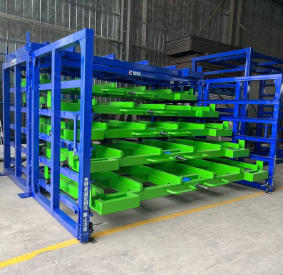
For top-layer access, the ladder truck isn’t an afterthought—it’s part of the system design. Our mobile climbing platform locks into receiver tubes welded to the rack base, preventing tipping during use. The platform height matches the top drawer at full extension, creating a continuous safe working surface. Unlike generic step ladders that slip on oily concrete, this integrated solution maintains three points of contact and includes a tool tray positioned at waist height when working on the uppermost layer.
Real-World Performance Metrics
A Midlands-based steel fabricator installed three HC-B4020-68 units last year. Their pre-installation data showed material retrieval averaging 11 minutes per sheet, with a 7% damage rate from handling. Post-installation, retrieval dropped to 2.3 minutes average, and damage fell to under 1%. The time savings alone recovered the equipment cost in 11 months. The reduced damage saved an additional £14,000 in material waste annually.
Another client, a shipyard in Rotterdam, needed to store plate up to 20mm thick near the cutting bay. The 8-ton capacity of the HC-B4020-68 handled individual plates, while custom 500mm layer spacing accommodated the thickness. They added the optional crane integration package, allowing direct transfer from rack to cutting bed. The result: they eliminated a dedicated material handler position and reduced crane idle time by 40%, as operators no longer waited for plate retrieval.
Making the Business Case
At $5,499 for the base HC-B3015-63 configuration, the investment competes with a single month’s forklift lease payment for many operations. Factor in the elimination of damaged material, reduced labor hours, and reclaimed floor space, and the payback period rarely exceeds 12 months in active shops. The rack’s 15-year design life means you’re not buying equipment—you’re installing a permanent process improvement.
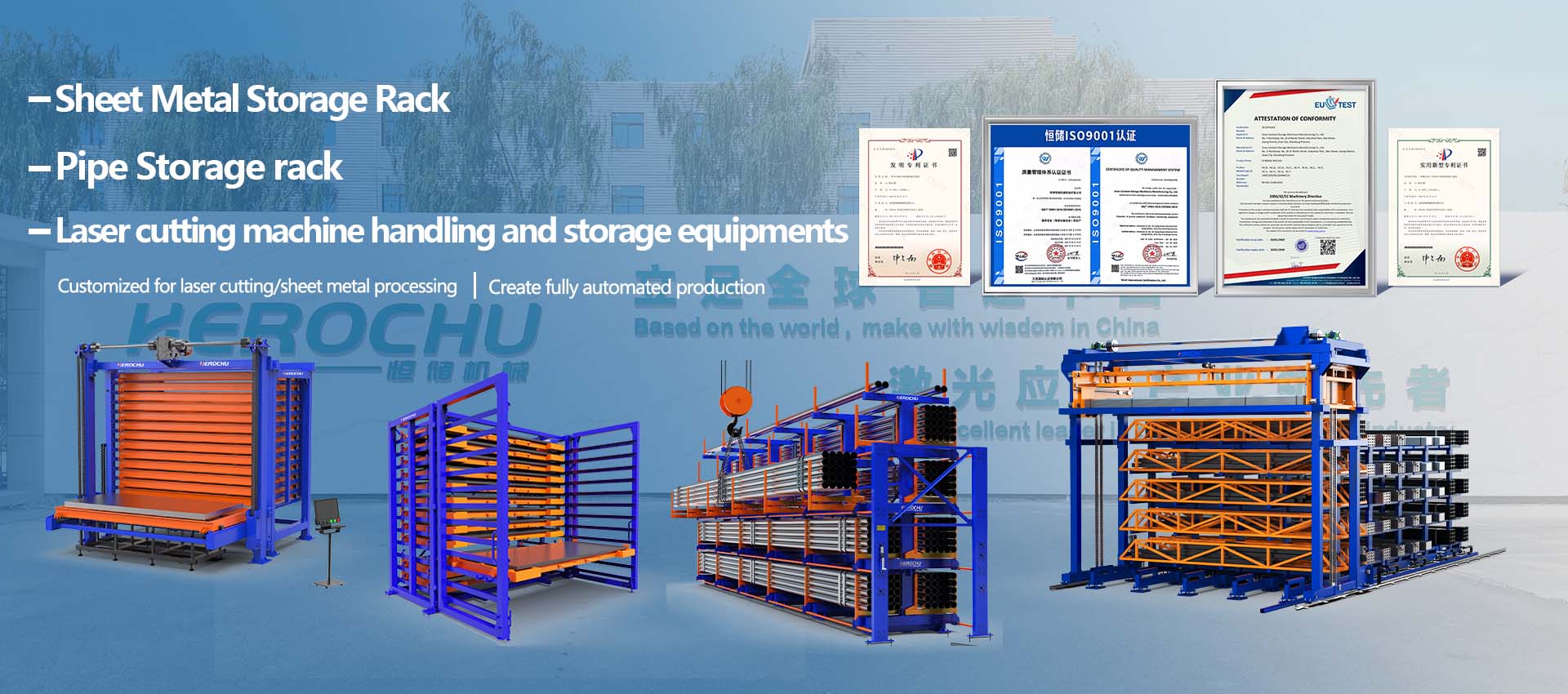
The certification package also accelerates approval in regulated environments. CE marking covers machinery directive compliance, while ISO 9001 documentation satisfies customer quality audits. In supply chains requiring supplier certification, these credentials often make the difference between approved vendor status and exclusion from bid lists.
Specification Summary Table
| Model | Load/Drawer | Plate Size | Layers | Overall Dimensions (L×W×H) |
|---|---|---|---|---|
| HC-B3015-63 | 3 tons | 3×1.5m | 6 (customizable) | 3505×2280×2000mm |
| HC-B4015-65 | 5 tons | 4×1.5m | 6 (customizable) | 4505×2280×2000mm |
| HC-B4020-68 | 8 tons | 4×2m | 6 (customizable) | 4505×2280×2500mm |
| HC-B6020-610 | 10 tons | 6×2m | 6 (customizable) | 6505×2280×2500mm |
Customization extends to layer count, load distribution, dimensional adjustments, and integration features.
Final Considerations
Heavy plate storage demands more than a sturdy frame and strong welds. It requires a system that respects both material integrity and operator capability. The drawer rack approach treats steel plates as individual components worth protecting, not bulk commodity to be stacked arbitrarily. When a fabricator can retrieve the exact plate needed in under a minute, without assistance and without risking damage, your entire production schedule becomes more predictable.
Contact our engineering group to discuss your specific plate inventory, facility layout, and handling workflow. We’ll provide a configuration analysis showing exactly which model suits your operation and how customization options can solve your particular storage challenges. Lead times for standard configurations run 5-7 business days; custom engineered solutions ship in 4-6 weeks with full installation documentation.
Your steel plates represent a significant capital investment. They deserve storage that protects their value and makes them genuinely accessible. This drawer system delivers that capability, certified, engineered, and ready for the demands of modern metalworking operations.