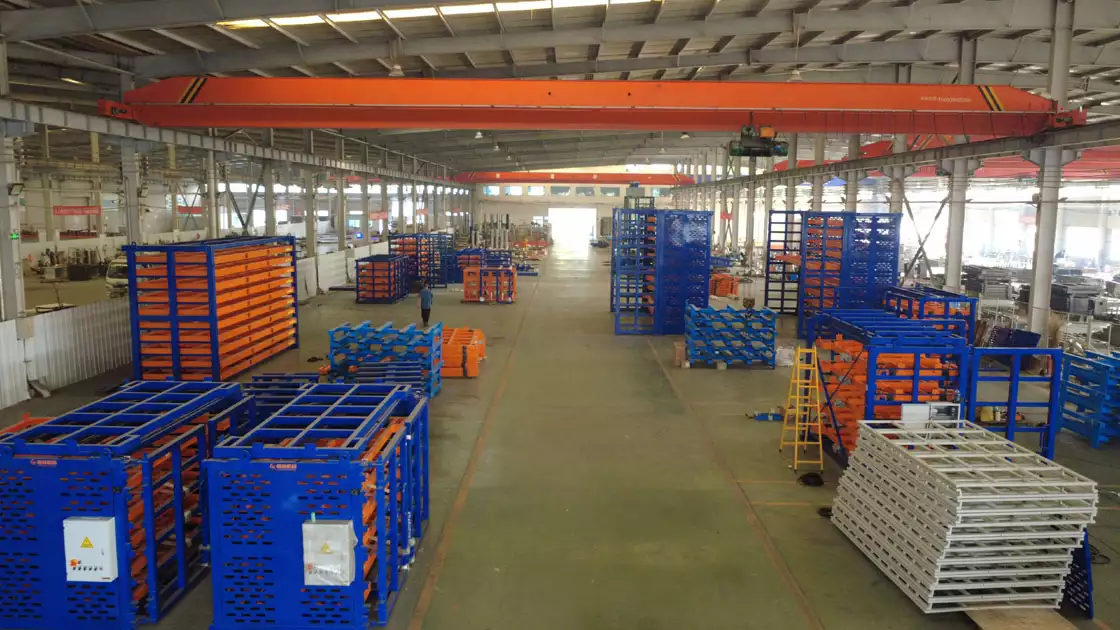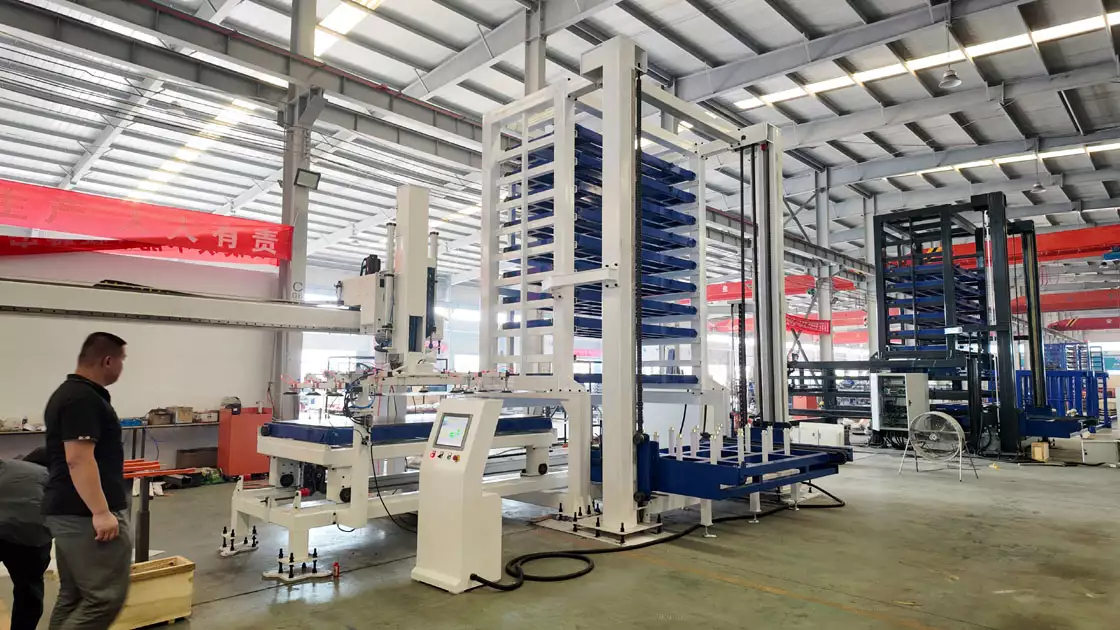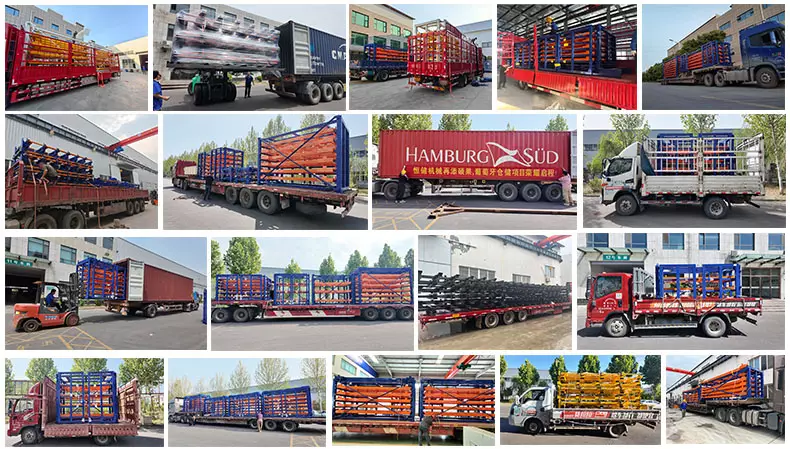
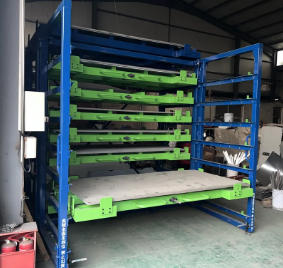
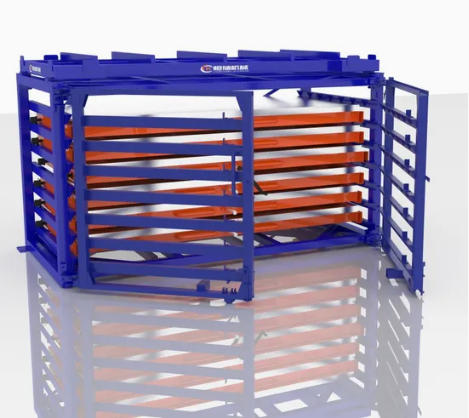
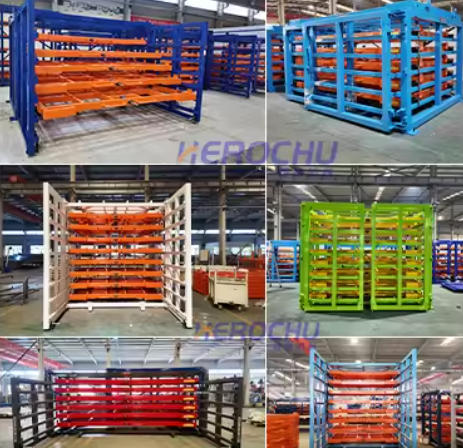
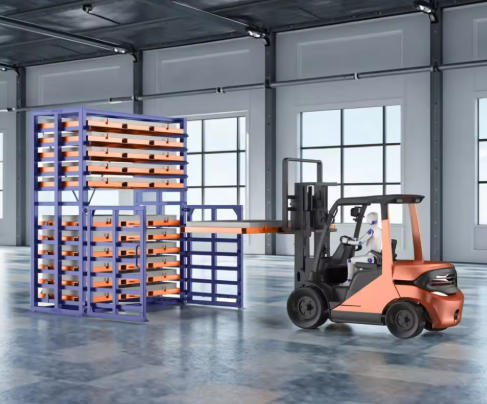
Custom-configured for your operation. Starting at $5,499.
CE Certified | UE Compliant | ISO 9001 Approved
Every
fabrication shop has that corner. You know the one—aluminum
plates stacked like precarious dominoes, scuffed and scratched from dragging across concrete. Your forklift operator spends twenty minutes every shift trying to wedge forks under a 2-ton
sheet without cracking the edges. Meanwhile, your competitor down the street just unloaded a full truck in under ten minutes and their
material looks pristine. The difference isn’t a bigger forklift. It’s what the forklift interfaces with.
The Herochu
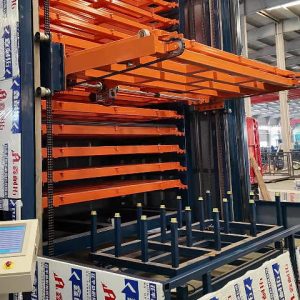
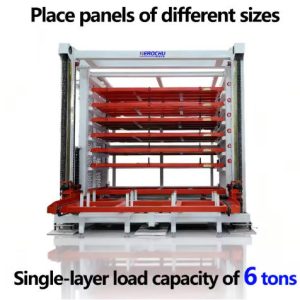
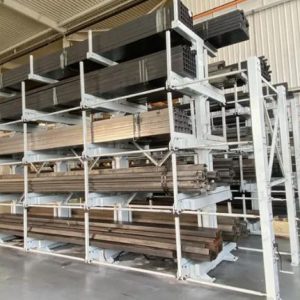
Heavy Duty Forklift Plate Rack isn’t another static
storage shelf that collects dust. It’s a mobile
material handling foundation that transforms your forklift from a simple lift truck into a
precision plate logistics system. Built specifically for aluminum plate storage but engineered to handle whatever your supply chain throws at it—steel, composites, plate glass, even hardwood panels—this
rack system eliminates the bottleneck between delivery and production.
What Separates a Real Plate Rack from a Welded Table
Most “forkliftable”
racks on the market are repurposed
pallet racks with bigger fork pockets. That’s like putting truck tires on a sedan and calling it an off-roader. The Herochu frame starts with Q235B hot-rolled steel channel, not the lighter gauge material you’ll find in generic storage
equipment. We weld a grid matrix of crossbeams and longitudinal supports that create load distribution paths, not just a flat deck. This means when you drop a 4,000-pound aluminum blank onto the rack, the stress flows through the structure instead of concentrating at the weld points.
The fork pockets themselves tell the real story. Set at 100-150mm height, they’re positioned for both standard counterbalance
forklifts and narrow-aisle reach trucks. More importantly, they’re reinforced with internal gussets where the heels of the forks make contact—a detail most
manufacturers skip because it doesn’t show up in
product photos. That reinforcement is why our racks maintain
structural integrity after 10,000+ pick-and-drop cycles while others develop hairline fractures at 2,000.
Load Ratings That Reflect Actual Work, Not Lab Conditions
We rate these racks at 1 to 5
tons per unit, but those numbers only matter in context. A 3-ton
capacity rack doesn’t just hold 3 tons—it holds it while a forklift tilts forward during a quick stop. It holds it when your operator misjudges the approach and one fork hits the pocket before the other. It holds it when you need to stack racks three high in the holding area because a shipment arrived before the job was scheduled. Our 1-ton model handles standard aluminum sheet packs for HVAC
fabrication. The 5-ton unit? That’s for aerospace-grade aluminum plate stock, where a
single sheet can weigh 800 pounds and you need twenty
sheets on deck for a production run.
The deck surface reflects what you’re storing. For raw aluminum plate, we mill a series of shallow channels that allow air circulation and prevent moisture trapping—critical in humid environments where condensation causes surface oxidation. For painted or anodized sheets, we fit replaceable polyethylene wear strips that create a non-marring contact surface. The edge treatment isn’t just deburred; we radius the corners and weld a continuous guard strip that rises 15mm above the deck plane. This isn’t to look polished—it’s to stop a shifting plate from
sliding off when the forklift accelerates.
Forklift Interface: Where Seconds Become Margin
Time studies in metal
fabrication shops reveal a brutal truth: material handling eats 35-45% of total production hours. The Herochu system attacks this directly. The fork pockets accept forks up to 2.5 inches thick, but the real
efficiency gain comes from the visual alignment guides we build into the frame. High-visibility yellow powder coating on the pocket interiors gives your operator immediate confirmation that forks are seated correctly. The 40mm pocket depth means the rack won’t slip off during transport, even if the mast tilts forward 5 degrees.
When you need to move plates directly from storage to the CNC router, the rack travels with the load. Set it down, cut your parts, and return the skeleton to storage on the same rack. No secondary handling, no edge damage from dragging, no wasted motion. In a typical 8-hour shift, this cuts 45-60 minutes of dead time per operator.
Customization Without the Custom Price Tag
Your aluminum plates aren’t standard, so why should your storage be? We fabricate rack dimensions to your actual material specs, not the other way around. The most common request is 2000mm x 1500mm for European-sized aluminum sheet, but we’ve built 1200mm x 1000mm units for metric plate and 8ft x 4ft for North American stock. The frame height adjusts based on your stacking preference—some shops want a low 300mm
profile for single-layer storage and retrieval, others need 800mm clearance to stack four layers of thin-gauge aluminum.
The foldable guardrail option transforms the rack from a flat deck to a contained carrier. When you’re moving a mixed load of 1/4-inch and 1/2-inch plates, the
adjustable dividers keep them separated, preventing the thinner sheets from bowing or sliding underneath the thicker ones. For operations that rotate stock frequently, we can integrate RFID mounting points into the frame rails, letting you scan inventory without unstacking material.
Where This Equipment Changes the Game
In Manufacturing: Picture a job shop running three aluminum machining cells. Instead of dedicating floor space to static plate racks at each cell, you
store all material centrally on Herochu racks. When Cell 2 needs 5052 aluminum for a marine component, the forklift moves the specific rack to the cell. The operator pulls sheets as needed, then returns the rack to central storage. Your WIP area shrinks by 60%, and material traceability becomes automatic—you always know which rack holds which alloy and gauge.
In Warehousing & Distribution: A metals distributor in Rotterdam stacks our racks three high in their constrained
warehouse, using a reach truck with 6-meter lift height. Each rack holds 3 tons of aluminum tread plate. When a customer calls needing
500kg of material, they pull one rack down, retrieve the required sheets, and restack. Total time: 12 minutes. Previously, they shuffled individual sheets across a static rack system, averaging 45 minutes per order and scratching 8-10% of material in the process.
On Construction Sites: A commercial glazing contractor stores aluminum
composite panels on Herochu racks at ground level. As the curtain wall installation progresses floor by floor, the forklift delivers racks to the exact elevation via a construction elevator. Panels arrive undamaged, and the racks return to ground level for reloading. No material left exposed overnight, no panels warped from improper stacking on temporary dunnage.
The Real Cost of Ownership
That $5,499 starting price isn’t a budget option—it’s calculated aggression. A comparable static rack system with similar capacity runs $8,000-$12,000 installed, and you still need
manual labor to load/unload. The Herochu rack pays for itself in 14-18 months on labor savings alone in a shop handling 15+ tons of plate weekly. The powder coat finish we apply isn’t cosmetic; it’s a zinc-rich epoxy primer with a textured polyester topcoat rated for 1,000 hours of salt spray resistance. In a coastal fabrication shop where aluminum oxide corrosion is a constant battle, this finish extends service life from 3 years to 8+.
Galvanized versions for
outdoor storage cost roughly 20% more but eliminate rust concerns entirely. We’ve seen these racks sit in unsheltered storage yards for five years in North Sea conditions with zero structural degradation. The bolts and fasteners are grade 8.8 zinc-plated steel, not the grade 4.6 hardware that strips out after three adjustments. When we say 5-10 year service life, we’re accounting for 200+ handling cycles per week in a three-shift operation.
Specifying the Right Rack Without Overthinking It
Forget capacity charts that list fifty models. Focus on three numbers: your heaviest single plate pack, your forklift’s rated capacity at load center, and your largest plate dimension. Add 20% to the weight for
safety margin, then round up to the next standard rack rating. If your forklift is rated for 2.5 tons but your plates weigh 3 tons, you need a smaller rack and multiple trips—not a bigger rack that pushes your forklift past its stability limit.
Measure your plates diagonally, not just length and width. An aluminum sheet can bow in storage, and you need rack width to accommodate that deflection. For 2000mm
long plates, specify a 2100mm rack length. The extra 50mm per side costs little but prevents operator frustration and material damage.
Consider your aisle width. If you’re running a 3-meter aisle with a standard counterbalance truck, the 1500mm rack width works perfectly. In a 2-meter narrow aisle with a reach truck, drop to 1200mm width for maneuvering clearance. The rack isn’t the constraint—your facility
layout is.
Design around reality, not ideal conditions.
Maintenance: Five Minutes That Save Five Grand
At shift change, glance at the fork pocket welds. If you see spalling or rust staining, that’s moisture intrusion—address it before it becomes a crack. Every month, torque the bolted connections to 85 Nm. Vibration loosens them, and a loose frame flexes under load, creating fatigue points. Every quarter, flip the rack if it’s seen chemical exposure (like coolant runoff from machining). The underside gets equal wear time, doubling the effective lifespan of the deck surface.
The polyethylene wear strips? Replace them when the color fades. That’s your visual indicator they’ve worn thin. In a high-throughput shop, that’s roughly 18 months. The strips cost $40 and take ten minutes to swap with a ratchet—versus $400 to refinish a scratched aluminum plate that your customer rejects.
Why Herochu Builds It This Way
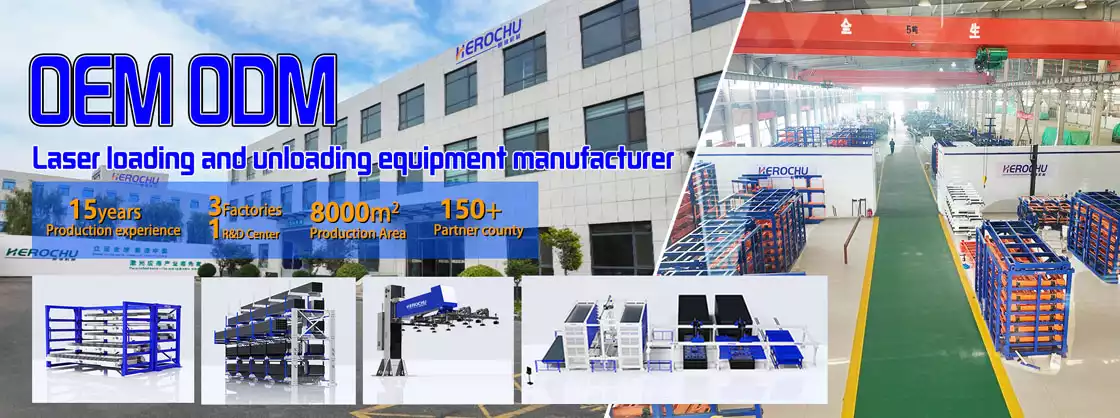
We started in 1998 as a forklift attachment repair shop. Every day, we saw plates dropped, racks cracked, and operators improvising unsafe
solutions. When we began manufacturing our own line in 2006, we didn’t copy existing designs—we reversed every failure mode we’d witnessed. The reinforced fork pockets came from a customer whose operator sheared a competitor’s rack in half. The moisture channels came from a marine fabricator fighting white corrosion on 5083 aluminum. The RFID integration came from an
aerospace supplier required to track every plate by heat lot.
This isn’t equipment designed in a catalog; it’s engineered on shop floors. The
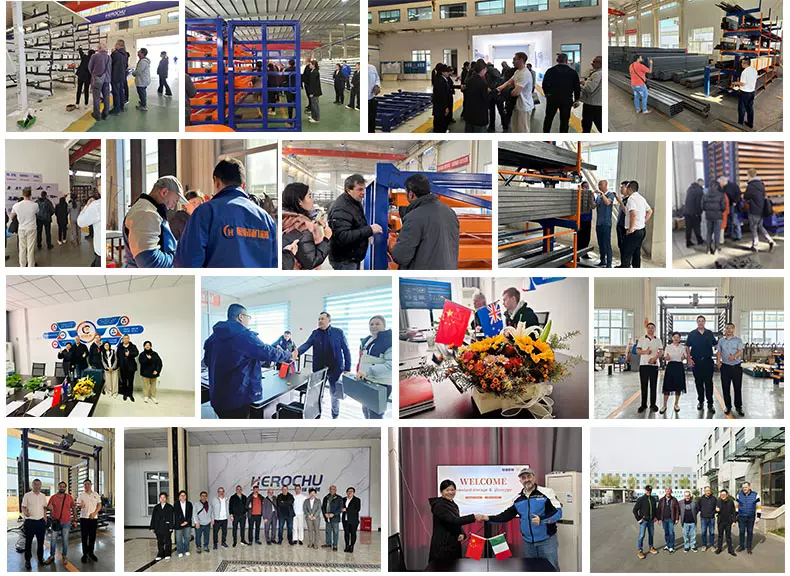
CE and ISO 9001 certifications are baseline expectations. The real validation comes from 2,100+ installations across Europe, from the Benelux ports to Italian automotive stamping plants. When a German automotive OEM specifies Herochu by name in their supplier requirements, that’s the spec that matters.
The First Step Toward Reclaiming Your Floor Space
That chaotic plate storage corner? Imagine it clear. Imagine knowing exactly where your 6061-T6 blanks are, moving them to the brake press in one motion, and returning the skeleton without a scratch. Imagine quoting jobs with confidence that material handling won’t eat your margin. The Herochu
Heavy Duty Forklift Plate Rack doesn’t store aluminum plates—it orchestrates them.
Configure your rack system today. Lead time is 3-4 weeks for standard sizes, 5-6 weeks for
custom dimensions. Every unit ships with a serialized load test report and a five-year structural warranty. Your forklift is already on the payroll. Give it the right partner.