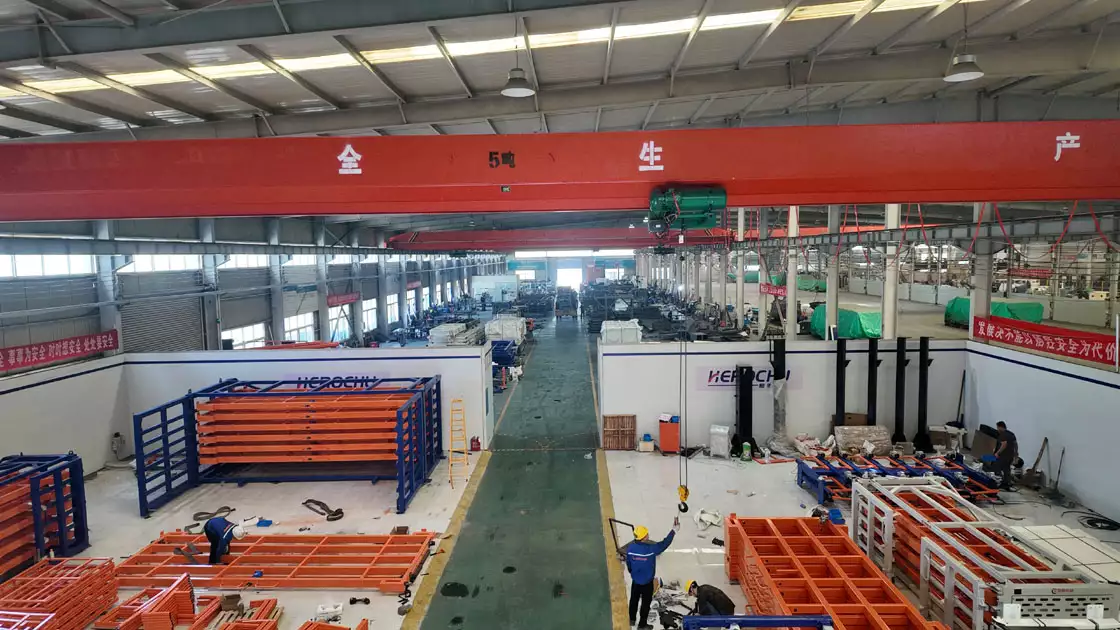
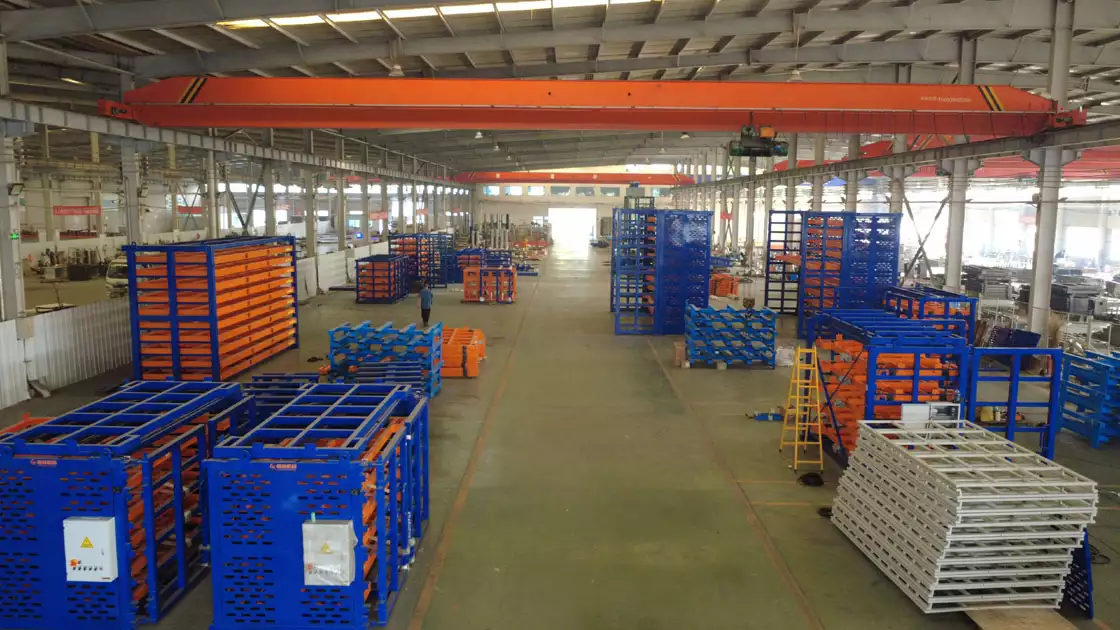
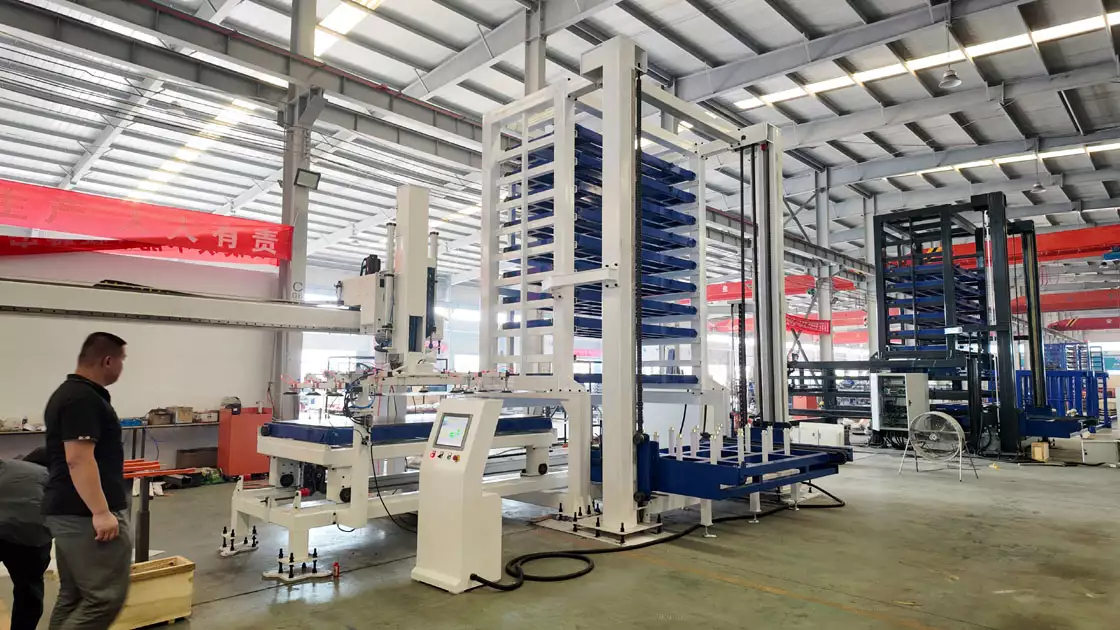
Herochu Automatic Laser Cutter Storage System: The $18,999 Warehouse Upgrade That Eliminates 90% of Your Material Handling Downtime
Your
laser cutter sits idle for 47 minutes out of every hour. Not because of maintenance, not because of programming delays, but because your operator is wrestling with a
forklift, hunting for the right
sheet in a labyrinth of floor stacks, or waiting for a second person to help maneuver a three-ton
steel plate into position. Herochu’s
Automatic Laser Cutter
Storage System doesn’t just
store sheet metal—it surgically removes the
material handling bottleneck that’s throttling your six-figure laser investment down to pawn shop productivity levels.
The Real Cost of Manual Material Handling
Let’s run the numbers that most
equipment brochures won’t show you. A 6kW
fiber laser cutter capable of 200 inches per minute traverse speed should generate $300-400 per hour in revenue when cutting. But if your operator spends 40 minutes per hour retrieving and positioning
material, your actual throughput drops to 20% of rated
capacity. You’re not losing minutes—you’re burning $240 per hour, every hour, in opportunity cost. Over a two-shift operation, that’s $460,000 annually evaporating because your
storage system belongs in a 1980s
warehouse, not complementing a $500,000
precision machine.
Floor stacking isn’t just inefficient; it’s hostile to modern laser operations. Sheets get scratched by adjacent
plates. Moisture trapped between layers creates rust spots that ruin cosmetic parts. You can’t find the specific alloy you need, so you cut a job from full-price new material while $15,000 in perfectly good remnants sits buried under three
tons of inventory. Your operator’s back gives out at age 42 because he’s been manually prying sheets apart for two decades. This is the reality that Herochu’s
automated system retrofits into oblivion.
Automation That Understands Laser Cutting Physics
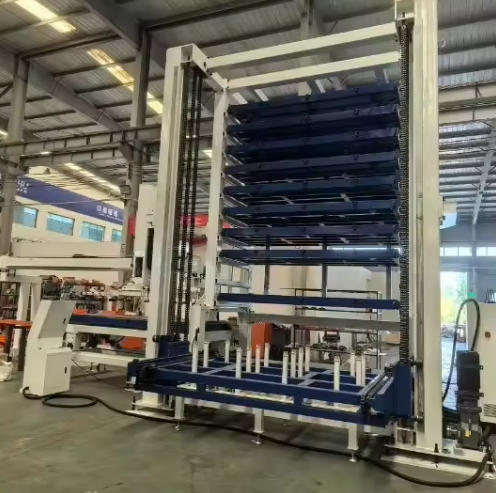
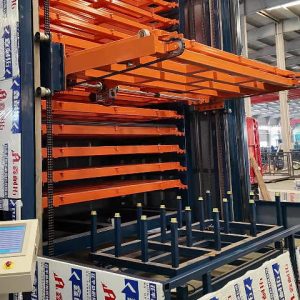
The heart of this system isn’t the
steel framework—it’s the chain-driven linear guide
rail mechanism that moves with purpose. At 9 meters per minute
vertical lifting speed and 12 meters per minute inlet/outlet speed, the system delivers a 3-ton
drawer from the top level (15 meters high) to operator height in under 90 seconds. Compare that to the 15-20 minutes it takes a forklift driver to carefully extract a buried sheet from a traditional stack, and the ROI calculation starts writing itself.
Each
storage unit rides on precision-machined linear guide rails, not crude rollers. The chain drive transmission maintains tension across the full
vertical travel, eliminating the slack that causes jerky movements and material sway. This matters because a 4mm
aluminum sheet loaded on a drawer that shudders during retrieval will shift, potentially jamming the system or creating edge damage. Herochu’s engineers eliminated that possibility through dual-chain synchronization that keeps the drawer plane within 0.5mm tolerance throughout the entire travel range.
Drawer Architecture That Defies Conventional Loading
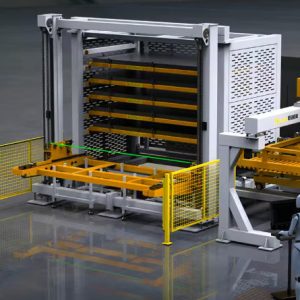
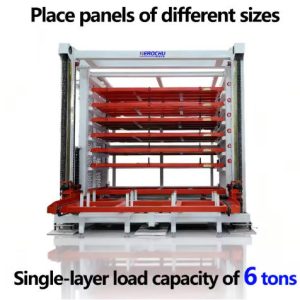
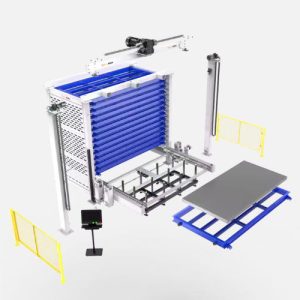
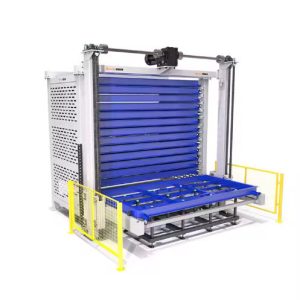
Standard configuration ships with seven
drawers, each rated for 3 tons of distributed load. But “standard” is a starting point, not a limitation. The
modular design accommodates anywhere from two to ten drawers per unit, with load ratings
adjustable from 1 ton to
5 tons per drawer. Need a
single massive drawer for your most common ½” steel stock and nine shallow drawers for 22-gauge remnants? The engineering team doesn’t flinch—they recalculate the chain tension, spec heavier guide rails for the loaded levels, and deliver a configuration map that matches your cutting schedule.
Drawer dimensions follow laser cutter bed standards: 3015, 4015, 4020, 6015, 6020, 6025mm. This isn’t arbitrary sizing—it’s direct correlation to the sheet sizes your laser is designed to cut. A 6025 drawer holds a full 6-meter by 2.5-meter sheet that feeds directly onto a matching 6kW laser bed without repositioning. The drawer extends completely, not 80% or 90%, but full travel so your
loading equipment can access the entire sheet surface. No more rotating a 12-foot plate because the rack didn’t extend far enough—that’s amateur-hour design, and
Herochu doesn’t build for amateurs.
The Mechanical-Automatic Hybrid Advantage
While the system offers
fully automatic operation with
PLC control and HMI interface, the mechanical backup system isn’t an afterthought—it’s a design pillar. During a power outage or
control system maintenance, operators can manually engage the mechanical drive to retrieve critical
materials. This hybrid approach eliminates the single-point-of-failure risk that plagues purely electronic AS/RS systems. Your laser cell doesn’t shut down because a sensor faulted; your operator switches modes and keeps cutting.
The automatic configuration includes position encoding on each drawer, so the system “knows” whether drawer 3 contains ¼” stainless or drawer 7 holds 16-gauge aluminum. Integrate with your MRP software, and the operator punches in the job number—the correct drawer descends automatically, position-locked and ready for extraction. This isn’t just
automation; it’s
intelligent material orchestration that turns your storage system from passive
shelving into an active participant in production workflow.
Vertical Space Monetization at 9 Meters Per Minute
Most
warehouses waste the cube above 12 feet because
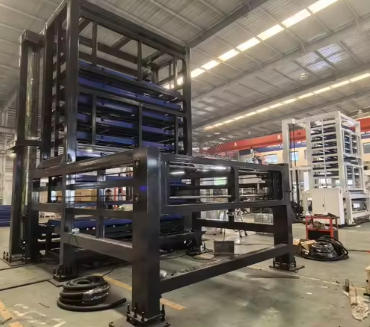
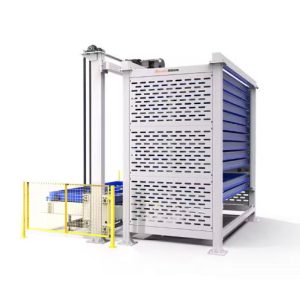
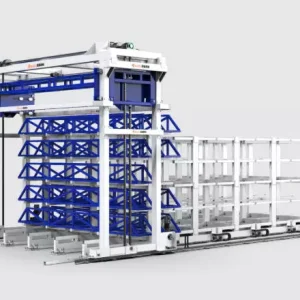
manual access becomes dangerous and slow. Herochu’s system weaponizes that dead space, stacking drawers up to 15 meters high with a 5-15m adjustable range. A 600 square foot footprint—barely larger than three parking spaces—stores 70 tons of sheet metal across ten levels. That same capacity in floor stacks would devour 3,000 square feet, and you’d still need aisle space for forklift maneuvering.
The vertical lifting speed of 9m/min means accessing the top level isn’t a penalty. Your operator calls for a sheet from level 10, and by the time he’s donned his gloves and positioned the
vacuum lifter, the drawer sits at waist height, locked and ready. This changes how you think about inventory organization. Put your fastest-moving materials at middle levels for absolute speed. Store specialty alloys and thick plate at the top without sacrificing
accessibility. The system converts vertical meters into profitable storage density without the “forget it exists” problem of traditional high-bay
racking.
Safety Engineering That Protects Your Most Expensive Assets
The lock-in/lock-out mechanism on each drawer engages with a physical detent, not a solenoid that could fail. When a drawer locks in the extended position, it supports the full rated load plus a 25%
safety margin—even if the chain drive disengages. This means your operator can confidently load a 3-ton sheet with a crane, knowing the drawer won’t retract unexpectedly.
But the real safety innovation lives in the load distribution monitoring. Optional plate support sensors detect if a sheet overhangs the drawer edge or if load centers drift beyond
safe parameters. The system halts descent and alerts the operator before an unbalanced load can tilt the unit. This prevents the catastrophic drawer drop that destroys material, damages the rack, and risks lives. Insurance underwriters love this feature; it’s documented risk mitigation that can lower facility premiums.
Certifications That Mean Something Beyond Wall Decoration
CE certification on this system covers 23 separate EU directives, from
machinery safety (2006/42/EC) to electromagnetic compatibility (2014/30/EU). The CE mark isn’t purchased; it’s earned through third-party testing where the system runs 10,000 full-load cycles while inspectors monitor deflection, wear, and safety system response. When the certificate says “rated for 5 tons per layer,” that number survived a 12.5-ton proof test without permanent deformation.
UE certification (often confused with CE but distinct) validates
structural unity under load. Each welded joint undergoes ultrasonic inspection; bolted connections receive torque verification and witness marking. The racking structure gets analyzed with finite element modeling to confirm stress distribution across the full 15-meter height under maximum eccentric loading. You’re not buying a rack; you’re buying a mobile bridge that’s been engineered to the same standards as
industrial cranes.
ISO 9001 certification means every component—from the 45# steel chain links to the powder-coated finish—has traceable material certificates and production batch records. If a drawer roller fails in year seven, we can trace it back to the steel mill heat number and replacement parts match original specifications exactly. This isn’t just quality control; it’s lifecycle asset
management.
Integration with Laser Cutting Workflow: The Subtle Revolution
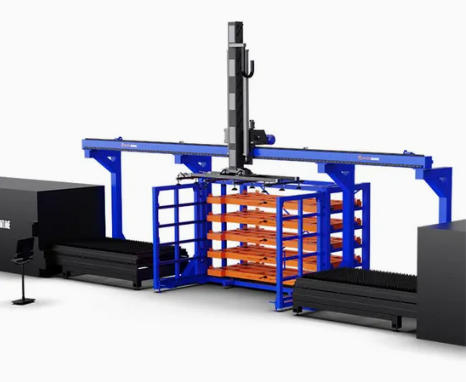
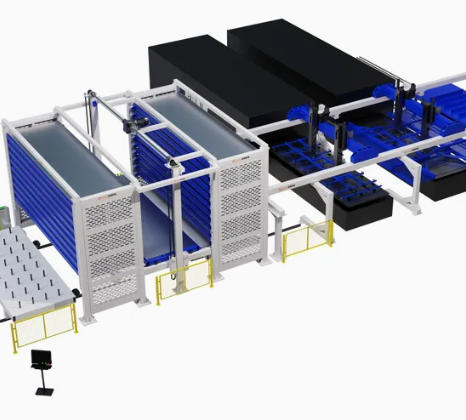
Place the storage system parallel to your laser cutter, separated by a 3-meter aisle. The operator pulls a job from the queue, scans the barcode, and drawer 4 (containing 5mm mild steel) descends. While the laser cuts the previous job, the operator pre-positions the next sheet on a transfer cart. The moment the laser bed clears, the new sheet slides into position and cutting resumes. Total downtime: under 60 seconds.
The system complements not just the laser, but the entire
fabrication cell. Position a shear adjacent to the rack, and off-cuts from laser jobs slide directly into designated
remnant drawers—the 180mm
custom spacing option accommodates these
partial sheets without wasting cube space. Press brake operators pull bent components from lower drawers while the laser feeds from upper levels, creating a synchronized
material flow that eliminates cross-traffic and forklift interference.
Customization as a Core Feature, Not an Upsell
The specification sheet lists “customization” so often because Herochu’s
manufacturing process is modular by design. Need a 4020mm drawer with
5-ton capacity and 200mm spacing for thick plate bundles? That’s not a special order requiring eight weeks of engineering—it’s a configuration code that triggers pre-approved component selection. The
factory builds your unit from validated modules, not from scratch, which means custom doesn’t cost triple or take six months.
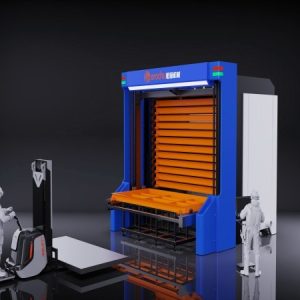
Color customization goes beyond aesthetics. Orange drawers provide visual safety demarcation; blue frames reduce eye strain in brightly lit facilities. But match the rack to your corporate red, and suddenly your storage system becomes a branded asset in client facility tours. The powder-coating process uses TGIC-free polyester that withstands 1,000 hours of salt spray testing—your custom color doesn’t flake off when the acid-etching shop next door vents overspray.
ROI That Outpaces Your Laser Depreciation
At $18,999 for the base automatic system, the math is brutal in favor of purchase. Recover 30 minutes of
laser cutting time per shift, and you’re generating an extra $200 daily in revenue. That’s $50,000 annually—payback in under five months. Factor in floor space savings worth $8,000-15,000 per year in most industrial markets, reduced material damage at $5,000-10,000 annually, and labor savings of one half-time position ($25,000), and the system delivers 400% ROI in the first year.
The
500kg unit weight (per modular section) allows installation on standard 6-inch reinforced concrete without deep foundations. Bolt it down, connect 480V three-phase power for the automatic drive, and the system is operational within four hours of delivery. Compare that to the six-month permitting and construction timeline for building expansion, and the strategic
advantage becomes obvious.
The New Type Development: What That Actually Means
Herochu classifies this as “New Type” because the architecture diverges from traditional carousel or crane-based AS/RS. The linear guide rail + chain drive system achieves 85% of vertical carousel speed at 45% of the mechanical complexity. Fewer moving parts means fewer wear points and maintenance intervals measured in years instead of months. The open structure design (despite the “Closed: Open” parameter indicating accessibility) allows technicians to inspect guide rails and chains without disassembly—preventive maintenance takes 30 minutes quarterly, not three days annually.
This “common use” serviceability means your maintenance team doesn’t need specialized training. The chain tensioner uses a standard threaded rod and locknut; the guide rail wipers are off-the-shelf polyurethane strips. If a component fails in year eight, you’re not locked into a proprietary $3,000 OEM part—you’re buying a $47 chain link from any industrial
supplier and
installing it with a pin punch and hammer. That’s the difference between “new type” innovation and traditional vendor lock-in.
Package and Ship: Built for Global Deployment
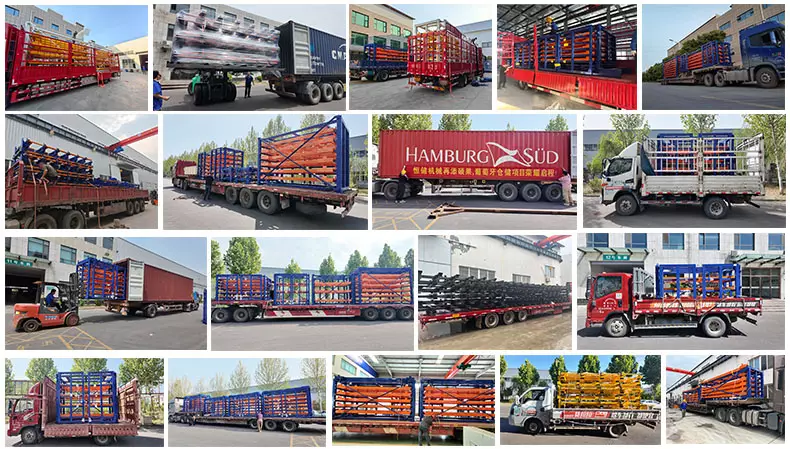
Standard export packaging isn’t bubble wrap and cardboard. Each modular section ships in a sealed steel frame with desiccant packs, VCI corrosion inhibitors, and shock indicators. The packaging survives 30 days on a saltwater deck and a 2-meter drop test—because that’s what shipping to Dubai or São Paulo actually entails. The 500kg sections move with standard
forklifts; no special rigging required. A complete 7-drawer system fits in a 40-foot high-cube container, meaning freight cost from Shanghai to Rotterdam runs under $2,000—negligible against the system’s value.
The Implementation Timeline Reality
Order to delivery: 8 weeks for standard configuration, 12 weeks for
heavy customization. Installation: 1 day for mechanical assembly, 1 day for automation commissioning. Training: 4 hours for operators, 2 hours for maintenance staff. First production cut: Day 3. Compare that to the 18-month lead time for a custom crane system or the 6-month shutdown required for warehouse renovation, and the decision becomes procedural, not deliberative.
Final Specification: Your Shop, Your System
The parameter table isn’t a menu—it’s a starting point for conversation. The engineering team wants to know your laser bed size, your heaviest material gauge, your average job turnover, and your peak inventory levels. They’ll model your storage requirements in 3D CAD, simulate material flow, and deliver a specification sheet that reads like it was written for your shop alone—because it was.
This is what $18,999 buys: not a rack, but a material handling strategy that turns your laser cutter from an underutilized asset into a revenue engine that runs at capacity, safely, efficiently, and profitably. The CE, UE, and ISO 9001
certifications guarantee it. The 9m/min vertical speed delivers it. The customization flexibility ensures it fits your reality, not the other way around.
Stop
storing sheet metal like it’s bulk gravel. Start managing it like the precision material your laser was built to cut. Herochu’s
Automatic Laser Cutter Storage System is the difference between a shop that cuts metal and a shop that prints money—one
automated retrieval at a time.
Herochu Automatic Laser Cutter Storage System for Warehouse
Starting at $18,999 | CE, UE & ISO 9001 Certified | 5-15m Vertical Range | 1-5 Ton Drawer Capacity | Linear Guide Rail + Chain Drive | 9m/min Lifting Speed | Fully
Customizable
Stop feeding your laser with forklifts. Feed it with automation.