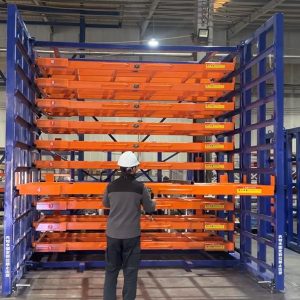
Roll-out Cantilever Rack Solves Long Goods Handling: Tubes, Pipes and Profiles
Most laser cutting downtime is not a machine fault. It is material handling: finding the right tube, moving three bundles to reach it, dragging it across the floor, and getting it onto the bed without a scratch. A roll-out cantilever rack fixes that by giving every tier its own travel, so an overhead crane lifts one bundle vertically and the cell keeps cutting. The rack is a storage product, but it is bought for uptime.
Roll-out Cantilever Rack Solves Long Goods Handling: Tubes, Pipes and Profiles
Where the hours actually go
Take a shop running two shifts with a fibre laser cuttingtube and profile. The machine cycle is planned to the minute, yet the operator loses time several times a shift: waiting for a bundle, unloading the stack to reach the right wall thickness, re-slinging after a load shifted, finding a straight section after a bundle was dragged. None of that appears on the machine’s utilisation report as a fault, and all of it appears in the month’s output.
Run the arithmetic on your own numbers. Three material searches a shift at eight minutes each is twenty-four minutes, and that is before the second shift. Over a year it is more than two hundred hours of paid cutting capacity spent standing still — a figure worth putting next to the price of any storage system.
Three failure modes that repeat in every workshop Herochu is asked to re-layout
Machine downtime while material is found. Bulk stacking hides stock. The bundle you need is at the bottom, and pulling it out is a fifteen-minute project with a crane and two people.
Surface damage from dragging.Long goods get handled by the end because that is where the sling goes. Dragging scratches tube walls, marks extruded profile faces and bends thin-wall sections. On aerospace and precision work, that damage is a rejection, not a cosmetic issue.
Forklift traffic in tight aisles. A forklift carrying a 6-metre bundle through a workshop with a laser bed on one side and a press brake on the other has no margin for error. Drops, struck racks and injured operators cluster in exactly those aisles.
What changes when the rack rolls out
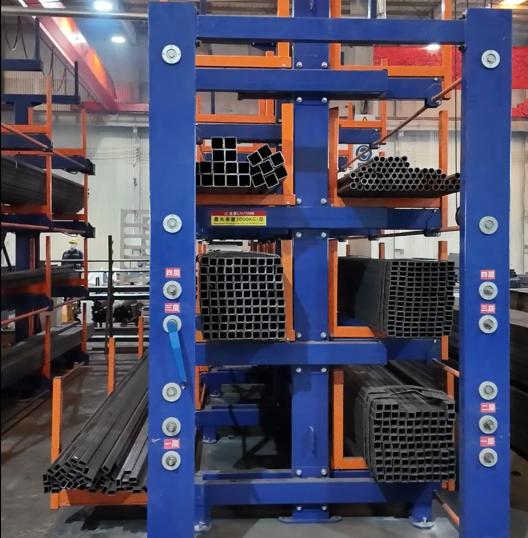
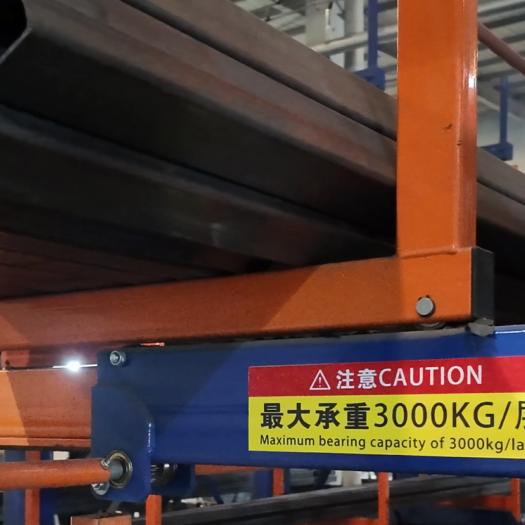
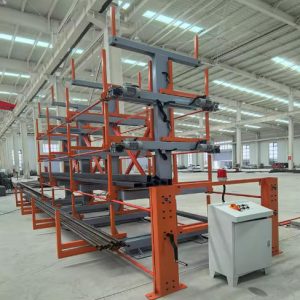
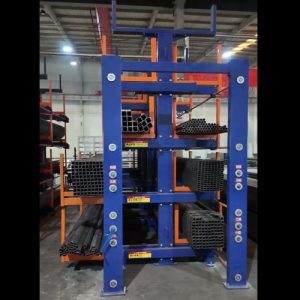
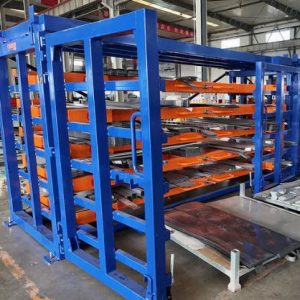
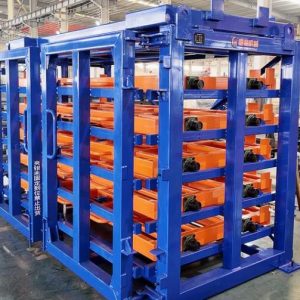
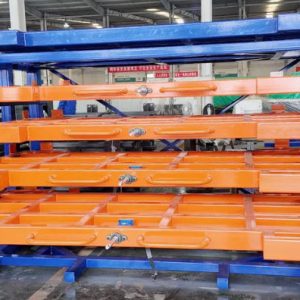
The mechanism is simple: each tier extends toward the aisle on a guided carriage, on rollers or a geared crank, and returns when the lift is complete. Three things follow, and each one attacks a specific failure.
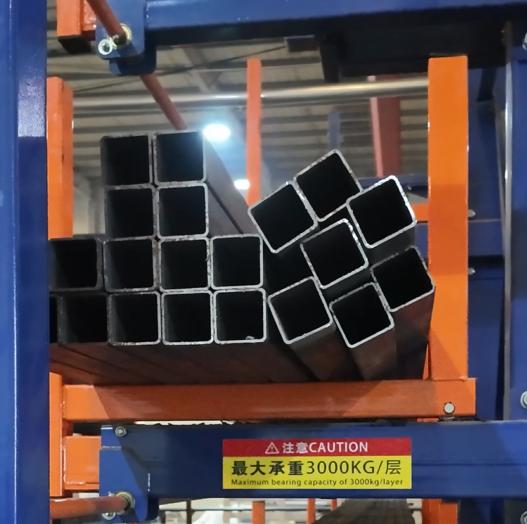
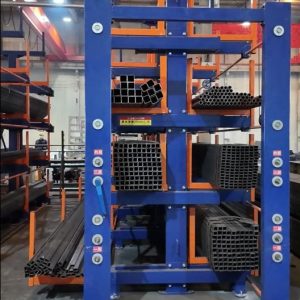
100% tier selectivity. Any level can be reached without touching the level above. Mixed alloy stock, mixed wall thickness, mixed length — the operator pulls the one bundle needed, not a stack.
Vertical crane loading. With the tier extended into clear space, the hook comes straight down. No side pulling, no chain wrapped around a bundle at an angle, no forklift under a swinging load.
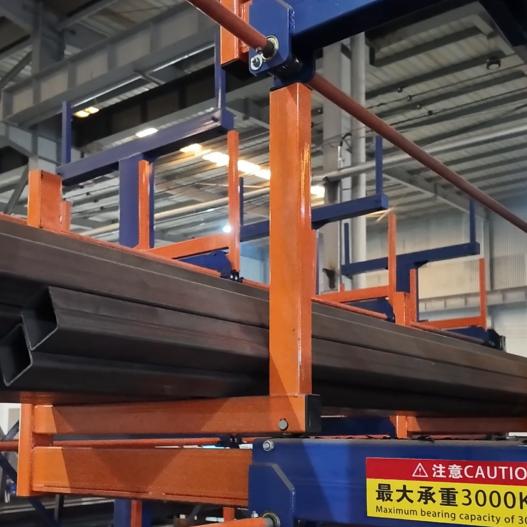
No dragging, no scratching. Material rests on independent arms with end stops. It is lifted off and set down, never scraped along steel.
On the Herochucrank-outdesign, the extended tier locks mechanically before anyone reaches in, and the arms are braced against droop so the bundle stays flat while it is out.
Floor space is what buyers notice first — layouts of this type commonly recover up to half the area previously given to stacks and turning circles — but space is the smaller prize. The real gain is that the cutting cell stops waiting.
Putting the rack where it earns its money
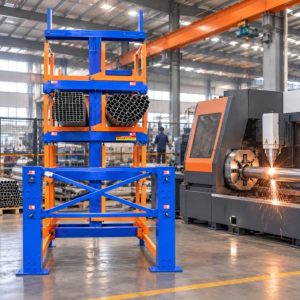
Place the rack parallel to the cutting cell, close enough that the crane travels metres rather than aisles. In that position the material flow is a short loop: rack, crane, table, cut parts, out. Operators stop walking to a warehouse and start working a five-metre circuit.
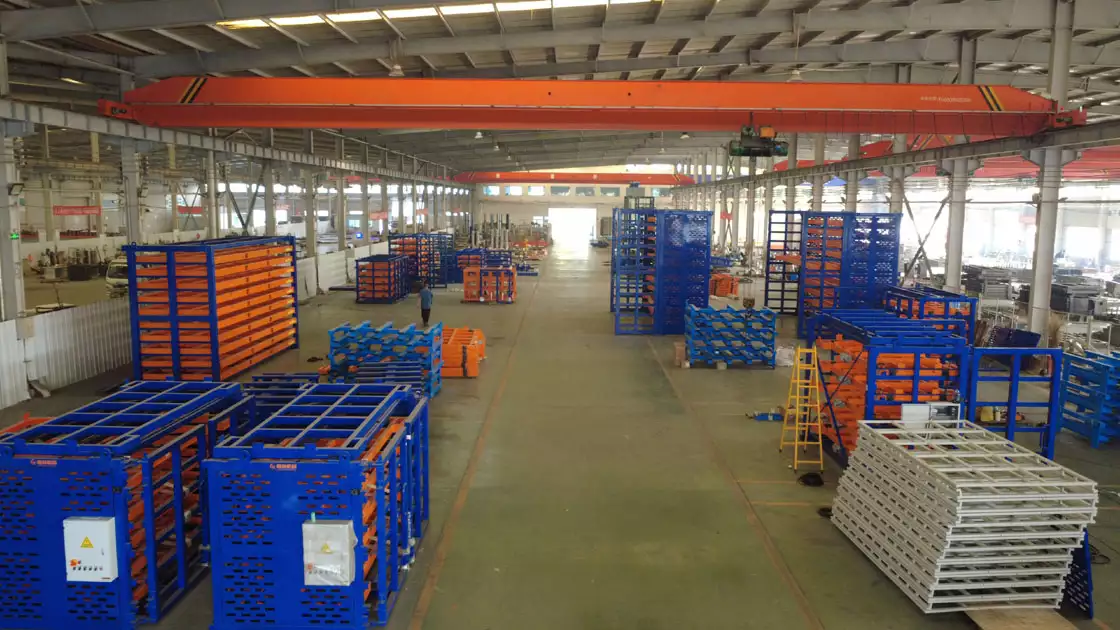
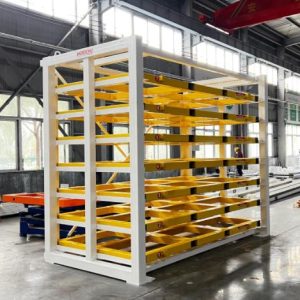
Herochu builds these racks for steel pipe, tube, square bar, H-beam, copper bar and aluminium extrusion, and sizes the frame to the stock list so the cell layout can be drawn around real bundle dimensions rather than assumptions. For shops cutting mixed profiles, the same frame carries different arm spacing per tier.
In each case the pattern is the same: many sizes, moderate quantities, and a downstream machine that costs more per hour than the storage ever will.
FAQ
Is a roll-out cantilever rack only for laser cutting? No. It suits plasma tables, automatic saws, press brakes with long tooling, and any cell fed with bundle stock. Laser shops adopt it first because their cycle times make waiting expensive.
How fast is a pick, realistically? A trained operator extends the tier, slings the bundle and lands it on the table in well under a minute for a normal bundle. The thirty-second figure applies to the tier access itself, not the full lift.
Can it replace a forklift? For storage and machine feeding, largely yes, provided the crane covers the cell and the hook height clears the top tier. Forklifts still move pallets of finished parts.
Does it work in an existing building with a low roof? Tier count is set by hook height, so a low building gets fewer tiers over a longer run. Herochu lays that out from a roof and crane survey before quoting.
Key takeaways
Downtime in a cutting cell is usually a storage problem wearing a production disguise. Roll-out tiers give full selectivity, crane loading removes the drag-and-drop handling that damages long goods, and a compact cell layout keeps material within metres of the machine. Fix the flow, and the machine hours come back.
FAQ
Here are some frequently asked questions about our sheet metal racks and pipe storage solutions. We hope you find them helpful!
Q1: Can I request a custom size or color? Absolutely. We offer complimentary design services and deliver efficient, tailored solutions to meet your specific requirements.
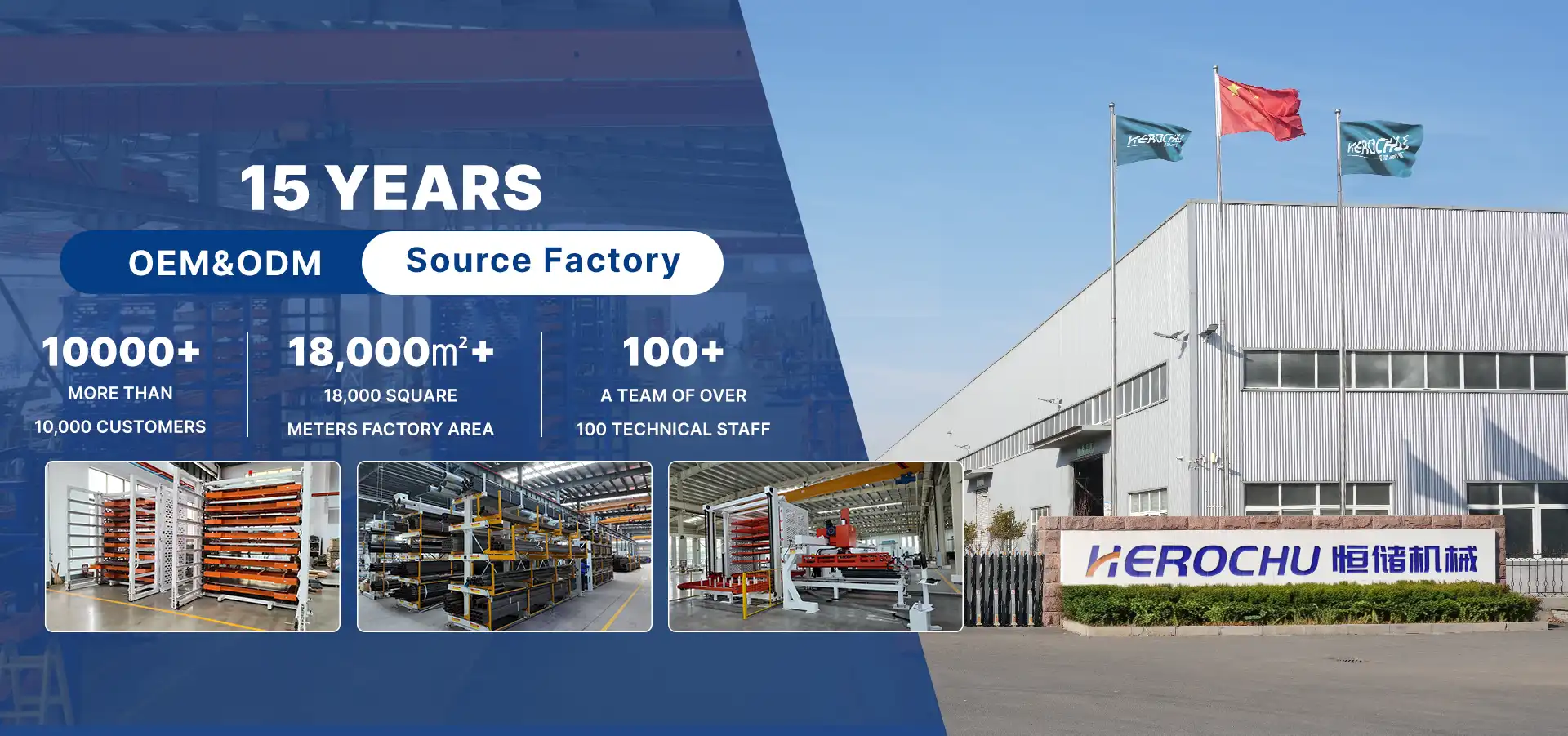
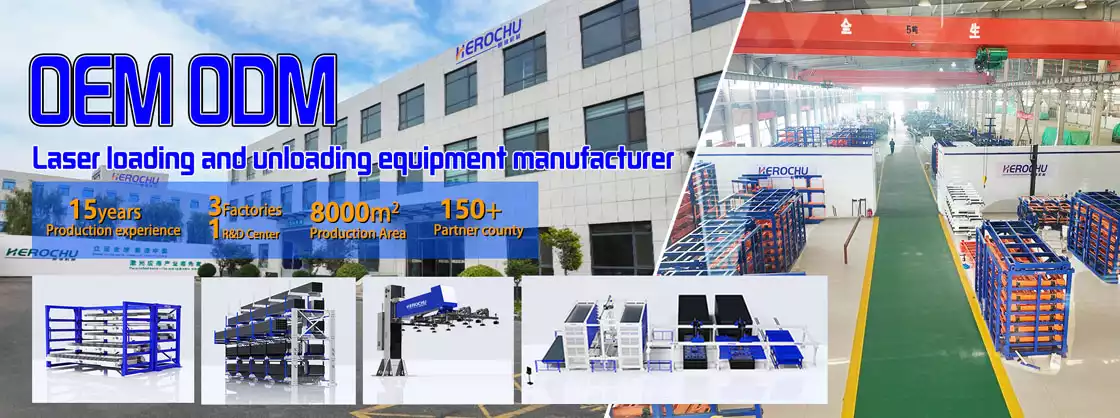
Q2: Are you a manufacturer or a distributor? We are a direct manufacturer with over 15 years of industry experience and expertise.
Q3: Is there a minimum order quantity? No. We welcome orders of any size, starting from a single unit.
Q4: How can I get detailed product information? Click the “Get a Quote” button to receive product images, detailed specifications, and videos. Our team is always ready to assist.
Q5: How do I provide my storage rack requirements? Simply share the type, dimensions, and quantity of materials you plan to store, along with any other specific needs. We will develop a professional storage solution for you. Alternatively, leave your contact details for a personalized consultation.
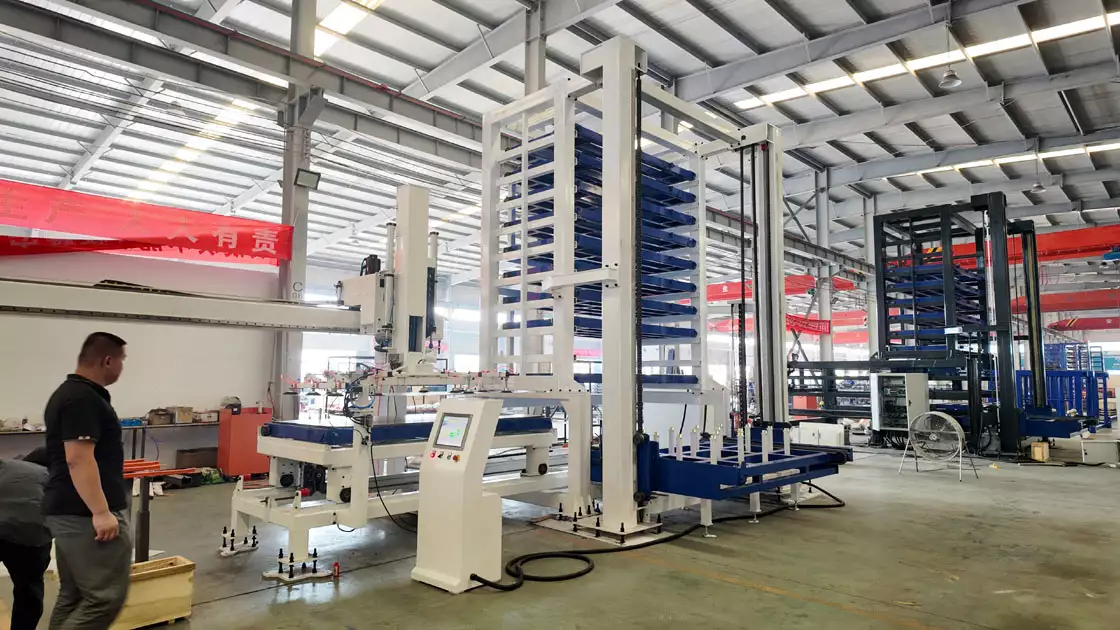
Q6: Do you offer automated loading systems or robotic arms? Yes. We provide loading robotic arms and integrated loading/unloading systems tailored to your laser cutting machine’s table size and material handling method (e.g., board rack, exchange platform, or material warehouse). Contact us with your details for a customized proposal.
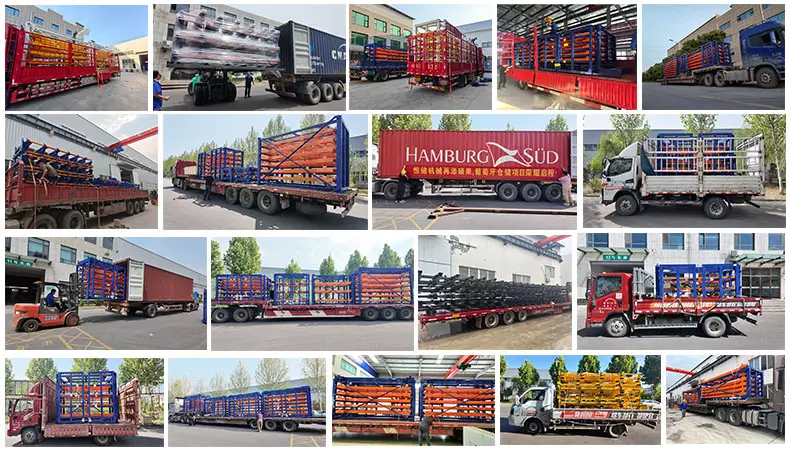
Q7: Do you provide on-site installation and debugging? Yes. Our technicians can travel to your facility for installation and debugging, ensuring successful operation. We have served clients globally, including in the USA, South Korea, Russia, Qatar, Mexico, South Africa, Egypt, and Lebanon.
Q8: How do you ensure product quality? Our quality assurance includes:
A team of over 40 technical engineers for professional debugging and support.
A dedicated quality control department compliant with ISO9001 standards.
CE certification for all exports.
Rigorous load testing before shipment to ensure structural safety and reliability.
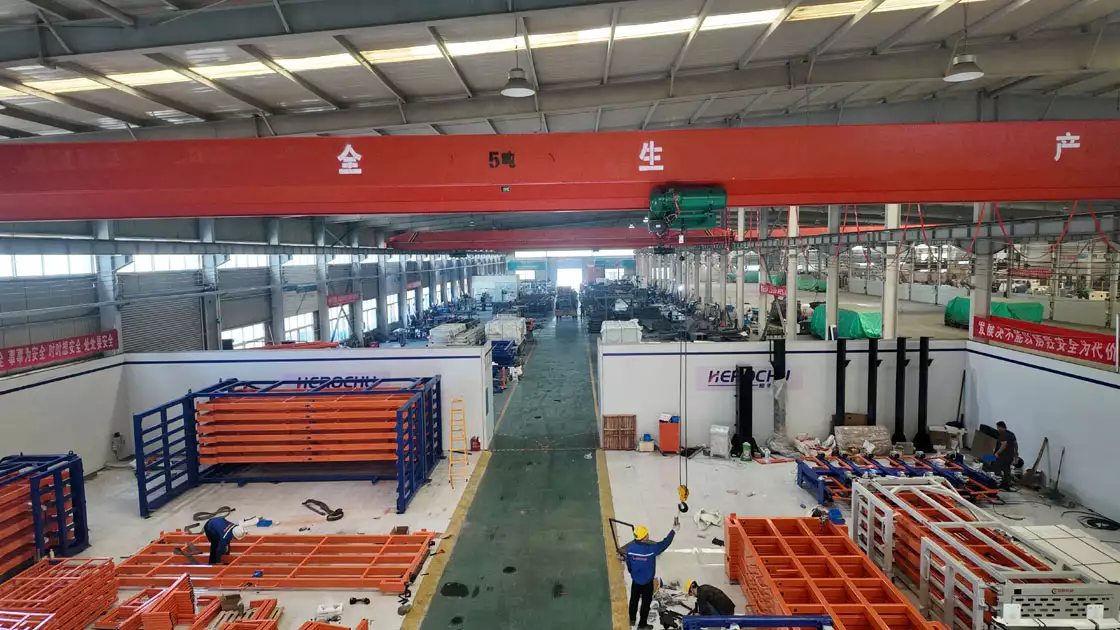
Q9: Where is your factory located? Our modern 10,000-square-meter manufacturing facility is located in Jiyang Industrial Park, Jinan, Shandong, China.
Q10: How can I evaluate your company’s capabilities? We offer virtual video factory tours and warmly welcome on-site visits.
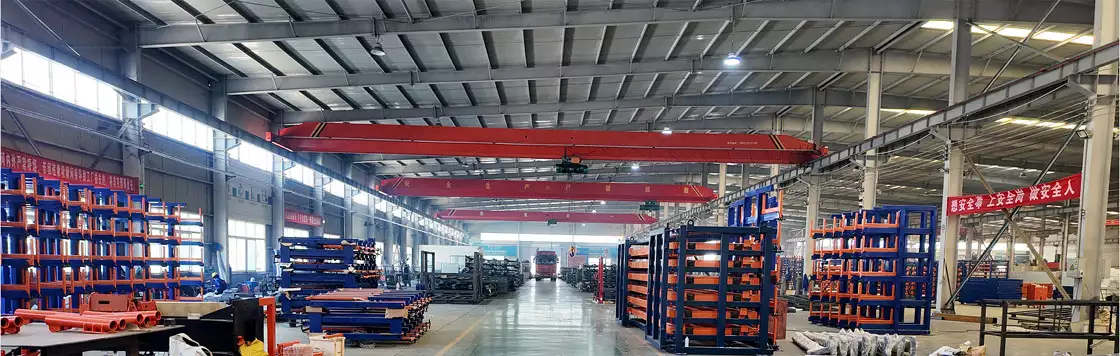
Q11: What does your company specialize in? Jinan Constant Storage Machinery Manufacturing Co., Ltd. is a high-tech enterprise specializing in the R&D, production, sales, installation, and service of intelligent storage solutions. Our product range includes sheet material warehouses, drawer-style shelves, cantilever racks, servo manipulators, gantry loaders, and fully automated handling systems. Supported by a skilled technical team and advanced equipment, we are committed to delivering high-performance storage products and solutions to customers worldwide.
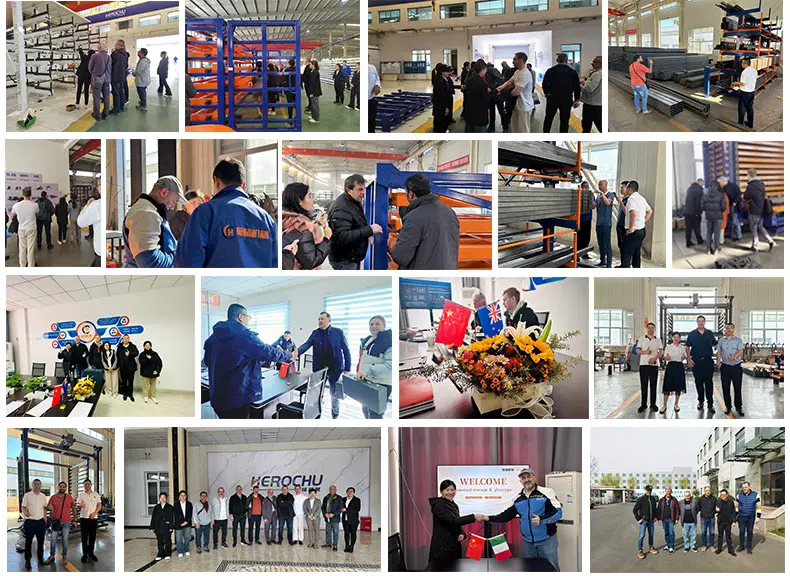
Customer visit
Herochu has always been adhering to the market-centric approach to meet customer requirements to the maximum extent, and the business philosophy of “creating brands with heart and gaining reputation with sincerity”. It provides customers with high-quality products and services with rigorous military quality, professionalism, and excellence, and has won unanimous praise in the Chinese aerospace, Chinese weapons, Chinese railways, automobile manufacturing, engineering machinery, non-ferrous metal titanium alloy and other industries.